

.webp)


What is a erysipelas?
Wound rose, also medically known as erysipelas, is a bacterial infection of the skin and subcutaneous tissue. The name may sound dramatic, but it simply refers to the characteristic red, inflamed appearance of the affected skin. It is a condition that you should take seriously, but can be treated with the right care.
Erysipelas is caused by a specific bacteria called streptococcus. Staphylococci can also cause a form of erysipelas, which is often slightly milder. In some countries, the separate term cellulite is used for this purpose. It only becomes dangerous when the staphylococcus (or streptococcus) gains access to deeper tissue through skin damage. This could be a small wound you barely noticed, a scratch, a pet scratch, a bug bite, or even an existing skin condition such as a leg ulcer or a yeast infection between the toes.
Once entered through such an entrance gate, the bacteria begins to multiply and spread through the skin and subcutaneous tissue. Unlike some other skin infections that remain localized, erysipelas tends to spread fairly quickly over a larger area of skin. This is because the bacteria produces enzymes that make it easy to move through the tissue.
Your body responds to this invasion with a powerful inflammatory response. This inflammatory response causes the typical characteristics of erysipelas such as redness, swelling, warmth and pain. But your body's response goes beyond local phenomena. You often feel generally ill with fever, chills and muscle aches, like you have the flu.
Wound erysipelas occurs at all ages, but slightly more common in older people. This is related to the fact that older people's skin is more vulnerable, blood flow may be less optimal, and because underlying conditions such as diabetes are more common as you get older. People with a weakened immune system are also more susceptible to erysipelas because their bodies are less able to fight bacteria.
Although erysipelas is a bacterial infection, it is not contagious from person to person in the sense that you don't catch it just by touching someone with a wound. The bacteria that causes it normally already lives on your own skin. The problem occurs when there is a break in your skin barrier that gives the bacteria access to deeper tissue.
Heb je last van Erysipelas?
Laat je huid beoordelen door een erkende dermatoloog via de Skindr app. Upload foto's en krijg binnen 48 uur een diagnose met persoonlijk advies. Geen wachtkamer, geen verwijsbrief nodig.
How does erysipelas occur?
Understanding how wound rose occurs helps to prevent it and recognize it in time. The development of erysipelas follows a specific pattern in which various factors play a role.
The entrance gate is the starting point of every wound infection. This is where the streptococcus bacteria enters the skin. Sometimes this entrance gate is clearly visible as a fresh wound, but it is often a very small and inconspicuous tear in the skin that you have barely noticed yourself. Scratches and minor wounds due to falls, bumps or scrapes are common entry points. A cat or dog crab, no matter how small, may be enough. Insect bites, especially when you scratch them, create openings in the skin.
People with certain skin conditions have an increased risk of erysipelas. A leg ulcer, also known as an ulcer, is an open wound that often occurs in people with blood flow problems or diabetes (diabetes). This chronic wound is a permanent entry point for bacteria. Fungal infections between the toes, called tinea pedis or athlete's foot, cause tiny cracks in the skin that provide ideal access for streptococci. Eczema or other skin conditions that damage the skin barrier also increase the risk. Even very small cracks in dry skin can be sufficient as an entry point.
Certain underlying conditions make you more susceptible to erysipelas. Diabetes mellitus (diabetes) is an important risk factor. In diabetes, resistance to infections is reduced, wound healing is delayed, and blood flow is often suboptimal. This makes it easier for bacteria to establish and multiply. Circulatory problems in the legs, common among elderly people or smokers, mean that the immune system is less able to respond to bacteria in the affected areas. A weakened immune system due to medication, chemotherapy, or conditions such as HIV also makes you more sensitive.
Lymphedema, a buildup of fluid in the leg due to a disruption of the lymphatic vessels, is a strong risk factor for erysipelas. This can occur after cancer treatments where lymph nodes have been removed, after radiation treatment, or sometimes without a clear cause. Even after a previous wound, lymphedema can occur as a complication after recovery, which increases the risk of a new infection in the future. The accumulation of fluid in the leg creates an environment where bacteria can multiply well, and it reduces the body's defenses on site.
Overweight also increases the risk, possibly due to increased pressure on the legs and feet, which can affect blood flow. Overweight also makes it easier for skin folds to form where moisture can accumulate and fungal infections and wounds can occur.
Interestingly, erysipelas often recurs in the same place in people who have had it before. Each new episode damages the lymphatic vessels a little more, causing fluid retention and an increased risk of a subsequent infection. In people who have three or more episodes per year, we speak of recurrent erysipelas, and long-term preventive treatment is often necessary.
Symptoms and characteristics of erysipelas
Wondroos has fairly characteristic symptoms that help with rapid recognition. The symptoms usually develop rapidly, often within a few hours to a day.
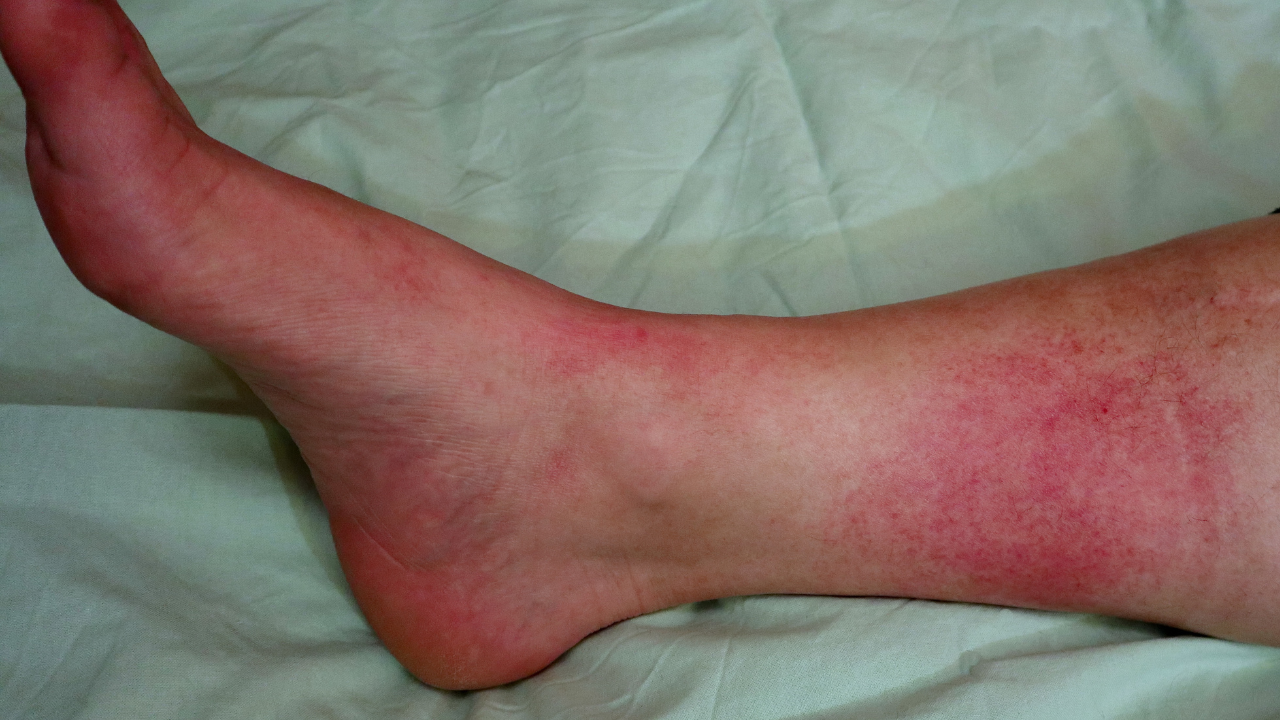
The most prominent sign is a red spot on the skin that is rapidly increasing in size. This redness is bright and has a sharply defined edge. When you run your finger across the transition between red and normal skin, you will feel a slightly raised edge. This is because the affected area is swollen due to the inflammation. The redness is warm when touched, sometimes even noticeably warmer than the surrounding skin. This is due to increased blood flow in response to the inflammation.
The affected area is painful, especially when touched or pressed. This pain can be quite intense and often has a throbbing, burning character. With a sore on the leg, walking becomes painful and difficult. The affected leg feels stiff and tense due to the swelling.
After one to two days, blisters may form on the red area. These blisters are filled with clear fluid and can range in size from small to fairly large. Sometimes they open spontaneously, with the moisture draining out. The development of blisters is a sign that the infection affects the superficial layers of the skin. These blisters usually heal without scarring after treatment, although the skin in that area may temporarily become darker or lighter.
The lymph nodes near the wound rose swell and become painful. In case of a wound on the leg, these are the inguinal glands; in the case of a wound on the arm, it is the glands in the armpit. These swollen glands can sometimes be clearly felt as painful bumps under the skin. In some cases, you will see a red line running from the wound rose to the swollen glands. This stripe, called lymphangitis, shows the inflamed lymphatic vessels and is a sign that the infection is spreading through the lymphatic system.
In addition to these local symptoms, you quickly feel generally ill. Fever is very common in wounds and can reach quite high, sometimes up to 39 or 40 degrees. You have chills, especially when the fever rises. Muscle pain throughout the body, similar to the flu, occurs regularly. Headaches, a general feeling of weakness and exhaustion, and sometimes nausea or vomiting can also occur. These general signs of illness often start before the skin changes are fully visible, which means you feel sick while the red spot is just beginning to appear.
The combination of local skin changes and general signs of illness makes erysipelas a condition that really makes you feel sick. It's not just a skin problem, but a systemic infection that affects your entire body.
Where does erysipelas occur
Wondroos has a clear preferred location, although it can in principle occur anywhere on the body where an entrance gate is present.
The vast majority of cases of erysipelas, around 80 to 90 percent, occur on the legs. There are various reasons for this. First, the legs are most susceptible to minor injuries such as scratches, bumps, and insect bites. We walk, we bump our shins, we shave our legs, all situations that can cause minor wounds. Secondly, foot fungi mainly occur between the toes, which creates a gateway for bacteria that can then migrate up to the lower leg via the lymphatic vessels. Third, blood circulation problems and lymphedema are most commonly present in the legs, which increases the risk of erysipelas.
Inside the leg, the lower leg is the most common location. The wound often starts at the foot or ankle and spreads from there over the lower leg. The typical presentation is a red, warm and painful swelling that starts at the ankle and gradually spreads across the tibia towards the knee. Sometimes the entire lower leg is involved, from ankle to knee.
The upper thighs can also be affected, but this is less common. When the upper leg is involved, it is usually an extension of a wound that started on the lower leg and has continued to creep up.
Although much rarer, erysipelas can also occur on other parts of the body. The face is the second most common location, accounting for approximately 5 to 10 percent of cases. Facial erysipelas often starts near the nose or around the eyes and can spread across the cheeks. This type of wound rose can be particularly worrying because the swelling around the eyes can affect vision and because the proximity to the brain means that complications can be more serious. Fortunately, this type is less common.
The arms may also be affected, especially in people who have lymphedema in the arm after breast cancer treatment where lymph nodes have been removed from the armpit. This group is highly sensitive to erysipelas in the affected arm, and it occurs regularly.
Very rarely, erysipelas can occur on the torso, hands, or feet. In people with a highly reduced immune system, erysipelas can even occur in several places at the same time, although this is exceptional.
Interestingly, erysipelas often recurs in exactly the same place as a previous episode. This is because each infection causes permanent damage to the lymphatic vessels and skin, making that area more vulnerable to subsequent infections.
Heb je last van Erysipelas?
Laat je huid beoordelen door een erkende dermatoloog via de Skindr app. Upload foto's en krijg binnen 48 uur een diagnose met persoonlijk advies. Geen wachtkamer, geen verwijsbrief nodig.
Treatment of erysipelas
Wound rose is a serious bacterial infection that always requires treatment by a doctor. Fortunately, the condition usually responds well to the right medication, but speed is important.
The cornerstone of the treatment is antibiotics that specifically target the streptococcal bacteria. Your doctor will start a cure immediately, usually for ten to 14 days. These drugs are given in high doses to effectively combat the bacteria. Preference is given to drugs from the penicillin group because streptococci are highly sensitive to this. Are you allergic to penicillin? Then there are excellent alternatives available, such as clindamycin or macrolide medications.
It is crucial that you complete the full course, even if you feel much better after just a few days. Symptoms usually improve soon after starting treatment, often within 24 to 48 hours. The fever subsides, you feel less sick, and the red spot stops expanding. But this does not mean that all bacteria have disappeared. Stopping the medication too early can lead to the recurrence of the infection and possibly also to resistance of the bacteria.
In addition to medication against bacteria, your doctor also prescribes pain relievers. Medications containing acetaminophen help with both pain and fever. You can take this regularly according to the instructions. Rust is an important part of the treatment. It is strongly recommended not to walk around too much or stand for long periods of time, especially in the early days of treatment. Try to raise your leg as much as possible, ideally above the level of your heart. This reduces swelling and relieves pain. Place your leg on a stack of cushions or on the armrest of the sofa. If you do have to walk, for example to the toilet, do this slowly and slowly.
A compression stocking or elastic bandage can help reduce swelling, but this is usually only applied after the acute phase has passed. In the beginning, the pain is often too severe to endure a tight bandage.
For most people, treatment at home is sufficient and the situation is improving rapidly. However, if there is no improvement after 48 to 72 hours despite treatment, or if you are very ill with a high fever and a lot of pain, hospitalization is necessary. In the hospital, you will receive antibiotics via an infusion, which works faster and more effectively for serious infections. Doctors can also keep a close eye on you there and treat any complications quickly.
After the wound has healed, the skin often peels where the red spot was. This is a normal part of the healing process and will go away on its own. The skin may also temporarily have a different color, darker or lighter than the surrounding skin, but this usually recovers within a few months.
An important part of the treatment is also finding and treating the entrance gate. Your doctor will carefully examine small wounds, fungal infections between the toes, or other skin problems that have served as gateways. Fungal infections are treated with special creams. Leg ulcers are professionally cared for. Underlying lymphedema or blood flow problems are also being addressed.
Long-term preventative treatment is necessary for people who have three or more episodes of erysipelas per year. You will then receive a monthly injection of penicillin (or alternative in case of allergy) for at least six months. This preventive treatment significantly reduces the number of recurrent infections and protects the lymphatic vessels from further damage.
What doesn't work against erysipelas
Wound rose is a serious bacterial infection that requires professional medical treatment. There are some misconceptions and ineffective approaches that are important to discuss.
The idea that erysipelas will go away on its own without treatment is dangerous. Unlike some mild skin infections that can sometimes heal spontaneously, wound rose is an aggressive infection that needs active treatment. Without antibiotics, the infection can spread, penetrate deeper into the tissue, and even cause life-threatening complications such as septicemia. Natural healing is not an option for a wound.
Self-medication with old medicines that you still have lying around the house is not wise. These medications may be wrong for the bacteria that causes erysipelas, they may be underdosed, or they may have lost their effectiveness. Even if the symptoms look like a previous infection, a doctor must determine which treatment is best now. In addition, old medications may cause side effects or interact with other medications that you are currently taking.
Using ointments, creams or natural remedies on the red area does not help against erysipelas. Wound rose is not a superficial skin infection, but a deep infection of the skin and subcutaneous tissue. Creams don't penetrate deep enough to reach the bacteria. You need medication that is spread through your bloodstream and thus reaches all affected tissues. At most, ointments can cause secondary irritation or trigger an allergic reaction on top of the existing inflammation.
Ignoring the first symptoms in the hope that it will not be too bad takes valuable time. The sooner erysipelas is treated, the better it responds to medication and the lower the risk of complications. Waiting for symptoms to get worse or for the red spot to become much larger makes treatment more difficult and increases the chances of needing to be hospitalized.
Continuing to exercise or do heavy physical work during the acute phase of erysipelas worsens the situation. Physical exercise increases blood flow and can accelerate the spread of the bacteria. Movement also causes more pain and swelling. Rest is essential in the initial stages of treatment.
The idea that you can reduce inflammation by cooling the red spot with ice or cold compresses does not work for erysipelas. Cold can even reduce blood flow, which is not desirable because your body needs good blood flow to transport the drugs to the affected area and to fight the infection.
Frequently asked questions about erysipelas
How can I prevent erysipelas?
Prevention starts with taking good care of your skin and avoiding entry points for bacteria. Treat all wounds, no matter how small, by cleaning them thoroughly with water and disinfecting them if necessary. Keep foot fungi under control by drying your feet thoroughly as a preventative measure, especially between the toes. For foot fungus, apply an antifungal cream twice a day for 2-4 weeks. Professional care is important for leg ulcers. If you have lymphedema, wear a compression stocking as your doctor has prescribed. Long-term preventive medication may be necessary for people with recurrent erysipelas.
Is wound rose contagious?
No, wound rose is not contagious from person to person in the usual sense of the word. You can't catch it by touching someone with a wound or being in the same room. The streptococcal bacteria that causes erysipelas may already be present on the skin (or in the throat). The infection occurs when this bacteria gains access to deeper tissue through a wound in someone who is susceptible. However, it is wise to practice good hand hygiene, especially if you care for someone with a wound and come into contact with wound fluid.
Why does erysipelas recur often?
Unfortunately, Wondroos has a tendency to come back, especially in the same place. Each episode damages the lymphatic vessels slightly, leading to fluid accumulation and a decreased immune system on site. This makes the same area more vulnerable to another infection. Underlying risk factors such as blood flow problems, diabetes or lymphedema also often remain. In people who have three or more episodes per year, long-term (= six months or longer) preventive antibiotic treatment is often very effective in preventing recurrence.
How fast does the treatment work?
Most people notice improvement within 24 to 48 hours of starting the medication. The fever subsides, you feel less sick, and the red spot stops expanding. However, complete healing takes longer. It usually takes one to two weeks for the redness to completely disappear and the swelling to subside. The skin can still peel and have a different color for weeks afterwards. It's important to complete the full course of antibiotics, even if you feel better soon, to prevent the infection from returning.
Can erysipelas be dangerous?
Yes, untreated, erysipelas can cause serious complications. The infection can spread to deeper tissues, tendons, or even bones. In severe cases, the bacteria can enter the bloodstream, leading to blood poisoning (sepsis), a life-threatening situation. Repeated wounds can also cause permanent damage to the lymphatic vessels, resulting in chronic lymphedema. Fortunately, these complications are rare when wound erysipelas is treated in a timely and adequate manner. This underlines the importance of rapid medical attention if a wound is suspected.
When should I go to the hospital?
Most people can be treated at home with medication and rest. Hospitalization is necessary if you have a very high fever that does not respond to medication, when the pain is extremely severe, if the red spot spreads very quickly despite treatment, if you are generally very ill with vomiting and exhaustion, or if there is no improvement after two to three days of treatment at home. People with diabetes, serious blood flow problems or a severely reduced immune system are also often treated in hospital because they are more at risk of complications.


.svg)
