

.webp)


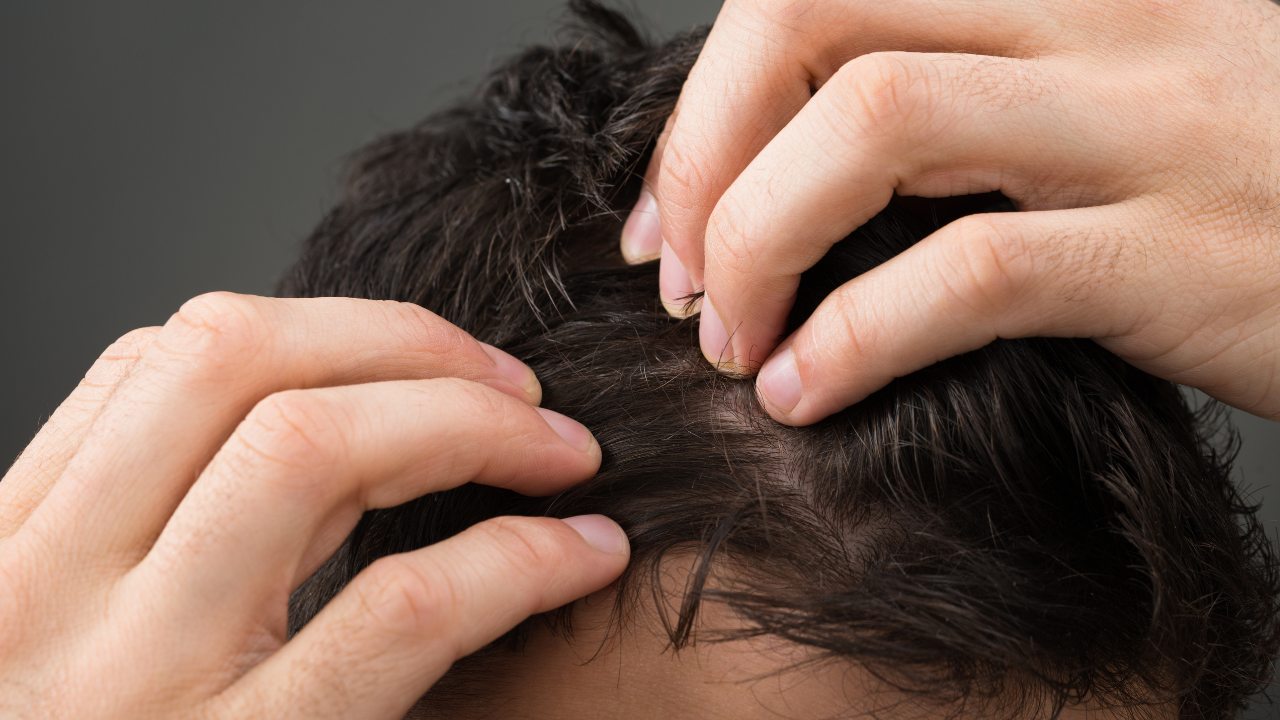
What is hair loss?
Hair loss, also known as baldness, occurs when you lose more hair than the body can produce. To understand when hair loss becomes abnormal, it's important to know how hair growth normally works. Your hair grows from hair follicles in a natural cycle of growth, rest and loss. During the growth phase, on average, hair becomes just under half a millimeter longer per day, after which growth decreases and hair eventually falls out. This is a completely natural process where old hair makes way for new ones.
The number of hair follicles you have is inherited, as is the thickness and density of your hair. With age, the number of hair follicles remains the same, but they become less active and produce less hair, making your head of hair thinner. This is a normal part of the ageing process. We only speak of abnormal hair loss when you lose more than 100 hairs per day. It is important to emphasize that the word “abnormal” here is purely medical and does not mean that hair loss is by definition a problem.
Some form of baldness occurs sooner or later in about 60% of men. This can start at an early age, although it usually only becomes visible after the age of 40. The younger the hair loss starts, the greater the chance of complete baldness. In women, baldness is much less common and develops differently. Women usually experience diffuse hair loss between the ages of 40 and 60, where hair becomes thinner everywhere without specific bald spots. The back of the head is almost always hairy in women.
Whether you experience hair loss as problematic is a very personal matter. For some people, it's a source of stress and uncertainty, while others accept it as part of who they are. Both responses are completely understandable and valid.
Heb je last van Hair loss?
Laat je huid beoordelen door een erkende dermatoloog via de Skindr app. Upload foto's en krijg binnen 48 uur een diagnose met persoonlijk advies. Geen wachtkamer, geen verwijsbrief nodig.
How does hair loss occur?
The causes of hair loss are diverse and often a combination of factors is involved. In the most common form, hereditary baldness (also known as androgenetic alopecia), both your genetic predisposition and hormones play a crucial role. Male hormones affect hair follicles, causing them to gradually shrink and eventually stop producing visible hair. This form of hair loss often follows a predictable pattern and is permanent, which means that the hair does not grow back.
In women, hair loss can also be hormonally determined, but the triggers are often different. Hormonal fluctuations during pregnancy, after childbirth, menopause or thyroid problems can cause temporary or permanent hair loss. These hormonal changes disrupt the normal hair cycle, causing more hair to enter the resting phase at the same time and then falling out.
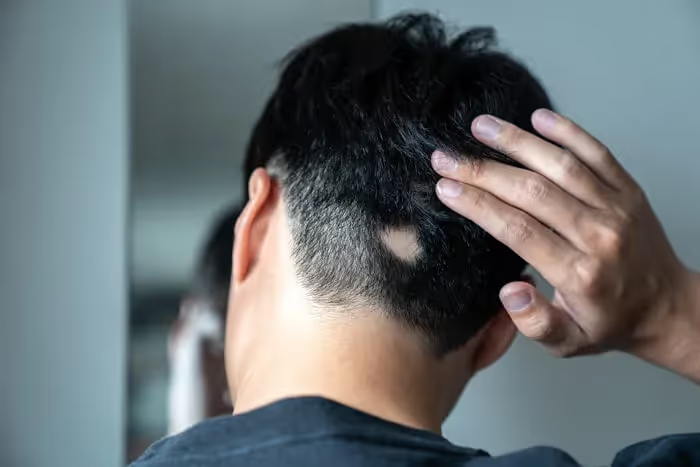
A special form of hair loss is alopecia areata, an autoimmune disorder in which the immune system accidentally attacks its own hair follicles. This leads to sudden, round bald patches without redness or peeling of the skin. The mechanism behind this disorder is not fully understood yet, but stress and other autoimmune disorders may play a role. The good news is that in alopecia areata, the hair usually grows back spontaneously after a few months; in some cases, it can also take a few years or only partially come back.
Telogen effluvium is a form where a large number of hairs stop growing at the same time in response to a physiological or emotional shock. Possible triggers include severe stress, thyroid disease, anemia, chronic illnesses, serious infections, major surgery, or certain medications. Chemotherapy is the best-known example of medication that causes hair loss. In telogen effluvium, the hair usually only falls out two to four months after the trigger, which sometimes makes it difficult to determine the cause.
Sometimes the cause of hair loss is very concrete and local. A fungal scalp infection can lead to localized bald patches with scaling and redness. Trichotillomania, a condition where people feel the urge to pull out their own hair, causes erratic, irregular bald patches. Hairstyles that are too tight such as ponytails, the use of products containing cortisone on the skin, or certain skin conditions can also contribute to hair loss.
Symptoms and characteristics of hair loss
The way in which hair loss occurs varies greatly by type and cause. In hereditary baldness in men, the process often begins insidiously with a receding hairline at the forehead and temples. Gradually, a typical M-shaped pattern is created, in which the crown also becomes thinner. Some men keep a horseshoe-shaped hair wreath around the head, while others become almost completely bald.
Women with hereditary hair loss experience a different progression. Instead of specific bald spots, the hair gradually thins all over the head. The separation widens and the scalp becomes increasingly visible due to the thinning hair. This process is usually slower than in men and the back of the head is almost always covered. Women often notice that their ponytail feels thinner or that there is more hair left in the brush.
In alopecia areata, one or more completely bald, smooth patches suddenly appear on the scalp. These patches are usually round or oval in shape and the skin looks normal with no signs of inflammation, scaling, or scarring. The edges of the bald spot may contain short, broken hairs that look like exclamation marks. In severe cases, eyebrows, eyelashes and beard can also fall out, and sometimes abnormalities are visible on the nails of the fingers and toes. They may have pits, lines, ripples, or whites, and they may become brittle or thinner.
Telogen effluvium appears as a sudden increase in hair loss all over the head. You notice that there is significantly more hair on your pillow, left in the shower tray, or left in your brush. The hair feels thinner but no specific bald spots occur. Often, you also feel generally less well during this period, depending on the underlying cause.
When a yeast infection is the cause, you'll see localized bald patches with obvious redness and scaling of the scalp. The skin may feel itchy or sore. In trichotillomania, the bald spots are irregular and erratic in shape, often in places that are easily accessible with the hands.
Where does hair loss occur?
Hair loss can manifest itself in different places, depending on the type and cause. The scalp is obviously the most common location, but it's important to understand that not all forms of hair loss spread across the head in the same way.
There are clear preferred locations for men with hereditary baldness. The process almost always starts at the hairline near the forehead and temples, where the hair gradually recedes. At the same time, thinning may occur at the crown, the highest point of the head. These two zones expand over time until they meet, leaving only a band of hair on the sides and back of the head. The hair above the ears and on the neck is usually preserved because these hair follicles are less sensitive to hormones.
Women with hereditary hair loss show a different pattern. The dilution mainly focuses on the top of the head, especially around the parting. The hairline on the forehead usually remains intact, unlike in men. The sides of the head do become thinner but rarely become completely bare. This diffuse pattern means that the hair becomes less full everywhere without creating specific bald areas.
Alopecia areata can occur anywhere on the hairy parts of the body. Round or oval bald spots develop on the scalp that can be randomly scattered. In rare cases, the entire scalp may become bald, a form called alopecia totalis. When all body hair also disappears, we speak of alopecia universalis. The condition can also affect eyelashes, eyebrows, male beard growth, and other body hair.
In telogen effluvium, hair loss is spread over the entire scalp. There are no specific bald spots, but the overall volume decreases noticeably. Fungal infections, on the other hand, do cause localized, demarcated bald areas that often occur on the crown or sides of the head. Trichotillomania leads to irregular patches, often in areas that are easy to reach, such as the crown or sides.
Heb je last van Hair loss?
Laat je huid beoordelen door een erkende dermatoloog via de Skindr app. Upload foto's en krijg binnen 48 uur een diagnose met persoonlijk advies. Geen wachtkamer, geen verwijsbrief nodig.
Hair loss treatment
The approach to hair loss depends entirely on the type, cause and your personal needs. It is important to realize that not all forms of hair loss require treatment or are treatable at all. In many cases, waiting patiently is the best strategy, especially for temporary forms such as telogen effluvium.
When there is an underlying cause, treating it comes first. In case of a yeast infection, your doctor prescribes antifungal medication, usually in the form of tablets that you need to take for a few weeks. Thyroid disease requires treatment with thyroid hormones. Iron supplements can help with anemia. Addressing these underlying issues often leads to hair growth recovery, although it can take several months.
For hereditary baldness in men and women, treatment consists of topical solutions and/or oral agents that you apply daily to the scalp. This treatment can slow hair loss and for some people it leads to some hair growth recovery. However, it is important to know that the effect only lasts as long as you continue the treatment. If you stop taking it, the hair loss will resume. The results vary from person to person and not everyone responds equally well.
For women with hormonal causes of hair loss, hormonal treatment may be considered, depending on the specific situation. This requires careful consideration with your doctor because hormonal therapy can also have risks and side effects.
There are several treatment options for alopecia areata, although none are guaranteed to be effective. Your doctor may prescribe topical treatment with lotions containing cortisone or, in some cases, inject cortisone directly into bald areas. The effect of this is variable and often disappointing. Fortunately, hair in alopecia areata usually grows back spontaneously, even without treatment, although this can take months.
In addition to medical treatments, there are also cosmetic solutions. A well-made hairpiece or wig can provide a natural effect and is a practical choice for many people. Under certain conditions, your health insurance may reimburse part of the costs, especially if hair loss is the result of medical treatment such as chemotherapy. Concealing hair powders and sprays can make thinning hair look visually fuller and are easy to use on a daily basis.
What doesn't work against hair loss?
There are countless products and treatments that promise to stop hair loss or make new hair grow, but the reality is that many of them have little or no effect. It's important to have realistic expectations and not spend a lot of money on ineffective solutions.
Vitamins and supplements are often touted as a miracle cure for hair loss. Unless there is a proven deficiency, such as anemia or specific vitamin deficiencies, additional vitamins, minerals or trace elements such as zinc have no effect on hair growth. Incidentally taking supplements without a proven deficiency can be pointless and, in some cases, even harmful if overdosed.
All kinds of shampoos, conditioners and hair products claim to prevent hair loss or stimulate hair growth. The truth is that these products can cleanse, condition and make your hair look healthier, but they can't affect hair growth from the hair follicles. Hair loss occurs at the follicular level, deep into the skin, where shampoos cannot penetrate.
Creams that you apply to the scalp generally have little effect, with the exception of the specific medical treatments mentioned earlier. Many over-the-counter products contain ingredients with no proven efficacy. They can be expensive and often create false hopes.
Paradoxically, the use of creams containing cortisone can actually cause hair loss instead of treating it. These products are therefore strongly discouraged for use on the scalp, unless specifically prescribed by a dermatologist for a very specific indication.
Laser helmets and other technological gadgets are flagged as innovative solutions, but evidence for their effectiveness is limited and mixed. They are often expensive and the results are disproportionate to the investment. Natural remedies such as essential oils, herbal therapies and homeopathic remedies have no scientifically proven effect on hair loss, although the scalp massage may make them feel comfortable when applied.
Frequently asked questions about hair loss
Is hair loss inherited?
Yes, the most common form of hair loss, androgenetic alopecia, is highly hereditary. If your parents or grandparents have baldness, you are more likely to develop it too. Heredity can come from both fathers and mothers. However, it is not always predictable when and to what extent hair loss will develop.
Can stress cause hair loss?
Yes, severe stress can lead to a form of hair loss called telogen effluvium. A few months after a stressful event, a lot of hair suddenly falls out. Fortunately, this type of hair loss is usually temporary and hair grows back as soon as stress decreases or disappears. Chronic stress can also make existing hair loss worse.
Does hair come back after hair loss?
This depends entirely on the type of hair loss. In temporary forms such as telogen effluvium and alopecia areata, hair usually grows back within six months to one year. In the case of hereditary baldness, however, the hair loss is permanent and the lost hair no longer grows back without treatment. Early treatment can sometimes help delay further hair loss.
When should I see a doctor?
Visit your doctor if you suddenly lose a lot of hair, bald patches, if your scalp is red, sore or scaly, or if the hair loss is accompanied by other symptoms such as tiredness or weight change. Even if hair loss starts at a young age or has a major emotional impact, it is wise to seek medical advice.
Does a healthy lifestyle help against hair loss?
A healthy lifestyle with sufficient nutrients, low stress and good sleep is important for your overall health and can contribute to healthy hair. However, it cannot prevent or cure hereditary hair loss. However, a poor lifestyle with smoking, excessive alcohol, one-sided diet and chronic stress can contribute to or worsen hair loss.
Is hair loss different in women than in men?
Yes, hair loss in women is clearly different from the pattern in men. Women rarely get a completely bald crown or receding hairline, but rather experience diffuse thinning over the entire top of the head. Hormonal factors in women are also often more complex, with the influence of pregnancy, menopause and thyroid disorders. The psychological impact may be greater among women because hair loss is less socially accepted.
Bronnen
- Gezondheidenwetenschap.be - Hair loss
- Thuisarts.nl - Hair loss
- CM.be - Illness and treatment: hair loss
- Alopecia Association Netherlands - Patient Information
- RIZIV - Reimbursement of non-implantable medical devices
- BCFI - Folia Pharmacotherapeutica






.svg)
