

.webp)


What are scalp disorders?
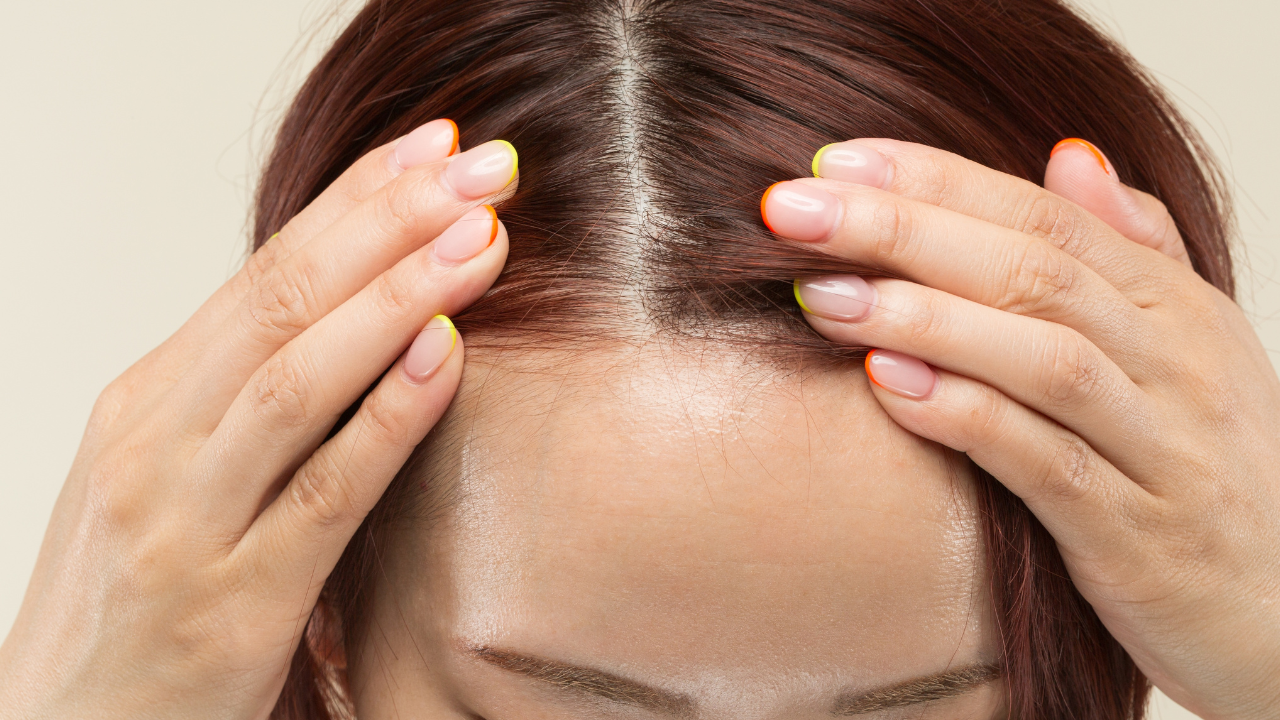
Scalp disorders are a broad category of skin problems that occur specifically on your skull. Your scalp is actually just skin, just like on the rest of your body, but due to the presence of hair follicles and the fact that this area is often covered by hair, this skin sometimes behaves differently and is susceptible to specific problems.
Rashes on the scalp occur regularly and present themselves in different ways. You often see redness and feel itchy, two symptoms that occur in almost all scalp problems. In addition, your scalp may flake, releasing white or yellow flakes. Some disorders also cause small bumps or even sores, which can be painful when touched.
What makes scalp disorders interesting but also complex is that they can be limited to just your scalp, but can also occur in combination with rashes on other parts of the body. Some skin conditions such as psoriasis or eczema often manifest in multiple areas at the same time, with the scalp being just one of the affected areas. There may also be abnormalities in your ears, nails or other parts of the body at the same time, which helps to make the correct diagnosis.
The impact of scalp problems goes beyond physical discomfort. Itching can distract you from daily tasks and interfere with your sleep. Scaling is often visible on clothing and can cause feelings of shame. Inflammations and sores can be painful, especially when combing or washing your hair. Profound inflammation of the hair follicles can lead to hair loss, temporary or permanent. This combination of physical and emotional aspects means that scalp disorders can have an important influence on your quality of life.
Determining the precise nature of a scalp disorder is sometimes challenging, as different problems can show similar symptoms. The specific combination of symptoms, the location, the course of time and any additional symptoms will help your doctor determine exactly what it is about and which treatment is most appropriate.
Heb je last van Scalp disorders?
Laat je huid beoordelen door een erkende dermatoloog via de Skindr app. Upload foto's en krijg binnen 48 uur een diagnose met persoonlijk advies. Geen wachtkamer, geen verwijsbrief nodig.
How do scalp disorders occur?
Scalp problems can have three main causes, namely irritation, an underlying skin condition, or an infection. These categories sometimes overlap, and it's not always immediately clear which factor plays the leading role in your specific situation.
Irritation of the scalp occurs when your skin responds to external stimuli. Products that you use every day can play a major role in this. Shampoo is a common culprit, especially when it contains harsh cleansers or perfumes. Hair dyes can also cause considerable irritation, sometimes even allergic reactions. The chemicals in these products are powerful and not every scalp tolerates them equally well. Other potential irritants include cosmetics, perfumes, soaps, shower gels, and even certain skin creams or lotions that you may use on your scalp. Finally, shaving can cause irritation, especially when done with a blunt shaver or without sufficient softening.
Various skin disorders can manifest themselves on the scalp. Eczema is a common form of inflammation that causes red, slightly scaly, and itchy lesions. This may be an allergic reaction to certain substances, or may result from an innate sensitivity called atopy. Seborrheic eczema is caused by changes in sebum production.
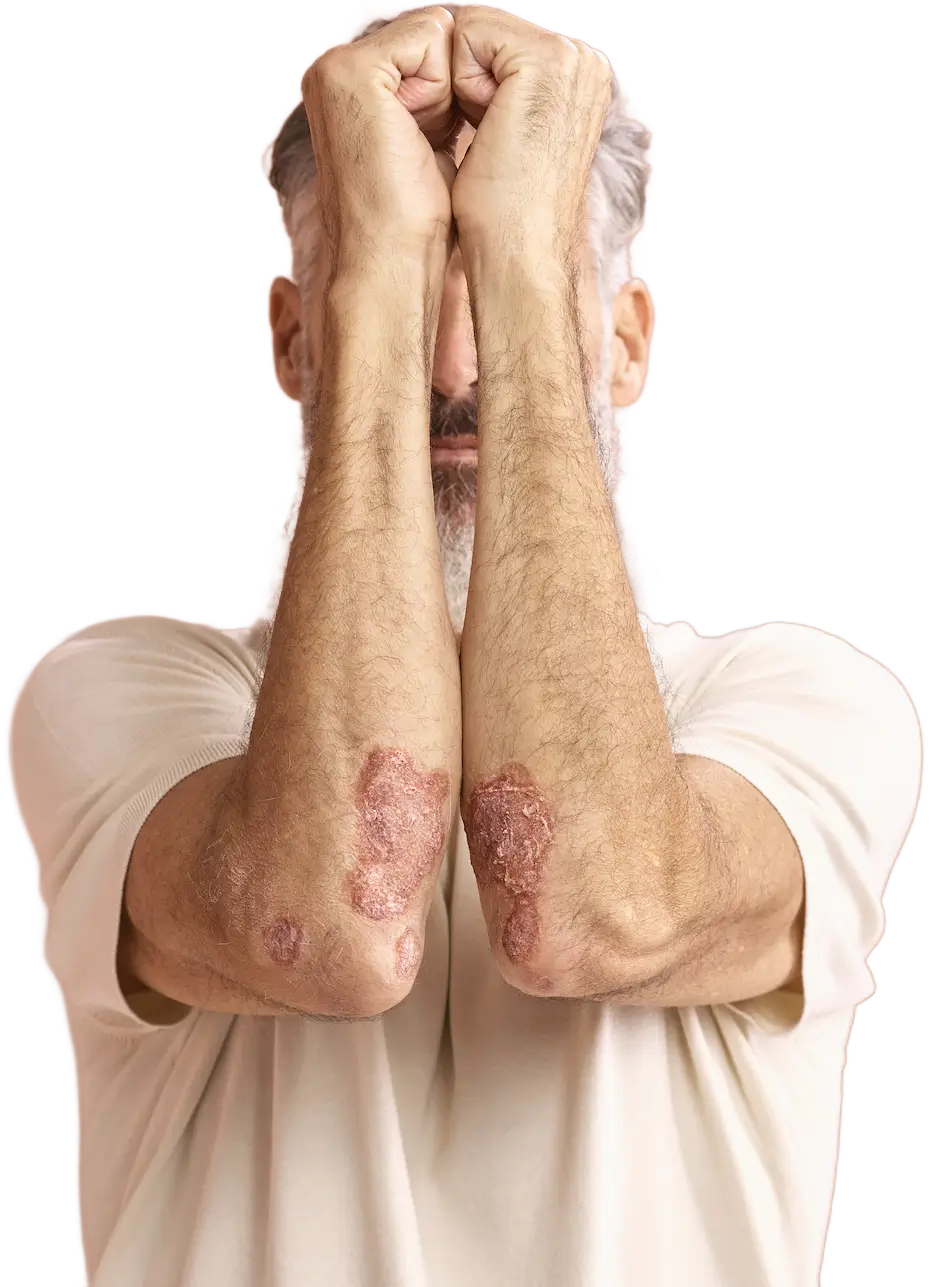
Psoriasis is another chronic skin condition that regularly affects the scalp. In psoriasis, you see red, dry patches in clearly defined areas, covered with thick white flakes. The disorder has an inherited component and is worsened by factors such as stress, smoking, infections, and excessive alcohol consumption. It is characteristic that psoriasis often also appears on knees, elbows and nails.
Alopecia areata, or bald patches, is a condition where round or oval bald areas suddenly appear on the scalp. It is considered an autoimmune disorder where the body mistakenly attacks its own hair follicles.
Also inflammations of individual hair follicles, folliculitis mentioned, occur regularly. These are caused by irritation, infection (with bacteria, yeast or fungi), or autoimmunity, and manifest as multiple small red sores, sometimes with a yellow cup full of pus.
Infections are the third major category of scalp problems. Impetigo is a bacterial infection that is highly contagious. You see red spots that become blisters, fill with pus, burst open and dry up into yellow scabs. The infection can spread all over your body if left untreated. Ringworm, also known as tinea, is a fungal infection that causes scaly areas where the hair is broken or fallen out. This infection is less contagious than impetigo but can cause permanent hair loss if not treated properly. Lice are a last form of infection, although this is actually a parasitic infestation. You notice small itchy bumps at the sting sites and can see the lice and their eggs with the naked eye.
Symptoms and Characteristics of Scalp Diseases
The symptoms of scalp disorders vary depending on the underlying cause, but there are some common features you can recognize. Understanding these symptoms helps you better understand your symptoms and communicate with your doctor.
itching is by far the most common symptom for scalp problems. This itching can range from mild and occasional to intense and almost constant. In some conditions such as lice or eczema, itching is the dominant symptom that keeps you busy day and night. The tendency to scratch is high, but this usually worsens the situation and can lead to wounds and even infections. Some people scratch unconsciously while they sleep, resulting in more damage and irritation the next morning.
Redness is another common sign. The affected areas on your scalp look inflamed, with a pink to bright red color. The intensity of the redness varies with the severity of the inflammation. In some conditions such as psoriasis, the red areas are sharply defined, while in eczema, they are often more diffuse with blurred edges that gradually merge into normal skin.
Peeling appears in different ways. In seborrheic eczema, you often see yellowish, oily flakes that accumulate at the base of the hair. In psoriasis, the flakes are thicker, whiter, and drier, and can build up into thick layers. In normal dry scalp, the flakes are smaller and whiter. These flakes often fall on your shoulders and are therefore visible on dark clothing, which is socially uncomfortable for many people.
Bumps and sores point to more specific disorders. In folliculitis, you see small, raised red bumps, sometimes with a yellow point of pus. These can be painful, especially when you touch or comb your hair. Impetigo develops blisters that fill with fluid, burst open and form yellow crusts. These can spread when you sit on them and then touch other parts of your scalp or body.
Pain and sensitivity occur in inflamed hair follicles, infections, or when you've scratched a lot. Your scalp can then feel delicate, and even gentle touching or washing your hair is uncomfortable. Some people experience a burning sensation, especially when exposed to water or specific products.
Hair loss is a frightening symptom that can occur with a variety of scalp conditions. In alopecia areata, you suddenly see bald, round patches. In ringworm, the hairs break off in the scaly zones. In seborrheic eczema and psoriasis, long-term inflammation can lead to temporary increased hair loss, although this usually recovers when the condition comes under control. Diffuse hair loss all over the scalp can indicate other causes such as hormonal changes, stress, or nutritional deficiencies.
Tingling and a burning sensations without visible abnormalities occur in what is called a sensitive scalp. This can be related to tension, stress or chronic pain, and is difficult to treat because there are no objective skin disorders to treat.
Where do scalp disorders occur?
While scalp disorders by definition affect your skull, there are specific patterns and preferred locations that can help identify the underlying cause. The extension to other parts of the body also provides important indications.
Most scalp disorders can spread all over your skull, but they often start in specific areas. The hairline, where your scalp meets your forehead, is a common starting point, especially for seborrheic eczema. This zone is rich in sebaceous glands and is therefore susceptible to disorders related to sebum production.
The top and back of the head, and the area behind your ears, are common areas for psoriasis. Here, sharply defined red spots with thick white flakes can occur. These spots can range in size from coins to palms and can coalesce into larger areas.
The area behind the ears and neck is also susceptible to both seborrheic eczema and contact allergies. Products such as shampoo and conditioner rinse these areas and may cause irritation. The friction of clothing and perspiration in the neck also make this a vulnerable zone.
In alopecia areata, the bald patches often occur asymmetrically and can occur anywhere on the scalp. They are usually round or oval and sharply bounded, surrounded by normal-looking hair and scalp. Sometimes you see several bald spots forming at the same time.
Folliculitis can occur anywhere on the scalp where there are hair follicles, but often gets worse in areas where there is more friction, such as where a hat or cap is worn. Places that perspire more are also more sensitive.
Many scalp conditions aren't limited to just your skull. Seborrheic eczema also regularly appears in the eyebrows, the beard in men, around the nose, on the eyelids and in and behind the ears. The face, especially the T-zone, may also be affected. This specific pattern is actually diagnostic and helps doctors recognize seborrheic eczema.
In addition to the scalp, psoriasis also typically occurs on the extended side of the knees and elbows. The nails can show the oil spot phenomenon, where yellowish spots are visible under the nail, or small pits in the nail surface. This combination of symptoms affecting the scalp, joints and/or nails is very characteristic of psoriasis.
Atopic eczema on the scalp is often associated with eczema in the elbow creases, knee cavities, wrists and sometimes the face. This condition rarely occurs only on the scalp.
Impetigo can start on the scalp but spreads easily to the face, neck, and beyond the body when you first touch the inflamed areas with your hands and then other parts of the body.
In infections such as ringworm, the abnormalities are usually limited to the scalp itself, although in principle the fungus can also affect other parts of the body. The concentration on the scalp is due to the warm, humid climate that can occur there and the presence of hair follicles.
Heb je last van Scalp disorders?
Laat je huid beoordelen door een erkende dermatoloog via de Skindr app. Upload foto's en krijg binnen 48 uur een diagnose met persoonlijk advies. Geen wachtkamer, geen verwijsbrief nodig.
Treatment of scalp disorders
The treatment of scalp problems depends very much on the underlying cause, but there are some general principles and specific approaches that are often effective. The goal is always to alleviate the symptoms, address the cause and prevent further damage.
If a bacterial infection such as impetigo is the cause, your doctor prescribes a course of antibiotics. In mild cases, a topical antibiotic cream or ointment may be sufficient. In case of more extensive infections or when topical treatment does not work, antibiotics in tablet form are necessary. It is important to complete the full course, even if the symptoms disappear earlier, to prevent the infection from coming back or bacteria becoming resistant.
Fungal infections such as ringworm require treatment with antifungal drugs. A topical cream or lotion may be effective for superficial infections, but a pill treatment is almost always necessary on the scalp because the inflammation at the hair follicles can penetrate deeply.\ This treatment usually takes several weeks because fungi are persistent and take time to eliminate all traces. Even after the symptoms disappear, it is important to complete the treatment to prevent relapse.
In eczema and other inflammatory diseases, topical cortisone-based agents play an important role. For use on the scalp, they exist in the form of lotions, emulsions, oily gels, foams or shampoos. The agent is applied to the affected areas and massaged gently. Because the scalp has a rather thick texture, powerful agents are often needed. When you use cortisone lotions according to your doctor's advice, this is a perfectly safe treatment. After improvement, it is gradually phased out.
For seborrheic eczema, special shampoos are often the first treatment step. Anti-dandruff shampoos help reduce flaking, especially those containing specific antifungal ingredients, as they combat the yeast that plays a role in seborrheic eczema. You use these shampoos a few times a week, massaging them thoroughly into the scalp and letting them work for a few minutes before rinsing them out. In persistent cases, your doctor may also prescribe a cortisone lotion to apply to the scalp.
In scalp psoriasis, treatment is sometimes more complex. In addition to cortisone preparations, special shampoos and lotions can help that soften and remove thick scales.In severe cases, your doctor may refer you to a dermatologist for more advanced treatments such as tablet medication.Lice requires specific treatment with lice shampoo or lotion, followed by careful combing out of the nits with a fine comb. A second treatment is often necessary after about a week to also kill the lice that have hatched. All family members should be monitored and treated at the same time if necessary. Bed linen, towels and clothes must be washed at a high temperature.
In alopecia areata, treatment depends on the severity. Small spots sometimes heal on their own within months. For more extensive bald patches, your doctor may give cortisone injections directly into the affected areas, or prescribe a strong cortisone preparation to apply locally. In some cases, other immunomodulatory treatments are being considered.
In addition to these specific treatments, there are general measures that help with almost all scalp disorders. Hydration is important: well-hydrated skin recovers better. Use mild, fragrance-free shampoos and don't wash your hair too often. Avoid very hot water that can further irritate the scalp. After shampooing, gently pat your scalp dry instead of rubbing hard. Cut your nails short to limit damage caused by scratching, and try not to scratch, no matter how tempting this is.
What doesn't work against scalp disorders
When dealing with scalp problems, there are several misconceptions about what should help. It's helpful to know which approaches are ineffective or may even be counterproductive, so you can invest time and effort into treatments that do work.
A common mistake is the idea that you can wash away a scalp problem by washing more often and more intensively. Frequent washing with harsh shampoos actually dries out your scalp and can make irritation worse. Mild, infrequent cleansing is usually more effective than intensive exfoliation.
The use of home remedies and natural remedies without medical advice is also often not effective. While some natural ingredients may be effective, there are no home treatments that match the effect of medical therapy for scalp disorders. Trying out a variety of oils, herbs and homemade blends can put extra strain on your scalp and cause allergic reactions. In addition, you are losing valuable time during which the condition can worsen.
Ignoring itching and just going on like nothing's wrong doesn't work either. Scratching causes microscopic damage to the skin that can trigger infections and worsen inflammation. It can also lead to permanent damage to hair follicles and thus to permanent hair loss. Actively addressing the itching, for example by asking your doctor for treatment, is essential.
In the case of fungal infections, it is a misconception that the infection will go away on its own. Ringworm and other fungal scalp infections are persistent and require specific antifungal treatment. Without adequate therapy, the infection can persist for months and cause permanent hair loss. Home treatments with various creams that you may still have lying around are also usually not suitable for scalp fungi.
With lice, it not only helps to remove the lice without also removing the nits thoroughly. Those nits contain developing lice that hatch within a few days and form a new generation. The idea that lice only occur with poor hygiene is also a misconception. Lice do not prefer dirty hair and are found in people of all hygiene standards.
Using strong cortisone preparations independently that you may still have from previous treatments is also not wise. These agents are potent and can damage the skin if used improperly. They can also actually worsen some conditions, such as fungal infections, by locally suppressing the immune system. Cortisone use should always be done under medical supervision.
The idea that sunlight solves all scalp problems is also not entirely correct. While sunlight can be beneficial for some conditions such as psoriasis, it actually worsens other problems. In addition, the scalp is difficult to expose to the sun without exposing your face and eyes, which in turn involves other risks. Controlled light therapy under medical supervision is safer and more effective than self-treatment with sunlight.
Frequently asked questions about scalp disorders
Are scalp disorders contagious?
This depends entirely on the cause. Infections such as impetigo are highly contagious and can easily be transmitted through direct contact or sharing towels, combs, and hats. Lice spread through direct hair-to-hair contact. Ringworm is less contagious but can be transmitted. Therefore, do not share hats or hairbrushes if you have one of these conditions. In contrast, eczema, psoriasis, seborrheic eczema, and alopecia areata are not contagious at all. You cannot transmit these disorders to others, no matter how much contact you have.
How long do scalp conditions last?
The duration varies greatly by condition. Acute infections such as impetigo usually heal within a few weeks with appropriate treatment. Lice can be completely removed within one to two weeks with adequate treatment. Fungal scalp infections usually require four to eight weeks of treatment. Chronic conditions such as psoriasis and seborrheic eczema may persist for a long time, with periods of improvement and worsening. Alopecia areata can last for months, but small spots sometimes heal spontaneously. Eczema can gradually improve with proper care but is often chronic.
Can I prevent scalp problems?
Prevention is certainly possible for many scalp disorders. Use mild, fragrance-free shampoos and avoid frequent washes with harsh products. Be careful with hair dyes and test new products on a small area first. If there are signs of irritation, discontinue the product immediately. Protect your scalp from extreme weather conditions and avoid excessive scratching. Do not share combs, brushes, or hats with others to avoid transmission of infections. If you are predisposed to certain conditions such as psoriasis or eczema, you can sometimes reduce outbreaks by limiting stress, sleeping well and living a healthy lifestyle.
When should I see a doctor with a scalp problem?
See your doctor if your scalp symptoms persist for more than two weeks without improvement, if you experience intense itching or pain, if you have visible sores or purulent bumps, if bald patches suddenly occur, or if the symptoms affect your daily life. Professional advice is also important if you suspect you have an infection or when over-the-counter treatments do not help. For babies and young children with scalp problems, it is wise to contact a doctor earlier.
Will my hair grow back after a scalp condition?
In most cases, your hair will grow back completely after the scalp condition has healed. In alopecia areata, the hair usually recovers completely, although it can take months. Even with temporary increased hair loss due to eczema, seborrheic eczema or stress, the hair comes back. However, fungal infections can cause permanent damage to hair follicles if not treated in time, resulting in permanent bald spots. Long-term, severe (autoimmune) inflammation can also sometimes have permanent effects on hair follicles. Early treatment maximizes your hair's chances of full recovery.
Can stress and diet affect scalp problems?
Absolutely. Stress is a known trigger for outbreaks of psoriasis, eczema, and seborrheic eczema. Stress can also lead to increased hair loss and sensitive scalp. Stress management can therefore help keep your scalp healthier. When it comes to nutrition, certain deficiencies such as iron deficiency can contribute to hair loss. A balanced diet with sufficient vitamins and minerals supports a healthy scalp. Omega-3 fatty acids and zinc, for example, are associated with better skin health. Although diet alone is rarely the main cause of scalp problems, good nutrition does contribute to recovery and prevention.


.svg)
