

.webp)


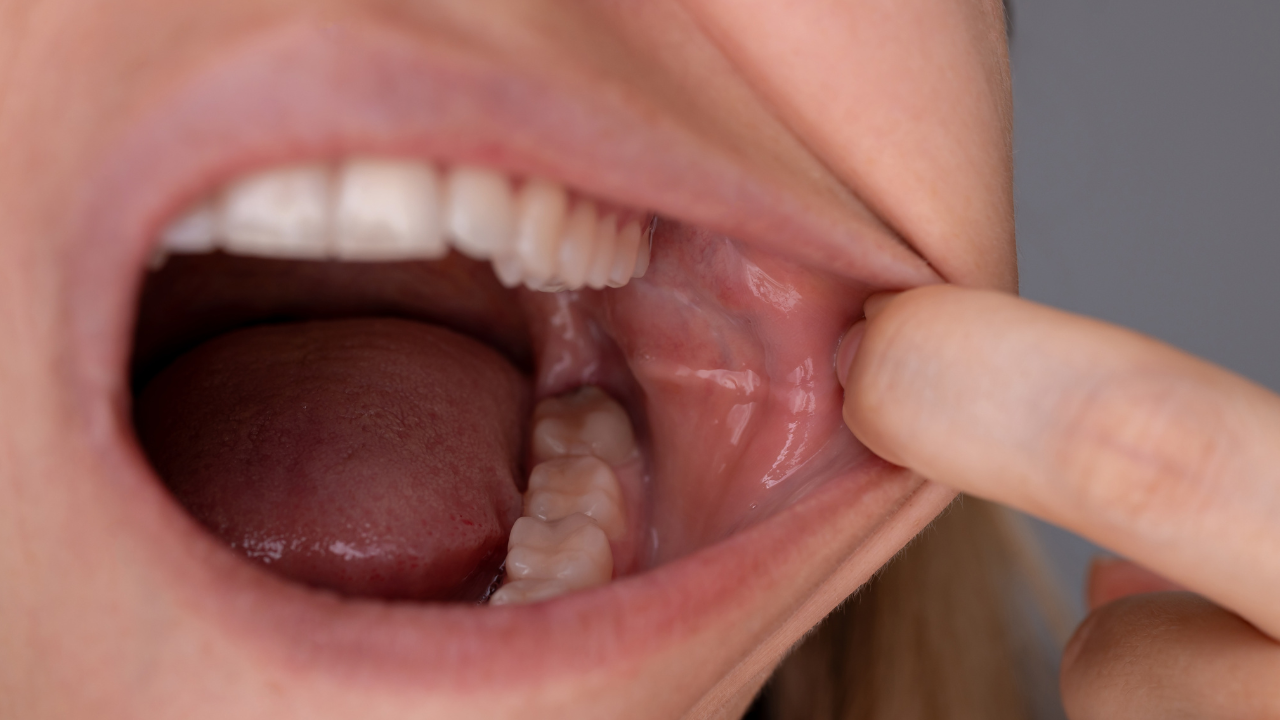
What is a viral infection of the oral mucosa?
Viral infections of the oral mucosa are a diverse group of disorders that are all caused by viruses but can manifest themselves in different ways. These infections can cause lesions on your lips, tongue, palate, cheeks, and throat. Sometimes the mouth infection is an isolated condition, but it can also be part of a wider viral illness that affects your entire body.
The most common viral mouth infection is undoubtedly the cold sore, called herpes labialis in medical terms. It is caused by the herpes simplex virus type 1. The interesting thing about this virus is that it is extremely common: between fifty and seventy percent of all people carry this virus in their bodies, often without knowing it. Most carriers never develop cold sores. The number of people who actually get visible cold sores is estimated at around 1.6 per thousand people per year.
Another well-known viral infection is chickenpox (“chicken pox” in the Netherlands), caused by the varicella zoster virus. Almost everyone gets this during childhood. In addition to the characteristic blisters all over the body, blisters can also form in the mouth. The same virus can become active again later in life and then cause shingles, also known as zona or herpes zoster. This affects around three out of every thousand people who visit their GP. In fifteen to twenty percent of these cases, the blisters appear in the head and neck area, sometimes including the oral cavity. Shingles is more commonly seen in elderly people and patients with weakened immunity (due to medication or illness)
In addition, there are several other viruses that can infect your oral mucosa. The human papillomavirus, better known as HPV, can not only cause genital warts and cervical cancer, but also infect the oral mucosa. Fortunately, HPV infection of the mouth is relatively rare: only affects around 0.4 percent of the population.
Finally, there are enteroviruses such as the Coxsackie virus, which can cause herpes angina and hand-foot-mouth disease, and the Epstein Barr virus (EBV), which is responsible for mononucleosis. All these viruses have their own characteristics, but they share one thing: they can all affect your oral mucosa.
Heb je last van Viral infection of the oral mucosa?
Laat je huid beoordelen door een erkende dermatoloog via de Skindr app. Upload foto's en krijg binnen 48 uur een diagnose met persoonlijk advies. Geen wachtkamer, geen verwijsbrief nodig.
How do viral oral mucosal infections occur?
Each virus has its own way of entering your body and causing infections, but there are common patterns. Understanding these mechanisms helps to understand why some people are more susceptible than others.
The herpes simplex virus spreads mainly through direct contact. Infection usually occurs in childhood, often via kissing or sharing cutlery and glasses with someone who has an active cold sore. The special thing about this virus is that it never disappears from your body after the first infection. It retreats into a nerve in your face, where it goes into a kind of hibernation, as it were. There, it can stay calm for years without causing problems. But under certain circumstances, the virus wakes up and travels back to your skin or oral mucosa, where it causes blisters again.
What exactly does the virus work for? UV radiation from the sun or tanning beds is a known trigger. Fever, cold and stress can also activate the virus. Fatigue, menstruation and local injuries are also seen as triggering factors. At the first infection, only one percent of the children develop obvious symptoms: a pronounced blistering inflammation of the oral mucosa with fever. The other ninety-nine percent barely notice the infection.
The varicella zoster virus, responsible for chickenpox, spreads through the air and contact with the fluid in the blisters. It is extremely contagious. After chickenpox, this virus also stays in your body for life, hidden in nerve cells. If the immune system is weakened or in old age, the virus can become active again, but in the form of shingles. This explains why shingles mainly occurs in elderly people and people with reduced immunity: their immune system is less able to control the dormant virus.
Enteroviruses such as the Coxsackie virus also spread through direct contact and through contaminated food or water. These viruses often cause epidemics, especially in daycare centers and schools. The virus enters through your mouth or respiratory tract and then multiplies in your intestines, hence the name enterovirus. From there, it spreads through your body and can reach various organs, including your oral mucosa.
The human papillomavirus mainly occurs in people with reduced immunity and can be transmitted through direct contact. Children, for example, can transfer hand warts to their mouths by sucking on their fingers. Sexual contact is another transmission route, which explains why oral HPV infections sometimes occur in adults.
The Epstein Barr virus, which causes mononucleosis, spreads through saliva and is therefore also known as kissing disease. After infection, it can take weeks before you become ill. The virus infects specific white blood cells and spreads through your bloodstream throughout your body, including your mouth and throat.
Symptoms and characteristics of viral oral mucosal infections
The different viruses each cause their own characteristic symptoms, so they are usually easy to distinguish from each other.
Cold sores often start with a burning, tingling sensation in a specific area of your lip or around your mouth. This warning signal precedes the appearance of the actual blisters and can last from a few hours to a day. Subsequently, groups of small blisters form on a red, inflamed surface. These blisters are filled with a clear liquid. After a few days, the vesicles burst and crusts form. In your mouth itself, the blisters break down more quickly due to movement and contact with saliva, causing superficial sores. This entire cycle usually takes one to two weeks, after which the lesions heal spontaneously without leaving scars. During this period, the spot can be quite sore, especially when eating and drinking.
You can recognize chickenpox by its characteristic rash all over your body: small red bumps that quickly turn into blisters filled with clear liquid. These blisters appear in different waves, allowing you to see fresh bumps, blisters, and scabs at the same time. Blisters may also appear in your mouth, although they are less noticeable there among all other body symptoms. The mouth blisters are often painful, which can make eating and drinking difficult. After about ten days, the blisters dry out and scabs form. Chickenpox is often accompanied by fever, tiredness, and general malaise.
Surprisingly enough, facial shingles sometimes start with a toothache. This is because the virus moves along a nerve that provides the sensation in your teeth. Only after a few days do the typical blisters appear. The most characteristic feature of shingles is that the blisters are confined to one side of your body and do not cross the midline, except sometimes at the level of your palate. The blisters appear in a band or strip that follows the course of the affected nerve. Shingles in your mouth and face can be quite painful. Even after the blisters have healed, an annoying, sometimes burning pain can remain that can last for weeks or even months. This is called post-herpetic neuralgia and occurs mainly in the elderly.
Herpes angina, caused by the Coxsackie virus, occurs mainly in children. Before the blisters appear, children often already feel ill with fever, headache, abdominal pain and muscle aches. Then small blisters are formed surrounded by a pale ring, usually on the soft palate, uvula and tonsils. An important distinguishing feature is that in herpes angina, in contrast to herpes simplex infections, there are no blisters on the gums. The injuries are also less painful and present for a shorter time than with cold sores.
Hand-foot-mouth disease provides a very recognisable pattern. You'll see a red, spotty rash on the skin, along with painless blisters in the mouth and palms and soles. The blisters are often on the tongue and the inside of the cheeks. Children may have some difficulty eating and drinking, but they are generally not very ill. The disease heals on its own within about five days.
HPV infections in your mouth appear as cauliflower-like warts or small lumps, usually on the inside of your cheeks. They are usually not painful and grow slowly. Sometimes they disappear on their own, but they can also last for years.
Mononucleosis is accompanied by tiredness, fever, sore throat, and swollen glands in your neck. You can get painful sores in your mouth. A typical feature is that you feel extremely tired, sometimes for weeks or months.
Where do viral oral mucosa infections occur?
The location of the blisters and lesions varies by virus type and is often an important indication for diagnosis.
Cold sores appear classically at the transition between your lip and normal facial skin, often on the upper lip. The blisters can also extend to the skin around your mouth. Inside your mouth, lesions can occur on your gums, the hard palate, and the inside of your lips. The location often remains the same for recurring episodes: once you have had a cold sore in a certain spot, there is a good chance that later outbreaks will return to the same spot.
In the case of chickenpox, the distribution is more random. Blisters can form anywhere in your mouth: on your tongue, cheek lining, palate, and gums. They are part of a generalized rash that affects your entire body, with the torso often the most affected.
Facial shingles follow the course of one or more nerves. One side of your face may be affected, with blisters that extend from your forehead, over your cheek, to your mouth. When the optic nerve is involved, blisters may appear around your eye, requiring medical urgency due to the risk of eye complications. In your mouth, the blisters usually stay on one side, except on your palate where they may cross the midline.
Herpes angina is limited to the back of your mouth: your soft palate, uvula, and tonsils. The front part of your mouth, including your gums and lips, is spared. This helps distinguish it from herpes simplex infections.
Hand-foot-mouth disease shows blisters spread throughout your mouth, but especially on your tongue and cheek mucosa. The characteristic triptych of the mouth, hands and feet usually makes the diagnosis clear.
HPV warts often appear on the inside of your cheeks, but can also be on your tongue, gums, or palate. In children who suck their fingers, we often see the warts in the same place in the mouth where the finger comes.
In mononucleosis, sores can occur all over your mouth and throat, although strep throat and swollen tonsils are often the most noticeable.
Heb je last van Viral infection of the oral mucosa?
Laat je huid beoordelen door een erkende dermatoloog via de Skindr app. Upload foto's en krijg binnen 48 uur een diagnose met persoonlijk advies. Geen wachtkamer, geen verwijsbrief nodig.
Treatment of viral oral mucosal infections
The treatment of viral mouth infections depends heavily on which virus is the cause and how serious the symptoms are. For many viral infections, there is no specific treatment and symptom management is all that is needed.
With cold sores, there is debate about the value of treatment. In people with normal immunity, there is insufficient evidence that antivirals such as tablets or creams actually accelerate recovery. They are therefore not recommended as standard, even for people who regularly suffer from recurrent cold sores. After all, the infection usually heals on its own within one to two weeks. However, you can take anti-symptom measures: cold compresses can provide relief, and painkillers such as paracetamol help with the discomfort.
Chickenpox also heals spontaneously and usually does not require specific treatment. The focus is on relieving symptoms. Antipruritic drugs can help against itching. Bathing lukewarm can also provide relief, but then gently pat dry instead of rubbing hard, as this can open up blisters and cause scars. Paracetamol can be used for high fever, but be careful with the dose, especially for children.
A different approach applies to facial shingles. Antiviral tablets are often prescribed here, especially for people with reduced immunity and injuries around the eye. This medication may reduce the severity and duration of the infection and may also lower the risk of developing long-term nerve pain. Pain management is important for shingles. In the case of severe pain or prolonged nerve pain after healing of the blisters, stronger pain relievers or even special nerve pain medications may be required.
Enteroviruses such as these that cause herpes angina and hand-foot-mouth disease only require symptomatic treatment. This means that you treat the symptoms without attacking the virus itself. Pain relievers, sufficient fluids and soft food are usually sufficient. The infections heal on their own within a few days to a week.
HPV warts in your mouth often disappear spontaneously, sometimes only after months or years. When they persist or cause inconvenience, there are several options. Your doctor can freeze the warts with liquid nitrogen, a technique called cryotherapy. Laser therapy is another option, where the wart is burned away. In some cases, surgical removal is chosen. The choice depends on the size, location and number of warts.
In the case of mononucleosis, treatment consists of resting, drinking enough and painkillers for sore throat and fever. Antibiotics don't help because it's a viral infection, and can itself lead to an extensive rash. It's especially important to give your body time to recover. This can take weeks to months. You should avoid strenuous exercise in the first few weeks, as mononucleosis can cause your spleen to be enlarged and there is a risk of spleen rupture in the event of a blow or fall.
An important aspect of all viral mouth infections is preventing further spread. Do not share food and drink utensils, towels, or other personal items during an active infection. Wash your hands regularly. For babies with cold sores, it is wise to sterilize pacifiers and pacifiers.
What doesn't work against viral oral mucosal infections?
As with many health issues, there are misconceptions about what works and what doesn't work in viral mouth infections. It's helpful to know what not to waste your time on.
Antibiotics are completely useless against viral infections. They only work against bacteria, not viruses. Nevertheless, they are sometimes prescribed incorrectly, for example for mononucleosis. This does not help against the infection and can even lead to side effects. In fact, in mononucleosis, a certain type of antibiotic can actually cause an annoying rash.
Antiviral cold sore creams have been disappointing in scientific research. They don't work as well as many people think and are therefore not recommended as standard. At most, they can reduce the duration of the infection by half to one day, but this effect is often so small that it is barely noticeable.
Home remedies such as dabbing cold sores with alcohol, tea, honey or toothpaste have no proven effect. Some of them can even irritate your skin and delay recovery. The same goes for the use of garlic, vitamin E oil or other natural products. Even though some people swear by it, scientific evidence of their effectiveness is lacking.
The idea that you can treat chickenpox by bathing your child with salt, vinegar, or oatmeal may sound old and familiar, but these additions have no added value. Ordinary lukewarm water works just as well against itching.
For facial shingles, it helps to recognize and treat early with antiviral medication. But if you wait too long and the rash is a few days old, treatment makes less and less sense. The virus has already multiplied and the damage has been done. If immunity is weakened and new blisters are still forming, it does make sense to start taking virus inhibitors longer than 48 hours after the first symptoms. Another misconception is that boosting your immune system with vitamin C, zinc, or other supplements protects you against viral mouth infections or helps them heal faster. In people with a normal nutritional status, there is no evidence that additional supplements help. A healthy, varied diet provides your body with everything it needs to deal with viral infections. However, sufficient rest can support recovery.
Finally, isolating children with chickenpox or hand-foot-mouth disease has only a limited effect. This is because these diseases are contagious even before the rash appears. By the time you see that your child is ill, they have already been able to infect others. However, staying at home is wise to limit further spread and to give your child a rest.
Frequently asked questions about viral oral mucosal infections
Are viral mouth infections contagious?
Yes, most viral mouth infections are highly contagious. Cold sores can be transmitted through direct contact, such as kissing, or by sharing cutlery, glasses, and towels. You are most contagious when the blisters are open. The chickenpox spreads through the air and contact with the fluid in the blisters, making it extremely contagious. Shingles is less contagious than chickenpox, but someone without immunity can get chickenpox from someone with shingles. Hand-foot-mouth disease and herpes angina spread through direct contact and contaminated saliva. It is wise to take extra hygiene measures during an active infection and to avoid close contact with others, especially babies and people with reduced immunity.
How long do these infections last?
This varies by virus. Cold sores usually last one to two weeks from the first tingling to complete healing. Chickenpox heals in about ten to fourteen days, although the fever and malaise often disappear after just a few days. Shingles can last two to four weeks, and the pain can unfortunately last for months or even years. Hand-foot-mouth disease usually goes away within five to seven days. Mononucleosis is a marathon disease: the acute phase with fever and sore throat lasts one to two weeks, but fatigue can last for months. HPV warts can persist for years if left untreated.
Can you prevent these infections?
Some yes, others not. For chickenpox, there is a vaccine that is part of the standard vaccination program in some countries, although not in Belgium. A shingles vaccine is available for the elderly and may reduce the risk of this painful condition. An HPV vaccine protects against certain strains that can cause oral cancer. There is no vaccine for cold sores, but you may be able to prevent outbreaks by avoiding triggers. Use sun protection on your lips, get enough rest and control stress. There is no vaccine for the other viral infections and it is difficult to completely prevent infection. Good hand hygiene does help to limit the spread.
When to see a doctor
Most viral mouth infections are easy to take care of yourself and do not require a doctor's visit. There are, however, exceptions. See a doctor if you have blisters in your mouth accompanied by a high fever, severe pain, or if you have trouble eating and drinking because of the pain. In case of shingles in the face, especially around the eye, rapid medical intervention is important to prevent eye problems. Babies and young children with extensive oral infections who do not want to drink need medical attention due to the risk of dehydration. Even if you have a reduced immune system and develop a viral mouth infection, it is wise to contact your doctor.
Can these infections come back?
Some of them do. Cold sores recur regularly in many people, sometimes several times a year. After all, the virus is in your body for life. Shingles can also recur, although this is less common than with cold sores. You usually only get chickenpox once in a lifetime; after that, you're immune. The same usually applies to mononucleosis. You can get hand-foot-mouth disease more often because there are different strains of the virus. HPV warts can come back after removal if the virus has not completely disappeared.
Are there long-term complications?
For most people, viral mouth infections heal with no lasting effects. An exception is post-herpetic neuralgia after shingles, in which the nerve pain can persist for a long time. This is particularly common among older people. In very rare cases, shingles around the eye can cause permanent eye problems if not treated in time. HPV infections in the mouth are associated with an increased risk of oral cancer, especially in people who smoke or drink a lot of alcohol. For other viral infections, long-term complications are extremely rare.
Bronnen
- Health & Science, Viral Infections of the Oral Mucosa
- eBPNet (Evidence-Based Practice Network)
- Thuisarts.nl, various articles about viral infections
- Dutch General Practice Association (NHG), various standards



.svg)
