

.webp)


What is solar keratosis?
Solar keratosis, called actinic keratosis in medical terms, is a skin change that occurs due to prolonged exposure to sunlight. The word “actinic” refers to radiation, in this case ultraviolet radiation from the sun, and “keratosis” means a disruption in the skin's keratinization process.
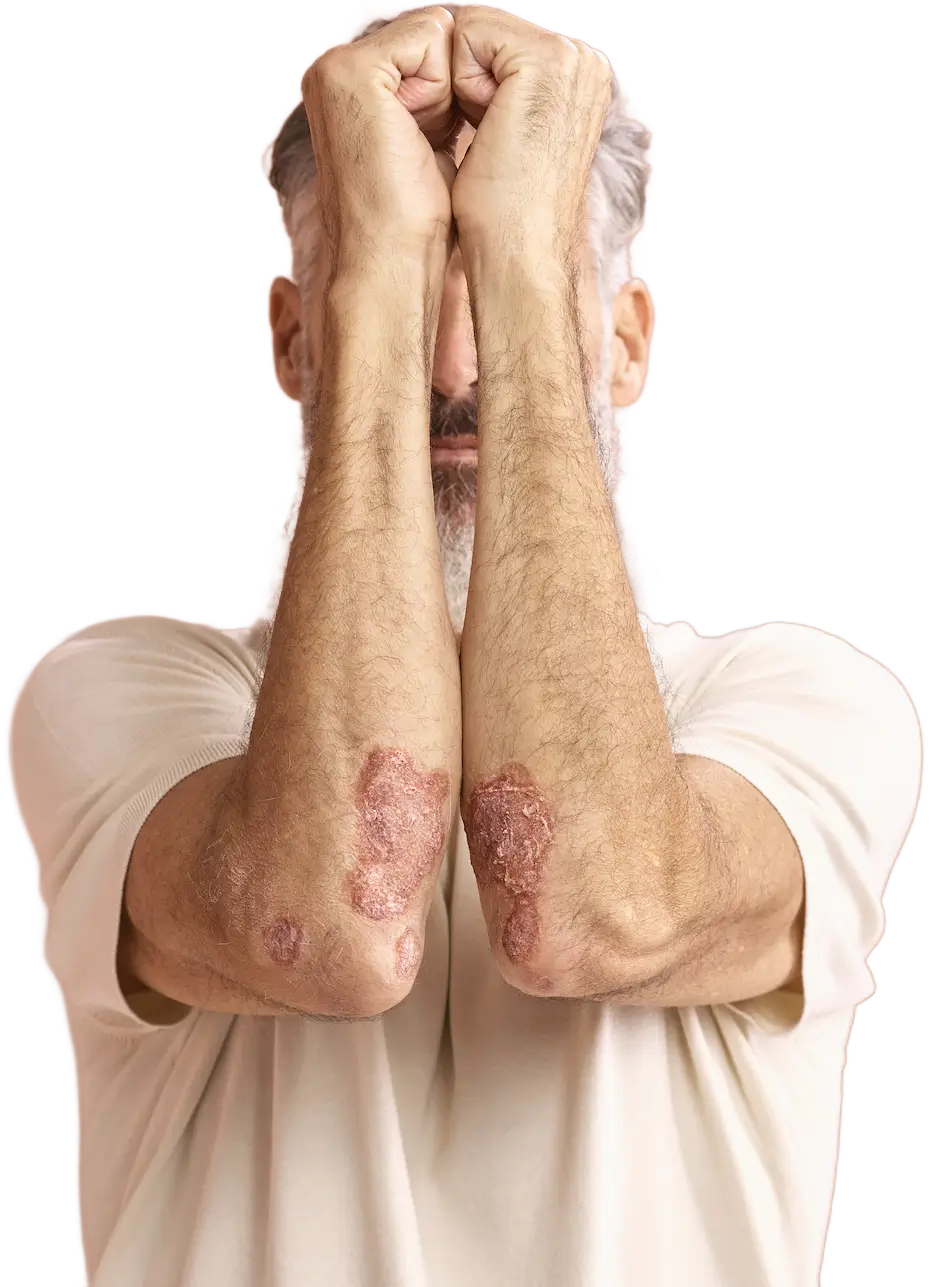
The condition appears as rough, scaly patches on your skin. These can range in color from red to skin, sometimes even light brown. The spots feel rough when you run your fingers over them, like there's sandpaper on your skin. This rough feeling is due to the accumulated, misshaped horny cell layers. Sun keratosis develops on parts of the body that have been intensively exposed to sunlight over many years, such as your face, bald scalp, earlobes, neck, décolleté, and the backs of your hands.
The most important thing to know about solar keratosis is that it is considered a precursor to skin cancer. This sounds alarming, but it doesn't mean that every solar keratosis automatically grows into cancer. The risk of an individual injury evolving into skin cancer is relatively small, less than one in a thousand per year. However, because many people develop multiple injuries and these may continue to occur, the cumulative risk is higher. Around twenty percent of people over the age of sixty develop skin cancer that started as solar keratosis at some point.
This skin change occurs mainly in older people with a light skin tone. People with pale skin, light eyes, and light hair have the highest risk. Their skin has less natural pigment that protects against UV rays. People who have worked or recreated a lot in the sun all their lives, such as gardeners, construction workers, sailors or golfers, are at increased risk. The development of solar keratosis is cumulative. It's not one sunburn that causes it, but the sum of years of exposure. That's why you see solar keratosis mainly in people over fifty.
Heb je last van Solar keratosis?
Laat je huid beoordelen door een erkende dermatoloog via de Skindr app. Upload foto's en krijg binnen 48 uur een diagnose met persoonlijk advies. Geen wachtkamer, geen verwijsbrief nodig.
How does solar keratosis develop?
The development of solar keratosis is a gradual process involving cumulative damage to your skin cells caused by ultraviolet rays. Sunlight contains UV radiation that occurs in two main forms: UVA and UVB. Both penetrate your skin and damage the DNA of your skin cells. Your body has repair mechanisms that normally repair this damage, but with repeated and prolonged exposure, these mechanisms become overloaded.
When the DNA of skin cells is damaged and is not repaired correctly, the cells can behave abnormally. They begin to divide more rapidly and produce layers of corneum that are not properly organized. This leads to the accumulation of keratinized tissue that you feel like those rough, scaly patches on your skin. In the initial stages, the damage is microscopic and not visible. Year after year, sun exposure leads to more and more damaged cells. At some point, the changes become visible as small, red spots.
Without treatment or continuous exposure to the sun, the lesions can grow. They're getting bigger, thicker, and more elevated. The flakes are becoming more prominent and difficult to remove. Some lesions may be several inches wide and develop a thick, hard crust.
Symptoms and Characteristics of Solar Keratosis
Recognizing solar keratosis often starts with feeling the lesions before you see them clearly. When you stroke your forehead, nose, or bald scalp with your hand, you feel rough patches that don't feel smooth like the rest of your skin. This is often the first sign.
Visually, the lesions present themselves as small, red to skin-coloured spots. In the beginning they are often small, a few millimetres in diameter, and well delineated. The color may vary: some are bright red, others more pink or brown. The flakes on the lesions are characteristic. They are dry, rough flakes that are firmly attached to the skin. If you try to remove them, they resist and may even bleed slightly. This distinguishes solar keratosis from ordinary dry skin, where flakes come off easily.
As injuries age, they can become thicker and more elevated. Some develop a hard, horny crust that can grow to a few inches in size. The injuries usually cause no symptoms. There is no pain, no itching, no burning. This lack of symptoms is actually a pitfall, as it makes people less likely to seek help.
The distribution over the body follows the pattern of sun exposure. You often see multiple lesions on the face at the same time, with clusters on the forehead, nose, or cheeks. A bald scalp can be covered with dozens of minor injuries. This multiple character is typical and helps with recognition. The lesions are persistent and do not go away spontaneously, such as an itch or irritation. They stay in the same place for months and can even grow slowly.
In rare cases, an injury may begin to change in ways that cause concern. When solar keratosis evolves into skin cancer, the injury usually thickens, grows faster, can bleed without cause, or develops a raised, irregular edge. Such changes require immediate medical attention.
Where does solar keratosis appear?
Solar keratosis has a highly predictable distribution pattern that is directly related to chronic sun exposure. The face is by far the most common location. Within the face, the forehead, the bridge of the nose, the tip of the nose and the cheekbones are frequently affected because these areas face the sun horizontally and capture a lot of radiation prominently.
The bald scalp deserves special attention. In men with beginning hair loss, injuries occur first on the crown. As baldness increases, the affected area expands. In completely bald men, the entire skull may be covered with solar keratosis. This is one of the highest risk areas because the skin here has been unprotected for years.
The ears are surprisingly vulnerable, especially the upper half of the auricle and the rim. In men with short hair, the ears are fully exposed. The back of the neck, especially in people with short hair or updo, is often affected. The cleavage is a frequently affected area, especially among women, by open shirts, dresses and tops.
The hands, specifically the back, are constantly exposed. While driving, your hands are on the wheel in the sun. When working outdoors, they are constantly exposed to radiation. The palms are always spared because they face downwards. The outside of the forearms may also be affected by people who often wear shorter sleeves. Areas that never see sunlight, such as palms, soles and the area under clothing, are always spared.
Heb je last van Solar keratosis?
Laat je huid beoordelen door een erkende dermatoloog via de Skindr app. Upload foto's en krijg binnen 48 uur een diagnose met persoonlijk advies. Geen wachtkamer, geen verwijsbrief nodig.
Treatment of solar keratosis
The treatment has two goals: to remove existing lesions to prevent them from developing into skin cancer, and to prevent new injuries through good sun protection. The most common treatment method is cryotherapy, or freezing with liquid nitrogen. Your doctor or dermatologist applies liquid nitrogen to the injury using a spray or applicator. The extreme cold destroys the abnormal skin cells. The treatment only takes a few seconds per injury.
When freezing, you feel a burning, stinging sensation that lasts for a few seconds. After treatment, the area becomes white and feels numb. In the hours and days that follow, the injury may turn red, swell, and be painful. Sometimes a blister or crust forms. After about a week, the treated tissue begins to flake off and new, healthy skin appears underneath. The cosmetic result is usually good, although permanent depigmentation may occur in people with darker skin.
For more extensive areas with multiple injuries, photodynamic therapy is an option. A special cream is applied to the affected area that makes the abnormal cells more sensitive to light. After a few hours, the area is illuminated with a special lamp that activates the cream and selectively destroys the abnormal cells. The treatment can be quite painful during the exposure and also a few days afterwards. In the days after photodynamic therapy, the area becomes red, inflamed, and may flake. This is just a sign that the treatment is working. After one to two weeks, the skin calms down and the lesions are gone. A cream may also be prescribed for home use that disables rapidly dividing cells.
Consistent sun protection is absolutely essential for the prevention of new injuries. Use sunscreen daily with a minimum factor of 30, factor 50 is better. Apply the cream generously and repeat every 2 hours, especially after swimming or sweating. Wear protective clothing. A wide-brimmed hat effectively protects your face, ears, and neck. For people with a bald scalp, a hat or hat is essential. Avoid the sun during the strongest hours between 11 a.m. and 3 p.m. Remember that UV radiation also comes through clouds, so sun protection is also necessary on cloudy days.
What doesn't work for solar keratosis?
There are some misconceptions and ineffective approaches that are important to know. Ignoring solar keratosis in the hope that it will go away on its own is not an option. Solar keratosis does not disappear spontaneously. Without treatment, the lesions persist and may grow in size. The idea that sun exposure is “good” for solar keratosis because it makes the skin “stronger” is dangerous and completely false. Sunlight caused the problem in the first place, and further exposure only worsens the situation.
Home treatments with sharp objects to scratch or remove the lesions are ineffective and dangerous. At most, you remove the superficial flakes, but the underlying abnormal cells remain. Using common skin care products, even those with exfoliating properties, won't eliminate solar keratosis. The abnormality is too deep in the skin. Self-medication with creams without medical advice is risky. There are medical creams for solar keratosis, but they must be used under the supervision of a doctor.
Avoiding treatment for fear of pain or scarring is understandable but unwise. Modern treatments are relatively mild and the cosmetic result is usually good. The risk of not treating is greater than the minor inconveniences of treatment. Finally, the idea that you no longer have to pay attention after treatment is wrong. Treatment removes existing injuries but does not prevent new ones from occurring. Lifelong sun protection remains necessary.
Frequently asked questions about solar keratosis
Does every solar keratosis become skin cancer?
No, the majority of solar keratosis injuries do not progress to skin cancer. The risk per individual injury is small, less than one in a thousand per year. However, people with solar keratosis often have multiple injuries and continue to develop new ones, increasing the cumulative risk. That is why treatment makes sense, not because every injury is dangerous, but to minimize the risk.
Can I see if my solar keratosis is changing into cancer?
Some changes may indicate progression to skin cancer. Look for injuries that suddenly grow faster, thicken, rise above the skin, bleed spontaneously without being touched, or develop an irregular edge. Pain or itching in an injury that previously caused no symptoms can also be a warning sign. In case of doubt or concern, always have it checked by a doctor.
Do I have to have all solar keratosis treated?
It is wise to have all solar keratosis treated. Every injury carries a risk, no matter how small, and treatment is relatively easy. In addition, you prevent injuries from getting bigger and more difficult to treat. Your doctor can work with you to determine which injuries are a priority, but the ultimate goal is to remove all injuries.
Can solar keratosis come back after treatment?
A successfully treated injury does not usually come back to the exact same spot. However, new injuries can occur in other areas, because the underlying sun damage remains in your skin. That's why regular check-ups are important and you should continue to protect your skin from the sun. Think of treatment not as a one-off solution, but as part of a long-term strategy.
Is solar keratosis contagious?
Absolutely not. Sun keratosis is not an infection but a reaction of your skin to cumulative sun damage. You cannot transfer it to others by touch or otherwise. It is also not hereditary in a strict sense, although hereditary factors such as skin type do play a role in your sensitivity.
Do Vitamin D supplements help against solar keratosis?
No, vitamin D supplements do not treat or prevent solar keratosis. Although sunlight stimulates vitamin D production, the damage caused by UV radiation far exceeds the benefit of vitamin D. It is safer to get vitamin D through food or supplements than through sun exposure. For people with solar keratosis, strict sun protection is essential.
Bronnen
- Skindr dermatologists
- Gezondheidenwetenschap.be - Solar keratosis (actinic keratosis)
- Skin And New (HENW) - Skin Cancer Prevention Foundation
- Dutch Society for Dermatology and Venereology - Actinic Keratoses


.svg)
