

.webp)


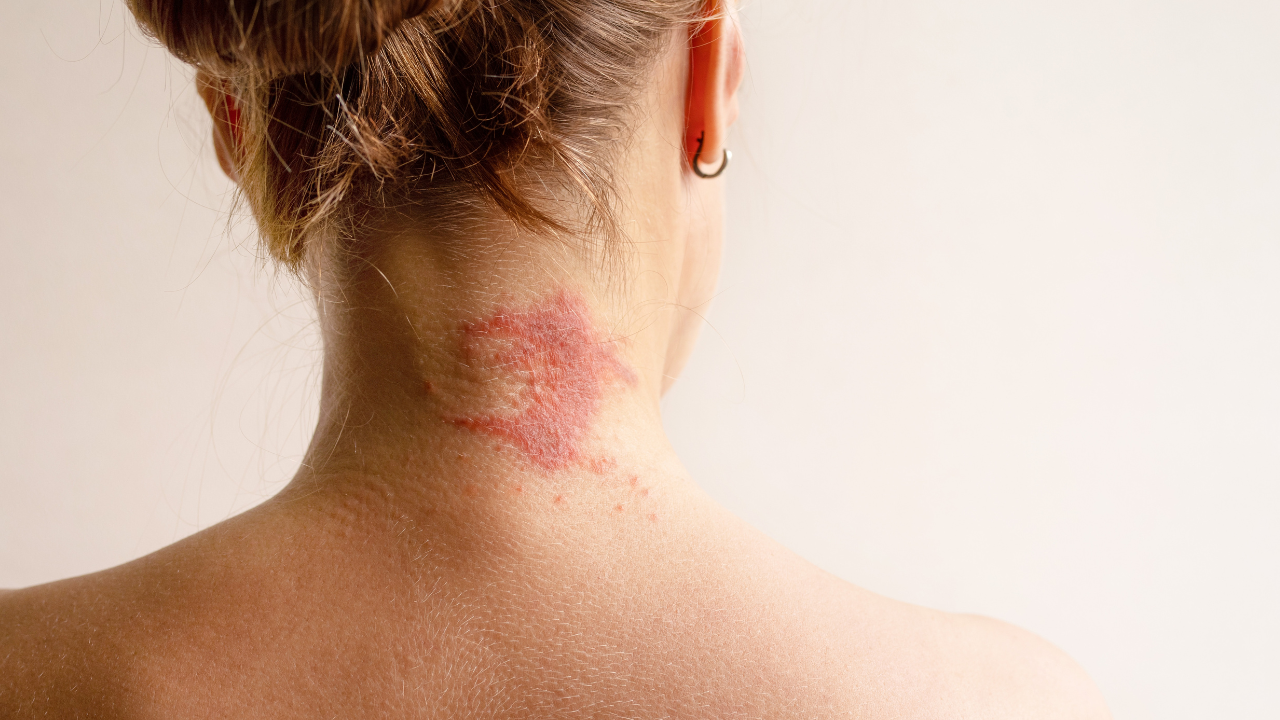
What is eczema?
Eczema is not a single disorder, but a collective name for various inflammatory conditions of the skin. These inflammations have a variety of causes and can occur at any time in your life, from baby to adulthood. What all forms have in common is that they lead to inflamed, irritated skin that is often intensely itchy, red and damaged.
An important fact: eczema is not contagious. You can't transmit it to others through touch, nor can you contract it from someone else. It is a reaction of your own skin to internal or external factors, in which the skin's immune system plays a role.
The skin of people with eczema has an impaired barrier function. Imagine your skin as a wall that protects your body against external stimuli. In eczema, that wall is weakened: it has cracks and holes that lose moisture and make it easier for irritants to enter. This explains why people with eczema often have dry, sensitive skin that responds quickly to various stimuli.
Eczema can manifest itself in various ways, from mild dryness to severe inflammation with blisters and skin thickening. The impact goes beyond just the physical symptoms. The itching can interfere with your sleep, which affects your energy levels during the day. Visible eczema on your hands or face can affect your self-confidence. Many people also struggle with unpredictability: periods when the skin is calm alternate with revivals where the symptoms suddenly worsen.
Heb je last van Eczema?
Laat je huid beoordelen door een erkende dermatoloog via de Skindr app. Upload foto's en krijg binnen 48 uur een diagnose met persoonlijk advies. Geen wachtkamer, geen verwijsbrief nodig.
How does eczema occur?
The development of eczema is complex and varies by type, but a disturbed skin barrier plays a central role in all forms. The outer layer of your skin acts as a protective shield. For people with eczema, this shield does not work optimally, making the skin more vulnerable to external stimuli.
Heredity plays an important role. If one or both parents have eczema, asthma, or hay fever, children are more likely to develop eczema as well. This genetic predisposition does not mean that you will definitely get eczema, but it does mean that your skin is more susceptible to inflammatory reactions. Bee atopic eczema, the most common form, is a genetic defect in the production of certain proteins that keep the skin barrier strong. The immune system in the skin also reacts differently: it shoots more quickly into ignition mode when in contact with normally innocent substances.
Contact eczema occurs due to external influences. In case of irritant contact eczema, substances such as cleaning agents or excessive water contact damage the skin barrier directly. Allergic contact eczema is an immune response: your body has learned to recognize a certain substance such as nickel or perfume as foreign and reacts violently to repeated contact.
Seborrheic eczema is related to a yeast that occurs naturally on the skin. In people with this form, the skin reacts too strongly to the normal presence of this yeast, leading to inflammation and scaling. Hormones and stress can enhance this response. Nummular eczema, with its characteristic coin-shaped patches, often has no clear cause. Presumably, extreme dryness of the skin plays a role, combined with minor damage.
A variety of triggers can make existing eczema worse. Stress affects your immune system and weakens the skin barrier. Cold, dry air in the winter draws moisture out of the skin. Sweating, abrasive clothing, certain foods, and emotional factors can all contribute to revives.
Symptoms and characteristics of eczema
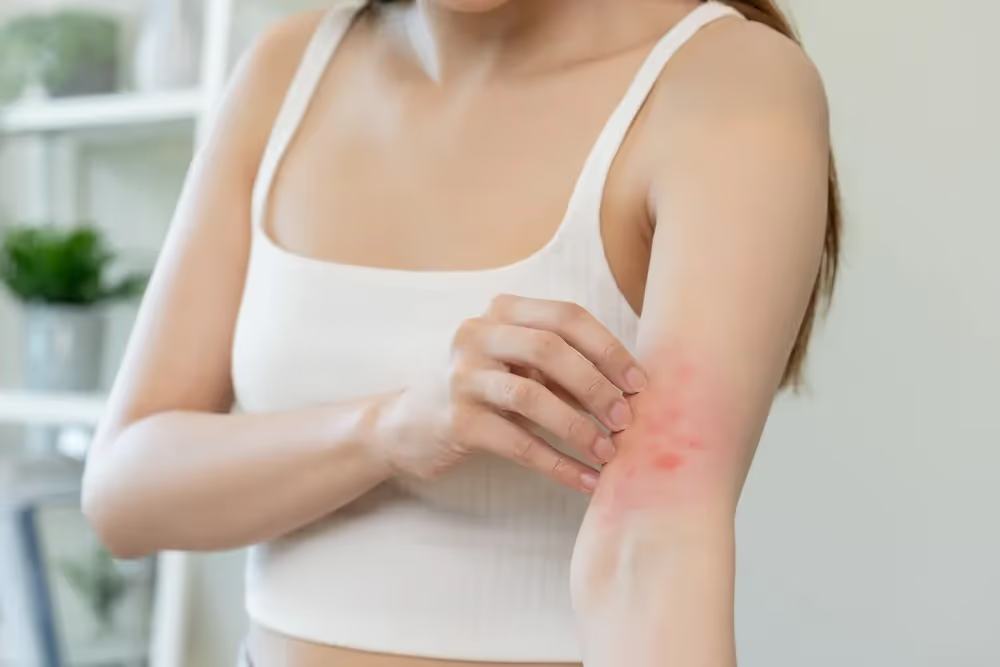
The most universal and annoying symptom is itching. This itching ranges from mild to unbearable and tends to worsen in the evening and night. The urge to scratch is often overwhelming, but scratching further damages the skin and worsens inflammation, leading to a vicious cycle.
Redness is another characteristic sign of active eczema. On lighter skin tones, this redness is clearly visible as bright red spots. On darker skin tones, eczema can show up as dark brown, purple, or greyish discolorations that are less noticeable but feel just as irritating. These discolorations can remain visible for months after healing.
Dryness and flaking are almost always present. The skin feels rough and constantly loses small flakes. In some forms, such as seborrheic eczema, the flakes are oily and yellowish. In acute phases, blisters can develop that are intensely itchy and can burst, making the skin wet and extra vulnerable to infections.
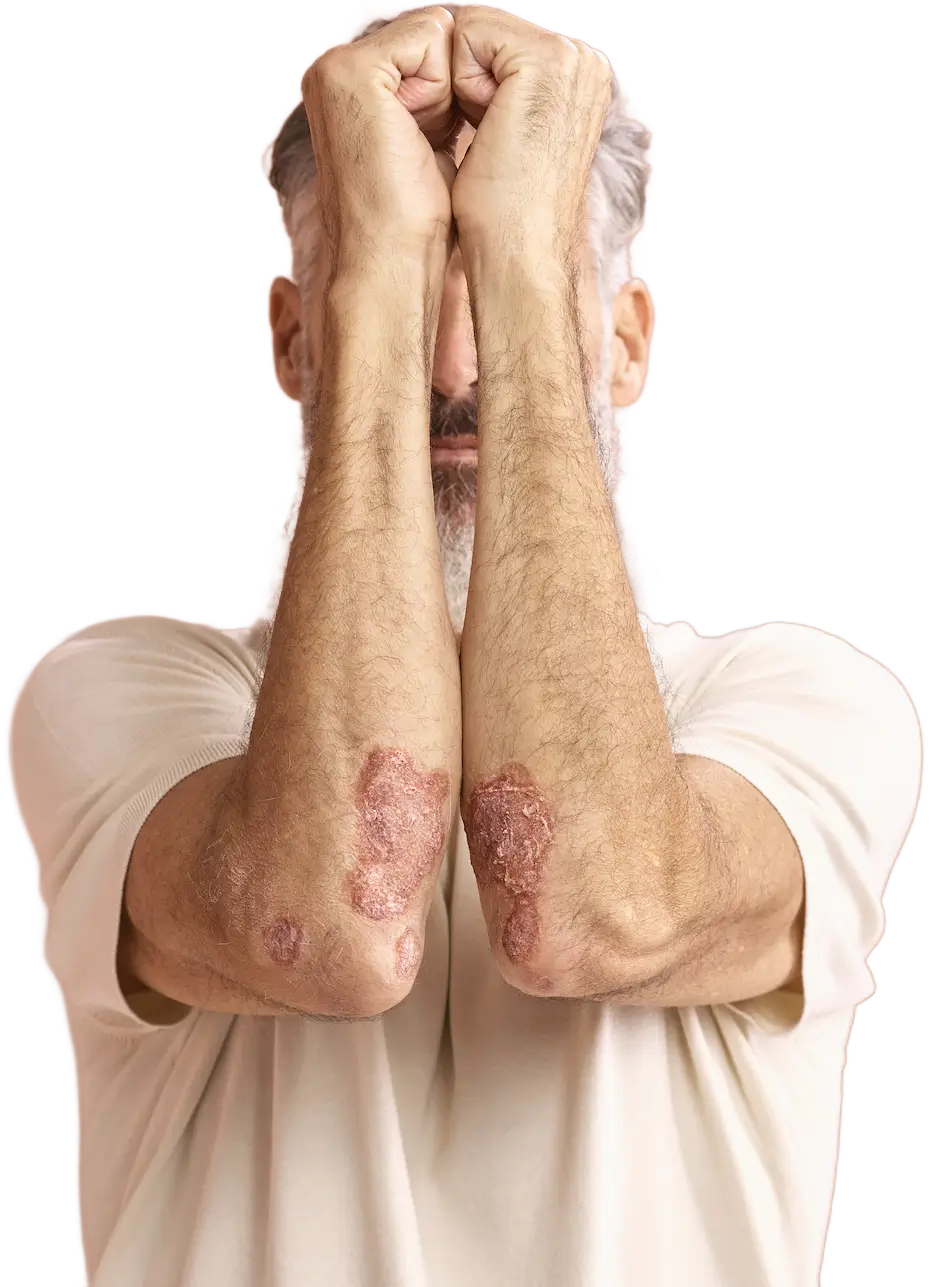
In chronic eczema, the skin thickens and takes on a leathery appearance. This process is called lichenification and is a result of prolonged inflammation and repeated scratching. The skin lines become deeper and more prominent, especially in areas that are often scribbled. Cracks and cracks in the skin are painful and occur mainly in areas where the skin moves, such as the hands and around joints.
The severity of symptoms varies greatly between people and over time. Some people only have mild symptoms, others suffer from severe eczema that affects large parts of their body and restricts their daily life.
Where does eczema come from?
The locations where eczema appears depend a lot on the type of eczema and age. In babies with atopic eczema, the first signs often appear on the cheeks, forehead, and scalp. As children get older, it typically moves to the folds of the body. The elbow folds and knee cavities are classic locations; the wrists, ankles and neck are also often affected.
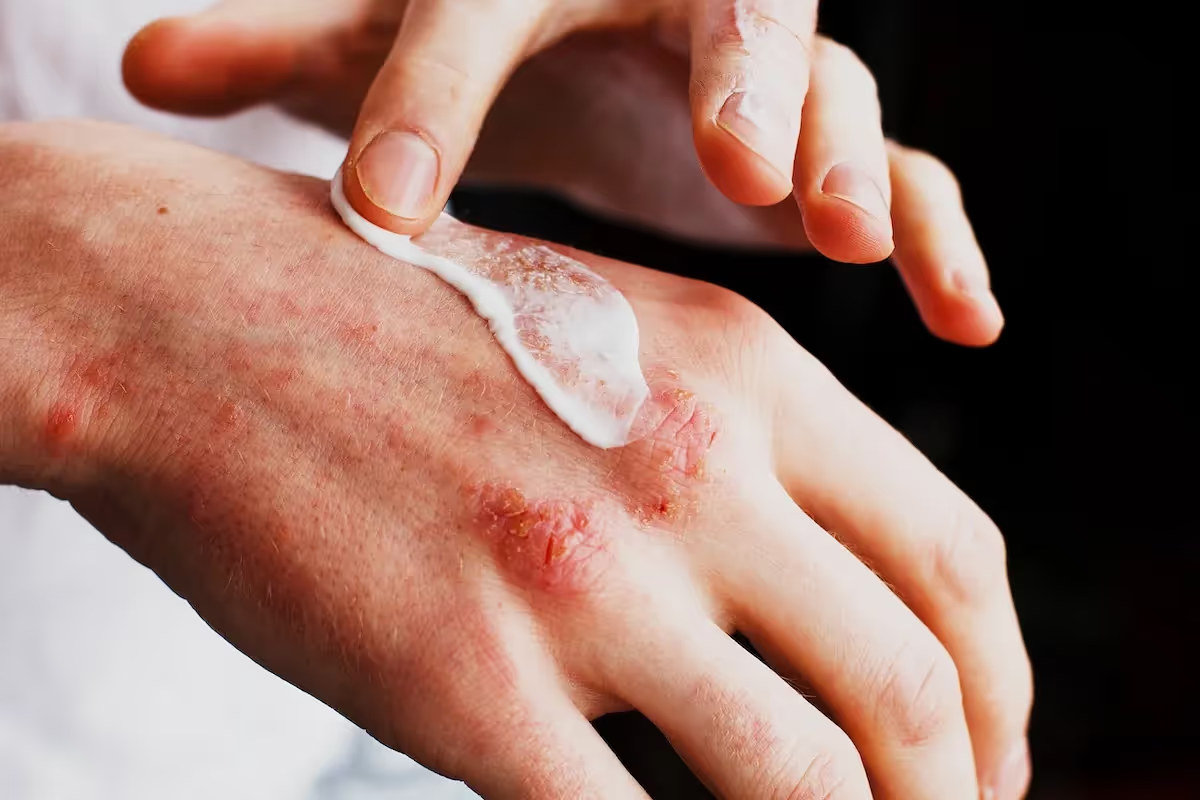
In adults, the hands may be prominently affected. Hand eczema is particularly annoying because your hands are constantly in contact with water, soap and other potentially irritating substances. For people whose work requires frequent hand washing or contact with chemicals, this can be problematic.
Seborrheic eczema appears in places where there are many sebaceous glands: the scalp (where it is known as dandruff), eyebrows, wings of the nose, behind the ears, and sometimes the chest. In babies, you see them as yellow, oily scabs on the scalp, often called milk crusts.
Nummular eczema shows a preference for the legs, especially the lower legs. However, the coin-shaped patches can also appear on the arms and torso. They are sharply defined and clearly distinguishable from the surrounding healthy skin. Contact eczema appears in areas that come into contact with the causative substance, such as nickel allergy where jewelry touches the skin.
Heb je last van Eczema?
Laat je huid beoordelen door een erkende dermatoloog via de Skindr app. Upload foto's en krijg binnen 48 uur een diagnose met persoonlijk advies. Geen wachtkamer, geen verwijsbrief nodig.
Treatment of eczema
The treatment always starts with good basic skin care. Applying oily, emollient creams daily is fundamental. These creams restore the skin barrier, retain moisture and protect against external stimuli. It is best to apply them to slightly damp skin after showering, when the skin is most receptive. Repeat this several times a day, especially in dry weather.
Your doctor will prescribe an anti-inflammatory cream or ointment for active inflammation. The strength and duration depend on the severity and location of your eczema. The goal is to quickly control the inflammation so that the itching decreases and your skin can recover. Treatment is usually phased out as soon as symptoms ease.
For specific forms, there are targeted additional treatments. If there is contact eczema, identifying and avoiding the causative agent is crucial. Your doctor may refer you for allergy tests. For Seborrheic eczema special shampoos are available on the scalp that help control the yeast.
When topical treatments are not effective, systemic treatments are available. These are medications that you take or receive that affect your entire immune system. These are reserved for moderate to severe eczema that does not respond to regular treatments.
Self-care measures reinforce any medical treatment. Take short, lukewarm showers instead of long, hot baths that dry out the skin. Use soft, fragrance-free soaps or soap substitutes. Wear soft clothing made from natural fibers such as cotton, and avoid abrasive fabrics such as wool directly on the skin. Wash new clothes before wearing them.
Get to know your triggers and avoid them where possible. Keep a journal where you note when your eczema revives. Patterns can help identify whether certain factors are making your eczema worse. Itch management is a separate area of focus. Keep your nails short and consider cotton gloves while sleeping. Cool compresses can provide temporary relief.
What doesn't work for eczema
A common mistake is washing the skin excessively. Washing too often or showering for too long actually dehydrates the skin and further weakens the skin barrier. Water, especially hot water, removes moisture from your skin and washes away the natural protective oils. Limit your shower to five to ten minutes and use lukewarm water.
Using regular soaps, especially perfumed ones, is counterproductive. These products are often too aggressive for the sensitive skin of people with eczema. Products that are marked as natural may also contain irritants. Opt specifically for products designed for sensitive skin.
The idea that you need to let eczema dry out to heal is a misconception. Dry skin is weak skin that is actually more susceptible to new inflammations. Constantly hydrating and retaining moisture is essential for recovery. Even after healing, regular lubrication remains necessary.
Ignoring early signs of a rebound in the hope that it will go away on its own often leads to more severe symptoms that last longer and are harder to treat. Early intervention prevents a small upsurge from developing into a major inflammatory response.
Arbitrarily discontinuing prescribed treatment as soon as symptoms improve is a common pitfall. Eczema is a chronic condition where the underlying vulnerability persists even when you no longer see symptoms. Always follow the reduction schedule prescribed by your doctor.
Frequently asked questions about eczema
Is Eczema contagious?
No, definitely not. Eczema is a reaction of your own skin and immune system, not an infectious disease. You can't transfer it to others by touching, sharing towels, or in any other way. So you can just have normal contact with others without putting them at risk.
Are you growing over eczema?
That depends on the type of eczema. Many children with atopic eczema see their symptoms decrease or even disappear completely in puberty or early adulthood. For some, however, it persists or comes back later. Other forms of eczema, such as contact eczema, usually disappear as soon as you avoid the causative agent. The underlying sensitivity often persists.
Can diet affect eczema?
In some people, especially young children with severe atopic eczema, certain foods may make symptoms worse. However, this is not the case for everyone. Elimination diets without medical supervision are not recommended because they can lead to deficiencies. If you suspect that diet plays a role, discuss this with your doctor who may be able to arrange allergy tests or a referral to a dietician.
When should I see a doctor with eczema?
Visit your doctor if you develop new symptoms similar to eczema, if existing eczema does not respond to your current treatment, or if symptoms affect your daily life. Even if the skin shows signs of infection such as increasing pain, warmth, swelling, yellow scabs or fever, medical advice is needed soon. Infections can seriously complicate eczema.
Does sunlight help with eczema?
Moderate sunlight can indeed be beneficial for some forms of eczema due to the anti-inflammatory effects of UV radiation. Please note: too much sun damages the skin and can actually make eczema worse. Always use sunscreen that is suitable for sensitive skin. Some dermatologists offer controlled light therapy as a treatment option for chronic eczema.
Is eczema curable?
Eczema is a chronic condition where the predisposition persists, but the symptoms are easy to manage. With the right treatment and skin care, many people can achieve prolonged periods without symptoms. The focus is on controlling the condition and preventing relapses, rather than on a complete cure. With good self-care and medical guidance, you can maintain a normal quality of life.
Bronnen
- Skindr dermatologen
- Gezondheid en Wetenschap - Eczeem
- BMJ Best Practice - Overview of dermatitis, februari 2022
- Thuisarts.nl - Ik heb eczeem
- EBPnet - Evidence-based richtlijnen voor huisartsen



.avif)
-min.avif)

-min.avif)


.svg)
