.webp)


What is an abscess?
An abscess is a pus-filled cavity that forms when the immune system tries to encapsulate bacteria. The most common culprit is Staphylococcus aureus, a bacterium that enters the skin through a small wound, a clogged hair follicle, or a sebaceous gland. In response, the body surrounds the bacteria with white blood cells, forming the characteristic pus pocket.
A skin abscess is also sometimes called a sore or furuncle. It differs from a boil: a boil is an abscess limited to a single hair follicle, whereas an abscess can also develop through a wound or an apocrine sweat gland. An oral or throat abscess falls outside Skindr's domain.
Do you suffer from Abces?
Personalized advice for your skin, completely online. Upload a few photos through the Skindr app and receive medical advice from a licensed dermatologist within 48 hours. No waiting room or referral required.
How does an abscess form?
An abscess forms when bacteria penetrate the skin and the immune system cannot immediately eliminate them. This can happen through a small cut, a shaving nick, a clogged sebaceous gland, or a hair follicle. In the armpit and groin, it can also occur via apocrine sweat glands.
Certain factors increase the risk: a weakened immune system, diabetes, obesity, aggressive shaving, and moist conditions all play a role. Do you frequently experience recurring abscesses in the armpit, groin, or gluteal cleft? This could indicate acne inversa (hidradenitis suppurativa), a chronic skin condition that requires specific treatment. Also, acne can play a role as a source of skin inflammation, as can other forms of eczema that weaken the skin barrier.
Symptoms and signs of an abscess
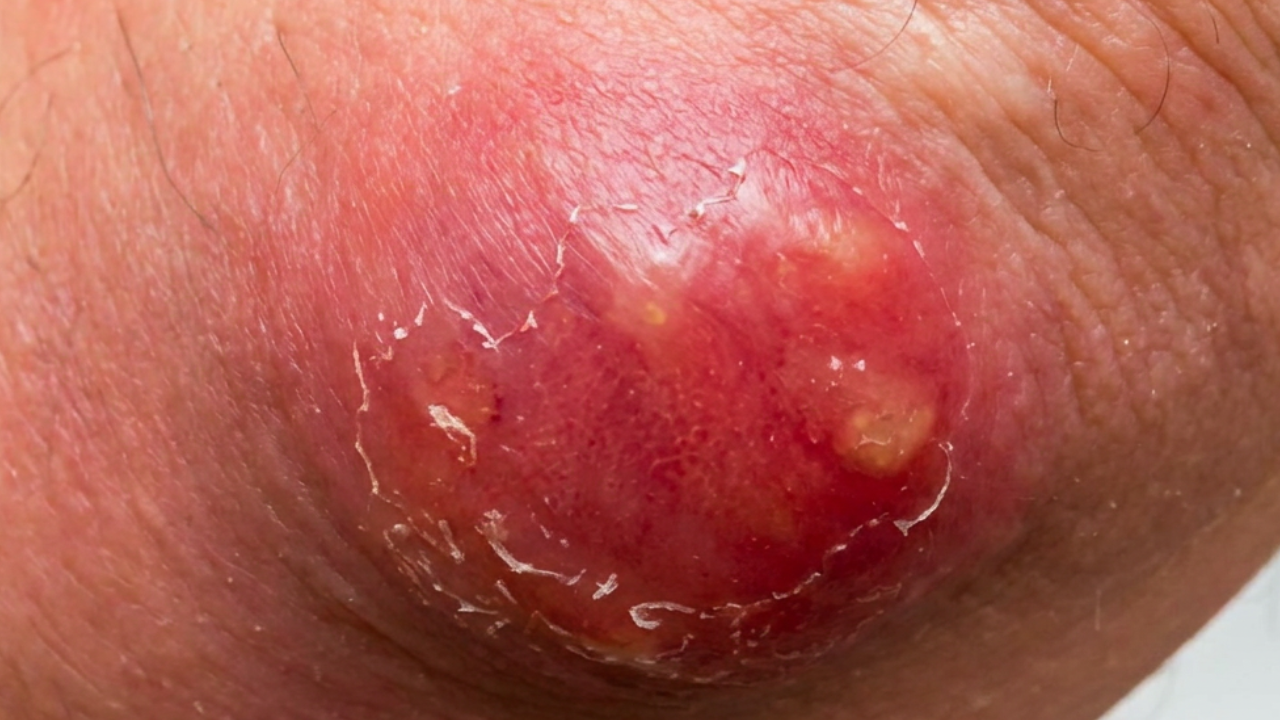
In the initial stage, you'll notice redness, warmth, and slight swelling. After a few days, the abscess matures: the swelling increases, the pain becomes throbbing, and a yellow or white pus point appears on the surface. Larger abscesses may also cause fever and swollen lymph nodes.
On darker skin, redness may be less visible. In such cases, warmth, swelling, and throbbing pain are the main indicators. Are you unsure if your bump is an abscess? A certified Skindr dermatologist can assess it within 48 hours based on a photo. Do you want to know if a skin biopsy is necessary, a dermatologist can help assess that.
Where do abscesses occur?
An abscess can appear anywhere on the skin, but is most commonly found in the armpit, groin, gluteal cleft, neck, face, and back. These areas are more vulnerable due to friction, sweat, or hair follicles that are more prone to clogging. Furthermore, abscesses in the armpit, groin, and gluteal cleft tend to recur more often, which may indicate acne inversa. An oral or throat abscess is treated by a dentist or an ENT specialist.
Do you suffer from Abces?
Personalized advice for your skin, completely online. Upload a few photos through the Skindr app and receive medical advice from a licensed dermatologist within 48 hours. No waiting room or referral required.
Treatment of an abscess
In the early stages, you can apply a warm, moist compress to the abscess 3 to 4 times a day. This promotes blood circulation and aids the maturation process. Keep the skin clean and covered, but do not press on it.
A mature abscess is medically treated via incision and drainage: a doctor makes a small incision, drains the pus, and flushes the cavity. Sometimes, gauze is placed to keep the wound open so that pus can continue to drain. After the procedure, an abscess typically heals within 1 to 2 weeks. Whether any additional treatment is needed is something to discuss with your doctor, for example in cases of fever, a large abscess, or an increased risk due to other conditions.
Do you have a fever above 38 °C, is the abscess larger than 2 cm, do you see spreading redness (possibly erysipelas), does it not mature after 5 days, or is it located on your face? Then consult your GP. For pimples that recur or worsen, it is also advisable to consult a dermatologist. For recurrent abscesses in the armpit, groin, or gluteal cleft, a dermatologist consultation is recommended. Through Skindr, you will receive advice from a certified dermatologist within 48 hours.
What doesn't work against an abscess?
The most important thing not to do: squeeze it. This spreads bacteria to the surrounding skin, increasing the risk of a more extensive infection such as erysipelas or the risk of cellulitis is greatly increased. Cutting it open yourself is also not safe, as without a sterile environment, you risk further infection.
Dry heat (such as an electric heating pad) does not help. A warm, moist compress works better. Applying an ointment yourself also doesn't work once the abscess is fully formed: the ointment cannot penetrate the pus cavity. And waiting for it to open on its own is rarely a good idea for a larger or painful abscess.
Frequently asked questions about an abscess
What is an abscess?
An abscess is a pus-filled cavity in the skin, caused by a bacterial infection. The immune system encapsulates the bacteria, leading to a painful, pus-filled swelling.
How long does it take for an abscess to improve?
After medical drainage, an abscess typically improves within 1 to 2 weeks. Without treatment, an abscess can persist for weeks and spread further.
What does an abscess look like?
A mature abscess is a red, warm, painful swelling with a yellow or white pus point. The surrounding skin is taut and sensitive to the touch.
When should I see a dermatologist or GP about an abscess?
See your GP if you have a fever above 38 °C, an abscess larger than 2 cm, spreading redness, an abscess on the face, or if it doesn't mature after 5 days. For recurring abscesses, a consultation is always recommended.
Is an abscess contagious?
Bacteria from a ruptured abscess can infect others through direct contact or shared towels. Keep an open abscess covered and wash your hands after each contact.
Can Skindr help with an abscess?
Yes. You send a photo and a certified Skindr dermatologist will provide advice within 48 hours. This is especially useful if you're unsure about the assessment or for recurring abscesses.


](https://static.legitscript.com/seals/624359.png)