.webp)


What is acne inversa?
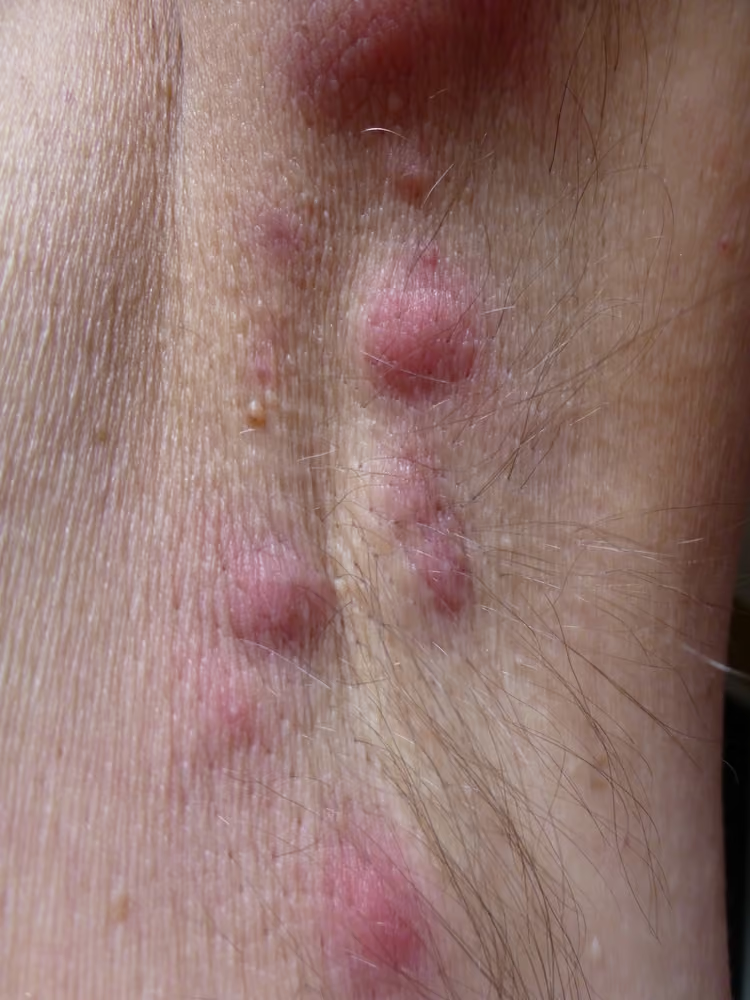
Acne inversa, medically hidradenitis suppurativa (HS) or Verneuil's disease, is a chronic inflammatory skin disease characterized by recurrent painful lumps, abscesses, and scarring. The condition affects approximately 1% of the population and usually begins in young adulthood. Women are affected more often than men.
Acne inversa likely begins with the blockage of hair follicles in skin folds such as the armpits and groin. This causes the hair follicle to become inflamed and potentially rupture, releasing its contents into the surrounding tissue and triggering a severe inflammatory response. What distinguishes acne inversa from common acne, is its chronic and recurrent nature: the inflammations repeatedly return to the same areas and can go deeper, leading to the formation of tunnels or fistulas under the skin.
The Hurley scale is the most commonly used classification to determine severity:
Hurley I (mild)
Hurley I includes isolated abscesses without scarring or fistulas.
Hurley II (moderate)
Hurley II includes recurrent abscesses with scarring and one or more fistulas, but the lesions are still partially separate with normal skin in between.
Hurley III (severe)
Hurley III is characterized by extensive scarring and multiple fistulas covering contiguous areas, with a debilitating effect on daily life.
The impact on quality of life is significant: pain, shame, restricted movement, and social isolation are frequent consequences.
Do you suffer from Acne Inversa?
Personalized advice for your skin, completely online. Upload a few photos through the Skindr app and receive medical advice from a licensed dermatologist within 48 hours. No waiting room or referral required.
How does hidradenitis suppurativa develop?
The exact cause is not yet fully understood, but hidradenitis suppurativa develops due to a combination of multiple factors. It is not an infectious disease and not a result of poor hygiene.
Heredity plays a significant role: approximately one-third of patients have family members with the same condition. This indicates genetic factors that predispose individuals.
The process begins with the blockage of hair follicles in skin folds. The condition often develops after puberty, possibly due to hormonal influences and other factors. Due to blockage and inflammation, the hair follicle can rupture, releasing its contents into the surrounding tissue and causing a severe, persistent inflammatory reaction.
Modifiable risk factors include smoking (nicotine affects the immune system and reduces blood flow) and obesity (more skin folds, more friction, and sweating). Weight loss and quitting smoking lead to significant improvement for many.
There is a link with other inflammatory diseases. People with hidradenitis suppurativa are more likely to have inflammatory bowel diseases such as Crohn's disease or ulcerative colitis. Joint inflammation and diabetes are also more common. This suggests an underlying systemic inflammatory predisposition.
Symptoms and characteristics of hidradenitis suppurativa
The symptoms of hidradenitis suppurativa develop gradually. The characteristic pattern is that symptoms flare up and subside, with periods of relative calm interspersed with periods of active inflammation.
The first signs are small, painful lumps under the skin that resemble (subcutaneous) pimples. They are hard and painful to the touch. Unlike ordinary pimples, they do not have a white head and are difficult to express.
These lumps can develop into true abscesses that grow larger and increasingly painful. An abscess is a pus-filled cavity that feels red, swollen, and warm. After rupturing, pus leaks out, often with an unpleasant odor.
In cases of long-standing disease, scars and tunnel-like tracts (fistulas) develop, connecting various inflamed areas.
Also characteristic are double comedones: two or more enlarged pores filled with black keratin plugs, a typical feature of hidradenitis suppurativa.
Possible consequences of severe or long-term hidradenitis suppurativa include secondary infections, scarring, fistula formation, a rare increased risk of skin cancer, and a significant psychological impact such as pain, anxiety, depression, and social isolation.
Are you concerned about a painful lump in a skin fold? Through Skindr, a certified dermatologist will assess your skin within 48 hours, discreetly and without a waiting room.
Where does hidradenitis suppurativa appear?
Hidradenitis suppurativa is a chronic inflammation originating from hair follicles, with skin folds being the preferred areas. The most commonly affected locations are the armpits (most frequent), groin, inner thighs including the genital area, the gluteal cleft, the area around the anus, and the areas under the breasts in women.
Symmetry is characteristic: if one armpit is affected, the other armpit will also become involved sooner or later. Hidradenitis suppurativa never occurs on the palms of the hands, soles of the feet, or the face: the absence of apocrine glands in these areas explains this.
Do you suffer from Acne Inversa?
Personalized advice for your skin, completely online. Upload a few photos through the Skindr app and receive medical advice from a licensed dermatologist within 48 hours. No waiting room or referral required.
Treatment for hidradenitis suppurativa
Treatment focuses on alleviating symptoms, preventing new inflammations, and improving quality of life. There is no cure, but with the right approach, periods of remission are very possible.
Lifestyle: the foundation
Quitting smoking is the most crucial measure. Weight loss for those who are overweight reduces skin folds and friction. Wear loose, cotton clothing. Practice gentle hygiene without aggressive products.
Treatment by Hurley Stage
The choice of treatment is tailored to the Hurley stage:
Hurley I: topical antibiotic gels or creams (clindamycin) plus agents that normalize skin renewal.
Hurley II: oral antibiotics (course or maintenance treatment), possibly incision of acute abscesses.
Hurley III: biologics (adalimumab, secukinumab) that block specific inflammatory substances, only upon recommendation from a dermatologist. Sometimes surgical removal of affected areas.
When to refer?
Referral to a dermatologist is advisable for insufficient response to basic treatment, Hurley II or higher, suspected fistulas, or when biologics are being considered.
Want to have your skin assessed? Through Skindr, a certified dermatologist will assess it within 48 hours, discreetly and without a waiting room. For extensive disease, we will refer you to the appropriate specialist.
What doesn't work for hidradenitis suppurativa?
Squeezing or puncturing abscesses makes the situation worse. The inflammations are deep within the skin. Squeezing damages surrounding tissue and increases the risk of scarring.
Believing that better hygiene is the solution is incorrect. Hidradenitis suppurativa is not caused by poor hygiene. Excessive washing actually irritates the skin.
Saving antibiotics from previous courses and taking them yourself is unwise. Only take medication under medical advice.
Waiting without treatment is not an option for hidradenitis suppurativa. Without treatment, symptoms gradually worsen. Early treatment can slow progression to higher Hurley stages.
It's understandable to feel ashamed about seeking help, but it's detrimental. Doctors are familiar with this condition. Completely controlling acne inversa without treatment is not feasible, but with the right approach, long periods of remission are certainly possible.
Frequently asked questions about acne inversa
Is acne inversa contagious?
No, acne inversa is absolutely not contagious. It is a chronic inflammatory disease of the immune system, not an infectious disease.
Why do some people get this disease and others don't?
Heredity plays a role: about a third of patients have family members with the same condition. Smoking and obesity significantly increase the risk.
Can acne inversa be controlled?
Acne inversa cannot be cured with current treatments, but symptoms can be well controlled with a combination of lifestyle adjustments and medical treatment. Remission occurs in some people.
When should I be referred?
Referral to a dermatologist is advisable for severe or extensive disease (Hurley II/III), insufficient improvement with standard treatment, or when biologics or surgery are being considered.
What is the Hurley scale?
The Hurley scale divides acne inversa into three stages: Hurley I (mild, isolated abscesses), Hurley II (moderate, fistulas and scars), Hurley III (severe, extensive scar network). Treatment choice is tailored to the stage.
Can Skindr help with acne inversa?
Yes. Through Skindr, a certified dermatologist assesses your skin based on photos and provides an initial evaluation, discreetly and without a waiting room, within 48 hours. For extensive acne inversa, we refer you to the appropriate specialist.



](https://static.legitscript.com/seals/624359.png)