.webp)


What is balanitis?
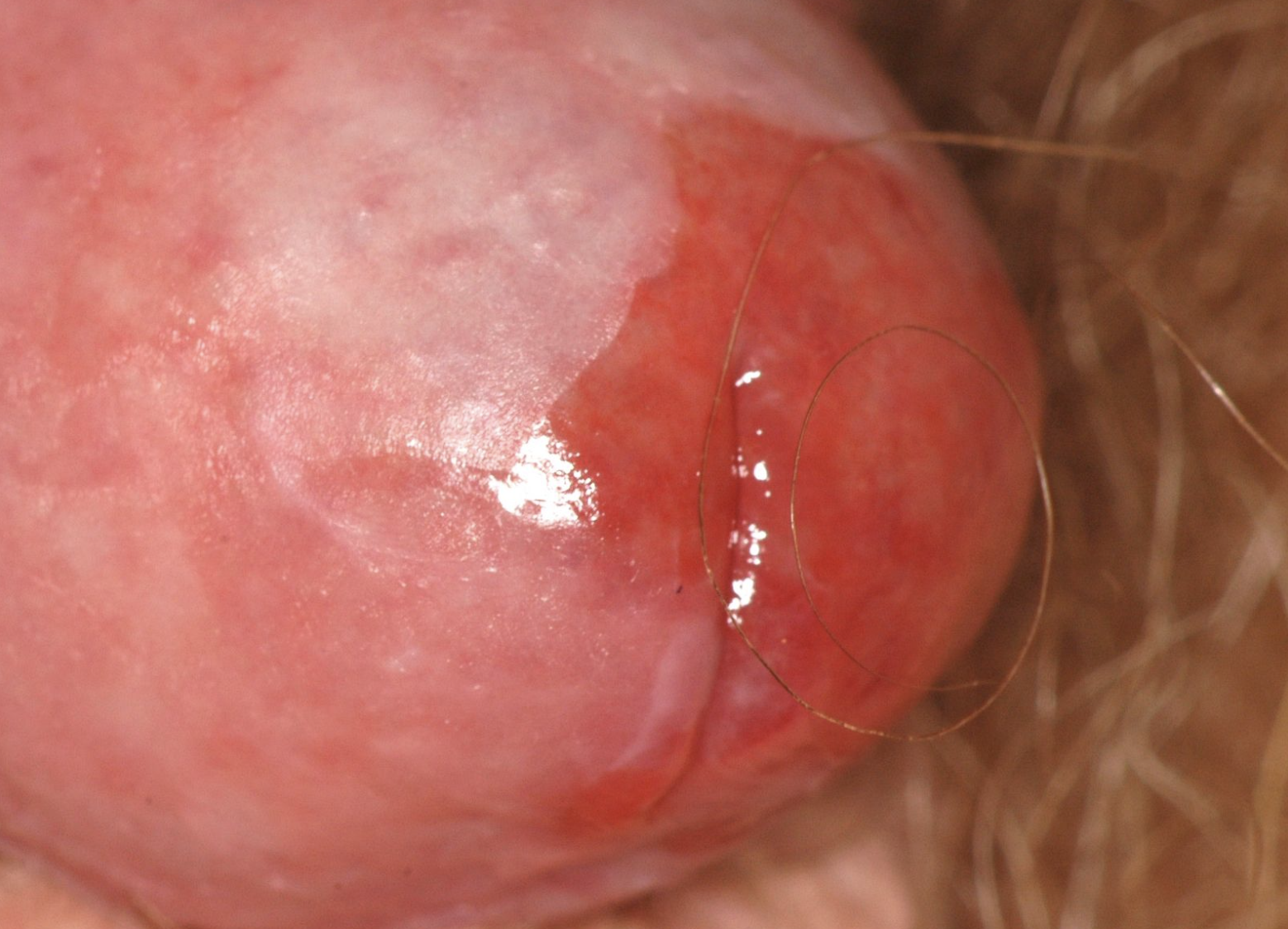
Balanitis is an inflammation of the glans (glans penis). If the foreskin is also inflamed, it is called balanoposthitis. An important reassurance: non-specific balanitis, the most common form, is not contagious and, in most cases, not a sexually transmitted infection (STI).
Balanitis vs. balanoposthitis: what's the difference?
Balanitis refers to the glans only. In balanoposthitis, the foreskin (prepuce) is also affected. Both terms are often used interchangeably in practice, but the treatment is identical in most cases.
How common is balanitis?
Balanitis is a common condition in men. According to NIVEL registration data (2022) it appears that approximately 7.8 per 1,000 men per year visit a general practitioner for balanitis for the first time. The condition affects all ages but is most common in young children between 0 and 4 years old and in older men over 85 years old. Uncircumcised men have a 68% higher risk than circumcised men.
Do you suffer from Balanitis?
Personalized advice for your skin, completely online. Upload a few photos through the Skindr app and receive medical advice from a licensed dermatologist within 48 hours. No waiting room or referral required.
How does balanitis develop?
Balanitis can have multiple causes: a fungal infection (candida), bacteria, poor hygiene, irritation, or an underlying skin condition. The cause determines the treatment, so it's important to identify the type before starting a cream.
Candida: the most common cause
Candida (a yeast fungus) is, according to DermNet responsible for approximately 30% of all balanitis cases. Candida as a cause of balanitis can occur in anyone, including men who are not sexually active. Heat, moisture, and reduced immunity are the main triggers.
When is balanitis an STI? (and when it's not)
In most cases, balanitis is "non-specific": there is no specific infectious cause. However, balanitis can also be caused by a sexually transmitted infection such as chlamydia, gonorrhea or herpes simplex. Skin conditions such as psoriasis, lichen planus, contact dermatitis and lichen sclerosus (BXO) are another category of causes. If an STI is suspected, testing is always recommended.
Predisposing factors: diabetes, phimosis, and obesity
A tight foreskin (phimosis) makes cleaning the glans difficult and significantly increases the risk of balanitis. Diabetes mellitus, obesity, and a weakened immune system reduce local defenses and predispose to recurrent infections. Also, an underlying form of eczema can make the glans more susceptible to irritation and inflammation. Men affected by these factors are more likely to develop chronic or recurrent balanitis.
Symptoms and characteristics of balanitis
The most common symptom of balanitis is redness, swelling, and pain on the glans, sometimes accompanied by itching, a burning sensation during urination, or a white or yellow discharge. In severe cases, erosions (open sores) may also occur.
On darker skin tones, redness is often less clearly visible than on lighter skin. In such cases, look for dark discoloration, swelling, scaling, or a white coating on the glans as possible signs of balanitis. In candida balanitis, in addition to a white coating, there may also be a patchy erythema with a shiny (glazed) surface, a collarette of scales, and satellite lesions. These characteristics are generally visible regardless of skin color.
Symptoms of non-specific balanitis
Non-specific balanitis (balanitis simplex) presents as small red spots or diffuse redness on the glans. The symptoms are usually mild: mild itching, redness, without discharge. This type of balanitis is not contagious and not an STI.
Symptoms of candida balanitis
Candida balanitis causes intense itching and a characteristic white, cheesy discharge on the glans and the inner surface of the foreskin. The redness can spread to the foreskin, sometimes with small erosions. Partners of men with candida balanitis can transmit the fungus through sexual contact.
Zoon's balanitis and BXO
Zoon's balanitis is a persistent, shiny reddish-brown lesion typically found in older, uncircumcised men. A biopsy is required to rule out erythroplasia of Queyrat (a precursor to penile cancer). Lichen sclerosus (BXO) on the glans penis presents as whitish hardened patches that can constrict the foreskin and, if left untreated, carry an increased long-term risk of penile cancer. Unsure which type of balanitis you have? A certified Skindr dermatologist will assess your photos within 48 hours.
Where does balanitis occur?
Balanitis affects the glans penis and, in cases of balanoposthitis, also the foreskin. Sometimes the urethral opening is also involved; the shaft itself is rarely affected.
In boys younger than 5 years old, the foreskin is naturally still tightly fused with the glans penis (physiological phimosis). This is normal and usually resolves spontaneously before puberty. Balanitis in young boys is related to this: moisture and bacteria have difficulty escaping. Consultation with a doctor is only advisable in cases of recurrent infections or pain during urination. More about common skin problems in children can be found on our overview page.
A rare but serious complication is paraphimosis, also known as "Spanish collar": the retracted foreskin constricts the glans penis and impedes blood circulation. This is a medical emergency.
Do you suffer from Balanitis?
Personalized advice for your skin, completely online. Upload a few photos through the Skindr app and receive medical advice from a licensed dermatologist within 48 hours. No waiting room or referral required.
Treatment of balanitis
The treatment of balanitis always begins with proper self-care: gentle hygiene is the cornerstone of recovery and prevention.
Self-care: the correct way to wash
Wash the glans penis daily with lukewarm water, without soap or perfume. This gentle washing advice forms, according to the Belgian guideline on inflammation of the glans penis and foreskin the basis of the approach. Then gently pat the glans penis dry: moisture under the foreskin promotes fungi and bacteria. A condom does not help with non-specific balanitis: the inflammation is internal and is not acquired or transmitted through sex.
Corticosteroid cream for inflammation
For non-specific or inflammatory balanitis, a weak corticosteroid cream (class I) is applied to the glans penis. Never stop the cream too early: recurrence is almost certain with an incomplete course of treatment.
Antifungals for candida balanitis
For candida balanitis, a miconazole or clotrimazole cream is applied for 1 to 2 weeks. In therapy-resistant cases or in men with diabetes, a systemic azole preparation may be indicated.
Circumcision as a definitive option
For recurrent balanitis with phimosis or BXO, circumcision is sometimes the definitive treatment option. This is a procedure that Skindr does not perform itself, but a certified Skindr dermatologist will guide you and refer you to the appropriate specialist. For inverse psoriasis on the glans penis as the cause of balanitis, a specific treatment is indicated that differs from the standard approach.
Through Skindr, you receive advice from a certified dermatologist within 48 hours: discreetly, without a waiting room, and without a referral from your GP.
What doesn't work against balanitis?
Some approaches might seem logical for glans inflammation, but they are ineffective or even worsen the condition.
Using soap or shower gel on the glans is a common mistake: this increases irritation and disrupts the local flora. The same applies to strongly perfumed products or disinfectants, which, just like with allergic contact dermatitis can further irritate the skin.
A condom is not effective as prevention for non-specific balanitis: the cause is internal, not sexually transmitted. Waiting when dealing with Zoon's balanitis or BXO is not an option: these subtypes always require a biopsy and regular dermatologist check-ups to rule out malignant conditions.
Taking antibiotics yourself is pointless if the cause is a fungal infection: antibiotics don't work on candida and can even worsen the situation by disrupting the bacterial flora. Also, don't stop the treatment cream too early when you see improvement: relapse is almost certain without a complete course.
With paraphimosis (a retracted foreskin that cannot be returned to its normal position), waiting is dangerous. Go to the emergency department immediately.
Frequently asked questions about balanitis
Is balanitis an STD?
Not always. Non-specific balanitis, the most common form, is not an STD. Balanitis can also be caused by a sexually transmitted infection such as chlamydia or genital herpes. If you suspect an STD, testing is recommended.
Is balanitis contagious?
Non-specific balanitis is not contagious. Candida balanitis can be transmitted through sexual contact. STD-related balanitis is contagious: treatment for both partners is then necessary.
Does balanitis go away on its own?
Mild non-specific balanitis can clear up with good hygiene, without soap. For candida, an STD, or a skin condition, specific treatment is necessary, and it will not resolve spontaneously.
Which cream helps with balanitis?
That depends on the cause: hydrocortisone 1% for non-specific inflammation, miconazole or clotrimazole for candida. The correct cream depends on the type: a certified dermatologist will determine this.
Can balanitis also occur in my child?
Yes. Balanitis is common in boys between 0 and 4 years old, due to the physiologically narrower foreskin at that age. Consult a doctor for recurrent infections or pain during urination. Reliable patient information on this can also be found at Thuisarts.nl.
Can Skindr help with balanitis?
Yes. A certified Skindr dermatologist will assess your photos within 48 hours, determine the type of balanitis, and provide personalized treatment advice, discreetly and without a waiting room.
When is balanitis a medical emergency?
Immediate medical attention is required for paraphimosis (where the retracted foreskin constricts the glans) or high fever with a severely swollen glans. In such cases, go directly to the emergency department.
Resources
- Skindr — certified dermatologists (medical reviewer: Dr. Kamille Van Bunder)
- NIVEL 2022 — Balanitis Incidence Rates Netherlands (7.8/1,000 men/year)
- Edwards SK, Bunker CB — European guideline on management of balanoposthitis, JEADV 2023
- CEBAM / Gezondheidenwetenschap.be — Evidence-based patient information balanitis (2019)
- DermNet NZ — Balanitis
- Thuisarts.nl / NHG — Patient information balanitis


](https://static.legitscript.com/seals/624359.png)