.webp)


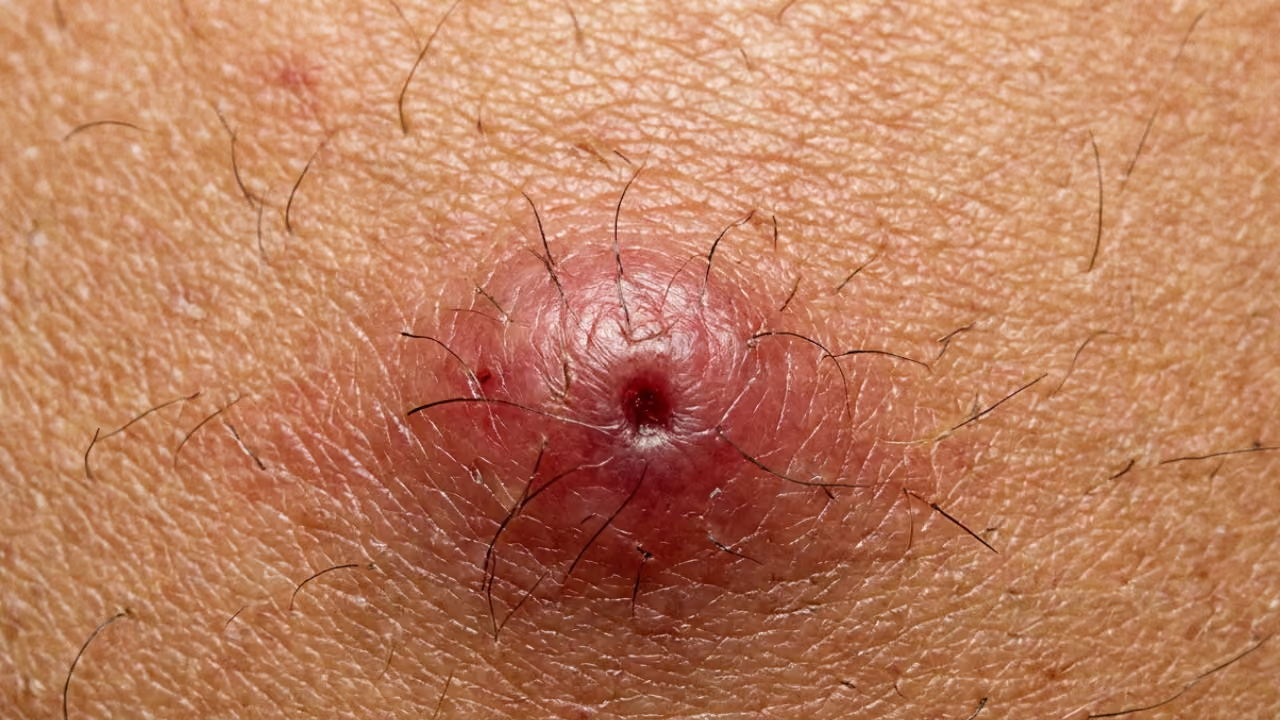
What is a sebaceous cyst?
A sebaceous cyst is a benign lump in the skin, filled with a creamy white mass. The lump feels hard and movable, and is fixed within the skin. Colloquially, it is also referred to as an "atheroma cyst" or "sebum cyst," but the correct medical term is epidermoid cyst. On this page, we use "sebaceous cyst" because it is a more common term.
Cysts also occur on the scalp, but these are almost always pilar cysts (trichilemmal cysts). They are firmer, have no visible punctum, and are more often hereditary. Both types are benign.
Do you suffer from Benign Cyst?
Personalized advice for your skin, completely online. Upload a few photos through the Skindr app and receive medical advice from a licensed dermatologist within 48 hours. No waiting room or referral required.
How does a sebaceous cyst form?
A sebaceous cyst forms when the duct of a sebaceous gland or hair follicle becomes blocked. Skin cells and sebum accumulate in a cavity, thus forming the cyst.
Risk factors: younger adults and men (hormonal influence), family predisposition, scarring, acne or clogged pores, sun damage. Also pimples and recurrent inflammation of the hair follicle increase the chance of cyst formation.
A sebaceous cyst is not cancerous, not an infection, and not contagious.
Symptoms and characteristics of a sebaceous cyst
Recognizable as a round, smooth, firm but slightly elastic lump directly under the skin. Diameter from a few mm to several cm. Sometimes a small black or white punctum in the center (blocked duct). Contents: cream-colored, cheese-like mass, sometimes an unpleasant odor if damaged. Painless at rest.
Signs of inflammation: redness, warmth, pain, swelling, pus/discharge, sometimes fever. A severe inflammation requires prompt treatment. A mild inflammation is painful and bothersome, but acute treatment is not required.
Unsure if it's a sebaceous cyst? Send a photo via Skindr: a certified dermatologist will review it within 48 hours.
Where do sebaceous cysts occur?
Most common: face (cheeks, neck, behind ears), back and torso (upper back, shoulders, chest), scalp (here, pilar cysts are more common), genitals (scrotum in men, labia in women). Less common: arms, legs, soles of feet. Sebaceous cysts rarely occur on the palms of hands and soles of feet (few sebaceous glands present).
Do you suffer from Benign Cyst?
Personalized advice for your skin, completely online. Upload a few photos through the Skindr app and receive medical advice from a licensed dermatologist within 48 hours. No waiting room or referral required.
Treatment of a Sebaceous Cyst
No symptoms: no treatment needed. Treatment is indicated for growth, discomfort, recurrent inflammation, or cosmetic concerns.
Squeezing it out doesn't work: the cyst wall remains, the cyst reforms, and the risk of infection increases.
Surgical removal: the only definitive treatment is excision of the entire cyst wall. Outpatient procedure, under local anesthesia. For an infected cyst, it must first be drained and treated, only then can it be surgically removed.
When to see a GP vs. a dermatologist: GP for initial assessment and referral for small, non-infected cysts. Dermatologist for diagnostic uncertainty, cosmetically sensitive areas (face, décolletage), recurrent cysts, or when surgical expertise is needed. You can send a photo via Skindr for an initial assessment. Similar benign skin bumps such as molluscum contagiosum or keloid are assessed in the same way by a dermatologist.
After complete surgical removal: low chance of recurrence. With incomplete removal (squeezing): the cyst almost always returns.
Via Skindr, you will receive advice from a certified dermatologist within 48 hours on the best approach for your situation.
What not to do with a sebaceous cyst
Squeezing or draining: the cyst wall remains, the cyst returns, and the risk of infection increases. Puncturing with a needle at home: increases infection risk, solves nothing. Waiting with inflammation: an infected cyst can develop into an abscess. Antibiotics without a prescription from a doctor: do not resolve the cyst, only temporarily treat the inflammation.
Frequently Asked Questions about Sebaceous Cysts
How do I know if it's a sebaceous cyst or a lipoma?
Sebaceous cyst: just under the skin, sometimes a visible punctum, may have a slight odor. Lipoma: deeper, softer, lobulated, no punctum. If in doubt, a dermatologist will assess it. A skin biopsy is rarely necessary but can provide clarity for atypical characteristics.
Does a sebaceous cyst always need to be removed?
No. Small, asymptomatic cysts can be monitored. Removal is indicated for growth, inflammation, cosmetic concerns, or recurrent infections.
How long does recovery take after removal?
Wounds heal within 1-2 weeks. A small scar may be possible depending on location and size.
Can I see a dermatologist for an infected sebaceous cyst?
Yes. It will first be drained and treated, and only then surgically removed.
Does health insurance cover the removal?
In Belgium, it is reimbursed in most cases with a medical indication. Consult your dermatologist or general practitioner for the specific conditions.
Resources
1. Skindr dermatologists — skindr.com
2. Thuisarts.nl: Sebaceous cyst — thuisarts.nl
3. NVDV: Atheroma cyst (patient leaflet) — nvdv.nl
4. DermNet NZ: Epidermoid cyst — dermnetnz.org
5. Huidziekten.nl: Atheroma cyst — huidziekten.nl


](https://static.legitscript.com/seals/624359.png)