.webp)


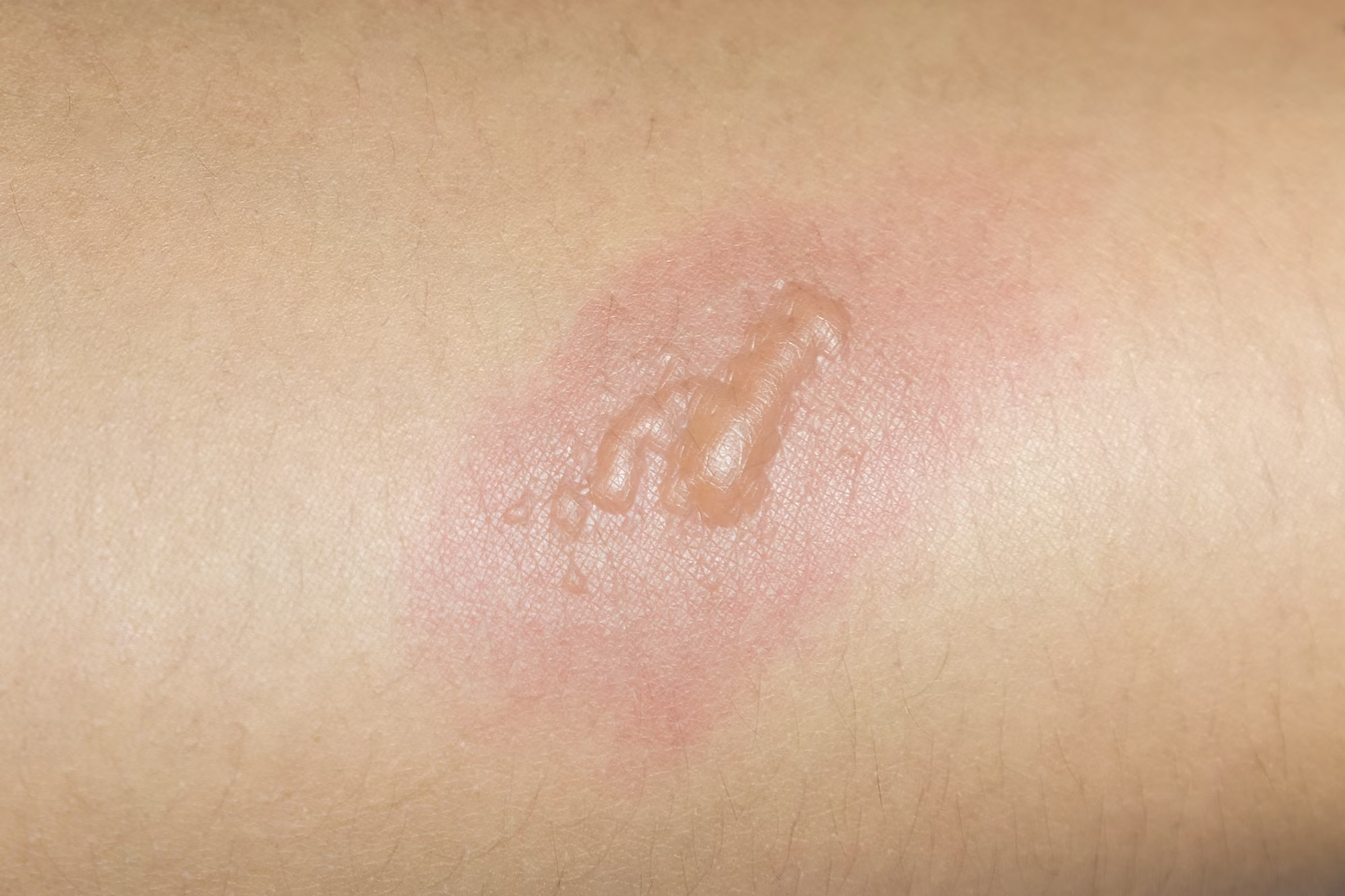
What are chronic blistering skin conditions?
Chronic blistering skin conditions are a group of rare conditions where the immune system attacks the body's own skin cells. Instead of fighting external invaders, the body directs its defenses against itself, causing the skin to form spontaneous blisters. Despite their rarity, all forms require professional assessment and treatment.
Pemphigus vulgaris: blisters due to attack on skin cells
In pemphigus vulgaris, the immune system produces antibodies that attack the connecting proteins between skin cells. This causes the cells to detach from each other, leading to flaccid, fragile blisters. The disease often begins in the mouth or on other mucous membranes before the blisters appear on the skin.
Bullous pemphigoid: blisters on the basement membrane
Bullous pemphigoid is the most common blistering disease and primarily affects people over sixty years of age. Here, the antibodies target the basement membrane, the connection between the epidermis and the underlying skin. This results in large, tense blisters that rupture less easily than in pemphigus. Clinical information about pemphigus can be found on DermNet NZ.
Dermatitis herpetiformis: blisters due to gluten intolerance
Dermatitis herpetiformis (DH), also known as the skin manifestation of celiac disease, is an autoimmune reaction to gluten that manifests on the skin. The vesicles are small, intensely itchy, and symmetrically distributed. More information about DH can be found on DermNet NZ.
Epidermolysis bullosa: hereditary blistering
Epidermolysis bullosa (EB) is a hereditary blistering disease where the skin spontaneously forms blisters even with light touch or friction. EB is present from birth and requires lifelong, meticulous skin care.
All four conditions require professional assessment and treatment, but are well manageable with the right guidance.
Do you suffer from Chronic blistering skin conditions?
Personalized advice for your skin, completely online. Upload a few photos through the Skindr app and receive medical advice from a licensed dermatologist within 48 hours. No waiting room or referral required.
How do chronic blistering skin conditions develop?
In most chronic blistering diseases, the immune system produces antibodies that attack the body's own skin instead of harmful invaders. The body makes a mistake: instead of fighting bacteria or viruses, it damages the "glue" that holds skin cells together or the connection between the epidermis and the underlying layer.
Autoimmune mechanism in blistering diseases
In pemphigus vulgaris, the antibodies target the proteins that bind skin cells together. When these proteins are damaged, the cells detach from each other, and blisters form from within. In bullous pemphigoid, the basement membrane is the target. Certain substances can trigger pemphigus; a dermatologist can assess whether this plays a role.
Dermatitis herpetiformis and gluten
DH has a direct link to gluten intolerance. When people with gluten sensitivity consume gluten, the immune system reacts with antibodies that target not only the intestinal wall but also an enzyme in the skin. This causes the characteristic blistering. Iodine in food, such as shellfish and iodized salt, can further exacerbate the skin reaction in DH. Learn more about the relationship between DH and gluten intolerance via huidziekten.nl.
Genetic predisposition also plays a role in DH: the condition is often associated with other autoimmune diseases such as type 1 diabetes. Early recognition enables targeted treatment, which makes a big difference in the long run.
Symptoms and characteristics of chronic blistering skin conditions
The most characteristic symptom of chronic blistering skin conditions is the spontaneous appearance of blisters on the skin or mucous membranes, without clear cause or injury. The precise manifestation varies by condition.
In pemphigus vulgaris, flaccid, fragile blisters develop that quickly rupture and leave painful, open sores. They often start in the mouth, on the gums or palate, before appearing on the trunk or face.
Bullous pemphigoid causes large, tense blisters that are less prone to rupture. It is characteristic that severe itching as a symptom of blistering diseases occurs weeks before the first blisters appear. The skin around the blisters is red and irritated.
Dermatitis herpetiformis manifests as small, intensely itchy vesicles that appear symmetrically: mainly on the elbows, knees, buttocks, and back. The itching is intense and often has a burning quality.
Epidermolysis bullosa causes blisters in areas exposed to friction or pressure, such as the knees, hands, feet, and inside of the mouth.
On light skin, the blisters are visible on a red or pink background. On dark skin, the blisters themselves may sometimes be less contrasting, but after healing, the skin leaves behind dark spots or hyperpigmentation.
Do you have spontaneous blisters you can't explain? Through Skindr, a certified dermatologist assesses your skin within 48 hours. New spontaneous blisters, especially around the mouth or genitals, or blisters that spread rapidly, are a reason to seek professional advice quickly.
Where do chronic blistering skin conditions occur?
The location of the blisters varies by condition and is an important clue for recognising the condition.
Pemphigus vulgaris typically starts on the mucous membranes in the mouth: on the gums, palate, and inside of the cheeks. Later, the blisters spread to the trunk, armpits, and groin.
Bullous pemphigoid primarily appears on the abdomen, thighs, armpits, and the inner sides of the arms and legs. Unlike pemphigus, the mouth is rarely affected in bullous pemphigoid.
Dermatitis herpetiformis has a characteristic symmetrical pattern: the small blisters appear simultaneously on both elbows, both knees, on the buttocks, and on the back. Sometimes it also affects the head.
Epidermolysis bullosa develops in areas where the skin is exposed to friction or pressure: the knees, hands, feet, and the inside of the mouth.
The combination of blister location, blister type, and associated symptoms is crucial for recognising the condition. This always requires a professional assessment.
Do you suffer from Chronic blistering skin conditions?
Personalized advice for your skin, completely online. Upload a few photos through the Skindr app and receive medical advice from a licensed dermatologist within 48 hours. No waiting room or referral required.
Treatment of chronic blistering skin conditions
The treatment of chronic blistering skin conditions aims to suppress the autoimmune reaction and prevent new blisters. As these are chronic conditions, long-term follow-up by a dermatologist is necessary.
Immunosuppressants for pemphigus and pemphigoid
For pemphigus vulgaris and bullous pemphigoid, a treatment that suppresses the immune system is used to reduce the production of harmful antibodies. Your dermatologist will discuss which approach and duration suit your situation. For dermatitis herpetiformis, your dermatologist determines the first-line treatment choice, aiming to reduce blistering.
Gluten-free diet for dermatitis herpetiformis
For DH, a strict gluten-free diet is not only a treatment option but also addresses the underlying cause. By completely avoiding gluten, the autoimmune reaction decreases, and skin symptoms diminish over time. In addition to gluten, iodine-rich foods, such as shellfish and iodized salt, are also triggers that should be avoided.
When to see a dermatologist for chronic blistering diseases?
At the first suspicion of a blistering disease, consulting a dermatologist is always the initial step. Confirmation requires a skin biopsy and blood tests to identify the type of antibodies. Self-treatment or waiting is not advisable, as blistering diseases worsen without treatment.
Through Skindr, you will receive advice from a certified dermatologist about your skin complaints within 48 hours. Skindr can help you assess whether further specialist follow-up is needed. Are you comparing your symptoms with eczema as another possible cause of an itchy skin rash? A certified dermatologist can help you tell the difference.
What doesn't work for chronic blistering skin conditions?
For chronic blistering diseases, there are several common mistakes that can worsen the situation and delay the right approach.
It is strongly advised against pricking or squeezing blisters open yourself. Open wounds in autoimmune diseases heal with more difficulty, and the risk of infection increases.
Ordinary skin creams, moisturizers, or eczema creams have no effect on autoimmune blistering diseases. They do not address the underlying cause and can delay the right approach by temporarily altering symptoms.
Waiting it out is not a solution: chronic blistering diseases worsen without treatment. The sooner the condition is recognised, the more effectively the treatment works.
For DH: starting a gluten-free diet without medical confirmation is helpful but never a substitute for medical supervision. Furthermore, iodine-rich foods, such as shellfish and iodized salt, should be avoided: this worsens the skin reaction in DH.
Do you think it psoriasis could be another possible cause of chronic skin conditions could be? Always have that professionally assessed as well.
Frequently asked questions about chronic blistering skin conditions
Are chronic blistering skin conditions contagious?
No. All chronic blistering diseases are autoimmune diseases and are not transmitted through contact, blood, or saliva. They are completely non-contagious.
What does dermatitis herpetiformis have to do with gluten?
Dermatitis herpetiformis is the skin manifestation of gluten intolerance. When the immune system reacts to gluten, antibodies are also produced that attack the skin and cause blisters.
Do chronic blistering diseases go away on their own?
Almost never without treatment. Pemphigus and pemphigoid require treatment to control the autoimmune reaction. DH can improve with a strict gluten-free diet, but medical supervision is also needed here.
When should I see a dermatologist for spontaneous blisters?
For spontaneous blisters not caused by an injury, a dermatologist is always necessary. Confirmation requires a skin biopsy. Through Skindr, a certified dermatologist can assess whether further follow-up is needed.
Can Skindr help with chronic blistering diseases?
Yes. A certified Skindr dermatologist will assess your skin complaints and provide advice on the necessary steps, including referral to a specialist if needed, within 48 hours.
Is pemphigus the same as pemphigoid?
No. Both are autoimmune blistering diseases, but they affect a different layer of the skin. Pemphigus causes flaccid, fragile blisters; bullous pemphigoid causes larger, tense blisters that are more difficult to rupture.
Resources
1. Skindr Dermatologists — skindr.com
2. DermNet NZ — dermnetnz.org
3. Huidarts.com — huidarts.com
4. Huidziekten.nl (UMC Amsterdam) — huidziekten.nl
5. UZ Leuven — uzleuven.be


](https://static.legitscript.com/seals/624359.png)