.webp)


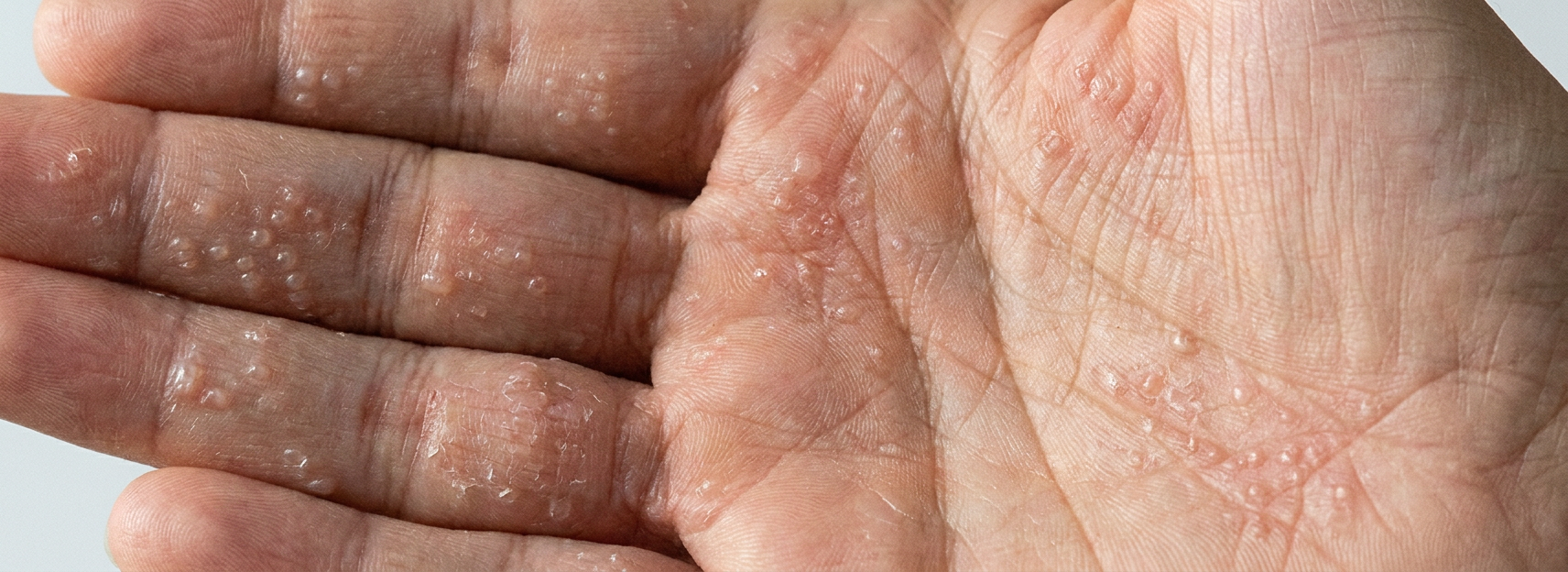
What is Vesicular Eczema?
Vesicular Eczema is a type of eczema that manifests as small, clear, and intensely itchy blisters on the hands and sometimes also on the feet. The medical term is acrovesicular eczema (acra means hands and feet, vesicles are blisters). You also often hear the name dyshidrotic eczema. That term is actually outdated: it was previously incorrectly believed that the blisters were caused by a disorder of the sweat glands, but that has proven not to be the case.
Due to the thick skin on the palms of the hands and soles of the feet, the blisters often remain visible longer than on other parts of the body. Dyshidrotic eczema primarily affects young adults and middle-aged individuals and usually occurs in flare-ups: periods with active blisters alternate with quieter periods. The condition is not contagious.
What forms of dyshidrotic eczema exist?
There is an acute and a chronic form of dyshidrotic eczema. In the acute form, also known as pompholyx , deeply embedded, intensely itchy blisters and sometimes larger bullae suddenly appear on the palms of the hands and the sides of the fingers. A special variant is the ide reaction: blisters on the hands that develop as a hypersensitivity reaction to a fungal infection elsewhere on the body, for example, athlete's foot.
In the chronic form, the condition progresses in recurring flare-ups. Over time, the skin can thicken and flake, with painful fissures and calluses. As a result, the hands can not only itch but also become sensitive or painful.
Do you suffer from Dyshidrotic Eczema?
Personalized advice for your skin, completely online. Upload a few photos through the Skindr app and receive medical advice from a licensed dermatologist within 48 hours. No waiting room or referral required.
How does dyshidrotic eczema develop?
The exact cause of dyshidrotic eczema is unknown in most cases. However, there are factors that can trigger or worsen the blisters. These factors do not affect everyone and are not always demonstrable.
Common triggers include emotional stress and tension, heat (especially in the summer months), and excessive sweating of the hands and feet. Regular contact with irritating substances, such as soap, solvents, or lubricating oil, can also irritate the skin. For some people, a contact allergy is involved, for example, to nickel, cobalt, rubber, perfume, or chromium. Those with a predisposition to atopy (and therefore may also have atopic eczema, hay fever, or asthma) are more susceptible. Heredity does not play a significant role.
A notable cause is the so-called ide reaction. A fungal infection elsewhere on the body, often athlete's foot, can trigger bilateral dyshidrotic eczema on the hands. The blisters on the hands are then an immune response to the fungus on the feet. Treating that fungal infection will, in such cases, also make the eczema on the hands disappear.
With prolonged or recurring symptoms, scratching and rubbing perpetuate the inflammation. This can cause a flare-up to last longer than necessary. By avoiding triggering factors as much as possible and taking good care of the skin, you can limit the number and severity of flare-ups.
Symptoms and characteristics of dyshidrotic eczema
The most characteristic symptom of dyshidrotic eczema is small, clear blisters that itch intensely. The blisters are deep in the skin and therefore feel firm. Sometimes multiple blisters merge into larger ones.
Over time, the blisters dry out and the skin starts to flake or peel. With recurring or long-term symptoms, the skin can become dry, thickened, and scaly, with painful fissures on the hands or feet. The condition often occurs in flare-ups, with periods of active blistering alternating with calmer periods.
What does dyshidrotic eczema look like on different skin tones?
On light skin, the blisters and redness are usually clearly visible. On darker skin, redness is harder to see, and the skin may appear purplish-brown or grayish instead. The blisters are often felt more easily than they are seen. Therefore, also pay attention to the itching and the firm, raised sensation of the bumps.
Is dyshidrotic eczema contagious?
No, dyshidrotic eczema is not contagious. You cannot transmit it through skin contact or by sharing objects. The blisters themselves do not contain germs that can infect others.
Unsure if your symptoms match dyshidrotic eczema? A certified dermatologist will assess your skin via Skindr within 48 hours, based on a few photos and a short description.
Where does dyshidrotic eczema occur?
Dyshidrotic eczema primarily affects the hands, particularly the palms and the sides of the fingers. Sometimes the feet are also affected, especially the soles and the sides of the toes.
The condition is often symmetrical, meaning both hands or both feet can show symptoms simultaneously. A special form is the so-called 'id reaction'. This involves bilateral dyshidrotic eczema of the hands in response to a fungal infection elsewhere on the body, usually on the feet.
When the hands are affected, dyshidrotic eczema is considered a form of hand eczema.
Do you suffer from Dyshidrotic Eczema?
Personalized advice for your skin, completely online. Upload a few photos through the Skindr app and receive medical advice from a licensed dermatologist within 48 hours. No waiting room or referral required.
Treatment of Dyshidrotic Eczema
Treatment for dyshidrotic eczema focuses on reducing itching, healing the blisters, and preventing new flare-ups. The necessary treatment depends on the severity of the symptoms.
Self-care and Skin Care
It is important to protect the skin as much as possible from irritating influences. Avoid contact with substances that can irritate the skin, such as soap, cleaning products, solvents, and lubricating oils. Regularly apply a rich cream or ointment to the hands and feet to prevent skin dryness.
Medical Treatment
During a flare-up, a doctor usually prescribes a corticosteroid cream or ointment. This reduces inflammation and helps the blisters disappear more quickly. For severe or persistent symptoms, additional treatments may be necessary. If an id reaction is caused by a fungal infection, treating the underlying fungus is important. This will also cause the blisters on the hands to disappear.
When to see a dermatologist?
Consult a dermatologist if symptoms persist, recur frequently, or do not respond adequately to treatment. Further investigation, for instance, into a contact allergy or fungal infection, may also be beneficial if the cause of the symptoms is unclear.
Through Skindr, you will receive advice from a certified dermatologist within 48 hours. You upload a few photos and receive a personalized treatment plan. If further examination is needed, you will be specifically referred.
What doesn't work for dyshidrotic eczema?
It is advisable not to prick or squeeze the blisters. Doing so will further irritate the skin and will not make the blisters heal faster.
Scratching can temporarily relieve the itch, but it often perpetuates the eczema. Frequent washing and contact with irritating substances, such as soap and cleaning products, can also worsen the symptoms.
Regular use of a rich cream or ointment helps protect the skin and prevent dryness. If symptoms persist or keep recurring, it is advisable to have your skin assessed. Sometimes a contact allergy or a fungal infection plays a role in the development or persistence of dyshidrotic eczema.
Frequently asked questions about dyshidrotic eczema
Is dyshidrotic eczema contagious?
No, dyshidrotic eczema is not contagious. It is a form of eczema and not an infection. Therefore, you cannot transmit it to other people through touch or skin contact.
What is the difference between dyshidrotic eczema and athlete's foot?
Dyshidrotic eczema is eczema and not an infection; athlete's foot, however, is a fungal infection. Sometimes, athlete's foot can trigger dyshidrotic eczema on the hands via an id reaction. A certified dermatologist can distinguish between the two.
Can I squeeze or prick the blisters?
No. Pricking the blisters does not help them disappear faster and can further irritate the skin. Therefore, leave the blisters alone and care for your skin according to your doctor's treatment advice.
Does dyshidrotic eczema disappear on its own?
A flare-up of dyshidrotic eczema usually dries out over time, after which the skin will flake or peel. However, the condition can recur. By avoiding triggering factors as much as possible and taking good care of the skin, flare-ups can often be limited and less severe.
What helps best against itching?
Regularly apply a rich, fragrance-free moisturizing cream, use cool compresses, and try not to scratch. During a flare-up, a corticosteroid cream prescribed by a doctor can quickly reduce itching.
When should I see a dermatologist for dyshidrotic eczema?
If symptoms don't improve after a few weeks, if blisters keep recurring, if there are signs of infection, or if the itching disrupts your daily life. With Skindr, you'll receive an assessment within 48 hours.
Can Skindr help with dyshidrotic eczema?
Yes. You upload a few photos and a description of your symptoms, and a certified dermatologist will assess your skin within 48 hours, without waiting rooms or referrals. You'll receive a personalized treatment plan.


](https://static.legitscript.com/seals/624359.png)