.webp)


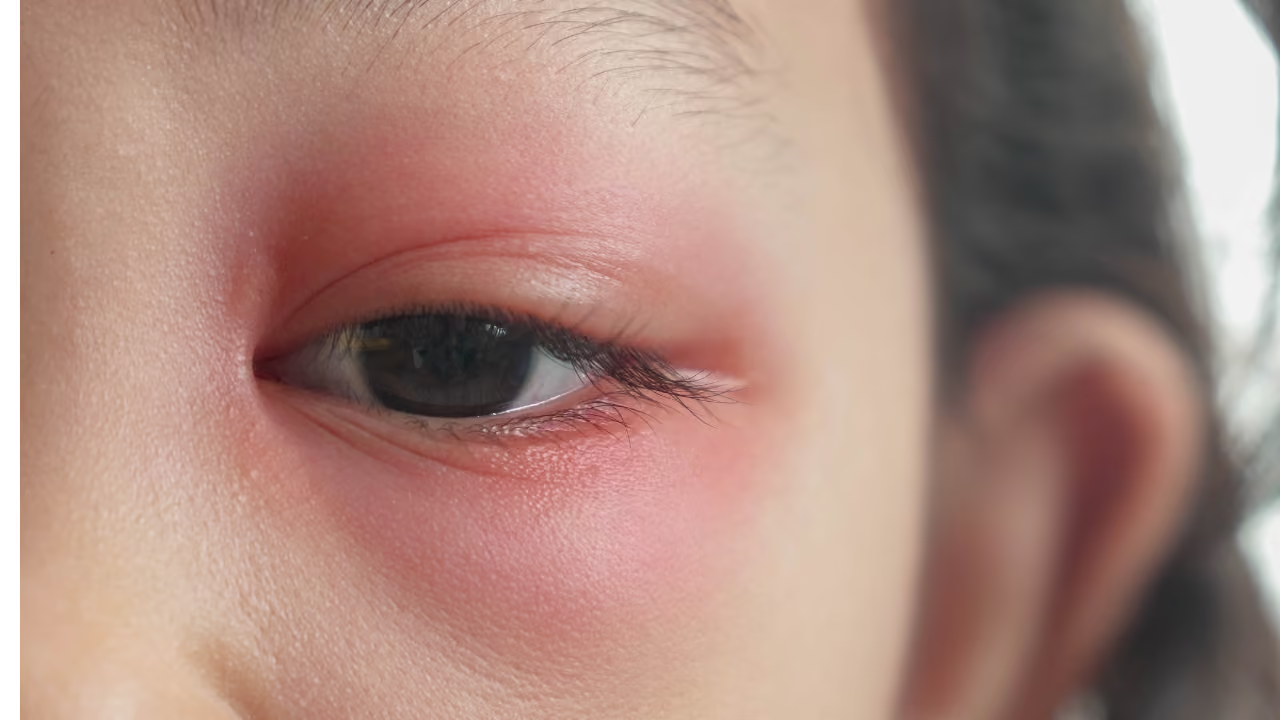
What is facial cellulitis in a child?
Facial cellulitis is a bacterial infection of the skin and underlying soft tissue, most commonly around the eyelids. The infection spreads through the tissue, causing redness, warmth, swelling, and pain. Prompt treatment is essential.
In Belgium and the Netherlands, 80% of cases occur in children under 10 years old, with an average age of 2 years. Young children are more susceptible because their immune system is still developing.
Two types are distinguished, requiring a fundamentally different approach.
Preseptal (periorbital) cellulitis
The most common form in young children. The infection is located in front of the orbital septum. Mild cases are treatable on an outpatient basis. The prognosis is good with prompt treatment.
Orbital cellulitis
Rarer but more serious. The infection is located behind the septum, within the eye socket itself. It always requires hospitalization and intravenous treatment. Can cause serious complications if not treated promptly.
Every case of facial cellulitis in a child requires prompt medical evaluation. More about skin problems in children can be found on the corresponding page.
Do you suffer from Facial cellulitis in a child?
Personalized advice for your skin, completely online. Upload a few photos through the Skindr app and receive medical advice from a licensed dermatologist within 48 hours. No waiting room or referral required.
How does facial cellulitis develop?
Cellulitis in the face occurs when bacteria (usually Staphylococcus aureus or Streptococcus pyogenes) penetrate through a small break in the skin and spread into the deeper tissue layers.
Bacteria enter through a small wound or scratch, an insect bite that has burst open, skin conditions such as eczema, or a sinus infection (sinusitis). Sinusitis is the most common cause of orbital cellulitis in school-aged children. A dental abscess can also be an underlying cause.
Risk factors include young age, a developing immune system, a history of sinus infection, and skin conditions that cause scratching injuries. Young children frequently sustain minor skin damage from falls and play, making them particularly vulnerable.
Symptoms and characteristics of facial cellulitis
The clinical presentation varies depending on the form. Recognizing the distinction is crucial for prompt action.
Preseptal cellulitis
Red, swollen eyelid (one side), warmth and pain in the eyelid area, fever. The eyes move normally, and there is no change in vision.
Orbital cellulitis - alarm symptoms
In addition to the above symptoms: pain with eye movements, double vision (diplopia), bulging eye (proptosis), reduced or altered vision, high fever, severely ill child.
When to go to the emergency department immediately?
Go to the emergency department immediately if there is pain with eye movements, a bulging or misaligned eye, a change in vision or double vision, a fever above 39 degrees in a young child with a swollen eyelid, or asymmetry of the pupils.
Possible complications
Untreated orbital cellulitis can lead to vision impairment (in 3-11% of severe orbital cases) and very rarely blindness, cavernous sinus thrombosis, meningitis, and brain abscess.
Are you concerned about your child's eyelid? Through Skindr, a certified dermatologist will assess the skin within 48 hours. More about Eyelid inflammation in children or a chalazion or hordeolum can be found on the corresponding pages.
Where can facial cellulitis occur?
Facial cellulitis in children most often affects the eyelids (periorbital area). In preseptal cellulitis, the eyelid itself is affected. In orbital cellulitis, the infection spreads to the eye socket behind the septum.
Other locations include the cheeks, nose, lip, and chin. The neck can be affected if an infection spreads. The orbital space becomes involved as an extension from a periocular infection or from the sinuses.
Do you suffer from Facial cellulitis in a child?
Personalized advice for your skin, completely online. Upload a few photos through the Skindr app and receive medical advice from a licensed dermatologist within 48 hours. No waiting room or referral required.
Treatment of facial cellulitis in children
Treatment depends entirely on the type and severity. Prompt medical evaluation is always necessary.
Preseptal cellulitis - mild cases
Outpatient treatment as advised by the doctor. Warm compresses can support recovery. Close follow-up by the doctor is essential: return after 24-48 hours if no improvement occurs.
Preseptal cellulitis (severe) and orbital cellulitis
Hospitalization required for intravenous treatment. Ophthalmological consultation for all cases of orbital cellulitis. CT scan if an abscess is suspected.
Prognosis
With timely treatment, preseptal cellulitis recovers completely, usually within 5-7 days. Orbital cellulitis requires longer follow-up but has a good prognosis with early treatment.
Are you concerned about your child's skin? A certified dermatologist will assess it within 48 hours via Skindr. For acute bulging eye or altered vision: seek immediate emergency medical attention.
Sources: EBPNet - Health and Science - Oogartsen.nl
What doesn't work for facial cellulitis?
Waiting is dangerous with facial cellulitis. The infection can rapidly worsen and spread within hours.
Eye drops or over-the-counter eye ointment do not help with cellulitis. The infection is located in the deeper skin and tissue layers, not on the eye surface. Superficial products cannot reach the infection site.
For orbital symptoms (pain with eye movements, double vision), never treat at home or wait. These are signs of an urgent medical situation.
Starting a treatment yourself with products from your home first-aid kit is not a solution. The correct approach requires medical expertise based on the type and severity of the infection.
Frequently Asked Questions about Facial Cellulitis in Children
Is facial cellulitis contagious?
Cellulitis is not directly contagious from person to person. The bacteria only cause an infection if they enter through a wound or scratch.
How quickly should I consult a doctor?
For a swollen, red eyelid with fever: the same day. For pain with eye movements, a bulging eye, or altered vision: immediately go to the emergency department. These are signs of orbital cellulitis.
Can my child be treated at home?
Mild preseptal cellulitis can be treated at home with close medical follow-up. Orbital cellulitis always requires hospitalization with intravenous treatment.
How long does the treatment last?
Your doctor or dermatologist will discuss which approach and duration suit your child. Orbital cellulitis always requires treatment in hospital.
Can Skindr help with cellulitis in my child?
For mild symptoms without eye involvement, a certified dermatologist via Skindr assesses the skin and provides advice, without a waiting room, within 48 hours. For alarm symptoms: go directly to urgent medical care.


](https://static.legitscript.com/seals/624359.png)