.webp)


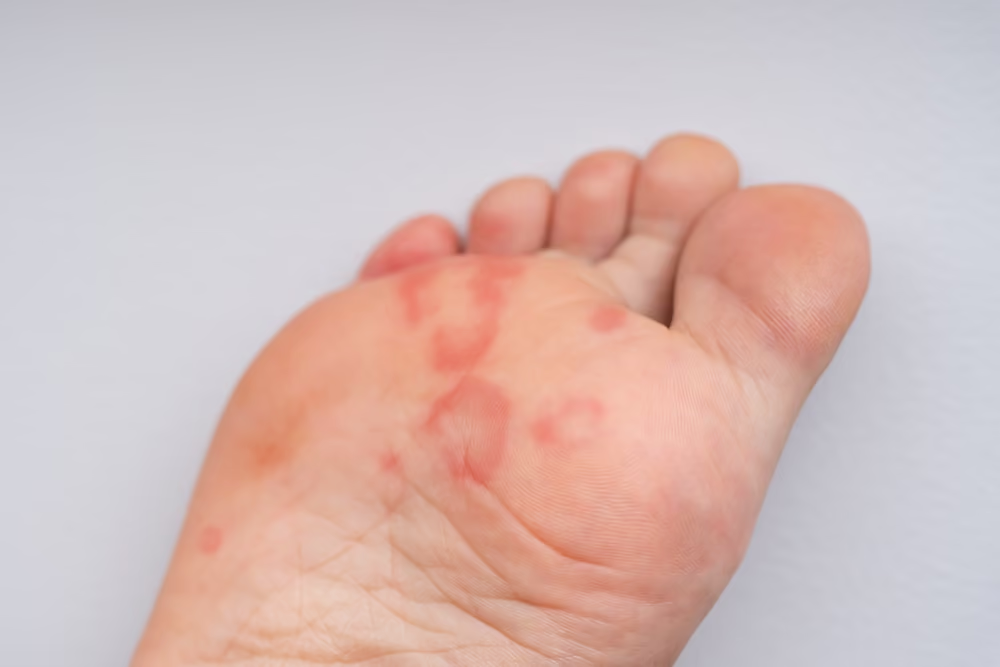
What are skin problems on the feet?
Skin problems on the feet are a common complaint and appear in various forms. Feet are susceptible to infections and irritations due to their moist environment, contact with the ground, and pressure from footwear. In most cases, it concerns one of three types.
Athlete's Foot (tinea pedis)
Athlete's foot, medically tinea pedis, is a fungal infection of the skin of the foot. The condition is also known as swimmer's eczema or athlete's foot, although these terms are somewhat outdated. It is the most common foot skin condition and affects people of all ages.
Eczema on the feet
Eczema on the feet appears in two main forms. Blistering eczema (dyshidrotic eczema) manifests as itchy, watery blisters on the sole or sides of the foot, sometimes followed by scaling and cracks. Contact eczema arises from an irritant or allergic reaction to substances in shoes or socks.
Rash and blisters on the feet
Rash on the feet can also indicate other skin conditions, such as psoriasis or an allergic reaction. Other fungal infections of the skin can occur on the feet. The symptoms sometimes overlap with athlete's foot and eczema, which can make differentiation difficult. Virtually all skin problems on the feet are treatable with proper assessment.
Do you suffer from Foot Skin Problems?
Personalized advice for your skin, completely online. Upload a few photos through the Skindr app and receive medical advice from a licensed dermatologist within 48 hours. No waiting room or referral required.
How do skin problems on the feet arise?
The cause varies by type of foot skin problem, but warmth, moisture, and friction play a role in most.
Risk factors for athlete's foot
Athlete's foot is caused by fungi (dermatophytes) that thrive in warm and humid environments. According to thuisarts.nl , the infection spreads through skin flakes in environments such as swimming pools, showers, and changing rooms. The risk increases when walking barefoot in communal areas, wearing shoes that offer insufficient ventilation, or when the skin between the toes is not properly dried. The skin between the toes, especially between the fourth and fifth toes, is particularly susceptible because it is difficult to keep dry and is less well ventilated.
Causes of foot eczema
Dyshidrotic eczema does not have a single clear cause but is often triggered by factors such as stress, heat, and chronically moist feet. Contact eczema develops due to an allergic or irritant reaction to substances such as rubber, glue, or chromium in shoes. Foot eczema can also occur as a so-called 'id reaction' (dermatophyte reaction): an immune response to a fungal infection elsewhere on the body.
Obesity, diabetes, and neuropathy increase the risk of both conditions because the skin becomes more vulnerable and small lesions are noticed less quickly.
Symptoms and characteristics of skin problems on the feet
Symptoms of athlete's foot include scaling, cracks, and itching, especially between the toes or on the sides of the foot. With eczema on the feet, clear fluid-filled blisters and itching are central. Both conditions can closely resemble each other, sometimes making diagnosis difficult.
When is it athlete's foot?
Athlete's foot typically begins between the toes as white, macerated-looking skin or maceration. As the infection progresses, cracks, redness, and a burning or itchy sensation between the toes. In more severe forms, the condition can spread to the sides of the foot and sometimes the entire sole. On lighter skin, redness is clearly visible, while on darker skin, a grayish or darker discoloration may be seen.
Athlete's foot is contagious: fungal spores can survive for weeks on floors, towels, and in shoes, as described by gezondheidenwetenschap.be. Foot eczema itself is not contagious.
When is it eczema?
Dyshidrotic eczema on the feet appears as small, clear fluid-filled blisters on the sole or sides of the foot. The blisters often itch intensely and can feel painful. After bursting, scaling and dry, red skin develop. With contact eczema of the foot, the rash is more often on the top of the foot.
Unsure if it's athlete's foot or eczema? Through Skindr, a certified dermatologist will assess your feet within 48 hours.
Where do skin problems on the feet occur?
Skin problems on the feet can appear in various locations, depending on the type. The localization provides a useful clue for differentiation.
Athlete's foot typically first appears between the fourth and fifth toes, where the narrow, moist space provides ideal conditions for fungal growth. From there, the infection can spread to the sides of the foot and sometimes the entire sole. If athlete's foot remains untreated, the toenails can also become affected. Toenail fungus as a complication of athlete's foot are recognizable by a thickened, yellow, or brittle nail plate. Athlete's foot also increases the risk of an inflamed nail when the skin barrier around the nail is damaged.
Dyshidrotic eczema appears more often on the sole and sides of the foot, less frequently between the toes. It can also occur on the sides of the fingers, which is a characteristic indicator.
Contact eczema appears at the site of contact: the top of the foot in case of allergy to shoe materials, or the entire foot in case of allergy to sock materials.
Do you suffer from Foot Skin Problems?
Personalized advice for your skin, completely online. Upload a few photos through the Skindr app and receive medical advice from a licensed dermatologist within 48 hours. No waiting room or referral required.
Treatment of skin problems on the feet
Most skin problems on the feet can be treated at home. For athlete's foot, an external antifungal cream is sufficient in most cases; for eczema, avoiding triggering factors and supporting the skin barrier are key.
Self-care and prevention
The first step in treating athlete's foot is to keep the feet thoroughly dry, including between the toes. Use cotton socks that absorb moisture and allow shoes to air out sufficiently. Wear flip-flops in swimming pools, showers, and changing rooms, and never use someone else's towel or footwear. For foot eczema, it is important to avoid contact with potential irritants as much as possible.
Topical treatment
An antifungal cream is available over-the-counter at the pharmacy and works well for athlete's foot. Use the cream for at least two weeks, even after symptoms have disappeared, to prevent recurrence. According to the treatment guidelines for athlete's foot on thuisarts.nl for more severe infections or nail involvement, oral treatment may be necessary.
For eczema on the feet, a dermatologist may recommend an anti-inflammatory cream. For persistent dyshidrotic eczema, light therapy may be an additional treatment option.
When to see a dermatologist for skin problems on the feet?
Consult a dermatologist if symptoms do not improve after two weeks of treatment, if the infection spreads to the nails, if painful sores appear, or if you have diabetes. For people with a diabetic foot as a risk group for athlete's foot extra vigilance is required.
Through Skindr, you will receive advice from a certified dermatologist within 48 hours. No referral from a GP is needed.
What doesn't work for skin problems on the feet?
There are common mistakes in treating foot skin problems that delay recovery or cause damage.
Stopping treatment too early is the most common mistake with athlete's foot. As soon as the flaking disappears, the infection seems gone, but the fungus is still present. If you stop too early, a relapse is almost certain.
Continuing to use shared towels is also a risk: even after healing, the fungus can temporarily still be present on towels and socks. Wash them at a high temperature.
Pricking open blisters yourself may seem tempting with dyshidrotic eczema, but it increases the risk of a bacterial infection. Let the blisters burst spontaneously.
Continuing to walk barefoot in swimming pools or changing rooms, even after treatment: re-infection is quickly possible via the floor.
Socks made of synthetic material retain moisture and worsen both athlete's foot and eczema. Cotton socks are better.
For persistent symptoms that do not respond to treatment, do not self-diagnose. Eczema on the feet, psoriasis, and fungus sometimes look similar and require a different approach.
Frequently asked questions about skin problems on the feet
Is athlete's foot contagious?
Yes. Athlete's foot spreads through skin flakes on floors, shared towels, or footwear. Wear flip-flops in swimming pools and changing rooms, and never use someone else's towel.
Does athlete's foot go away on its own?
Rarely. Athlete's foot almost never goes away without treatment. An external antifungal cream is usually sufficient, but the course of treatment must be completed to prevent relapse.
How do I know if I have athlete's foot or eczema?
Athlete's foot typically starts between the toes with scaling and cracks. Dyshidrotic eczema, on the other hand, appears on the sole of the foot as itchy blisters. Through Skindr, a certified dermatologist will assess your feet within 48 hours.
When should I see a dermatologist for athlete's foot?
Consult a dermatologist if symptoms do not improve after 2 weeks of treatment, if you have nail fungus, or if you have diabetes. Through Skindr, you will receive advice within 48 hours, no referral needed.
Can Skindr help with foot skin problems?
Yes. A certified Skindr dermatologist will assess your skin concerns and provide tailored treatment advice within 48 hours. No waiting room, no referral needed.
Are foot skin problems different in children?
Athlete's foot is rarer in young children but still possible. In babies and toddlers, diaper rash or eczema are more common. If you're unsure, a dermatologist can quickly differentiate this.



](https://static.legitscript.com/seals/624359.png)