.webp)


What are Fordyce spots?
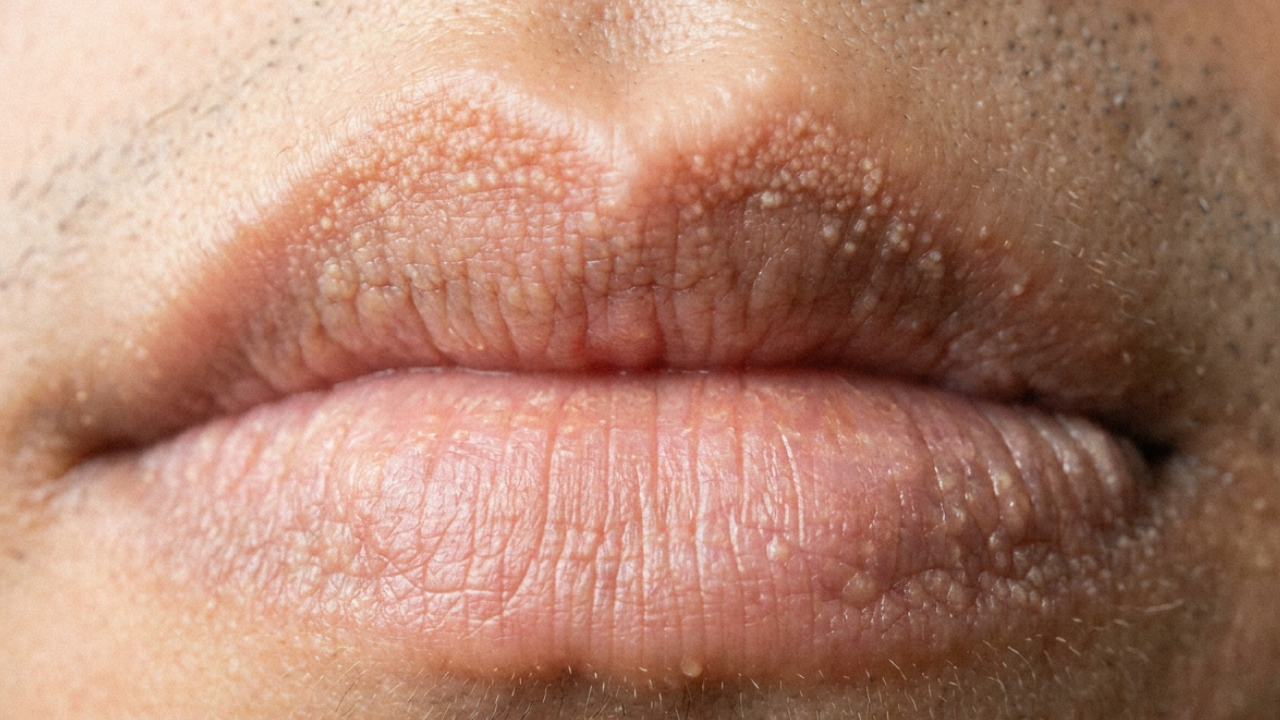
Fordyce spots are small white or yellow spots that develop when sebaceous glands form in an area where hair follicles are normally absent. The medical term is "ectopic sebaceous glands". Named after dermatologist John Addison Fordyce (1896). They are also commonly referred to as "sebaceous bumps" or "oil glands".
The spots are harmless, not contagious, and pose no health risk. They are not an STI and not a sign of poor hygiene.
An estimated 70 to 80 percent of adults have Fordyce spots to varying degrees. Many people discover them purely by chance. It's understandable to be concerned if you notice unfamiliar spots in a sensitive area. However, Fordyce spots are as normal as freckles. They are also sometimes confused with pearly papules, another harmless condition that occurs in similar locations.
Do you suffer from Fordyce spots?
Personalized advice for your skin, completely online. Upload a few photos through the Skindr app and receive medical advice from a licensed dermatologist within 48 hours. No waiting room or referral required.
How do Fordyce spots develop?
Fordyce spots develop when sebaceous glands form outside a hair follicle during embryonic development. They produce sebum but lack a normal excretory duct, making the small gland visible as a white or yellow spot. There may be a genetic component. No lifestyle factors (hygiene, diet, sexual behavior) play a role. DermNet NZ mentions a rare association with Lynch syndrome (Muir-Torre variant), but this is exceptionally rare in the vast majority of cases.
Symptoms and characteristics of Fordyce spots
Fordyce spots are 1 to 3 mm in size, white, yellowish-white, or light yellow, located just beneath the skin surface or mucous membrane. They appear in clusters or groups. No itching, no pain, no discharge, no growth, no color change.
On light skin tones: clearly visible as yellowish-white dots. On darker skin tones: less noticeable, recognizable as small, soft bumps.
If a spot grows, changes color, or is accompanied by pain or discharge: consult a dermatologist. In that case, it's likely not Fordyce spots. Sometimes itch or redness indicate a different skin condition that needs to be assessed separately.
Where do Fordyce spots appear?
In men, on the penis and scrotum: clusters on the shaft and scrotum. Sometimes confused with pearly penile papules or other benign bumps, but Fordyce spots are smooth, white/yellow, and have been stable for years.
In women, on the labia and vulva: labia minora and majora. Asymptomatic and benign. Sometimes there is unwarranted concern about a sexually transmitted infection such as genital herpes, but Fordyce spots are never infectious.
On the lips and in the mouth: border of the upper or lower lip and inside of the cheeks (buccal mucosa). Sometimes confused with cold sores or herpes simplex, but are painless, non-infectious, and stable. More about conditions in the mouth and lip region: skin conditions and the mouth.
Do you suffer from Fordyce spots?
Personalized advice for your skin, completely online. Upload a few photos through the Skindr app and receive medical advice from a licensed dermatologist within 48 hours. No waiting room or referral required.
Treatment and prognosis of Fordyce spots
Fordyce spots are completely harmless. Medically, there's no need to do anything about them. They generally don't disappear spontaneously but may become less noticeable with age.
What doesn't work at home: squeezing (damages skin, gland remains), creams/vinegar/tea tree oil (no proven effect). According to huidziekten.nl , several medical treatment options are available.
Medical treatment options for cosmetic concerns: CO2 laser therapy (most common method), electrocoagulation, photodynamic therapy (PDT), bichloroacetic acid or a cream that supports skin renewal, available through a doctor. No method guarantees permanent removal. Skindr assesses and can refer to the appropriate specialist.
Are Fordyce spots a cosmetic concern for you, or are you unsure if they are indeed Fordyce spots? Seek advice from a certified Skindr dermatologist: discreetly and within 48 hours.
What not to do with Fordyce spots
Squeezing or picking: damages skin, increases infection risk, spot reappears. Aggressive scrubs or acids: damage skin without effect. Online "miracle cures": no scientific basis. Panic: Fordyce spots are not an STD, not cancer, not an infection.
Frequently Asked Questions about Fordyce spots
Are Fordyce spots contagious?
No, absolutely not. They are a congenital anomaly in sebaceous gland development, never transmissible through skin contact or sex.
How do I know if they are Fordyce spots or genital warts?
Fordyce spots: smooth, white/yellow, painless, stable for years. Genital warts: rougher, can grow, change over time. If in doubt: consult a dermatologist. Also chlamydia and other STDs can cause skin manifestations that are initially mistaken for Fordyce spots.
Can I remove Fordyce spots myself?
No. Squeezing is painful, ineffective, and increases the risk of infection. Medical removal via laser or electrocoagulation is performed by a dermatologist.
Do Fordyce spots go away on their own?
Rarely completely. They may become less visible with age.
When to see a dermatologist?
If you are unsure what the spots are, if they grow, cause pain or discharge, or if you desire cosmetic treatment. Skindr offers discreet advice within 48 hours.
Resources
1. Skindr dermatologists — skindr.com
2. DermNet NZ — dermnetnz.org
3. Huidarts.com — huidarts.com
4. Thuisarts.nl — thuisarts.nl


](https://static.legitscript.com/seals/624359.png)