.webp)


What is a hematoma?
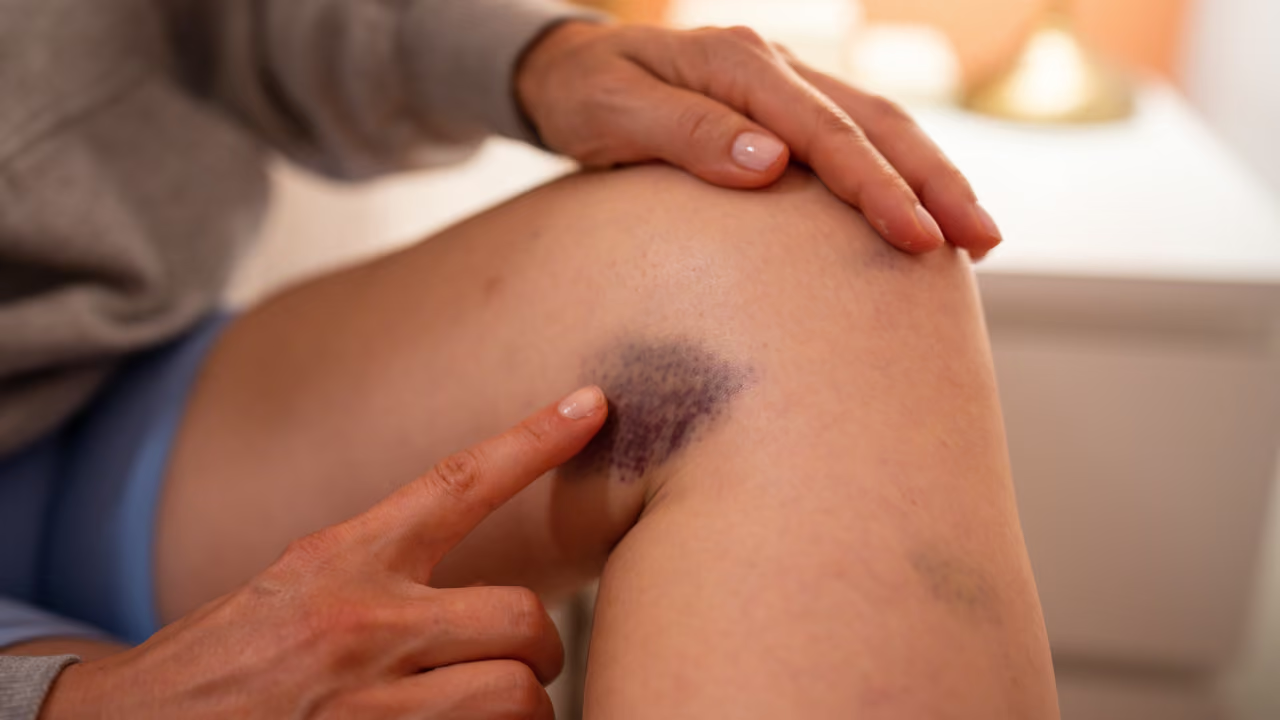
A hematoma is a localized accumulation of blood outside the blood vessels, which occurs when vessels rupture due to external force or spontaneously. Colloquially, it is referred to as a bruise. It is useful to distinguish between two terms: an ecchymosis is a superficial, flat discoloration of the skin without palpable swelling, whereas an actual hematoma is a palpable accumulation of blood in deeper tissue where the skin feels soft or swollen.
Hematomas occur in people of all ages, but older adults and those taking blood thinners are more prone to developing bruises, sometimes larger ones, due to the more fragile condition of their blood vessel walls. Most hematomas are harmless and disappear on their own within one to three weeks.
In addition to subcutaneous (under-the-skin) hematomas, there are also deeper forms: intramuscular hematomas in muscle tissue and subdural hematomas around the brain. The latter are a medical emergency and fall outside the scope of a dermatologist. A common bruise after a bump falls into the category of subcutaneous hematomas.
Do you suffer from Hematoma?
Personalized advice for your skin, completely online. Upload a few photos through the Skindr app and receive medical advice from a licensed dermatologist within 48 hours. No waiting room or referral required.
How does a hematoma occur?
A hematoma occurs when small or larger blood vessels rupture due to an external force, such as a bump, fall, or compression. Blood then leaks into the surrounding tissue, causing the characteristic discoloration. As the extravasated blood breaks down, it undergoes a recognizable color progression: reddish-purple in the first two days, bluish-purple from day three to five, green from day five to seven, and yellowish-brown from day seven to ten. After one to three weeks, the discoloration completely disappears.
Certain factors increase the risk. The use of blood thinners makes it more difficult for the body to quickly seal small injuries. Older age is associated with thinner, more fragile skin and more delicate blood vessels. A deficiency in vitamin C or K affects, respectively, the strength of the vessel wall and blood clotting. Intense contact and elite sports increase the likelihood of bumps and falls.
Spontaneous hematomas that occur without a clear cause are a sign that an underlying cause, such as a clotting disorder or hives (in cases of vasculitis), should be ruled out. In people taking blood thinners, a growing hematoma indicates a similar mechanism as with melanoma: early recognition is crucial for the correct approach. You can also read more about skin color changes in relation to rosacea, a condition with a similar blood flow mechanism.
Symptoms and signs of a hematoma
The most distinctive feature of a hematoma is the skin discoloration, which follows the progression of blood breakdown. In the initial phase (day one to two), the area is reddish-purple and tender. The color then shifts to bluish-purple (day three to five), green (day five to seven), and finally yellowish-brown (day seven to ten). When touched, the area is tender or painful; sometimes slight swelling and warmth are also palpable.
On lighter skin tones, the color progression is clearly visible. On darker skin tones, the discoloration is less distinct. Here, swelling, warmth, and pain upon touch are better indicators than the visible color.
Warning signs that require medical evaluation: a hematoma that appears without a clear cause, a bruise that grows rapidly instead of fading and shrinking, hematomas accompanied by fever, multiple spontaneous bruises at once, or a bruise that has not started to disappear after three weeks. These signs may indicate an underlying skin condition or clotting disorder. You can read more about skin discoloration and redness on DermNet NZ over bruising.
Where do hematomas occur?
Hematomas most commonly occur in areas with a thin layer of skin over bony prominences: the shins, knees, arms, and the back of the hands are classic locations. In older adults, the forearms are particularly vulnerable due to thinner skin and fragile capillaries. After an injection or blood draw, a hematoma typically appears on the inside of the elbow or on the upper arm.
Deeper hematomas in muscle tissue are less visible on the surface but cause more pain with movement. In children, hematomas are more common on the legs and head after falls. Repeated hematomas in unusual locations, without a clear external cause, warrant medical attention. For leg wounds that do not heal properly, you can find more information on the page open leg wound. Also, pressure ulcers can be accompanied by subcutaneous hemorrhages due to prolonged pressure.
Do you suffer from Hematoma?
Personalized advice for your skin, completely online. Upload a few photos through the Skindr app and receive medical advice from a licensed dermatologist within 48 hours. No waiting room or referral required.
Treatment of a hematoma
Most hematomas disappear on their own and do not require medical treatment. However, there are measures that can accelerate recovery and relieve pain.
In the first 24 to 48 hours after the trauma, cooling is the most effective first aid. Apply a cold pack or ice wrapped in a cloth to the area for 15 to 20 minutes, with breaks in between. Direct application of ice to the skin is not recommended. Rest, compression with an elastic bandage, and elevating the affected body part (the RICE principle: Rest, Ice, Compression, Elevation) limit the extent of the hemorrhage.
After the first 48 hours, gentle warmth, such as a warm pack, can accelerate the breakdown of clotted blood. However, warmth in the first 24 hours is strongly discouraged: it increases blood flow and thus the size of the hematoma.
When is medical evaluation necessary? For spontaneous hematomas without an identifiable cause, for hematomas that grow larger instead of smaller, with fever, with frequently recurring bruises, or for a hematoma that does not begin to fade after three weeks.
Through Skindr, you will receive advice from a certified dermatologist within 48 hours regarding unexplained or persistent bruises.
What doesn't work against a hematoma?
Applying heat immediately after trauma is a common mistake. In the first 24 hours, heat increases blood flow, causing the hematoma to expand rather than diminish. Use cooling in the initial phase and apply heat after 48 hours.
Vigorous massage over the bruise irritates the damaged tissue and slows down recovery instead of speeding it up. Light pressure with a compression bandage is useful; intensive rubbing or kneading is not.
Waiting and doing nothing about recurrent spontaneous bruises without a clear cause is also unwise. Recurrent hematomas without trauma can be a sign of an underlying problem that warrants medical evaluation. More information about skin wounds and recovery can also be found at huidziekten.nl on wounds. Also compare the page burns for related information on tissue damage and recovery.
Frequently asked questions about a hematoma
Is a hematoma contagious?
No. A hematoma is a localized collection of blood in the tissue, not an infectious disease. It is not transmissible.
Does a hematoma disappear on its own?
Yes, in most cases, hematomas disappear within one to three weeks. Spontaneous or persistent hematomas warrant medical attention.
What is the difference between a hematoma and a bruise?
An ecchymosis (bruise) is a superficial, flat discoloration without palpable swelling. A true hematoma is a palpable collection of blood in deeper tissue, sometimes with noticeable swelling.
When should I see a dermatologist for a hematoma?
For spontaneous hematomas without a clear cause, hematomas that do not shrink, fever, or recurrent bruises. Through Skindr, you will receive an assessment from a certified dermatologist within 48 hours.
Can Skindr help with a hematoma?
Yes. For unexplained or persistent bruising, send a photo via Skindr and receive advice from a certified dermatologist within 48 hours.


](https://static.legitscript.com/seals/624359.png)