.webp)


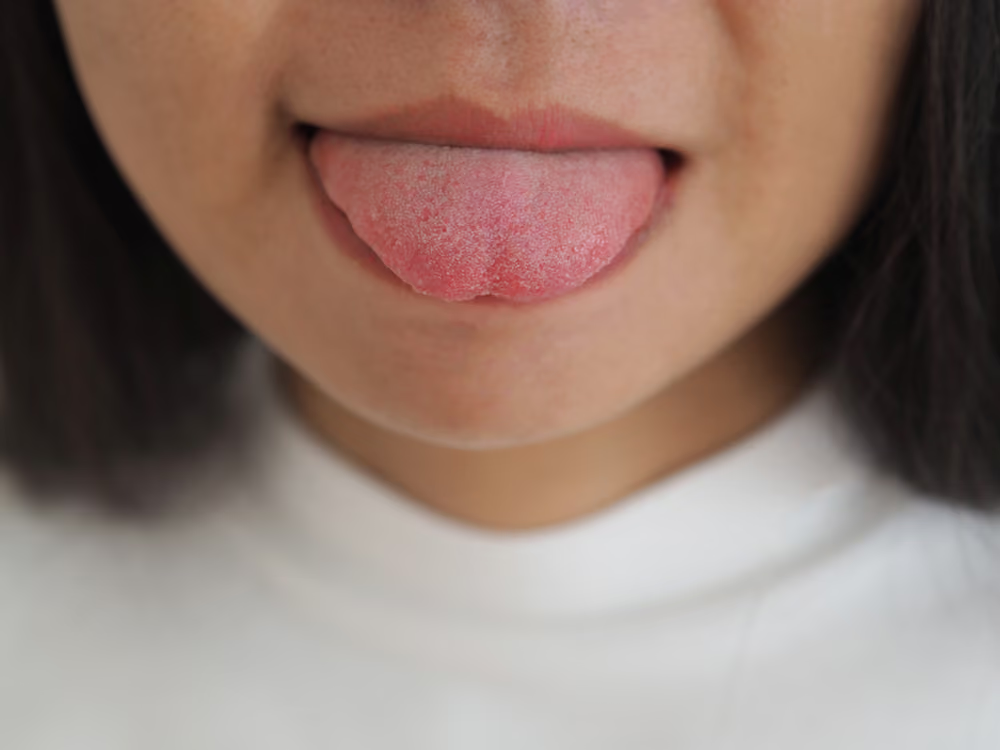
What is an inflamed tongue?
An inflamed tongue, the medical term is glossitis (ICD-10: K14.0), is an inflammation or irritation of the tongue tissue. The tongue can become red, swollen, or painful, and its surface may change in appearance. In most cases, an inflamed tongue is easily treatable once the cause is clear.
There are different forms of glossitis. In acute glossitis, symptoms appear suddenly and are often severe. Chronic glossitis persists longer and often has an underlying cause. Atrophic glossitis is characterized by the disappearance of the tongue's taste papillae, giving the tongue a smooth, bright red surface: this is often a sign of a nutritional deficiency. Geographic tongue, finally, is a benign variant where the tongue shows irregular, migrating red and white patches. This is generally not dangerous and does not require treatment.
Do you suffer from Inflamed tongue?
Personalized advice for your skin, completely online. Upload a few photos through the Skindr app and receive medical advice from a licensed dermatologist within 48 hours. No waiting room or referral required.
How does an inflamed tongue develop?
An inflamed tongue can have multiple causes. Identifying the correct cause is key to targeted treatment.
Fungal infection
The most common infectious cause is a candida infection in the mouth. The tongue then develops a white, cheese-like coating. More about a fungal infection in the mouth can be read on the page about skin diseases and the mouth.
Irritation from dentures or friction
Poorly fitting dentures or mechanical friction from sharp teeth or braces can cause chronic irritation of the tongue's mucous membrane.
Nutritional deficiencies
A deficiency of vitamin B12, iron, or folic acid can lead to atrophic glossitis, where the papillae disappear and the tongue develops a smooth, bright red surface. Supplementation of the missing nutrient usually leads to recovery.
Infections
In scarlet fever, the tongue develops a typical strawberry-like appearance (strawberry tongue).
Smoking and poor oral hygiene
Smoking chronically irritates the mucous membrane of the tongue. Poor oral hygiene increases the risk of infections.
Allergy or reaction to products
Some people react to ingredients in toothpaste, mouthwash, or certain foods. Certain medications can also cause inflammation of the tongue's mucous membrane.
Symptoms and characteristics of an inflamed tongue
The symptoms of an inflamed tongue can vary greatly, depending on the cause.
Color change is one of the most visible signs: the tongue can be bright red (nutritional deficiency), white (candida), or patchy red and white (geographic tongue). The color change is usually clearly visible on both light and dark skin tones.
Change in tongue surface: in atrophic glossitis, the papillae disappear and the tongue feels smooth. In infectious glossitis, the papillae may be swollen, and erosions or small ulcers may be present.
Sensations include burning, pain when eating or speaking, sensitivity to acidic or spicy foods, and a dry mouth. Loss of taste is an aspect that patients experience but which almost no source mentions: in atrophic glossitis or candida, the sense of taste can be temporarily diminished. After successful treatment, this usually recovers completely. More about burning mouth and tongue without visible inflammation (glossodynia) can be found on the page about skin diseases and the mouth.
White or red spots that persist for more than two weeks or do not disappear with simple self-care warrant medical attention. If you're unsure? A certified Skindr dermatologist will assess your concern within 48 hours.
Where does an inflamed tongue appear?
An inflamed tongue can affect the entire tongue, or only a part of it. The location often provides a clue about the cause.
Irritation due to an allergy, mechanical friction, or a sharp tooth or denture is often seen at the tip and sides of the tongue. The dorsum of the tongue is the most visible location: here, candida manifests as a white coating and atrophic glossitis as a smooth, red surface. The underside of the tongue may show canker sores or small ulcers. Geographic tongue is characterized by migrating patches across the entire dorsum of the tongue, which can change position from day to day: this is a benign condition.
An important emergency signal: if the tongue suddenly swells severely and breathing becomes difficult, this is a medical emergency. In that case, call 112.
Do you suffer from Inflamed tongue?
Personalized advice for your skin, completely online. Upload a few photos through the Skindr app and receive medical advice from a licensed dermatologist within 48 hours. No waiting room or referral required.
Treatment of an inflamed tongue
The treatment for an inflamed tongue is primarily aimed at the cause.
For a Candida infection, antifungals are used. In case of a nutritional deficiency (vitamin B12, iron, folic acid), supplementation is the appropriate step. For irritation caused by ill-fitting dentures or a sharp tooth, adjusting or removing the irritating factor is essential. For scarlet fever, antibiotic treatment prescribed by a doctor is necessary. In case of an allergic reaction to toothpaste or mouthwash, switching products is the first measure.
Self-care supports healing: use a soft toothbrush, eat soft foods as long as the tongue is sensitive, avoid alcohol, smoking, acidic, heavily spiced, and hot foods. Good oral hygiene is a basic requirement for all forms of glossitis.
Consult a doctor if symptoms persist for more than two weeks, if there are white or red spots of unclear origin, if symptoms return after treatment, or if the pain is severe. Through Skindr, you receive advice from a certified dermatologist within 48 hours, without a referral or waiting room.
What doesn't work in the treatment of an inflamed tongue?
Alcohol-based mouthwash is a common mistake: it dries out the mouth and further irritates the inflamed mucous membrane. Brushing the tongue too hard damages the sensitive tissue.
Waiting when symptoms persist for more than two weeks or when unclear white or red spots are visible is not advisable: always have this assessed by a dermatologist. Suspecting and treating Candida yourself without assessment can lead to incorrect treatment of another condition.
Eating heavily spiced, acidic, or hot foods while the tongue is sensitive significantly slows down recovery. Are you unsure about the right approach? Through Skindr, you can reach a certified dermatologist within 48 hours.
Frequently asked questions about an inflamed tongue
Is an inflamed tongue contagious?
That depends on the cause. A Candida infection or scarlet fever can be transmissible through direct contact. Glossitis due to a nutritional deficiency or irritation is not contagious. If in doubt, it is advisable to consult a dermatologist.
How long does an inflamed tongue last?
Simple irritation can disappear within a few days. For an infection or nutritional deficiency, the duration depends on how quickly treatment begins. With timely treatment, symptoms usually disappear within one to two weeks.
Can an inflamed tongue cause loss of taste?
Yes. In atrophic glossitis or a Candida infection, the taste buds can be temporarily affected, causing loss of taste. After successful treatment, the sense of taste usually recovers completely.
What helps with an inflamed tongue?
That depends on the cause: antifungals for Candida, supplementation for a deficiency, removing an irritant for mechanical irritation. Additionally, soft foods, quitting smoking, and a soft toothbrush help.
When should I see a dermatologist for an inflamed tongue?
For symptoms lasting longer than two weeks, unexplained white or red spots, severe pain, or when the tongue swells to the extent that breathing becomes difficult. Through Skindr, you will receive an assessment within 48 hours.
Can Skindr help with an inflamed tongue?
Yes. A certified dermatologist will assess your complaint and photos within 48 hours and provide personalized advice, without a referral from your GP.
Resources
Skindr dermatologists (medically verified)
Health and Science (CEBAM/EBPNet): Inflamed tongue (glossitis)



](https://static.legitscript.com/seals/624359.png)