.webp)


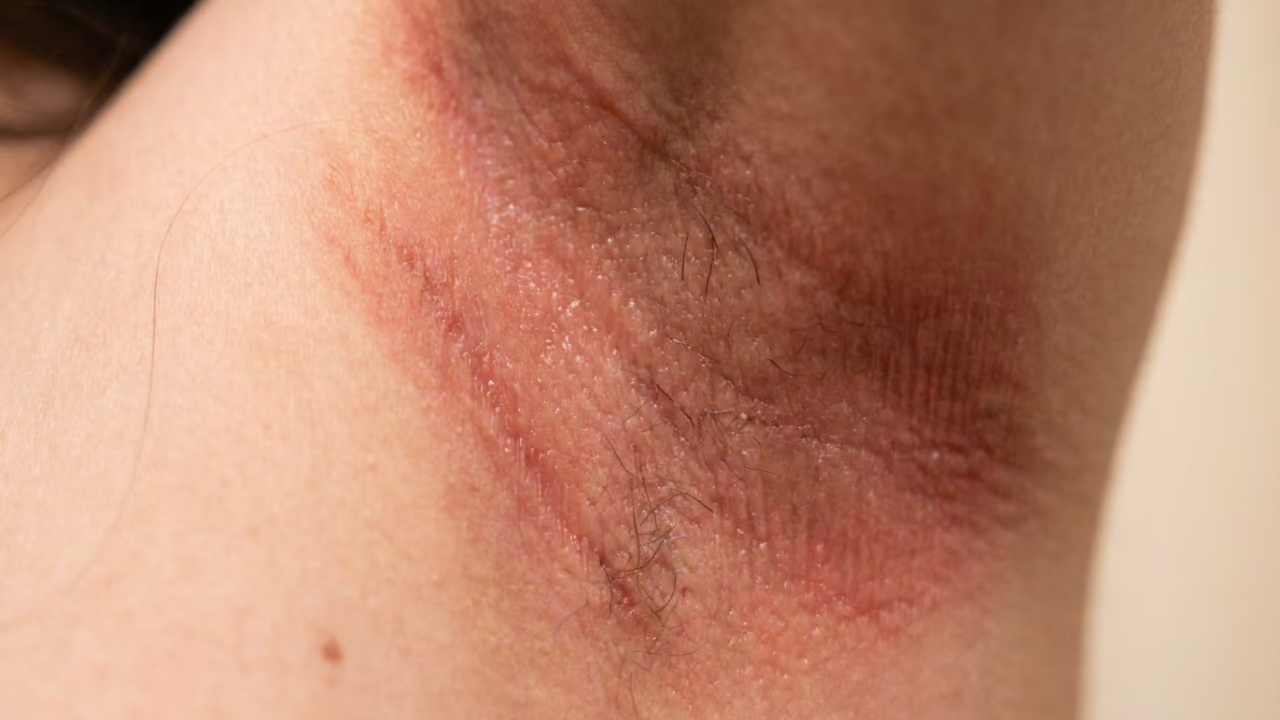
What is intertrigo?
Intertrigo is a skin irritation that develops in skin folds, also popularly known as "chafing." The condition is caused by the combination of friction, heat, and moisture in areas where skin makes prolonged contact with itself. This damages the skin barrier, leading to a red, itchy inflammation.
Important to know: intertrigo itself is not an infection. However, the skin fold is an ideal environment for fungi or bacteria, which can lead to a secondary infection. In that case, it's called infected intertrigo, where the treatment differs from that of regular chafing.
Intertrigo has nothing to do with poor hygiene. It is a common, mechanical skin problem that can affect anyone, regardless of age or background. Babies get it in the diaper area or neck folds, while older adults more often develop it in abdominal folds or between the buttocks. The condition is closely related to eczema and is also called intertriginous eczema, although it requires a specific approach.
The condition is not contagious in the classical sense. In rare cases, with an additional Candida infection, it can be transmitted through close skin contact, but in most cases, you don't need to worry about that.
Do you suffer from Intertrigo?
Personalized advice for your skin, completely online. Upload a few photos through the Skindr app and receive medical advice from a licensed dermatologist within 48 hours. No waiting room or referral required.
How does intertrigo develop?
Intertrigo develops due to three interconnected factors: heat, moisture, and friction in skin folds. When skin constantly rubs against itself in a warm, moist environment, the skin barrier becomes damaged, leading to inflammation.
The mechanism works as follows: friction gradually abrades the top layer of skin, making it vulnerable. Sweat and moisture then macerate the skin tissue, making it soft and easily irritable. Heat accelerates this process while simultaneously creating ideal conditions for microorganisms to grow.
Certain people are more prone to intertrigo. Obesity plays a significant role: extra skin folds mean more friction and moisture over a larger area. Babies are vulnerable in the diaper area and neck folds. In older adults, the skin is thinner and less resilient. Diabetics sweat more, have higher blood sugar levels that promote fungal growth, and heal slower. Athletes get chafing from synthetic underwear and prolonged sweating during intense exertion.
When an infection occurs, Candida is the most common complication. You recognize it by small red dots just outside the central red patch, known as satellites. A bacterial infection manifests with more inflammation, pustules, and sometimes fever. A ringworm or fungal infection is often confused with intertrigo, making a correct assessment and targeted treatment necessary.
Symptoms and characteristics of intertrigo
The most recognizable symptom of intertrigo is a red, moist patch in a skin fold, accompanied by itching and a burning or painful sensation. The skin feels soft and is easily damaged by touch. Prolonged irritation can lead to small fissures or scaling.
On lighter skin tones, intertrigo is clearly visible as a bright pink to red area. On darker skin tones, scaling, a darker or shiny texture, and a wetter feel are often the first signs.
In the case of a secondary Candida infection, small red pustules appear just outside the central red patch. A slight characteristic odor may also be present. A bacterial infection causes more pronounced inflammation, sometimes with pus.
It is useful to distinguish intertrigo from other skin conditions. Jock itch (tinea cruris) has a characteristic ring-shaped, scaly border. Erythrasma is brownish-pink and fluoresces coral red under a special lamp. With persistent itching in the skin folds or if symptoms spread, a targeted assessment is advisable.
Are you unsure if you have intertrigo or another skin condition? A certified dermatologist will assess your skin via Skindr within 48 hours. Also, pay attention to warning signs such as spreading despite treatment, open wounds, or fever.
Where does intertrigo occur?
Intertrigo can occur anywhere two skin surfaces are in prolonged contact, but some locations are clearly more frequently affected.
Under the breasts is one of the most common locations for women. The combination of gravity, perspiration, and constant friction makes this area particularly vulnerable, especially in warm weather.
The groin and inner thighs are also classic locations, with an increased risk of an additional Candida infection in people with diabetes.
In the armpits, the same combination of heat and moisture plays a role, where deodorant or antiperspirant can further irritate already damaged skin.
Other locations include the abdominal fold, the gluteal cleft, neck folds in babies, and the spaces between fingers and toes.
Do you suffer from Intertrigo?
Personalized advice for your skin, completely online. Upload a few photos through the Skindr app and receive medical advice from a licensed dermatologist within 48 hours. No waiting room or referral required.
Treatment of intertrigo
The basis of intertrigo treatment is simple: keep the affected area clean, dry, and cool. This gives the skin a chance to heal.
Clean the area with a mild, fragrance-free wash product and then pat the skin completely dry, without rubbing. A zinc-containing cream or protective paste helps restore the skin barrier. Cotton, breathable clothing promotes moisture wicking and reduces friction.
For an additional Candida fungal infection, an antimycotic cream is recommended. For a bacterial infection, treatment is necessary and always requires guidance from a doctor or dermatologist.
Prevention is just as important as the treatment itself. A healthy weight helps reduce the number of skin folds. A cornstarch-based or antifungal powder can limit moisture in deeper folds. More about eczematous skin problems that resemble intertrigo can be found on the page about contact eczema en atopic eczema in adults.
Intertrigo in babies: what can you do?
In babies, you treat intertrigo by frequently changing diapers, allowing the skin to dry completely, and applying a barrier cream. More about skin problems in children can be found in our comprehensive overview.
Through Skindr, you will receive advice from a certified dermatologist within 48 hours regarding persistent or recurring intertrigo.
What doesn't work against intertrigo?
Aggressive scrubbing or vigorous rubbing further damages the already vulnerable skin barrier. This worsens inflammation and makes the skin more susceptible to infections.
Regular talcum powder is also not recommended: it clumps together in skin folds, retains moisture instead of absorbing it, and thus increases the risk of irritation and fungal growth. Preferably use cornstarch-based powder or a specific antifungal powder.
Heavily perfumed soap or greasy creams further irritate damaged skin. Waiting it out with recurring intertrigo is also not wise: a recurrence indicates an underlying factor that needs to be addressed fundamentally.
Frequently asked questions about intertrigo
Is intertrigo contagious?
Intertrigo itself is not contagious: it is a mechanical skin irritation, not an infectious disease. In the case of an additional Candida infection, the fungus can, in rare cases, be transmissible through close skin contact.
Does intertrigo disappear on its own?
Mild intertrigo can improve once the skin is kept dry and cool. However, without addressing the underlying cause, such as obesity or chronic perspiration, it often recurs.
When should I see a dermatologist for intertrigo?
Consult a dermatologist if intertrigo does not improve with self-care, recurs frequently, or if the assessment is unclear. With Skindr, this is possible within 48 hours.
What is the difference between intertrigo and jock itch?
Intertrigo does not have a sharp border and spreads diffusely within the skin fold. Jock itch (tinea cruris) has a ring-shaped pattern with a scaly, active border on the outside.
Is intertrigo the same as eczema?
Intertrigo is also known as intertriginous eczema, and there is a strong overlap. However, the approach is not always identical: eczema has broader causes and can also occur outside of skin folds.
Can Skindr help with intertrigo?
Yes. For persistent or recurring intertrigo, a certified dermatologist will assess your skin within 48 hours via Skindr. You will receive personalized advice without a waiting period.
Resources
Skindr certified dermatologists (www.skindr.com)
DermNet NZ: Intertrigo
Thuisarts.nl: Intertrigo
Huidarts.com: Intertrigo
Huidziekten.nl: Intertrigo



](https://static.legitscript.com/seals/624359.png)