.webp)


What are pearly penile papules (pearl necklace)?
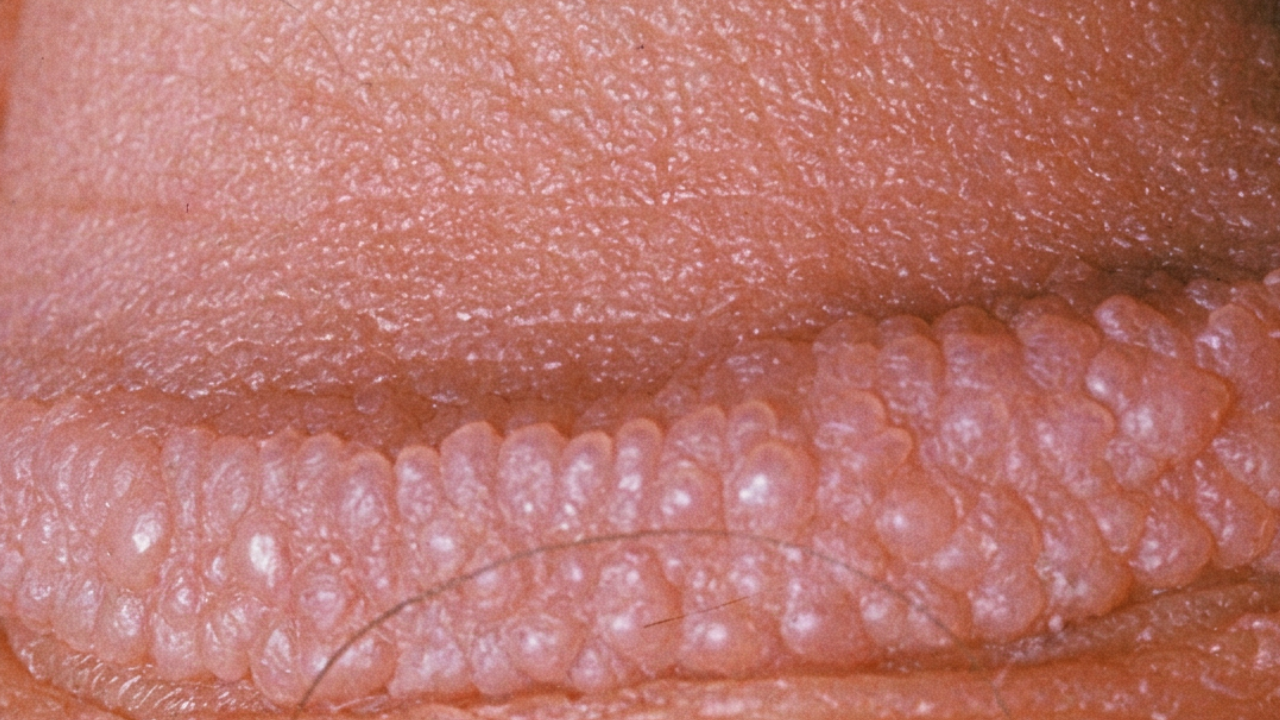
Pearly penile papules (PPP), also known as pearl necklace, glans pearls, or hirsuties papillaris penis, are small, benign bumps that form a regular ring along the corona of the glans. They are completely harmless, not a sexually transmitted infection, and have nothing to do with hygiene or sexual behavior. Medically, they are angiofibromas: small structures of connective tissue and blood vessels that form during skin development.
PPP occur in an estimated 20 to 30 percent of all men. It is therefore a very common skin variation, not an exception. They typically appear after puberty and remain present thereafter.
It is not uncommon for men to be concerned when discovering these bumps and fear they may have a sexually transmitted infection. This concern is understandable but unfounded. PPP should not be confused with genital herpes, molluscum contagiosum or genital warts (caused by the HPV virus). The typical characteristic is their regular, ring-shaped arrangement along the corona. If in doubt, an assessment by a certified dermatologist is the quickest way to clarity.
Do you suffer from Pearl necklace?
Personalized advice for your skin, completely online. Upload a few photos through the Skindr app and receive medical advice from a licensed dermatologist within 48 hours. No waiting room or referral required.
How do pearly penile papules develop?
Pearly penile papules develop when small angiofibromas form during skin development around the corona of the penis. Angiofibromas are benign structures composed of blood vessels and connective tissue. The exact cause of their formation is not fully known, but there is no connection whatsoever to infection, disease, hygiene, or sexual behavior.
PPP are not a consequence of a sexually transmitted infection and are not caused by a virus such as HPV. They typically appear after puberty, when skin development is further complete. They are slightly more common in uncircumcised men, but also occur in circumcised men. Their number may increase, but individual papules do not grow larger and cause no symptoms.
Symptoms and Characteristics of Pearly Penile Papules
The bumps in pearly penile papules are 1 to 2 millimeters in size, skin-colored to whitish or pearly-lustrous, and smooth-surfaced. They form a regular row, or sometimes a double row, along the entire corona of the glans. There is no itching, no pain, no bleeding, and no growth of the individual bumps.
The most distinguishing characteristic compared to genital warts is their regularity: PPP are neatly arranged in a row along the corona, whereas genital warts are irregular, have a cauliflower-like structure, and can also occur outside the corona.
On both light and dark skin tones, the regular crown is usually clearly visible. On darker skin, the papules may have slightly less contrast, but their shape and placement remain recognizable.
If you have doubts about their appearance, if the papules are irregular or growing rapidly, or if you experience additional symptoms, an assessment by a certified dermatologist is advisable. If in doubt, also consult our page on chlamydia for more context on STD-related skin conditions. More information on genital skin diseases can be found via DermNet NZ, the international reference source for dermatologists.
Where do pearly penile papules occur?
Pearly penile papules are found exclusively on the coronal ridge (corona glandis) of the glans penis, arranged in a crown-like fashion. They do not appear on the penile shaft, scrotum, or other body parts.
In women, a similar, equally harmless skin variation exists: hirsuties papillaris vaginae. These are small papules on the inner labia that have the same origin and benign nature as PPP in men.
Papules in other genital locations, or papules with a different texture or arrangement, always warrant a dermatologist's consultation.
Do you suffer from Pearl necklace?
Personalized advice for your skin, completely online. Upload a few photos through the Skindr app and receive medical advice from a licensed dermatologist within 48 hours. No waiting room or referral required.
Treatment for Pearly Penile Papules
Medical treatment for pearly penile papules is not necessary, as they pose no health risk. However, PPP do not disappear on their own and remain present throughout life. Those who find them cosmetically bothersome do have options.
The most common treatments are CO2 laser treatment, fractional CO2 laser, and PLEXR (plasma treatment). Cryotherapy (freezing) has a success rate of 80 to 90 percent and is a less invasive choice. Electrocoagulation is an additional option. The indicative cost for treatment ranges from 300 to 900 euros, depending on the technique and extent.
When is it advisable to consult a dermatologist? If you have doubts about what it is (are they PPP or something else?), if they cause cosmetic bother and you desire treatment, or if there are sudden changes in the appearance or number of papules. A certified dermatologist will visually assess based on the typical pattern and, if necessary, refer you to the appropriate specialist for treatment. Similar benign skin variations also include pearly warts, which occur in other locations. You can also read more about treatment options for benign skin structures on huidziekten.nl.
Through Skindr, you receive advice from a certified dermatologist within 48 hours, without a referral from your GP and without a waiting room.
What doesn't work against pearly penile papules?
Self-removal is strongly discouraged. Using needles, scissors, tweezers, or abrasive tools at home causes infection, scarring, and irritation, without any effect on the papules themselves.
"PPP-remover" creams and kits offered online lack scientific basis and are not recognized by dermatologists. They have no proven effect on angiofibromas.
Wart treatments, such as salicylic acid creams or over-the-counter cryosprays, do not work on pearly penile papules. PPP are not warts and do not respond to wart therapy.
Waiting when in doubt about what it is is also not advisable. If you are unsure whether it's PPP or another condition, it's best to consult a certified dermatologist.
Frequently Asked Questions about Pearly Penile Papules
What is the difference between pearly penile papules and genital warts?
Pearly penile papules form a regular ring around the glans and are smooth and skin-colored. Genital warts are irregular, can appear anywhere on the genitals, and are caused by the HPV virus. If in doubt, a dermatologist can distinguish between them.
Are pearly penile papules dangerous?
No, pearly penile papules are completely harmless. They are benign skin structures unrelated to any disease, infection, or sexual behavior. They pose no health risk whatsoever.
Do pearly penile papules go away on their own?
No, pearly penile papules do not disappear on their own and remain present throughout life. Their number may increase. Those who find them cosmetically bothersome can opt for laser treatment.
Can pearly penile papules be treated?
Yes, treatment is possible via CO2 laser treatment, PLEXR, or cryotherapy. The cost typically ranges between 300 and 900 euros. Treatment is not medically necessary but purely cosmetic.
Are pearly penile papules contagious through sex?
No. Pearly penile papules are not contagious and are not transmitted through sexual contact. They have nothing to do with hygiene or sexual behavior.
Can women have something similar?
Yes. The female equivalent is called hirsuties papillaris vaginae: small bumps on the inner labia. Also harmless, not contagious, and not an STD.
Can Skindr assess a pearl necklace?
Yes. Through Skindr, you send photos to a certified dermatologist, who will assess whether it is PPP and if treatment is beneficial. You receive advice within 48 hours, without a referral from your GP.



](https://static.legitscript.com/seals/624359.png)