.webp)


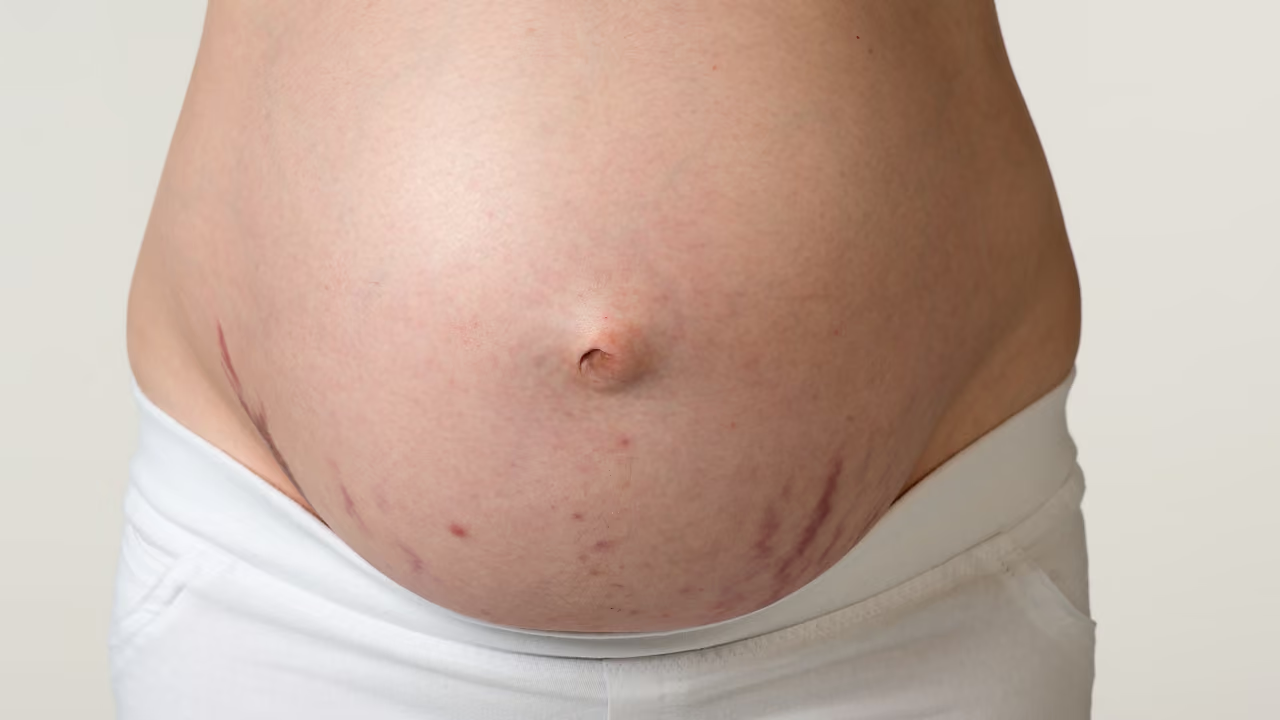
What are skin changes during pregnancy?
Pregnancy brings noticeable skin changes for most women. More than 90% of pregnant women experience one or more skin changes. Most are completely normal — the result of hormones, increased blood volume, and skin stretching. Sometimes skin complaints indicate a condition that requires medical attention.
These changes are caused by hormonal fluctuations, increased blood volume, and the physical stretching of the skin. Much of what you experience is physiological in nature: it stems from natural processes and does not require treatment.
It is sometimes difficult to assess which skin changes are normal and which indicate a condition. Furthermore, existing skin problems can worsen or improve during pregnancy.
An important aspect is that treatment during pregnancy should always be approached cautiously. Certain remedies that are normally effective can be harmful to you or your baby. Topical products such as creams and ointments are preferred. You can read more about melasma or the mask of pregnancy on the corresponding page.
Do you suffer from Skin Changes Pregnancy?
Personalized advice for your skin, completely online. Upload a few photos through the Skindr app and receive medical advice from a licensed dermatologist within 48 hours. No waiting room or referral required.
How do skin changes occur during pregnancy?
Skin changes during pregnancy are caused by three main factors: hormonal fluctuations, increased blood volume, and the physical stretching of the skin.
The levels of estrogen and progesterone rise significantly, and these hormones affect almost every aspect of your skin. They alter sebum production, moisture balance, pigmentation, and even the structure of connective tissue.
The increased amount of blood circulating through your body causes your blood vessels to dilate. This can lead to visible changes such as red spots on the skin, new or worsened varicose veins and persistent redness of your palms.
The physical stretching of your skin, especially on your abdomen, breasts, and thighs, can lead to damage to the underlying connective tissue. When the skin stretches faster than the elastic tissue can accommodate, the collagen fibers in the deeper skin layers tear. This results in the characteristic stretch marks.
Some conditions that can arise specifically during pregnancy are caused by a disrupted immune system or problems with bile acid drainage. In gestational cholestasis, bile acids accumulate in your blood, leading to intense itching. Always consult a certified dermatologist or doctor for this complaint.
Symptoms and signs of skin changes during pregnancy
The most common changes are physiological and completely normal. For most women, the skin becomes drier. Many pregnant women experience mild itching, spread across the torso.
Stretch marks or striae are brownish or purple lines that develop due to rapid stretching. They usually appear on the abdomen, buttocks, and breasts. Skin tags can appear on the neck, armpits, and groin.
Pigment changes are common: linea nigra, darker nipples, and melasma (the mask of pregnancy). Small red spots in the blood vessels, worsened varicose veins, and red palms are consequences of increased blood volume.
Itching during pregnancy
Itching is one of the most common complaints during pregnancy and has multiple causes. Pruritus gravidarum is the most common cause: mild itching due to dry skin and hormonal changes, usually harmless and relieved with moisturizing cream.
PUPPP (Pruritic Urticarial Papules and Plaques) are red, itchy bumps that start on the abdomen (often within stretch marks) and can spread to the arms and legs. Harmless but uncomfortable. Usually disappears after delivery.
Gestational cholestasis causes intense itching on the palms of the hands and soles of the feet, usually after the 30th week. This is a red flag — bile acids accumulate in the blood and can pose risks to the baby, including premature birth. Always consult a doctor if you experience these symptoms.
Hair changes
During pregnancy, less hair falls out because hormones prolong hair growth. Many women experience thicker hair. Approximately 3 months after delivery, temporary hair loss (telogen effluvium) can occur — which is normal and temporary. More about postpartum hair loss read here.
When to consult a dermatologist?
Consult a certified dermatologist for intense itching on the palms of your hands or soles of your feet (possible cholestasis), rash with blisters, rapidly changing skin lesions, or a changing mole. Unsure? Through Skindr, a certified dermatologist will assess your skin within 48 hours, safely and without a waiting room. More about acne during pregnancy.
Where do skin changes appear during pregnancy?
Skin changes during pregnancy often have preferred locations. The abdomen is the central area: stretch marks, the linea nigra, and in certain conditions like pemphigoid, lesions often start around the navel.
The breasts undergo significant changes. The skin stretches, which can lead to stretch marks. The face is susceptible to pigment changes: the mask of pregnancy manifests on the cheeks, forehead, and around the eyes.
Your hands and feet can also be affected. With obstetric cholestasis, the itching on the palms of the hands and soles of the feet is particularly intense. Your palms can become permanently red. The groin, armpits, and neck are areas where skin tags often appear.
Do you suffer from Skin Changes Pregnancy?
Personalized advice for your skin, completely online. Upload a few photos through the Skindr app and receive medical advice from a licensed dermatologist within 48 hours. No waiting room or referral required.
Treatment of skin changes during pregnancy
Treatment requires a cautious approach, prioritizing the safety of mother and child. For many physiological changes, no treatment is necessary.
For dry skin and mild itching, regular application of neutral body lotion is often sufficient. Use mild, fragrance-free washing products and avoid excessively hot showers. Stretch marks are difficult to prevent and gradually fade after delivery. Although many products are advertised, there is no evidence that creams are effective.
Pigment changes usually disappear after delivery. Avoid excessive sunlight and use sunscreen with a high protection factor. Bleaching agents are not recommended during pregnancy.
For severe forms of eczema that do not respond to local treatment, an additional treatment may be advised. In some cases, a short course of treatment is initiated, but this is exclusively under strict medical supervision.
Obstetric cholestasis requires specific treatment: a certified dermatologist or doctor can advise on the right treatment. In cases of pemphigoid, additional treatment may be necessary, always in a hospital setting.
Through Skindr, a certified dermatologist can assess your skin remotely — safely and without a waiting room, within 48 hours. Some skin conditions require a physical visit; your dermatologist will guide you on this. More about eczema during pregnancy.
Sources: EBPNet · Health and Science — Skin conditions during pregnancy
What doesn't work for skin changes during pregnancy?
Many products are advertised with promises to prevent stretch marks, but there is no scientific evidence that special oils, creams, or butters do so. Stretch marks result from damage to deeper skin layers and cannot be effectively prevented with topical products.
Aggressive treatments for pigment changes are not suitable during pregnancy. Bleaching agents, chemical peels, and laser treatments can be harmful and are not recommended.
The use of certain agents normally effective for skin problems is not permitted during pregnancy. Certain active ingredients, certain skin-lightening creams and high concentrations of salicylic acid can harm your baby's development.
Self-treatment without consulting your certified dermatologist or doctor is not advisable. Even seemingly harmless products — including natural or herbal products — can contain ingredients that are harmful during pregnancy.
Ignoring intense itching on your palms and soles is not advisable: this could indicate obstetric cholestasis, a condition with risks for your baby.
Frequently Asked Questions about skin changes during pregnancy
Are all skin changes during pregnancy normal?
Most skin changes are normal and physiological. Dry skin, stretch marks, pigment changes, and mild itching are natural. Intense itching, extensive rashes with blisters, or rapidly growing skin lesions require medical evaluation.
Do pregnancy stretch marks disappear after childbirth?
Pregnancy stretch marks do not disappear completely but fade significantly. The initially brownish or purple color gradually changes into silvery lines. This process takes several months to a year.
Can I use anything for melasma?
The most important thing is sun protection with a high-factor sunscreen. Avoid bleaching agents during pregnancy. Melasma usually fades after childbirth when hormone levels normalize.
When should I consult a dermatologist?
If you experience intense itching (especially on your palms and soles), a rash with blisters, rapidly growing skin lesions, or changing moles, consult a dermatologist or doctor immediately. When in doubt, it's always best to get in touch.
Are all skin products safe during pregnancy?
No. Avoid products containing certain active ingredients, certain skin-lightening ingredients and high concentrations of salicylic acid. Always ask your certified dermatologist or pharmacist for advice if you are unsure.
Will postpartum hair loss resolve?
Yes, the hair loss that occurs approximately 3 months after childbirth is temporary. Within 6 to 12 months postpartum, hair usually returns to its normal level.
Can I consult a dermatologist during my pregnancy?
Yes. Through Skindr, a certified dermatologist assesses your skin based on photos — safely, quickly, and without a waiting room, within 48 hours. For concerning symptoms such as intense itching or blisters, a quick assessment is recommended.


](https://static.legitscript.com/seals/624359.png)