.webp)


What is vasculitis?
Vasculitis is an inflammation of the blood vessels. Depending on which vessels are affected and whether organs are involved, the severity ranges from mild to severe. The condition can affect vessels of any size and can occur anywhere in the body.
Cutaneous vasculitis: only the skin affected
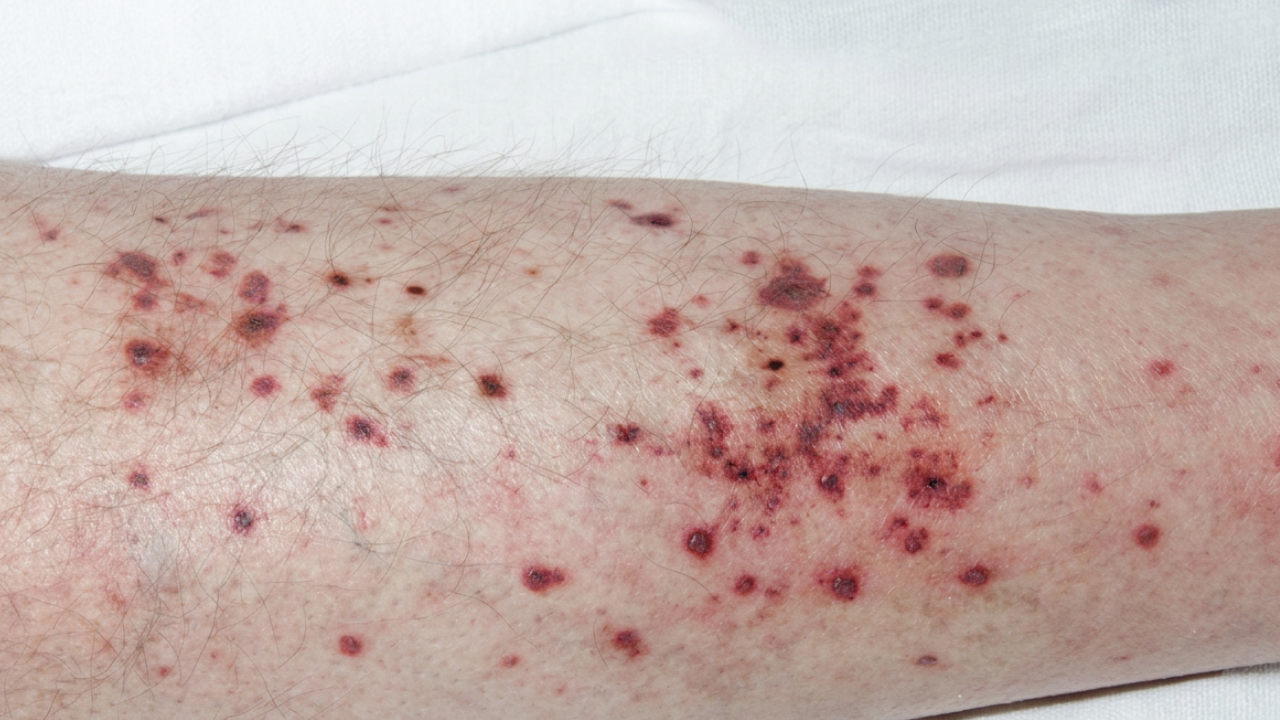
In cutaneous vasculitis, only the small blood vessels in the skin are inflamed. This is the most common form seen by a dermatologist. The condition manifests as red or purplish-red spots, blisters, or ulcers, primarily on the lower legs. In most cases, cutaneous vasculitis has a benign course and resolves within a few weeks with rest and compression stockings.
Systemic vasculitis: when is it dangerous?
Systemic vasculitis is more severe and involves blood vessels in organs such as the kidneys, lungs, heart, or nerves. Examples include ANCA-associated vasculitis and IgA vasculitis (Henoch-Schonlein purpura), which is common in children and can affect the skin, joints, and kidneys. Systemic vasculitis always requires multidisciplinary management.
Most people who present to a dermatologist with these types of skin complaints have cutaneous vasculitis. However, a correct assessment to timely rule out systemic involvement remains essential.
Do you suffer from Vasculitis?
Personalized advice for your skin, completely online. Upload a few photos through the Skindr app and receive medical advice from a licensed dermatologist within 48 hours. No waiting room or referral required.
How does vasculitis develop?
Vasculitis develops when the immune system attacks the walls of its own blood vessels, causing inflammation and damage. The exact cause remains unknown in about half of patients.
The known causes are divided into four groups: (1) infections such as streptococci and hepatitis B/C, (2) autoimmune reactions where the body produces antibodies that attack the blood vessels, (3) a reaction to certain products or treatments, and (4) underlying diseases such as lupus or rheumatoid arthritis.
In half of all patients, no specific trigger is found; this is then referred to as idiopathic vasculitis.
Symptoms and characteristics of vasculitis
The most characteristic symptom of vasculitis on the skin is purpura: red or reddish-purple spots that do not disappear when pressed. This non-blanching characteristic is the crucial distinction from ordinary redness. Press the spot with a finger or a glass: if the color remains, blood has leaked from the blood vessels.
The spectrum of skin abnormalities in vasculitis ranges from petechiae (small pinpoint hemorrhages), through larger flat spots, to blisters, ulcers, and in severe cases, skin necrosis.
What does vasculitis look like on dark skin?
On dark or brown skin tones, purpura is less visible as a red discoloration. The spots tend to appear dark brown, purple, or bluish. However, the non-blanching characteristic remains the most important distinguishing feature: regardless of skin tone, the color does not disappear under pressure.
Golfer's vasculitis: red spots after exertion
A specific but little-known form is golfer's vasculitis (exercise-induced vasculitis). After prolonged walking, playing golf, or cycling in warm weather, the lower legs can become red, warm, and swollen. Golfer's vasculitis is not dangerous and usually disappears after rest and cooling down.
When are the symptoms a sign of systemic vasculitis?
In addition to skin abnormalities, systemic vasculitis can also cause general symptoms: fever, fatigue, joint pain, blood in the urine, or shortness of breath. If purpura is combined with one or more of these symptoms, immediate medical attention is necessary.
Are you unsure if those red spots are vasculitis? A certified Skindr dermatologist will assess your photos within 48 hours.
Where does vasculitis occur?
Cutaneous vasculitis most often occurs on the lower legs because gravity slows down blood circulation there and increases pressure in the small vessels.
The most affected areas are the lower legs and ankles (primary location for small vessel vasculitis), the buttocks and thighs, and less frequently the trunk and arms. In IgA vasculitis (Henoch-Schonlein), a form more common in children, the buttocks and lower legs are affected together.
In systemic vasculitis, skin abnormalities can be more widespread and are accompanied by symptoms affecting organs.
Do you suffer from Vasculitis?
Personalized advice for your skin, completely online. Upload a few photos through the Skindr app and receive medical advice from a licensed dermatologist within 48 hours. No waiting room or referral required.
Treatment of vasculitis
For cutaneous vasculitis, rest and wearing compression stockings are often sufficient: most cases resolve on their own within a few weeks.
Self-care for Vasculitis: Rest, Compression Stockings, and Calf Muscle Exercises
The three basic measures are: rest with legs elevated, wearing compression stockings to support circulation, and regular calf muscle exercises that stimulate blood flow in the leg veins. Avoiding triggering factors such as prolonged standing, heat, and certain treatments your doctor advises against helps prevent recurrence.
Medical Treatment for Vasculitis
If cutaneous vasculitis persists or recurs repeatedly, a short course of treatment on your doctor's advice may be initiated. For systemic vasculitis, stronger immunosuppressants are necessary.
When to See a Dermatologist?
Seek immediate medical attention for fever combined with extensive purpura, blood in the urine, joint pain, or shortness of breath. Consult a doctor promptly if purpura spreads or sores and wounds develop.
Through Skindr, you receive advice from a certified dermatologist within 48 hours. Are the spots new, spreading, or accompanied by other symptoms? You will receive personalized advice without a waiting list or referral.
What Doesn't Work for Vasculitis?
Some self-treatments may seem logical for red spots on the skin, but they do not work for vasculitis and can worsen the situation.
Applying an over-the-counter treatment to the lesions does not help with most forms of vasculitis, especially not when an infection or autoimmune reaction is the underlying cause.
Seeking warmth (warm bath, sauna, warm environment) increases vasodilation in the lower legs and can intensify blood extravasation. Coolness and rest are recommended.
Excessive movement during an active episode is not recommended: vascular pressure increases and the purpura can spread.
Waiting when systemic signs (fever, blood in urine, joint pain, shortness of breath) are present is dangerous. These are alarm signals that require immediate medical attention.
Frequently Asked Questions about Vasculitis
Is Vasculitis Curable?
Cutaneous vasculitis usually resolves on its own or after a short course of treatment. Systemic vasculitis is rarely definitively curable, but it can be well controlled and stabilized with the right treatment.
Is Vasculitis Dangerous?
Cutaneous vasculitis is usually not dangerous. Systemic vasculitis involving the kidneys, lungs, or heart is more serious and requires specialized medical follow-up. Early detection is crucial.
What is the life expectancy with vasculitis?
With purely cutaneous vasculitis, the condition does not affect life expectancy. With systemic vasculitis, the prognosis largely depends on the type, the affected organs, and the speed of treatment.
What is golfer's vasculitis?
Golfer's vasculitis (exercise-induced vasculitis) is a temporary redness and swelling of the lower legs after prolonged exertion in warm weather. The condition is not dangerous and disappears after rest.
Can Skindr help with vasculitis?
Yes. Through Skindr, a certified dermatologist assesses your photos and symptoms within 48 hours. You receive personalized advice, including guidance on the necessary steps. No waiting list, no referral needed.
Resources
- Skindr dermatologists (medically verified content)
- NVDV - Patient Information Leaflet Vasculitis
- DermNet NZ - Vasculitis



](https://static.legitscript.com/seals/624359.png)