.webp)


What is viral exanthem?
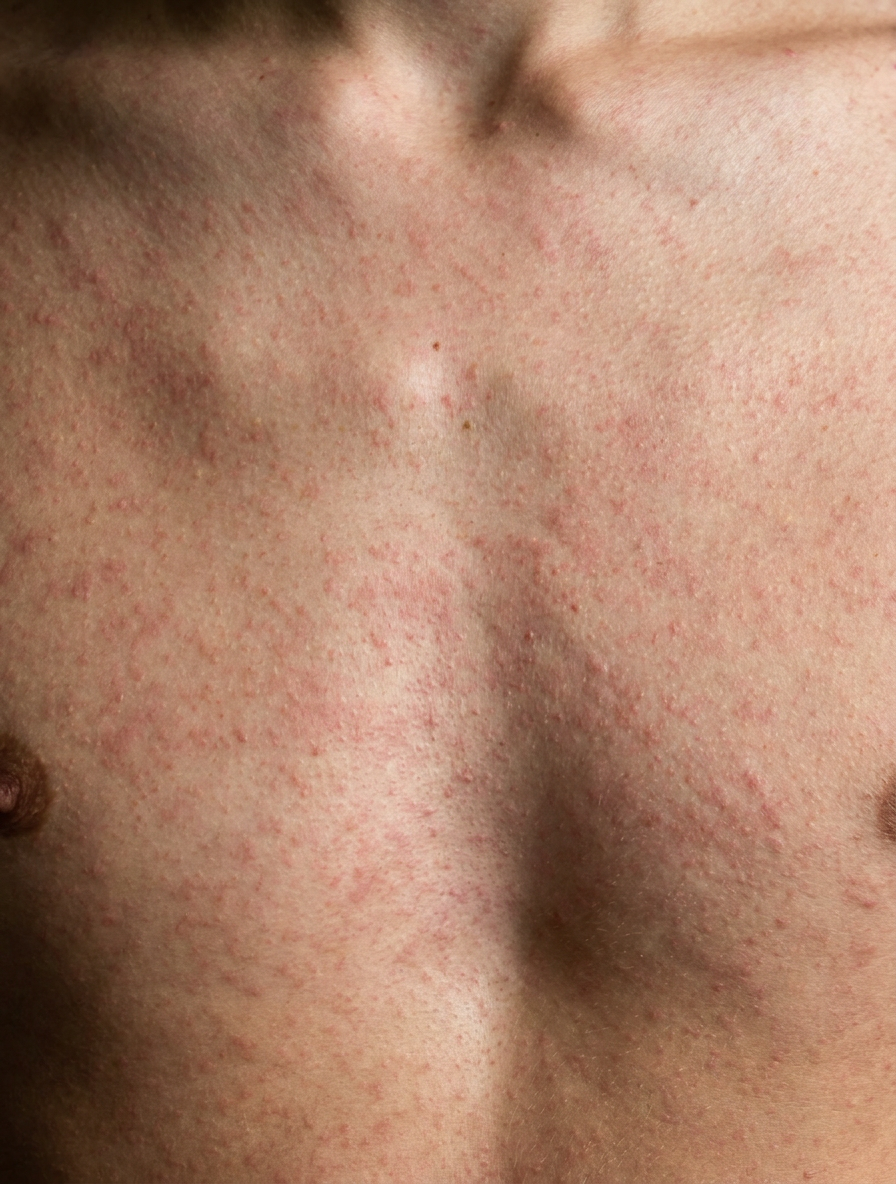
Viral exanthem is a skin rash that occurs as a reaction to a viral infection. It usually consists of small red spots or bumps that are spread across the body, symmetrically distributed, and sometimes merge into larger patches. You often also feel somewhat ill, with fever, sore throat, or a cold.
Exanthem is the medical term for a sudden, widespread skin rash. Viral exanthem is therefore a collective term: many different viruses can cause such a rash. The most well-known form is sixth disease (also called exanthema subitum or roseola infantum), which primarily affects young children.
It is most common in children because they encounter many viruses for the first time. However, adults can also get a viral exanthem, usually from a virus they haven't experienced as a child.
Common Viral Exanthems
In addition to sixth disease, these well-known spot diseases also fall under viral exanthem: the fifth disease (erythema infectiosum) with the typical red cheeks, measles, rubella, chickenpox, and hand-foot-and-mouth disease. The coronavirus can also cause a viral exanthem. It's often not possible to definitively identify the causative virus from its external appearance. However, the course and location of the rash can provide a clue.
Do you suffer from Viral exanthem?
Personalized advice for your skin, completely online. Upload a few photos through the Skindr app and receive medical advice from a licensed dermatologist within 48 hours. No waiting room or referral required.
How Does Viral Exanthem Develop?
Viral exanthem develops when your immune system reacts to a viral infection. The rash is therefore a sign that your body is clearing the virus. The skin itself is not the cause: it merely shows what is happening internally.
Many different viruses can trigger this reaction. Sixth disease is caused by human herpesvirus type 6 (HHV-6). This virus is unrelated to the viruses that cause cold sores or genital herpes. Other common culprits include parvovirus B19 (fifth disease), measles and rubella viruses, enteroviruses such as coxsackievirus, Epstein-Barr virus (glandular fever/mononucleosis), and common cold and respiratory viruses, including the coronavirus.
Most of these viruses spread through small airborne droplets, for example, by coughing and sneezing. You are often contagious before the rash appears. As a result, the infection has usually already been transmitted by the time you see the spots.
Who is at higher risk?
Young children most frequently get a viral exanthem, simply because they encounter many viruses for the first time. A daycare center or school where children are in close proximity makes spread easier. Sixth disease almost always affects children between six months and two years old. Adults rarely get it, and when they do, it's usually from a virus they haven't had before.
Symptoms and characteristics of viral exanthem
The most striking feature of viral exanthem is a rash of small red spots or bumps, often preceded or accompanied by fever and a general feeling of illness. The rash usually does not itch, or only mildly.
A good example is the course of roseola. First, a child has a high fever for several days, sometimes up to 40 degrees Celsius, without other clear symptoms. Only when the fever subsides do light red spots appear, first behind the ears and on the neck, then on the face and torso. These spots disappear on their own, often within a few hours to days. Besides the rash, you may also experience a cold, sore throat, fatigue, swollen glands in the neck, or red eyes.
What does viral exanthem look like on different skin tones?
On light skin, the spots are usually pink to red and clearly visible. On darker skin, they are often less red and more purplish-brown or skin-colored, making them less noticeable. Therefore, also feel the skin with your hand: bumps are often felt better than seen. For darker skin, pay extra attention to accompanying symptoms such as fever and fatigue.
A viral exanthem can usually be recognized by this typical progression, so additional examination is rarely necessary. A certified dermatologist can assess the rash based on photos and reassure you or provide a targeted referral.
When should you be concerned?
Usually, a child does not feel very ill, and there is no cause for concern. Are you unsure if the rash is consistent with a virus? A certified dermatologist will assess your photos within 48 hours via Skindr.
Where does viral exanthem occur?
Viral exanthem usually begins on the torso and spreads from there to the face, neck, and limbs. The rash is often symmetrical, appearing roughly equally on both sides of the body. Small spots can merge to form larger red areas.
However, the pattern varies by virus, and it is precisely this pattern that indicates which virus is responsible. Some exanthems begin on the face, such as measles, rubella, and fifth disease with its typical red cheeks. Others start on the torso, such as roseola and scarlet fever. In hand, foot, and mouth disease, the rash is primarily on the hands, feet, and around the mouth.
With roseola, the spots usually appear first behind the ears and on the neck, then spread to the face and torso. The palms of the hands and soles of the feet are spared in most viral exanthems. By observing where the rash begins and how it spreads, a dermatologist can often deduce a lot about the cause.
Do you suffer from Viral exanthem?
Personalized advice for your skin, completely online. Upload a few photos through the Skindr app and receive medical advice from a licensed dermatologist within 48 hours. No waiting room or referral required.
Treatment of viral exanthem
Viral exanthem usually does not require specific treatment. The rash disappears on its own once your body has cleared the viral infection, often within a few days to weeks. Therefore, you don't treat the rash itself, but primarily focus on comfort and rest.
Self-care and prevention
Drink plenty of fluids, especially with a fever, as young children dehydrate more quickly. Rest is allowed, but strict bed rest is not necessary: if your child feels well, they can play, bathe, or shower as usual. Is your child struggling with fever or feeling unwell? Then you may give a fever-reducing medicine, in the correct dosage for their weight. For mild itching, a cooling lotion can help. Since many viruses are already contagious before the rash appears, keeping your child home often makes little sense if they otherwise feel well.
When to see a doctor?
Most viral exanthems are harmless, but in some situations, it's best to seek advice the same day. Do so for a baby younger than three months with a fever, for a fever that lasts longer than a few days, for drowsiness or a child who cannot be comforted, for breathing problems, or signs of dehydration. Also, watch for small skin hemorrhages that do not blanch when pressed with a glass: these are not typical of a common viral exanthem and require prompt medical advice.
For pregnant women, roseola is not dangerous. Other viruses, such as those causing fifth disease or rubella, can be. If you are pregnant and have a rash or have been in contact with a sick child, seek advice.
Are you unsure about a rash, or do you want certainty without a long wait? Through Skindr, you will receive advice from a certified dermatologist within 48 hours, without a referral and without a waiting room. If a physical examination is still necessary, the dermatologist will provide a targeted referral.
What doesn't work against viral exanthem?
Antibiotics don't help with a viral exanthem. The rash is caused by a virus, and antibiotics only work against bacteria. So don't ask for them: they won't make you better faster and can cause unnecessary side effects.
Similarly, trying to scrub away the rash with aggressive creams or scrubbing the skin hard won't help. It will only irritate the skin and won't speed up recovery. There's also no need to suppress a fever at all costs. Fever is a normal immune response. Only give a fever-reducing medicine if your child is genuinely bothered by it.
Finally, trying to diagnose a rash yourself from a single photo can easily lead to incorrect conclusions. Many skin conditions look alike. If in doubt, consult a certified dermatologist instead of relying on isolated search results.
Frequently asked questions about viral exanthem
Is viral exanthem contagious?
The virus that causes the rash is usually contagious, especially in the days before the rash appears. The rash itself is not contagious. The exact contagiousness depends on the underlying virus.
Does viral exanthem disappear on its own?
Yes. In almost all cases, the rash will clear up on its own within a few days to weeks, once your body has fought off the viral infection. Specific treatment is usually not necessary.
What is the difference between fifth disease and sixth disease?
Fifth disease is caused by parvovirus B19 and typically presents with red cheeks and a lace-like rash. Sixth disease is caused by herpesvirus HHV-6 and begins with several days of high fever, followed by spots on the torso and face.
Can an adult get viral exanthem?
Yes. Although it primarily affects children, adults can also develop a viral exanthem, usually due to a virus they haven't been exposed to as a child. In adults, it can sometimes be accompanied by more severe symptoms.
Is viral exanthem dangerous during pregnancy?
Sixth disease is not dangerous during pregnancy. However, other viruses, such as those causing fifth disease or rubella, can be. If you are pregnant and develop a rash or have had contact with a sick child, please seek advice.
When should I see a dermatologist for viral exanthem?
Seek urgent advice for a baby younger than three months with a fever, or for persistent high fever, drowsiness, breathing problems, dehydration, or non-blanching spots. If you are unsure about the rash, a dermatologist can examine it.
Can Skindr help with viral exanthem?
Yes. Are you unsure if a rash is consistent with a viral infection or something else? A certified dermatologist will review your photos within 48 hours and provide tailored advice, without requiring a referral or a waiting room visit.


](https://static.legitscript.com/seals/624359.png)