.webp)


What is a boil (furuncle)?
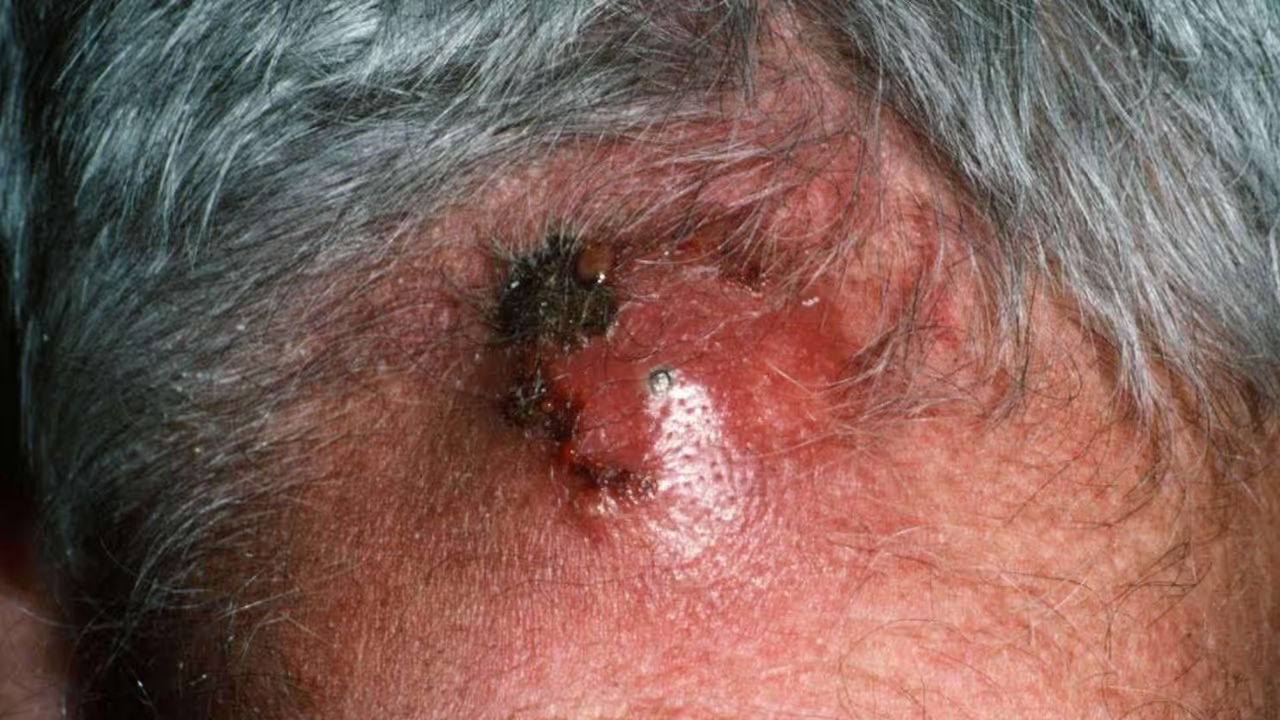
A furuncle, also known as a carbuncle or even eye in medical terms, is a deep inflammation of a hair follicle and surrounding tissue. It's actually a serious form of folliculitis, the inflammation of hair follicles. Where an ordinary inflamed hair follicle gives a small, superficial bump, a furuncle grows deeper into the skin and causes larger, more painful swelling.
Anyone can get a furuncle, at any time in life. It occurs regularly and is one of the most common skin infections. Men get a furuncle slightly more often than women, especially during puberty and at a young adult age.
A furuncle always starts with a hair follicle. These small growths in your skin, where the hair grows, can be infected by bacteria. When the inflammation spreads to surrounding tissue and subcutaneous connective tissue, the characteristic deep, painful swelling that we call a furuncle occurs.
The size can vary considerably. Some furuncles are no bigger than a pea, while others grow to the size of a golf ball. The bigger the furuncle, the more pain and discomfort you usually experience.
When multiple furuncles form side by side and connect under the skin, we call this a carbuncle or nine-eye. Fortunately, this is less common, but it is more serious and always requires medical treatment.
In rare cases, deep inflammation can progress to a skin abscess, a sealed cavity filled with pus. This, too, requires medical intervention to remove the pus and fight infection.
Do you suffer from furuncle?
Have your skin assessed by a licensed dermatologist via the Skindr app. Upload photos and get a diagnosis with personal advice within 48 hours. No waiting room, no referral required.
How does a boil develop?
A furuncle is almost always caused by a bacteria, usually Staphylococcus aureus. This bacteria lives naturally on our skin without causing problems, but under certain circumstances it can enter a hair follicle and start an infection there.
The infection often starts with minor skin damage. Shaving, waxing or epilating can make microscopic wounds that allow bacteria to enter. The friction of tight clothing also plays a role - think of tight jeans, tight collars or sportswear that rubs constantly.
Oily ointments and oils can clog hair follicles. When sebum builds up, an environment is created where bacteria can grow properly. Sweating also creates a humid, warm environment that is ideal for bacteria. The combination of moisture, warmth and friction is the perfect breeding ground. Poorly maintained hot tubs, whirlpools or swimming pools can also lead to furuncles.
Certain people are extra susceptible: people with weakened immune systems (due to diabetes, HIV, or medication), overweight people (especially in skin folds), or people taking certain anti-inflammatory medications. Poor hygiene can play a role, although furuncles also occur in people with good skin care.
A furuncle in one place increases the risk of more furuncles elsewhere, especially if you touch it or don't wash the pus away properly.
Symptoms and characteristics of a boil
A furuncle usually starts as a small, red bump on the skin. At this initial stage, it still looks like a regular pimple, but you'll soon notice the difference. The bump gradually grows in size and becomes more painful.
The four classic signs of inflammation are clearly present: warmth, redness, swelling and pain. The skin feels warmer, the redness expands, the swelling increases, and feels hard and tense. The pain increases and often causes a throbbing, throbbing sensation. With furuncles in areas where there is a lot of movement, such as in the neck or groin, the pain can be considerable and limit your freedom of movement.
After a few days, the furuncle matures. The center softens and a yellowish or white head forms on the surface - the pus that has accumulated. The furuncle can burst open by itself, which often brings immediate relief. Sometimes it remains intact and dries up, gradually clearing the pus by the body.
The size ranges from one centimeter to three to four centimeters in diameter. The skin around the furuncle often feels tense and hard, with a clear hardening underneath the skin. This distinguishes a furuncle from superficial skin infections.
With extensive furuncles or several at the same time, you can feel generally ill with fever, fatigue and malaise. This requires medical treatment. A carbuncle, where several furuncles come together, looks like a large mass with multiple yellowish heads and purple-red skin, and often makes you ill with a fever.
Boils sometimes leave scars, especially when they were large or scratched or pinched.
Where does a boil appear?
A furuncle can occur anywhere on the body where hair grows, but some areas are more sensitive. The location often depends on the cause and circumstances.
The face is common but also risky. In the beard area in men, furuncles often occur after shaving. A furuncle on the face requires extra attention because infections can spread here. The triangle between the nose and the corners of the mouth is an area where doctors take extra care because of the direct blood vessel connection to the brain.
The neck is often affected, especially in people with short-shaven hair or collars that chafe. The back of the neck is a classic spot. The armpits are sensitive due to the combination of sweating, shaving, deodorant and friction of clothing.
In the groin area, furuncles occur regularly, especially among people who shave or wax this area. Tight underwear, sweating and friction contribute to the development. The gluteal region, especially the buttocks and sitting cavity, is another common location. Sitting for long periods increases the risk.
The thighs can develop furuncles, especially on the inside where the legs rub against each other. On the back and chest, they are mainly seen in people who sweat a lot or exercise intensively. The scalp may also be affected, although this is less frequent. Boils here are often painful because the skin is tight. On the hands and arms, they are less common.
A furuncle usually occurs in one place, but some people get several at the same time on different parts of the body. This could indicate an underlying problem such as diabetes or a weakened immune system.
Do you suffer from furuncle?
Have your skin assessed by a licensed dermatologist via the Skindr app. Upload photos and get a diagnosis with personal advice within 48 hours. No waiting room, no referral required.
Treatment of a boil
Most furuncles heal on their own within one to two weeks. Good self-care can support the healing process and reduce discomfort.
The most important advice: leave the furuncle alone. Don't sit on it, squeeze it, or try to open it. By squeezing, you push the infection deeper and increase the risk of spreading and scarring.
Wash the skin around the furuncle gently twice a day with water and a mild disinfectant soap, but do not scrub. Then gently pat dry with a clean towel. Warm, moist compresses can bring relief. Soak a clean washcloth in warm water and place it on the furuncle for fifteen minutes, three to four times a day. The warmth promotes the healing process and can help it burst naturally.
If the furuncle opens by itself, let the pus flow out gently without pressing. Then wash the environment thoroughly. For pain relief, you can use paracetamol. Wear loose, breathable clothing that doesn't chafe. Do not cover the furuncle unless pus spills out. Avoid creams, ointments, or oils - these can further clog pores.
When to see a doctor? For furuncles that do not improve after one to two weeks, severe pain, enlargement, fever, red stripes across the skin, or if you feel generally ill. Facial furuncles always require medical assessment. People with diabetes or a weakened immune system should also seek medical attention.
Your doctor may prescribe an antibiotic ointment or give oral antibiotics for extensive infections. Sometimes a furuncle has to be incised (incision and drainage) to let the pus out, which often provides immediate relief. Recurrent furuncles may require long-term treatment with antibiotics or disinfecting soap.
What doesn't work against a boil?
There are various myths and wrong approaches around furuncles that are better avoided because they can make the situation worse.
Squeezing out a furuncle is the most common mistake. While it's tempting to squeeze out the pus, especially when you see a clear yellow cup, this is dangerous. By squeezing, you push bacteria deeper into the skin and you can spread the infection to surrounding tissue. You also significantly increase the risk of scarring.
Applying home remedies such as toothpaste, vinegar or baking soda to the furuncle have no proven effect and can irritate the skin. These remedies are not designed for skin infections and may further damage inflamed skin.
Applying oily ointments, oils, or thick creams under the assumption that they help heal is counterproductive. These products can further clog pores and obstruct the discharge of pus. In fact, the furuncle needs a clean, dry environment.
Pricking the furuncle with a needle to open it is dangerous. Needles are never completely sterile and you run the risk of bringing in even more bacteria. You can also damage blood vessels or nerves. If a furuncle needs to be opened, have it done by a doctor in sterile conditions.
Continuing to shave or epilate where there is a furuncle maintains irritation and can cause new ones. Give your skin a rest and temporarily stop hair removal in the affected area.
Thinking that a furuncle will be over in a few days can be disappointing. Boils take time to mature, open and heal. This process easily takes ten to fourteen days. Impatience often leads to pinching and picking, which is counterproductive.
Ignoring recurrent furuncles without seeking medical advice is not wise. Frequent furuncles may indicate underlying problems such as diabetes, the carriage of certain bacteria, or immune disorders that require treatment.
Sharing towels, washcloths, or razor blades with others when you have a furuncle can spread bacteria. Use your own items and wash them regularly at a high temperature.
Self-medication with old antibiotics from stocks is not only ineffective but also dangerous. Not all antibiotics work against the bacteria that causes furuncles, and misuse can lead to resistance.
Frequently asked questions about boils
Is a furuncle contagious?
A furuncle itself cannot be transmitted by ordinary contact. When you touch someone who has a furuncle, you don't automatically get one yourself. However, the bacteria in the pus can spread. If pus from a furuncle comes into contact with a wound on your own or someone else's skin, a new infection can occur there. That's why good hand hygiene is essential. Always wash your hands after touching a furuncle and don't share towels or washcloths with others.
How long does it take for a furuncle to heal?
A furuncle usually takes ten to fourteen days to fully heal. In the first few days, it grows and matures, which is accompanied by increasing pain and swelling. After about a week, the furuncle may crack open or begin to dry up. Then the swelling gradually decreases and the skin heals. In the case of large furuncles or when an abscess has to be incised, the healing process can take longer, sometimes up to three weeks.
Can I prevent a furuncle?
There are various measures that can reduce the risk of furuncles. Good skin hygiene is the basis: wash regularly with soap and water, especially after sweating. When shaving, you can reduce irritation by always using a sharp razor blade, shaving in the direction of hair growth, and cooling the skin afterwards. Wear breathable, loose clothing that doesn't chafe. Never share razor blades, towels, or other personal care items. If you get boils frequently, your doctor may recommend disinfecting soap for daily use.
When should I go to the doctor with a furuncle?
Medical attention is needed if the furuncle does not improve or, on the contrary, increases in size after two weeks. You should also contact your doctor if you have severe pain that does not respond to pain relievers, fever, red stripes that run from the furuncle over the skin, or if you feel generally ill. Facial furuncles always require medical evaluation because of the risk of serious complications. People with diabetes or a reduced immune system should consult their doctor with every furuncle.
Why do I keep getting furuncles?
Recurrent furuncles can have various causes. Some people are carriers of Staphylococcus aureus bacteria in their noses or skin, which increases the risk of infections. Underlying conditions such as diabetes can make you more susceptible. Certain habits such as shaving frequently, wearing tight clothing or working in warm, humid environments also play a role. In the case of frequent furuncles, it is important to work with your doctor to identify the cause and develop a treatment plan.
Can I work or exercise with a furuncle?
Working is usually possible, depending on the location and severity of the furuncle. If you have a furuncle in the buttocks, sitting for a long time can be painful. You can exercise, but avoid activities that cause friction at the site of the furuncle. Sweating can make the situation worse, so if you exercise, shower immediately afterwards. For boils in the armpits, lifting weights or other exercises that involve moving your arms may be too painful. Listen to your body and don't force anything.