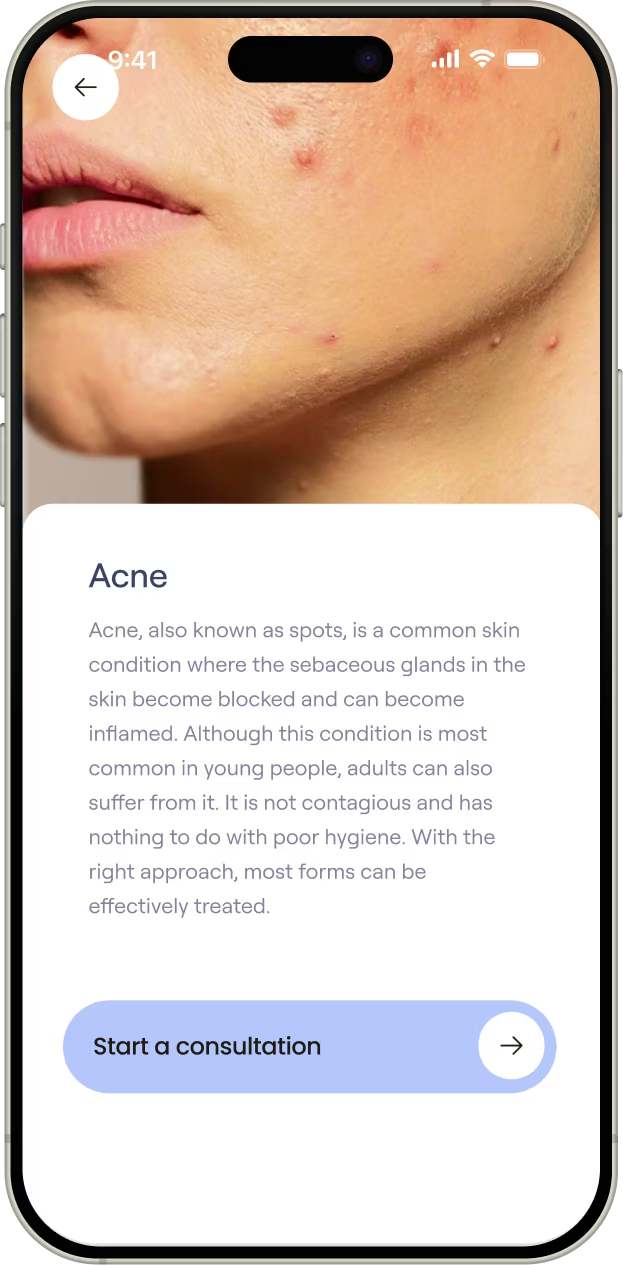
.webp)


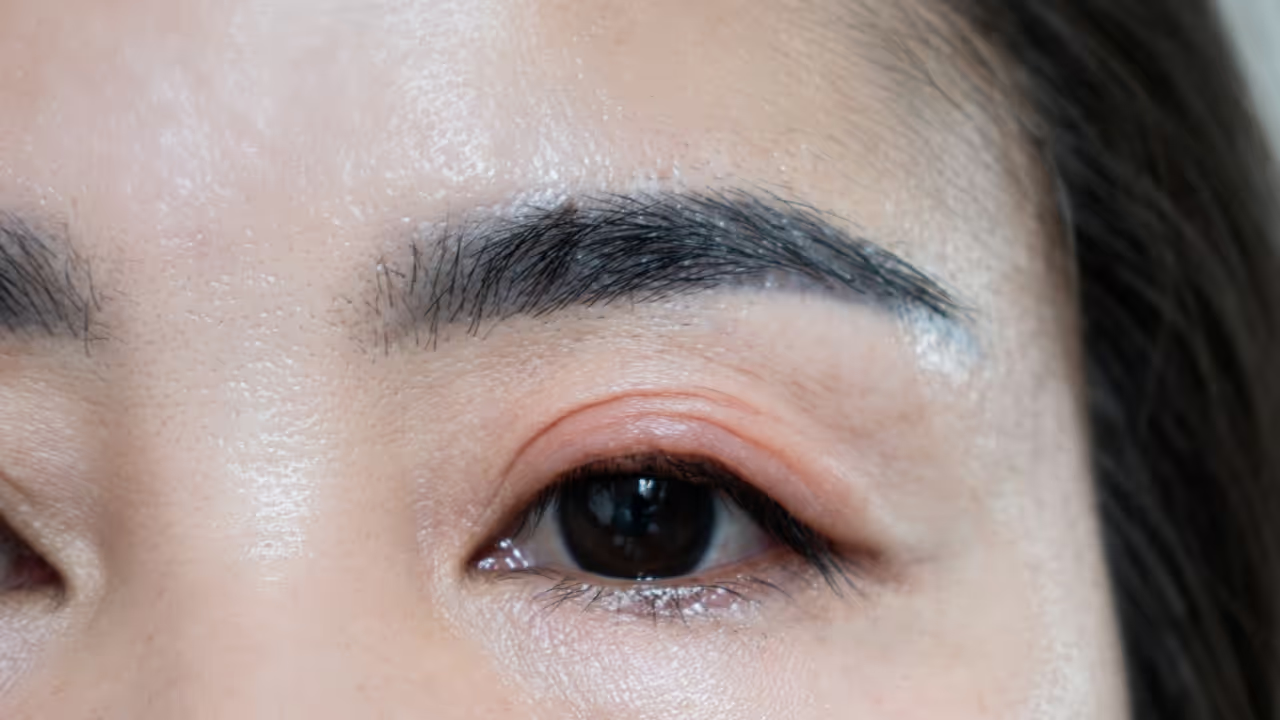
What is an eyelid skin problem?
Eyelid skin problems are a collection of disorders that affect the thin, fragile skin around your eyes. This skin is particularly sensitive because it is much thinner than the skin elsewhere on your body and is also constantly moving through blinks and facial expressions. Any problem with the eyelids can be quite annoying because it can affect your vision and because your eyes are at the center of your face.
Skin abnormalities on your eyelids can have three different causes: a local problem that only affects the eyelids, part of a common skin disease that also occurs elsewhere, or a symptom of an underlying condition.
In the case of local causes, the problem is limited to the eyelids and immediate surroundings. Dry eyes are a common cause. When your eyes don't produce enough tear fluid or the tear fluid evaporates too quickly, your eyes and the surrounding skin can become irritated. Allergic reactions to cosmetics, makeup, eye drops or contact lens solution also occur regularly. The skin on your eyelids can react very sensitively to substances that you normally tolerate on other parts of the body.
Common skin diseases can also manifest themselves on the eyelids. Eczema is by far the most common skin condition affecting the eyelids. This can be atopic eczema (a congenital tendency to dry and sensitive skin) or contact eczema (an allergic reaction to a specific substance). Psoriasis is less common on the eyelids but is certainly possible. Seborrheic eczema, a scaly skin condition that mainly occurs in areas with many sebaceous glands, can also affect the eyelids.
Bacterial infections such as blepharitis (inflammation of the eyelid edges) are common. Impetigo or currant beard is a contagious bacterial skin infection that can spread to the eyelids. Cellulite, a serious inflammation of deeper skin tissue, can affect eyelids and is a medical emergency. Infections of the lacrimal sac (the organ in the inner corner of the eye that drains tears) can also cause problems.
Viral infections are also important. Mollusca or pearl warts are small, shiny bumps caused by a virus and are mainly found in children. Zona or shingles, caused by reactivation of the chicken pox virus, can seriously affect eyelids when it occurs in the face.
Eyelid swelling may indicate underlying problems such as thyroid disorders, fluid retention due to heart or kidney problems, or other systemic diseases that manifest in the eyelids.
Do you suffer from eyelid skin problem?
Have your skin assessed by a licensed dermatologist via the Skindr app. Upload photos and get a diagnosis with personal advice within 48 hours. No waiting room, no referral required.
How does an eyelid skin problem develop?
The causes of skin problems on the eyelids are diverse and are related to the specific condition. Understanding these causes helps with prevention and treatment.
Dry eyes occur when your tear production is insufficient or when the tear fluid evaporates too quickly. This is more common among elderly people, people who work a lot behind a screen and therefore blink less, when taking certain medications, or with certain autoimmune disorders. The chronic irritation of dry eyes can lead to inflamed, red eyelid edges and scaly skin around the eyes.
Allergic reactions to eyelids are often caused by cosmetic products. Eye shadows, mascara, eyeliner, makeup remover, face creams, and perfumes can cause allergic contact dermatitis. Interestingly, sometimes you only develop an allergy after prolonged use of a product, even after years of trouble-free use. Eye drops, especially those containing preservatives, can also trigger allergic reactions. Even the rubber parts of eyelash clippers or ingredients in eyelash glue for false lashes can be the culprit.
Eczema on the eyelids can have various forms. Atopic eczema is hereditary and often occurs in people who also have asthma or hay fever. The skin is naturally dry and sensitive. Contact eczema occurs due to contact with allergenic substances. Seborrheic eczema is related to a yeast-like fungus that normally lives on the skin but causes overreaction in some people.
Blepharitis, inflammation of the eyelid edges, is caused by blocked sebaceous glands at the base of the lashes. These normally produce an oily substance that helps the tear fluid to stay on the eye. In blepharitis, these glands become blocked and inflamed. Bacteria that normally live on the skin can make the situation worse. The Demodex mite, a microscopic animal that lives in eyelash follicles, can also contribute to blepharitis.
Bacterial infections such as impetigo are caused by bacteria that enter through small wounds or damaged skin. Children who rub their eyes with dirty hands are at extra risk. Cellulitis, a deeper skin infection, can develop from an insect bite, wound, or spread from a nearby infection such as a sinus infection.
Viral infections have specific causes. Mollusca are transmitted through direct contact or shared towels. Zona is caused by reactivation of the chicken pox virus that is dormant in your nerves after a previous chicken pox infection. This can happen with reduced immunity, old age, or stress.
Lacrimal sac infections occur when the discharge of tears becomes blocked and bacteria accumulate in the lacrimal sac. This is more common in newborns with a congenital narrowing of the tear duct, or in elderly people whose tear outlet is narrowed.
Symptoms and characteristics of eyelid skin problems
Symptoms vary by condition and recognizing specific characteristics helps with the correct diagnosis.
In eczema, the eyelids are red, dry and scaly. The skin feels rough and can crack, especially at the corners of the eyes. Itching is often the most annoying symptom. With prolonged eczema, the skin around the eyes may turn darker. When eczema, psoriasis, or impetigo is the cause, you often see similar lesions in other parts of your body. That's why you should also look at your scalp, hands, elbows, and knees. Sometimes there are also abnormalities in the nails such as dimples or thickening.
In blepharitis, you see small flakes between the lashes, a bit like dandruff but at the lash line. The eyelid edges are red and may be swollen. Often, your eyes feel burning and you have the feeling that there is sand in them. Your lashes can stick together, especially in the morning. Sometimes eyelashes fall out. Itching occurs regularly.
Allergic reactions to cosmetics or eye drops cause acute swelling, redness and intense itching of the eyelids. The skin can become moist and even form blisters. Most of the time, you know you've used something new, although reactions sometimes only develop after repeated use.
Cellulite causes a seriously ill impression. The eyelid is strongly swollen, hot, red and sore. Without treatment, redness spreads across the face. You may have a fever and feel generally ill. This is a medical emergency.
A lacrimal sac infection causes a painful ball in the inner corner of the eye. When you press it, a drop of pus comes out. The eye itself may also be red and watery.
Mollusca are small, shiny, pearly bubbles with a calf in the middle. They don't usually itch or hurt. They grow slowly and can disappear spontaneously, but this often takes months.
Zona starts with pain in or around one eye, sometimes days before you see anything. This is an important feature, because the pain comes before the rash. Then redness appears and clusters of blisters form on one half of the forehead and eyelid. These blisters follow the course of a nerve and stop right at the midline. After a few days, the blisters dry up and form scabs. The pain can last for weeks to months, even after the skin disorders have healed.
Swelling of both eyelids without redness or pain may indicate fluid accumulation due to heart, kidney, or thyroid problems. Allergic reactions can also affect both eyes.
Where do eyelid skin problems occur?
As the name suggests, these problems primarily concern the eyelids, but the precise location and pattern can be diagnostically valuable.
Upper and lower members can both or each separately be affected. Eczema often affects both eyelids and usually both eyes symmetrically. The skin on the upper eyelid is extra sensitive to contact allergies because it is thinner and more exposed to cosmetics.
The eyelid edges, the area where the lashes are, are the primary location in blepharitis. There is redness, swelling, and flakes form right along the lash line. Mollusca are often on the edge of the eyelid or just below it.
The inner corner of the eye is the typical site for lacrimal sac infections. This causes a painful swelling that can put pressure on the lacrimal sac.
In zona, the pattern is very characteristic. The abnormalities are on one side of the face and follow the exact course of a nerve. They stop abruptly at the center line of the face. The blisters and redness are strictly limited to one half, while the other side remains completely normal.
Psoriasis on the eyelids is less common than on other parts of the body. When it occurs, other typical psoriasis locations such as the elbows, knees and scalp are often also affected.
Seborrheic eczema mainly affects areas with many sebaceous glands. On the face, this means the zones on either side of the nose, eyebrows and eyelid edges. You often also see flakes in the scalp.
Impetigo can occur anywhere on the face but has a tendency to spread. What starts as one spot can spread to eyelids, nose, and mouth by scratching and touching infected fingers.
Cellulite usually affects one eyelid and surrounding facial tissue. The redness has no sharp boundaries but gradually progresses to normal-looking skin.
Do you suffer from eyelid skin problem?
Have your skin assessed by a licensed dermatologist via the Skindr app. Upload photos and get a diagnosis with personal advice within 48 hours. No waiting room, no referral required.
Treatment of eyelid skin problems
Treatment depends heavily on the underlying cause. Correct diagnosis is therefore essential for effective treatment.
Artificial tear drops are the basis for dry eyes. You apply these drops several times a day to prevent the evaporation of eye moisture. Eye ointments for the night can also help.
In case of allergic reactions, identifying and avoiding the allergenic product is crucial. Stop all eye cosmetics and facial products and then reintroduce them one by one to find the culprit. Weak anti-inflammatory creams can provide temporary relief. Make sure you only use weak cortisone creams on the face, never strong ones. Also, never use them for more than two to three weeks in a row without consulting your doctor. The skin around the eyes is extra sensitive to side effects such as skin thinning.
For eczema, moisturising creams are essential. Spread an oily, unscented cream around your eyes several times a day. For active eczema, a short course of weak cortisone cream can help, but only use it under the guidance of your doctor. New medicines that act on the immune system are available for persistent eyelid eczema.
Blepharitis requires daily eyelid hygiene. Apply a warm, moist compress to your closed eyes twice a day for ten minutes. This loosens the clogged sebaceous glands. Then carefully clean the eyelid edges with a cotton swab dipped in diluted baby shampoo or special eyelid cleanser. In case of persistent blepharitis, your doctor may prescribe a cream containing medication.
Bacterial infections are treated with medication. In mild cases, a cream is sufficient; for more serious infections, tablets are needed. Cellulite always requires emergency treatment with medication, often via infusion in the hospital.
Lacrimal sac infections are treated with warm compresses and medication. Sometimes a minor procedure is necessary to open the tear outlet.
In viral infections, treatment varies by type. Mollusca usually disappear on their own, although this can take months. A doctor can remove them if they are bothersome. Zona, on the other hand, does require antiviral medication, especially when it concerns the eye. Any suspicion of eye zone should be examined immediately by an ophthalmologist to prevent eye damage.
In addition to specific treatment, there are general measures that help. Don't touch your eyes with dirty hands. Wash your towels and pillowcases regularly. Do not use eye makeup during acute infections. Throw away old cosmetics that may be contaminated.
What doesn't work against eyelid skin problems?
For eyelid skin problems, there are some ineffective or even harmful approaches that are better to avoid.
Using strong cortisone creams in the face and around the eyes is dangerous. The skin there is extra thin and sensitive to side effects. Cortisone that is too strong can permanently damage the skin, make blood vessels visible, and even cause cataracts and increased eye pressure. On the face, only use weak cortisone preparations and only for short periods.
Continuing to use cosmetics that you are allergic to in the hope that it will go away on its own won't work. The allergy is only getting worse. Stop the suspicious product completely and give your skin a rest to recover.
Trying eye drops from the drug store indiscriminately without knowing the cause can be counterproductive. Some eye drops contain preservatives or medicines that can make your problem worse. They can also cause an allergic reaction on top of your existing problem.
Making a diagnosis yourself via the internet and treating it without medical advice is risky. Skin problems on the eyelids may look alike but require very different treatments. The wrong treatment can make your problem worse. If in doubt or if it doesn't get better, see your doctor.
Scrubbing eyelids or cleaning them too aggressively when itching or peeling only makes things worse. The skin is extra irritated and damaged. Always be gentle and gentle with the skin around your eyes.
Not getting Zona around the eye treated is dangerous. Without antiviral treatment, the virus can affect the eye itself and cause permanent corneal damage or even blindness. Any suspicion of an area around the eye is an emergency.
Frequently asked questions about eyelid skin problems
Can I continue to use makeup for eyelid skin problems?
During an active infection or severe inflammation, it is better not to use eye makeup for a while. This prevents further irritation and the spread of any infections. Also, makeup may contain bacteria that aggravate the situation. Once your skin has recovered, you can gently start making up again, but opt for hypoallergenic products without perfume. Replace old cosmetics that may be contaminated with new ones. Introduce products one by one so you can see if something causes irritation.
How do I know if my skin problem is allergic?
In an allergic reaction, you usually see acute redness, swelling, and intense itching shortly after using a new product. Sometimes, however, you only develop an allergy after prolonged use. If you suspect something is causing a reaction, stop it completely and see if it improves. Your doctor or skin specialist can do allergy tests to identify specific allergies. This is done by sticking small amounts of possible allergens to your back and seeing if any reactions have occurred after a few days.
When should I see a doctor with eyelid skin problems?
See a doctor if your symptoms do not improve within a week with self-care, if you have pain, if you have swelling that obstructs your vision, if you have a fever, if you suspect a zone with blisters around the eye, if your pupil looks distorted or your vision has changed, or if you are not sure what the cause is. Even in the case of frequently recurring problems, professional advice is useful to address the underlying cause.
Can eyelid skin problems affect my vision?
Most eyelid skin problems are harmless and do not affect your vision. However, some conditions can be dangerous to your eye. Cellulite can spread to the eye socket and the eye itself. Zona may damage the cornea. Severe swelling can mechanically obstruct your vision. Chronic blepharitis can also eventually affect your eye. That is why it is important to seek immediate medical attention if these more serious conditions are suspected.
How do I prevent eyelid skin problems?
Good hygiene is important. Wash your hands regularly and don't touch your eyes with dirty hands. Every night, carefully remove your makeup. Use hypoallergenic, unscented products around your eyes. Change your eye makeup regularly, especially after an eye infection. Don't share towels, pillows, or makeup with others. If you have dry eyes, use artificial tears regularly. In case of known allergies, avoid the allergenic products. A healthy lifestyle with plenty of sleep and little stress helps keep your skin resilient.
Is blepharitis contagious?
Blepharitis itself is not contagious. It's an inflammation of your own sebaceous glands at the lash line. However, the bacteria involved can be transferred in theory, but this rarely happens in practice. There's no need to avoid someone with blepharitis. It is wise not to share each other's towels and practice good hand hygiene, but that actually always applies.