.webp)


What is a ingrown nail?
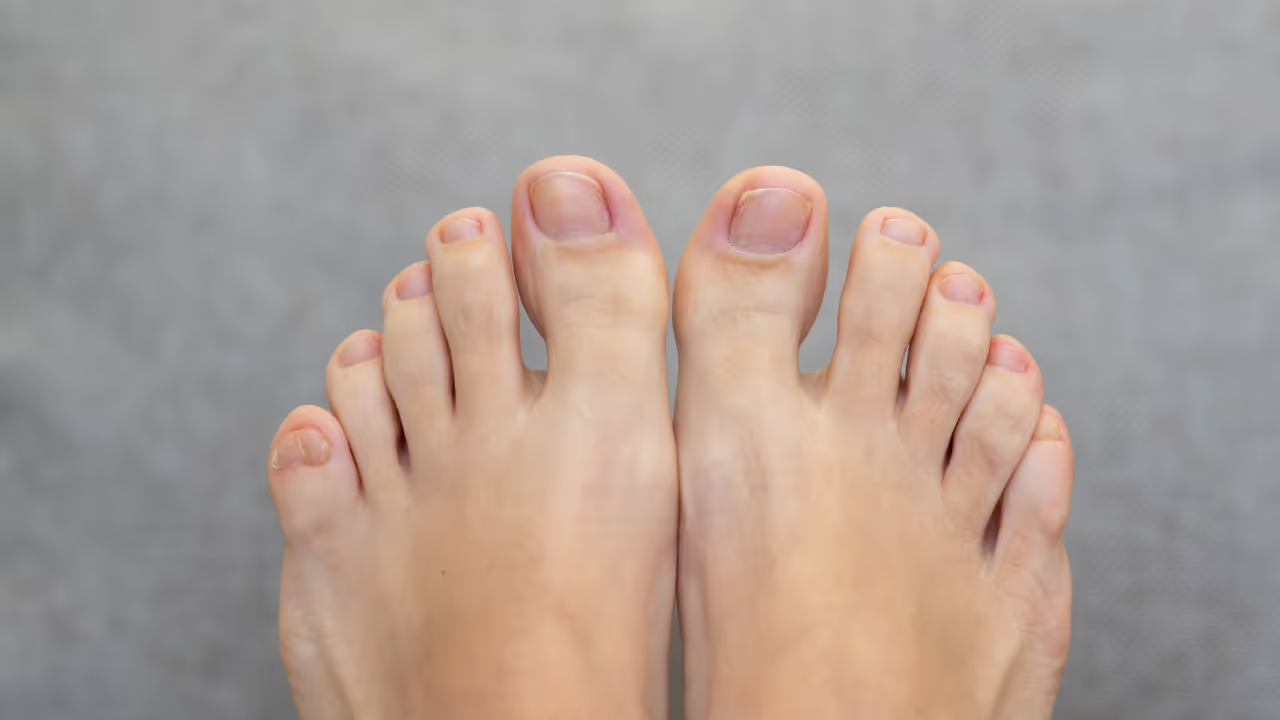
An ingrown nail, medically known as onychocryptosis, is a condition where the edge of the nail grows into the soft tissue of your finger or toe instead of across it. This happens most often with the big toe, but can in principle occur on any toe or even finger.
To understand what goes wrong with an ingrown nail, it helps to first know how a healthy nail grows. Throughout your life, your nails grow by about 2 to 3 millimeters per month. A nail consists of the nail plate, the hard visible part, that is attached to the nail bed at the bottom. On the sides, the nail edges are slightly folded downwards and are located in the nail wall, the tissue that surrounds the nail.
In a healthy nail, the side edge grows nicely over the soft tissue of the nail wall. In contrast, in an ingrown nail, the sharp edge or corner of the nail penetrates the skin. This can happen because the nail grows too curved, because too much external pressure is applied to the nail wall, or because the nail has been cut incorrectly, causing a sharp point that pierces the skin.
When the nail edge penetrates the skin, mechanical irritation occurs. The skin becomes damaged and responds with an inflammatory response. The area becomes red, swollen, and painful. Because the skin is pierced, bacteria can also enter, leading to an infection on top of the mechanical irritation. This combination of mechanical damage and infection often makes an ingrown nail very painful.
The problem with an ingrown nail is that it can become a vicious cycle. The swelling pushes against the nail, which worsens the ingrowth. The further ingrowth causes more irritation and swelling. Without treatment, this problem can last for weeks to months and even become chronic.
Ingrown nails are very common, especially among young people and young adults. Men suffer from it more often than women, possibly due to larger feet and different shoe choices. People who exercise a lot, especially runners and football players, are also more likely to have ingrown toenails due to the repetitive pressure and friction in sports shoes.
Although an ingrown nail is not dangerous on its own, it can be seriously annoying and limit your mobility. In people with diabetes or blood circulation problems, ingrown nails can cause more serious complications because their infections are harder to heal and spread more quickly. For this group, early treatment is extra important.
Do you suffer from Ingrown nail?
Have your skin assessed by a licensed dermatologist via the Skindr app. Upload photos and get a diagnosis with personal advice within 48 hours. No waiting room, no referral required.
How does an ingrown nail develop?
Ingrown nails occur due to various mechanisms, often due to a combination of factors. Understanding what increases the risk helps prevent it.
One of the most common causes is incorrect nail cutting. When you cut the corners of your toenails too round or cut them too deep, you stimulate the nail to grow into the skin instead of over it. This happens because you are actually disrupting the natural growth direction of the nail. The nail wants to grow forward, but by cutting the corners too deep, you create a sharp point that points down and to the side, directly into the soft tissue of the nail wall. The correct way is to cut toenails straight, parallel to the tip of the toe, and not remove the corners too deep. You may round the corners very slightly, but not so far as to get into the nail wall.
Shoes that are too tight are another important cause. Shoes that are too small, too narrow at the toes, or have a pointed nose press the nail against the nail. This constant pressure can literally push the nail into the skin. This problem is common among people who wear shoes that are actually a size too small because of their appearance, or children whose parents do not realize that their feet have grown and need new shoes. High heels can also make the problem worse by increasing pressure on the forefoot, which means that the toes are additionally pressed against the tip of the shoe.
Some people are naturally predisposed to ingrown nails. This may be related to the shape of their nails. Nails that are naturally more curved grow in more easily. This predisposition can be hereditary, so if your parents or siblings suffer from ingrown nails, you are also more likely yourself. The shape of your toes can also play a role: for some people, the nail wall is higher compared to the nail, which promotes ingrowth.
Thick nails, for example in elderly people or people with fungal nail infections, also grow in more easily. A thick nail is stiffer and has more power to penetrate soft tissue. In addition, fungal infections often make the nail discolored, deformed and brittle, all contributing to an increased risk of ingrowth.
Trauma to the toe also plays a role. Bumping your toe, dropping something heavy on it, or repeated microtraumas like running can interfere with nail growth. After trauma, the nail can grow in an abnormal direction, which can cause ingrowth. Footballers and other athletes who strain their feet repeatedly suffer from this more often.
Excessive foot sweating makes the skin around the nails softer and more vulnerable. This swollen, soft skin offers less resistance to an ingrown nail and is more easily pierced. People with hyperhidrosis, excessive sweating, are therefore more likely to suffer from ingrown nails.
Certain activities and occupations also increase the risk. Ballet dancing, where you stand on your toes, puts extreme pressure on the nails. Running, especially long distances, causes repeated impacts from the toe against the front of the shoe. Working where you spend a lot of time standing or walking in safety shoes that are often heavy and stiff can also contribute.
Symptoms and characteristics of an ingrown nail
The symptoms of an ingrown nail are quite characteristic and often develop gradually.
It usually starts with a feeling of discomfort on one side of the toe, often the outside of the big toe. This discomfort develops into marked pain that worsens with pressure. Walking becomes uncomfortable, especially in closed shoes. You notice that you are going to walk differently to protect the sore toe, which can lead to secondary complaints on your foot, ankle or even knee.
The skin on the side of the nail where the ingrowth takes place turns red and swollen. This redness is often bright and sharply limited. The swelling can be significant, causing the nail wall to appear to grow over the edge of the nail. The area feels warm when touched, a sign of the inflammation that is underway.
The pain typically has a pressing, throbbing character. Even without touch or pressure, you can feel the toe throbbing. When touched, the pain is often sharp and severe. Wearing shoes, especially closed shoes or socks that exert pressure, makes the pain significantly worse. Many people with an ingrown nail therefore walk at home in slippers or sandals, and avoid closed shoes whenever possible.
When the ingrown nail becomes infected, which happens regularly, the symptoms become more severe. You will then see pus forming along the nail edge. This pus can accumulate under the skin or come out as a yellowish white discharge. The swelling increases and can spread all over the toe. The redness also intensifies and can spread to the rest of the toe. The area becomes extra sensitive and pain increases.
Chronically ingrown nails can cause granulation tissue, also known as “wild meat”. This is red, fleshy new tissue that grows in response to the ongoing irritation. It can grow over the edge of the nail and looks like a moist, red mass. This tissue bleeds easily when touched lightly and can secrete moisture.
In severe or protracted cases, the nail itself may also undergo changes. Ongoing inflammation can lead to nail deformation, discoloration, or furrows in the nail plate. Sometimes the nail grows thicker or thinner as a result of chronic irritation.
It is also possible for both sides of the nail to grow in, although this is less common than ingrowth on one side. When both sides are involved, the pain and disability are of course even greater.
Where does an ingrown nail occur?
Ingrown nails have a clear preferred pattern when it comes to location, which has to do with anatomy and strain.
The big toe is by far the most common location for ingrown nails. Estimates vary, but around 90 percent of all ingrown nails affect the big toe. There are various reasons for this. First, the nail on the big toe is wide and relatively large, which offers more surface area where ingrowth can occur. Secondly, the big toe bears the most weight when walking and standing, which puts extra pressure on the nail walls. Third, the big toes are most affected by shoes that are too close, because the shoe tip is often narrowest exactly where the big toes are.
Within the big toe, there is also a preferred side for ingrowth. The outside of the big toe, i.e. the side furthest from the other toes, is most commonly affected. This is because this side is often the most compressed in shoes. With straight feet, this is the right side of the right big toe and the left side of the left big toe. Ingrowth on the inside, the side that points to the other toes, is also a little less frequent.
In some cases, both sides of the big toenail grow in. This is often the case with people with strongly curved nails or very tight shoes that exert pressure from both sides.
The other toes may also develop ingrown nails, but this is much rarer. When it occurs, it's usually the little toe. The little toe is vulnerable because it sits on the outside of the foot and is often pressed into the side of the shoe. The little toe is also susceptible to trauma because it sticks out. In people with certain foot disorders, such as hammer toes or a different position of the toes, the middle toes can also develop problems.
Ingrown fingernails are rare but not impossible. They are particularly common among people who put heavy strain on their hands professionally, such as guitarists who repeatedly press their fingertips against strings, or those who type a lot with hard strokes. Even after trauma to a finger, such as a bruised finger, a nail can grow and grow abnormally. Fingers involve the thumb most often when it occurs.
In children, ingrown nails also occur, although less frequently than in adults. This has to do with the fact that children's nails are often softer and more flexible.
In people with diabetes, blood circulation problems or neuropathy, ingrown nails can occur on several toes at the same time and can be more serious. These patient groups have reduced sensation in their feet, so they only notice the problem late. They also have a harder time healing wounds and infections. That is why extra attention and prevention are important in this group.
Do you suffer from Ingrown nail?
Have your skin assessed by a licensed dermatologist via the Skindr app. Upload photos and get a diagnosis with personal advice within 48 hours. No waiting room, no referral required.
Treatment of an ingrown nail
Treatment for an ingrown nail depends on the severity and whether there is an infection. Early treatment can often prevent the need for more drastic measures.
With a mild ingrown nail, especially at an early stage, you can start treatment at home. Hot foot baths can provide relief. Soak your foot in warm water for 15 to 20 minutes several times a day. This reduces swelling and softens the tissue. After bathing, dry the foot thoroughly, because moisture that remains can cause problems.
A medical pedicure can often provide relief at an early stage. The pedicure can gently brighten the ingrown edge of the nail with special instruments. A small wad of cotton wool, gauze or special material can be placed under the lightened nail edge. This raises the nail edge above the irritated tissue and gives the skin a chance to recover. The pedicure can also trim the nail correctly, so straight off without taking the corners too deep, and give advice on how to cut the nail correctly at home to prevent repetition. Regular visits to a good pedicure can be preventative for people with a predisposition to ingrown nails.
Temporarily, you can also wear wider, open shoes to reduce pressure on the toe. Sandals or flip flops are ideal during the acute phase. If you do have to wear closed shoes, choose shoes with a spacious, soft nose that does not put pressure on the toe.
Pain relievers can help reduce discomfort. Regular pain relievers with anti-inflammatory effects, such as ibuprofen, help against both pain and inflammation.
When the ingrown nail is infected, with obvious signs such as pus, strong swelling, intense redness, or fever, professional medical attention is needed. Your doctor will clean the toe thoroughly and possibly remove the pus. Often, a course of medication is prescribed to combat the bacterial infection. This medication is a topical antibacterial or taken orally, usually for five to seven days.
For ingrown nails that keep coming back despite conservative measures, or that are chronic with granulation tissue formation, surgical intervention is often the best and most definitive solution. This procedure is usually performed by a general practitioner or a (dermatological) surgeon.
The most common procedure is partial nail removal. Under local anesthesia, a strip of approximately five millimeters is cut away from the ingrown nail edge. This occurs along the entire length of the nail, from the tip to the root of the nail. The resulting quarry is then treated with phenol, a chemical that destroys the nail root at that location. This ensures that this part of the nail does not grow back permanently. The procedure sounds drastic, but the result is usually excellent.
After the procedure, your nail is slightly narrower than before, but this difference is almost invisible. The most important thing is that the side that was removed can no longer grow in, because there is simply no nail growing in that spot. The other side of the nail remains intact and grows normally. When both sides of the nail are ingrown, the procedure can be performed on both sides, resulting in a slightly narrower but problem-free nail.
The healing after the procedure usually takes two to four weeks. You should keep the toe clean and dry, change bandages regularly, and take a rest for the first few days. Most people are able to walk normally within a few days, although with open shoes the first week.
What doesn't work against an ingrown nail?
With ingrown nails, there are some approaches that are ineffective or can even be counterproductive.
Trying to cut the ingrown part of the nail independently with scissors or nippers seems a logical solution, but often makes the problem worse. First, it is difficult and painful to get deep enough without causing additional damage to the surrounding tissue. Second, you're likely to cut a new sharp edge that can then grow back in, possibly even more painful than before. Third, you increase the risk of infection by using non-sterile instruments to cut into an already inflamed area. Leave this to a professional who knows how to do it and has the right tools.
The idea that you can 'fix' an ingrown nail by cutting a V-shape out of the middle of the nail is a myth. This technique would cause the nail edges to pull in and thus reduce the pressure on the nail bags, but this does not work. Nails grow from back to front, not sides to center, so cutting away the middle has no effect on the sides. It only weakens the nail and can lead to cracks.
Continuing to wear shoes that are too close while you have an ingrown nail only worsens the situation. The constant pressure and friction maintain the inflammation and hamper healing. Even when the pain is temporarily bearable, you work on further ingrowth. Even open shoes such as flip flops offer no pressure, but they also provide little protection. The best are spacious, closed shoes with a soft, wide nose that do not put pressure on the toes but do protect.
Using homemade home remedies such as garlic, onion, various oils, or herbs you find on the internet is usually not effective. While some natural remedies may have mild antibacterial properties, they do not treat the underlying mechanical problem. An ingrown nail is a physical problem where the nail grows into the skin, and you can't solve that with ointments or compresses. If you have an infected ingrown nail, you need medical treatment.
Ignoring the pain and just continuing as if nothing is wrong leads to worsening. An untreated ingrown nail rarely heals on its own and usually gets worse gradually. Swelling increases, infection occurs, and granulation tissue may develop. At some point, walking becomes so painful that you are forced to seek help, but then the treatment is often more drastic than if you had been there early.
It is also not wise to keep delaying a surgical solution while conservative treatments fail time and time again. Some people spend months or even years struggling with a chronically recurring ingrown nail because they fear the procedure. In reality, the procedure is relatively simple, the anesthesia makes it painless, and finally solving the problem provides great relief and better quality of life. The fear of treatment is often greater than the treatment itself.
Frequently asked questions about ingrown nails
How do I prevent ingrown nails?
Prevention starts with cutting your toenails properly. Cut them straight, parallel to the tip of your toe, and don't leave the corners too deep. The nail should be about the same as or just above the tip of your toe. Use a good nail clipper that is sharp enough to cut neatly without tearing. Wear shoes that fit well and offer enough space for your toes. Your big toe should be able to move without pressing against the front or sides of the shoe. Avoid heels that are too high that put extra pressure on the forefoot. Keep your feet clean and dry, and preferably wear breathable shoes and socks made from natural materials. Regular visits to a good pedicure can help people who are prone to ingrown nails.
Is an ingrown nail dangerous?
For most healthy people, an ingrown nail is not dangerous, just annoying and painful. With the right treatment, it heals well without complications. However, ingrown nails can be dangerous for people with diabetes, blood circulation problems, or a weakened immune system. In these groups, infections can spread faster and further, are more difficult to heal, and in severe cases even lead to gangrene or sepsis. If you belong to this risk group, contact your doctor at the first signs of an ingrown nail.
Does an ingrown nail come back after treatment?
After conservative treatment where only the ingrown piece of nail has been removed without treating the nail root, the nail can indeed regrow if the underlying causes are not addressed. Cutting nails correctly and wearing good shoes remain important. In surgical treatment where a strip of the nail edge is permanently removed with phenol, the chance of returning to that side is almost zero. The treated edge no longer grows back and can therefore no longer grow in. In theory, the other side of the nail can still cause problems if an ingrowth problem also occurs, but this is then treated in the same way.
Can I exercise with an ingrown nail?
This depends on the severity and type of sport. With a mild ingrown nail, you may be able to do light activities that don't put pressure on the feet, such as swimming or cycling. Sports that require you to run, jump or start and stop, such as football, tennis or running, are not recommended with an ingrown nail. The repeated impact and pressure aggravate the problem and make it more painful. The risk of infection can also increase due to sweating and heat in sports shoes. Give your toe time to heal before you return to full exercise. When in doubt, consult your doctor or pedicure.
How long does healing take after a surgical treatment?
After partial nail removal with phenol treatment, complete healing usually takes two to four weeks. The first few days, there is pain and swelling, which can be treated well with pain relievers. After about a week, most people are reasonably mobile again, although with open or roomy shoes. The wound must be cared for daily. After two weeks, the wound has usually healed for the most part and you can gradually start wearing normal shoes again. After four weeks, there is usually no pain and you can resume all normal activities. The nail looks different on the treated side because no nail grows there anymore, but this is usually hardly noticeable.
Do I need to see a doctor or can a pedicure treat it?
For a mild ingrown nail without infection, a medical pedicure can often help by lifting the nail and trimming it correctly. If there are signs of infection such as pus, strong swelling, intense redness, or if you have a fever, you should see a doctor. Even for chronic ingrown nails that keep coming back, medical attention is needed for a permanent solution. In case of diabetes or other underlying conditions, it is wise to always consult with your doctor first. A good pedicure will refer you to a doctor yourself when medical treatment is needed.