.webp)


What is Perioral Dermatitis?
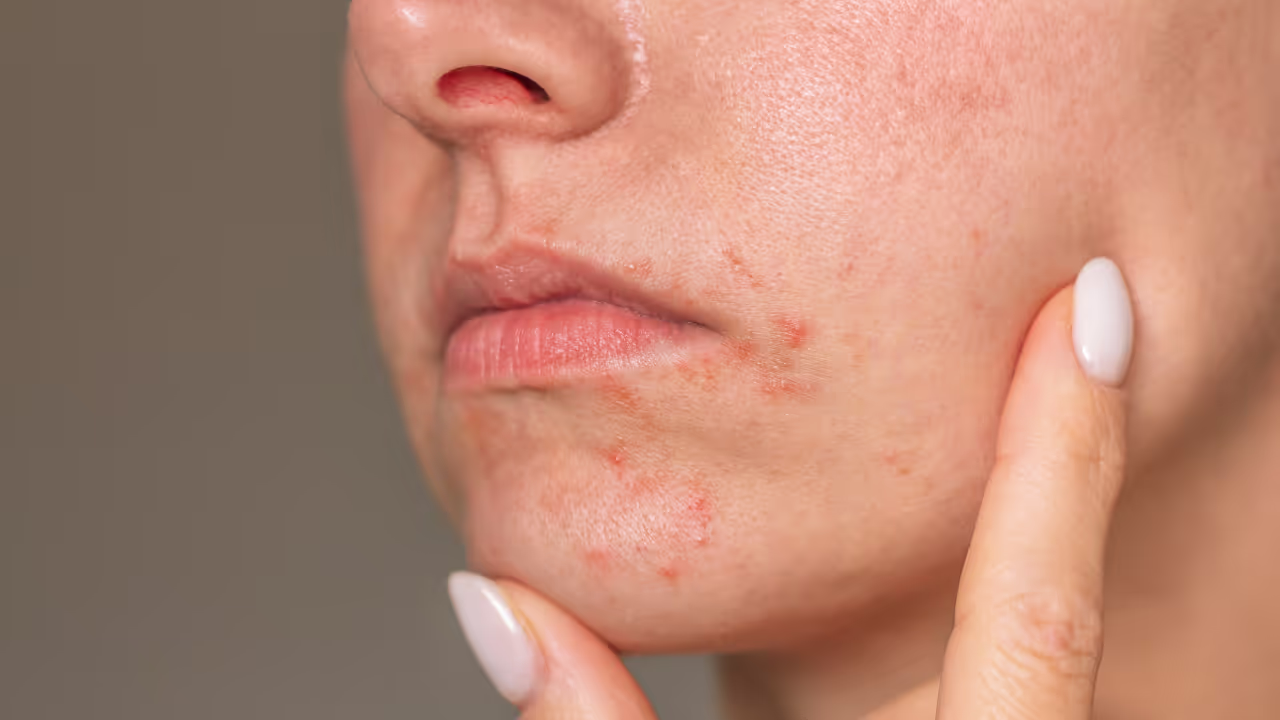
Perioral dermatitis is a skin condition that causes small red pimples and pimples on the face, mainly around the mouth. The word “perioral” literally means “around the mouth,” which is exactly where this characteristic rash appears. The disorder mainly affects young, adult women between the ages of 15 and 45, but can in principle affect anyone.
What makes perioral dermatitis so recognisable is the specific pattern in which the rash appears. The pimples and pimples often first appear in the skin fold between your nose and lips. From there, they can spread to the area directly around your mouth and sometimes even to the area around your eyes. A remarkable feature is that there always remains a narrow, injury-free border around the red lip itself. This small patch of healthy skin between your lips and the rash is almost always present and helps doctors make the diagnosis.
The pimples may be accompanied by redness and peeling of the skin. Many people also experience a burning or tensing sensation in the affected area. Although the condition isn't dangerous, it can be annoying and affect how you feel about your appearance. The rash is persistent and won't just disappear by itself without the right approach.
Perioral dermatitis is sometimes confused with other skin conditions such as acne or rosacea. With acne, however, you typically see blackheads, which is not the case with perioral dermatitis. Rosacea is more common in slightly older people and is often accompanied by visibly dilated blood vessels, which is not the case with perioral dermatitis. The specific location around the mouth and the characteristic pattern usually make perioral dermatitis easy to distinguish from other conditions.
Do you suffer from Perioral Dermatitis?
Have your skin assessed by a licensed dermatologist via the Skindr app. Upload photos and get a diagnosis with personal advice within 48 hours. No waiting room, no referral required.
How does perioral dermatitis occur?
The exact cause of perioral dermatitis has not yet been fully elucidated, but research has revealed several factors that can trigger or worsen the condition. It appears that perioral dermatitis is caused by a combination of influences that unbalance the sensitive skin around the mouth.
One of the most important and best documented triggers is the use of cortisone-containing creams on the face. Applying cortisone creams to the face for a long time can weaken the skin and cause perioral dermatitis. Interestingly, this does not only happen when used topically: even when you take cortisone-containing medications in tablet form, used by inhalation (for example to treat asthma) or by injection, this can contribute to the development of the disorder. The skin around the mouth is particularly sensitive to these effects.
Cosmetic products may also play a role in the development of perioral dermatitis. Moisturizers, foundations, and night creams are often identified as possible causes. These products may contain certain ingredients that irritate sensitive facial skin. Regularly applying dense, oily products to the face can create an environment where perioral dermatitis develops more easily.
There is also evidence that certain toothpastes containing fluoride contribute to perioral dermatitis, especially if you regularly come into contact with the skin around your mouth while brushing. Some people notice improvement when they switch to fluoride-free toothpaste, although it doesn't work for everyone.
Other factors that may play a role include hormonal fluctuations, stress and certain climatic conditions. Some women notice that their skin becomes more sensitive during specific phases of their menstrual cycle. Extreme weather conditions such as strong wind, cold or a lot of sunlight can also put extra strain on the skin and contribute to the development or worsening of the rash.
Symptoms and characteristics of perioral dermatitis
The first sign of perioral dermatitis is usually the appearance of small, red pimples around your mouth. These pimples sometimes look like regular pimples, but have a specific pattern and location. They often start in the skin fold between your nose and upper lip, an area known as the nasolabial fold. From there, they can spread to the area right next to and under your mouth.
The pimples themselves are usually small, red and may be slightly raised. Some pimples may also be filled with some moisture, making them look like small pimples. They often appear in groups or clusters, giving the skin a speckled appearance. Behind these pimples, the skin may be red and slightly flaky, especially when the condition has been around for a while.
In addition to the visual aspect, you often also experience physical sensations. A burning sensation is very common in perioral dermatitis. This can feel like a slight but sustained warmth or tension in the affected skin. Some people describe it as a tingling or tense feeling. Itching also occurs, although this is usually less prominent than the burning sensation.
Perioral dermatitis is characterized by certain daily activities that can aggravate the symptoms. Exposure to sunlight often makes symptoms worse, causing your skin to burn or itch even more. The use of soap or simply contact with water while washing can also increase the sensation of burning. This sometimes makes daily facial care difficult and annoying.
An important diagnostic feature is the injury-free border around the lips red. This means that there is always a small line of healthy skin between your lips and where the pimples start. This small, unaffected area is almost always present and distinguishes perioral dermatitis from other skin conditions.
In some cases, the rash is not limited only to the area around the mouth. In some people, similar pimples may also appear around the eyes, especially in the under-eye area and on the sides. When this happens, people sometimes speak of “periocular dermatitis” for the area around the eyes, although it is the same condition.
Where does perioral dermatitis appear?
Perioral dermatitis has a clear preference pattern when it comes to the locations where the rash appears. The area around the mouth is central, but within this area there are specific areas that are affected more often than others.
The skin fold between your nose and upper lip is often the first place you'll notice the pimples. Technically called the nasolabial fold, this area is a natural line in your face that runs from the side of your nose to the corners of your mouth. The skin here is relatively thin and sensitive, which may explain why perioral dermatitis often starts here. The pimples can appear symmetrically on both sides of your nose, making the pattern extra striking.
From this starting position, the rash often spreads to the area directly around your mouth. The area under your lower lip is regularly affected, as is the skin on the sides of your mouth. The chin can also get involved, especially the central part directly under your lower lip. What is almost always respected, however, is that characteristic narrow border of healthy skin that borders directly on your red lips. This zone of about one to a few millimeters is almost always free of pimples.
In some people, the condition is neatly confined to the area around the mouth, but in others, the rash can spread further. The area around the eyes is the second most common location. Similar red pimples can appear here, especially in the area under the eyes and sometimes on the sides of the eyes, towards the temples. When the eyes are involved, the complaints of burning and itching can also manifest themselves there.
Remarkably, perioral dermatitis almost never occurs in areas such as your forehead, cheeks (except the part right next to your mouth), or neck. Your body is also almost always spared. This specific pattern helps physicians diagnose and differentiate perioral dermatitis from other skin conditions that often have a much more diffuse distribution pattern.
Do you suffer from Perioral Dermatitis?
Have your skin assessed by a licensed dermatologist via the Skindr app. Upload photos and get a diagnosis with personal advice within 48 hours. No waiting room, no referral required.
Treatment of perioral dermatitis
Treating perioral dermatitis requires a thoughtful approach where you first stop what's causing or worsening the condition, and then be patient while your skin recovers. This recovery process can take a few weeks to months, but with the right strategy, you'll usually see good results.
If applicable, the very first step is to stop using cortisone-containing creams on your face. This may sound simple, but it can be quite difficult in practice. This is because perioral dermatitis is often misdiagnosed as eczema. As a result, many people have been using these creams for some time because they think they are treating a different skin complaint. When you stop, those original symptoms can temporarily worsen. It is therefore crucial that your doctor explains to you why quitting is so important and what to expect.
Cosmetic products also deserve attention. It's wise to temporarily stop using moisturizers, foundations, and night creams that you normally apply to your face.
Specifically, it concerns two groups of products:
- Too active or irritating products: Avoid products with acids such as glycolic acid, retinol, or salicylic acid. These highly active ingredients can irritate the skin extra.
- Products that are too greasy: Products that seal the skin, especially in areas where the rash is located.
This gives your skin the chance to recover without continuous stimulation. Keep it simple: cleanse your face with soap and lukewarm water and avoid cleansing products or other products that may irritate the skin.
If your skin does not improve on its own despite these measures, your doctor may suggest treatment with topical antibiotic cream. A long-term course of certain types of antibiotics, specifically from the tetracycline group, often appears to be effective for perioral dermatitis. This treatment works not so much by killing bacteria, but mainly by having anti-inflammatory properties. You will usually have to take this medication for 6 to 12 weeks before you see the full effect.
If topical antibiotic cream does not improve enough, your doctor may suggest a combination of topical and oral antibiotics.
It's important to understand that you have to be patient with the treatment. Perioral dermatitis doesn't go away overnight; in the first few weeks after stopping cortisone creams, your skin may even appear temporarily worse. This is a normal part of the recovery process. Give your skin time to adjust and regain balance.
Additional self-care measures can support recovery. Protect your face from extreme weather conditions such as bright sun, wind and cold. Avoid situations that stress your skin unnecessarily. Stress can also play a role, so pay attention to your general well-being. Get enough sleep and try to incorporate relaxation into your day.
Once your skin starts to recover, it's wise to be careful about reintroducing products. Start with mild, fragrance-free and grease-free products and test them on a small area first. Build up slowly and pay close attention to how your skin reacts. Some people need to make permanent adjustments to their care routine to prevent recurrence.
What doesn't work against perioral dermatitis?
There are several misconceptions about the treatment of perioral dermatitis, and it's important to know which approaches don't work or are even counterproductive. This prevents frustration and helps you spend your time and energy on treatments that are effective.
The most important thing to know is that cortisone-containing creams, no matter how tempting they seem, should definitely be avoided. Although these creams help with many other skin conditions and can suppress the inflammatory response, they have a paradoxical effect on perioral dermatitis. In the short term, the skin may seem to improve for a while, but this is only temporary. The use of cortisone creams significantly worsens perioral dermatitis in the longer term and makes the problem more persistent. In fact, long-term use of these creams is seen as one of the main causes of the disorder. If you're already using cortisone creams, quitting is therefore essential, even if it may feel like a step backward at first.
The idea that you can treat perioral dermatitis like regular acne doesn't work either. Although the pimples may look like acne, it's a completely different condition with a different cause. Typical acne treatments such as strong cleansers, peels or certain acne creams can actually irritate the sensitive skin around your mouth and make the situation worse. The skin in perioral dermatitis is already inflamed and irritated, and aggressive treatments only make this worse.
Many people think that intensive skin care with many products is the solution. The opposite is true. In perioral dermatitis, less is actually more. Stacking different creams, serums and treatments only puts an extra strain on your skin. Even products that are presented as “mild” or “suitable for sensitive skin” can cause problems with perioral dermatitis. The idea that you need to lubricate more to make your skin better is wrong with this condition.
Home remedies and natural treatments often sound appealing, but are usually not effective for perioral dermatitis. While some natural ingredients may help with other skin problems, they have no proven effect on perioral dermatitis. On the contrary, trying out all kinds of different remedies can put extra strain on your skin and slow down the recovery process.
The idea that you can treat the condition by just adjusting your diet is also usually too optimistic. While a healthy diet is of course always good for your general health and skin, there is no specific diet that cures perioral dermatitis. Avoiding certain foods alone won't solve the problem.
Frequently asked questions about perioral dermatitis
Is Perioral Dermatitis Contagious?
No, perioral dermatitis is definitely not contagious. You cannot transmit the condition to others by touching, kissing, or sharing towels or other personal items. It is not an infection caused by bacteria, viruses or other pathogens, but an inflammatory reaction from your own skin. So you don't have to worry about infecting family members, friends or your partner.
How long does it take for perioral dermatitis to heal?
The recovery process requires patience and varies from person to person. After stopping cortisone creams and adjusting your skin care, you may even see a temporary worsening in the first few weeks before improvement occurs. It usually takes a few weeks to months before you see a clear improvement. When treated with topical, and possibly oral, medications, it may take two to three months before the condition completely disappears. It is important to be consistent with treatment and not give up too early.
Can I prevent perioral dermatitis?
While you can't influence all risk factors, there are preventative measures you can take. The most important step is avoiding long-term use of cortisone creams on your face. Also, stay attentive when using puffers or nasal sprays containing cortisone. Furthermore, be careful with cosmetic products on your face. Avoid creams and foundations that are too oily, as well as too active or irritating products with ingredients such as glycolic acid, retinol or salicylic acid. Opt for mild, fragrance-free products and don't use more than necessary. Stop immediately if you notice irritation. Finally, protecting your skin from extreme weather conditions can also help.
When should I see a doctor?
It's a good idea to see your doctor as soon as you suspect you have perioral dermatitis. Early diagnosis and treatment can prevent the condition from worsening or becoming long-term. Be sure to see a doctor if the results are extensive, if you have a lot of symptoms, or if you are unsure about the diagnosis. Even if the condition does not respond to basic measures such as stopping cortisone creams and adjusting your skin care, professional advice is important. If necessary, your doctor can refer you to a dermatologist for specialized care.
Does perioral dermatitis recur after treatment?
Unfortunately, perioral dermatitis can come back, especially if you use the same triggers that originally caused the condition. If you start using cortisone creams on your face again after successful treatment or return to intensive skin care with many products, there is a risk of a relapse. By staying aware of the triggers and keeping your skin care simple, you can reduce the risk of recurrence. Some people are more sensitive than others and need to be permanently careful with their facial care.
Can perioral dermatitis lead to permanent scarring?
Fortunately, perioral dermatitis itself does not usually result in permanent scarring. The pimples and inflammations are usually superficial and heal without leaving a trace. However, it is important not to scratch or pick at the pimples, as this can lead to scars. Using cortisone creams for a long time can also make the skin permanently thinner and more vulnerable. With the right treatment and without manipulation of the affected skin, you expect a full recovery without permanent signs.