.webp)


What is anal itching?
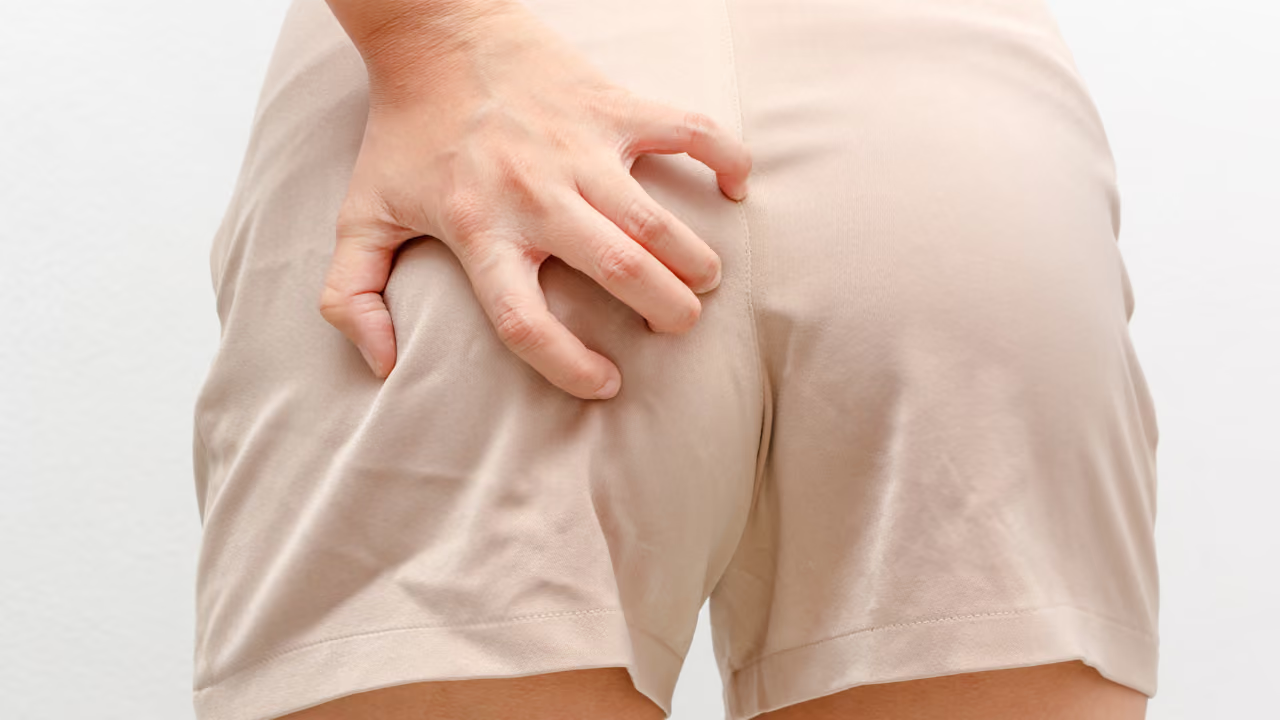
Anal itching, medically known as pruritus ani or perianal dermatitis, is persistent itching around the anus that sometimes comes with a burning or painful sensation. It is not a condition in itself, but a symptom with various possible causes.
Anal itching is a frequently reported complaint: an estimated 1 to 5 percent of the population experiences it at some point. It affects men more often than women and is most common in people between 45 and 64 years old, although young people and children are not immune.
The complaint can appear suddenly or develop gradually, ranging from mild and periodic to constant and sleep-disrupting. In up to 60 percent of cases, no clear underlying cause is found, but that does not mean treatment is impossible. Targeted self-care and a dermatologist's assessment often provide quick relief in most cases.
The causes broadly fall into four categories: skin irritation (due to cleansing products or stool), infections (fungal, worms, sexually transmitted infections), skin conditions (eczema, psoriasis, lichen planus) and anatomical factors (hemorrhoids, anal fissure). The applicable category determines the best approach.
Do you suffer from Anale jeuk?
Personalized advice for your skin, completely online. Upload a few photos through the Skindr app and receive medical advice from a licensed dermatologist within 48 hours. No waiting room or referral required.
How does anal itching develop?
Anal itching has dozens of possible causes. Below are the most common ones.
Residual stool
With incomplete cleaning after a bowel movement, traces of stool remain on the sensitive skin around the anus. The enzymes in stool irritate the thin perianal skin with prolonged contact.
Excessive or incorrect cleaning (soap)
Soap removes the protective fatty layer, causing the skin to dry out and become more susceptible to irritation. Furthermore, wet wipes with perfume or preservatives directly irritate the skin.
Moist skin and perspiration
A moist and warm environment around the anus promotes anal itching. Obesity, prolonged sitting, tight synthetic underwear, and urinary incontinence keep the skin macerated and vulnerable.
Fungal infection (candida)
A candida infection causes intense, burning itching, often with noticeable redness and small sores at the edges.
Hemorrhoids and anal fissure
Hemorrhoids slightly disrupt the anal seal, allowing mucus and stool residue to irritate the perianal skin.
Worms (pinworms)
Pinworms (Enterobius vermicularis) are the most common parasitic infection in Western countries, including adults. The females leave the intestine at night to lay eggs around the anus, causing an intense itching sensation.
Skin conditions: eczema, psoriasis, and lichen planus
Both eczema and psoriasis can affect the perianal area, sometimes even as the sole or most prominent location. Also atopic eczema in adults can affect the perianal region.
Allergic contact dermatitis
Perfume in toilet paper, fabric softeners, preservatives in wet wipes, or ingredients in ointments and creams can cause allergic contact dermatitis around the anus.
Sexually transmitted infections
Infections such as genital herpes, syphilis, and condylomata acuminata (caused by HPV) can cause anal itching. If an STI is suspected, consulting a doctor is always the recommended step.
Why does the anus itch at night?
Nocturnal anal itching is a classic sign of pinworms: the females are active at night and lay eggs around the anus, causing an intense, hard-to-ignore itching sensation. If you experience pronounced nocturnal itching, consider a deworming treatment for the entire household.
Symptoms and characteristics of anal itching
The most prominent complaint is the itching itself, but anal itching is often accompanied by other signs. The skin around the anus shows redness, irritation, small scratch marks (excoriations), and sometimes fissures or flaking. In cases of prolonged complaints, the skin may thicken (lichenification).
On lighter skin tones, redness is clearly visible. On darker skin tones, irritation often manifests as a darker discoloration of the perianal skin, and warmth may also be palpable.
In addition to itching, there may be additional complaints: a burning or painful sensation (especially with fissures), a moist or clammy feeling around the anus, or a trace of mucus in the underwear.
A pitfall is the scratch-itch cycle: scratching provides temporary relief but damages the skin, making the itching worse afterwards.
Have you been experiencing skin complaints around the anus for a while and the cause is unclear? A certified Skindr dermatologist will assess your skin online within 48 hours.
Where does anal itching occur?
Anal itching occurs in the perianal area: the skin around the anus, which is particularly sensitive due to the presence of many nerve endings, moisture, and warmth. Depending on the cause and severity, the itching can spread to the gluteal cleft, the perineum, and sometimes the buttocks themselves.
With underlying skin conditions such as eczema or psoriasis, the condition is not always limited to the perianal area. With contact eczema the same is true: the perianal region is particularly vulnerable due to the combination of moisture, warmth, and friction.
In the case of a fungal infection, the redness can spread to the skin on the inner thighs and other skin folds.
Do you suffer from Anale jeuk?
Personalized advice for your skin, completely online. Upload a few photos through the Skindr app and receive medical advice from a licensed dermatologist within 48 hours. No waiting room or referral required.
Treatment of anal itching
The treatment for anal itching is closely linked to the underlying cause. In many cases, simple adjustments to hygiene are sufficient to alleviate the symptoms.
The foundation of self-care is cleaning the perianal area with lukewarm water, without soap. Gently pat the skin dry instead of rubbing. Wear loose cotton underwear that allows the skin to breathe and avoid wet wipes containing perfume, preservatives, or alcohol.
When self-care is insufficient, the medical approach depends on the cause. For severe skin inflammation, a treatment on a doctor's advice may sometimes be indicated. For a fungal infection, an antifungal cream is the appropriate choice. For pinworms, a deworming treatment quickly resolves the problem. For skin conditions such as eczema targeted dermatological treatment is required. If allergic contact eczema identifying the irritating substance helps. More about itching in general you can read on our overview page.
When is it advisable to consult a doctor? If symptoms persist for longer than two weeks, recur regularly, are accompanied by pain or blood loss, or if the cause remains unclear.
Through Skindr, you will receive advice from a certified dermatologist within 48 hours.
What doesn't work against anal itching?
A common mistake is to clean the perianal area more intensely when experiencing itching. Soap, alcohol-based wet wipes, and disinfectant sprays actually irritate the skin further and worsen the symptoms, even if it feels hygienic.
Scratching provides temporary relief but damages the skin and perpetuates the itch-scratch cycle. In the long term, this can lead to skin thickening (lichenification) and more persistent symptoms.
Long-term independent use of creams without medical advice is risky: the skin around the anus can become thin and vulnerable, which worsens symptoms in the long term.
Waiting in the hope that it will go away on its own is not wise if there is an underlying cause. Pinworms, a fungal infection, or a skin condition will not disappear without targeted treatment.
Frequently asked questions about anal itching
Why does my anus itch at night?
Nocturnal itching around the anus is a classic sign of pinworms. The females lay eggs on the perianal skin at night, causing an intense itching sensation. A deworming treatment for the entire household quickly resolves this.
Is anal itching contagious?
Anal itching itself is not contagious. If pinworms are the cause, they can spread within a household. If an STI is the cause, that condition is transmissible.
Does anal itching go away on its own?
For mild irritation caused by soap or wet wipes, the itching may disappear as soon as you remove the irritating factor. For a skin condition, infection, or hemorrhoids, targeted treatment is necessary. Have symptoms lasting longer than two weeks checked.
Can eczema or psoriasis cause anal itching?
Yes. Both eczema and psoriasis can affect the perianal area, sometimes as the only or most prominent spot. A dermatologist is then the appropriate specialist.
When should I see a dermatologist for anal itching?
For symptoms lasting longer than two weeks, regularly recurring episodes, skin changes (flaking, thickening, redness), or an unclear cause. Through Skindr, you will receive an assessment from a certified dermatologist within 48 hours.
Can Skindr help with anal itching?
Yes. Send photos of the perianal skin via the app. A certified dermatologist will assess the skin within 48 hours, provide treatment advice, and refer you where necessary, without waiting times or a referral letter.
Resources
Skindr (www.skindr.com)
EBPNet/GezondheidEnWetenschap.be: Anal Itching Guideline (2019)
DermNet NZ: Pruritus ani
Thuisarts.nl: Itch in the buttock crease
GezondheidEnWetenschap.be: Anal itch


](https://static.legitscript.com/seals/624359.png)