.webp)


What is chickenpox?
Chickenpox is an infectious disease caused by the varicella-zoster virus, a member of the herpesvirus family. This virus is highly contagious and spreads rapidly, especially during the winter months and early spring. Almost everyone gets chickenpox as a child, making it a typical childhood disease that most people experience only once in their lives.
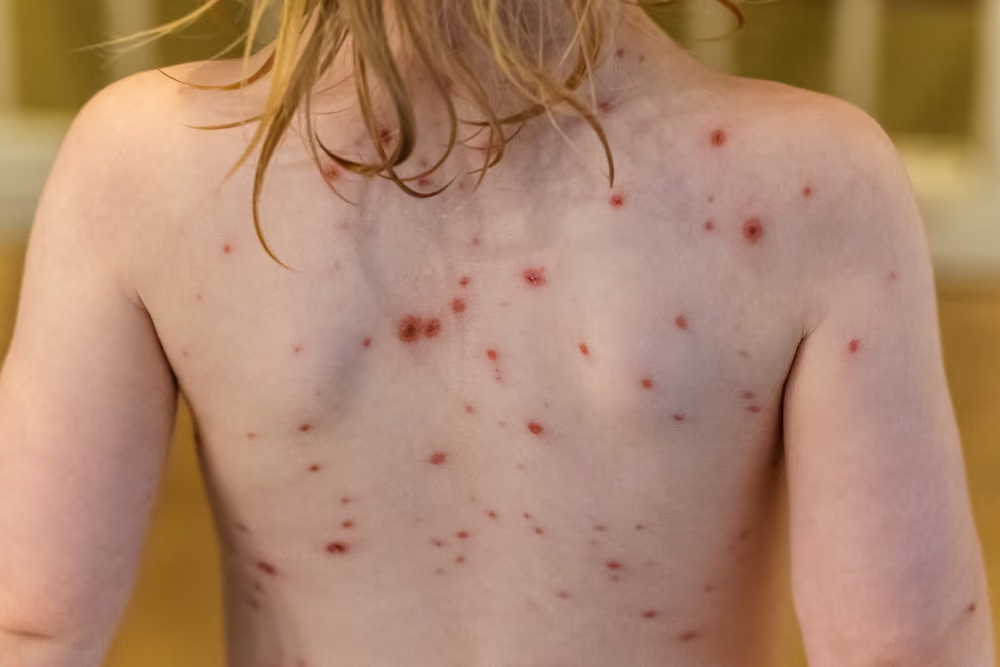
The disease primarily manifests on your skin in the form of small, itchy blisters that gradually appear all over your body. What makes chickenpox unique is that you can see different stages at the same time: new red bumps alongside fresh blisters and dried scabs. This mix of lesions in various developmental stages is characteristic of the condition.
The varicella-zoster virus has a remarkable characteristic: after a chickenpox infection, the virus does not completely disappear from your body. It retreats into nerve cells where it can remain dormant for years. Later in life, often with a weakened immune system or increasing age, this virus can reactivate and cause shingles, a condition you might know as herpes zoster. The varicella-zoster virus belongs to the same family as the virus behind herpes simplex, although the conditions differ significantly in their course.
For most healthy children, chickenpox runs its course without major problems and heals completely within a week and a half. The disease leads to lifelong protection against a new chickenpox infection. This natural immunity is very effective, although the virus is capable of returning later in a different form.
Do you suffer from Chickenpox?
Personalized advice for your skin, completely online. Upload a few photos through the Skindr app and receive medical advice from a licensed dermatologist within 48 hours. No waiting room or referral required.
How does chickenpox develop?
The varicella-zoster virus spreads in two main ways. Firstly, through small droplets that float in the air when an infected person coughs, sneezes, or talks. This airborne transmission makes the virus so contagious that you can even get infected without direct contact with the sick person. A brief encounter in an enclosed space can be sufficient.
Secondly, the virus can be transmitted through direct contact with the fluid in the skin blisters. This fluid contains large quantities of virus particles. Touching the blisters or contact with objects contaminated with this fluid can lead to infection. This explains why it is so important for children with chickenpox to stay home.
Understanding the timing of contagiousness is crucial. You are already contagious before you even know you're sick, specifically one to two days before the first blisters appear. This early contagiousness makes it difficult to prevent spread. You remain contagious until all blisters have dried up and formed a scab, which is at least five days after the first rash appears .
After infection, it typically takes two to three weeks before you become ill. This incubation period can range from ten to twenty-one days. During this time, the virus multiplies in your body without you noticing anything. You still feel healthy and go about your daily life, while the virus quietly prepares for its attack.
Certain factors increase the risk of severe complications. A weakened immune system due to illness or treatment makes you particularly vulnerable. Pregnant women who have never had chickenpox are at risk of complications for themselves and their unborn child. Newborn babies have not yet built up their own immunity and are therefore especially vulnerable. Adults who did not contract the disease as children can also become more severely ill than children.
Symptoms and characteristics of chickenpox
The symptoms of chickenpox develop in a characteristic pattern that usually makes the disease easily recognizable. It often starts with general complaints: you feel tired and listless. Children may become irritable and have less appetite. Within a day, the typical skin rash then appears, confirming the condition.
Your skin first turns red in various spots, as if small insect bites are appearing. These red spots feel warm and may be slightly raised. Within a few hours, these bumps transform into clear, fluid-filled blisters. These blisters are usually small, about the size of a pinhead, and are taut on the underlying skin.
The itch associated with chickenpox can be intense and is often the most bothersome aspect of the disease for many children. This itch comes in waves and often worsens in the evening or at night. The urge to scratch is almost irresistible, but scratching increases the risk of scarring and bacterial infections.
Fever often occurs at the onset of the illness. The temperature can rise to 38 or 39 degrees Celsius, sometimes even higher. This fever usually lasts a few days and often subsides before all the blisters have appeared. Some children have little to no fever, while others are quite ill.
The blisters follow a predictable course. After about a day, they burst open and drain. Then the drying process begins, forming scabs. These scabs fall off naturally after about a week. What makes chickenpox unique is that you simultaneously see blisters in different stages: fresh, burst, and dried ones side by side.
The rash usually starts on the torso and then spreads to the face, arms, and legs. You can literally get hundreds of blisters, although the number varies greatly from person to person. Some children have only a few dozen blisters, while others are covered in them. Painful blisters can also appear in the mouth, making eating and drinking unpleasant.
Where do chickenpox blisters appear on the body?
The spread of chickenpox blisters across the body follows a typical pattern, although there are individual variations. The torso almost always forms the epicenter of the rash. On your abdomen, back, and chest, you usually see the highest concentration of blisters. This central part of your body is affected first and often shows the most lesions.
Your face is another important target for the virus. Blisters on your forehead, cheeks, and around your nose are very common. These visible lesions can be socially distressing, especially for older children who are conscious of their appearance. Fortunately, these blisters also usually heal without permanent scars, unless scratched.
The arms and legs are also affected, though often to a lesser extent than the torso. The outer surfaces of the limbs usually show more blisters than the inner surfaces. Hands and feet can also be affected, including the palms and soles, although this is less common.
The hairy scalp is a location that is often overlooked but regularly involved. Blisters among the hair can cause additional itching and are more difficult to care for. After healing, these spots may be temporarily bald, but the hair will simply grow back.
Particularly bothersome are the blisters that develop on mucous membranes. In the mouth, they can appear on the inside of the cheeks, the palate, and the tongue. These oral lesions are painful and make eating and drinking unpleasant. Blisters can also develop in the genital area, making urination uncomfortable.
It's noteworthy that some body parts remain relatively unaffected. The palms of the hands and soles of the feet often have remarkably few blisters compared to the rest of the body. This is due to the thicker skin structure in these areas, which the virus can penetrate less easily.
Do you suffer from Chickenpox?
Personalized advice for your skin, completely online. Upload a few photos through the Skindr app and receive medical advice from a licensed dermatologist within 48 hours. No waiting room or referral required.
Chickenpox Treatment
The treatment of chickenpox primarily focuses on alleviating symptoms and preventing complications. For healthy children, specific medical treatment is often not needed, as the body overcomes the virus itself. The focus is on comfort and minimizing discomfort during the healing process.
Fever reduction is an important part of symptomatic treatment. Common pain relievers without anti-inflammatory action are the first choice to reduce fever and general malaise. It's important to avoid certain other pain relievers, as they can increase the risk of skin complications.
Managing itching is essential to prevent scratching. Keeping nails short and, for young children, using mittens if necessary helps to avoid scratching and scarring. Antihistamines in the form of tablets or drops can also significantly reduce itching, just like with other itchy rashes such as hives. This treatment can make some children a bit drowsy, which can sometimes be beneficial as it promotes rest. For local relief, cooling lotions or creams can be used which have a soothing effect on irritated skin.
Bathing plays an important role in care. Lukewarm baths, possibly with additives that soothe itching, offer temporary relief. It's important to gently pat the skin dry afterwards instead of rubbing. However, bathing too frequently or for too long can further dry out the skin and worsen itching, so moderation is important.
For the small group of patients with an increased risk of complications, antiviral treatments are available. This treatment is only effective when started within 24 hours of the appearance of the first blisters. It inhibits the multiplication of the virus and can significantly alleviate the illness. This treatment is given to people with weakened immune systems, pregnant women, and children over twelve years old with certain risk factors.
If a bacterial infection develops on top of chickenpox, treatment on a doctor's advice is necessary. Signs of this include increasing redness around the blisters, pus formation, recurrent fever after a period of improvement, or increasing pain. These secondary infections can be serious and often require prompt medical attention.
For people who have been in close contact with chickenpox but are themselves at increased risk, preventive measures exist. Vaccination within three days of exposure can prevent or significantly mitigate the illness. People with severely weakened immune systems can receive antibodies that offer immediate protection.
What doesn't work in chickenpox treatment?
There are several misconceptions about chickenpox treatment that you should avoid. The use of certain anti-inflammatory pain relievers is not recommended, even though they seem effective for fever and pain. These pain relievers can increase the risk of serious skin infections and cause other complications. A common painkiller without anti-inflammatory action remains the safest choice.
The idea that you should 'tough out' chickenpox without any symptom relief is outdated and unnecessary. There's no reason to let a child suffer unnecessarily from fever and itching when safe remedies are available to alleviate these symptoms. Comfort promotes recovery and prevents complications from scratching.
Home remedies such as applying toothpaste, vinegar, or other household products to the blisters are not effective and can even be harmful. These substances further irritate the already inflamed skin and can delay healing. Medically approved creams and lotions are a much better choice.
Intentionally exposing children to chickenpox to build immunity, known as 'chickenpox parties,' is not a wise practice. While it's true that chickenpox usually runs a milder course at a young age, there's always a risk of complications. With the availability of safe vaccinations, this risky approach is no longer necessary.
Also, the idea that you can simply go to school or daycare with chickenpox once the fever is gone is incorrect. You remain contagious as long as not all blisters have dried up. Premature return to community settings unnecessarily spreads the disease and endangers vulnerable individuals.
Frequently Asked Questions about Chickenpox
How long should my child stay home?
Your child can return to school or daycare when all blisters have dried up and formed scabs. This takes at least six days after the appearance of the first blisters, but it can be longer. As long as there are still fresh blisters, your child is contagious and must stay home.
Can adults get chickenpox?
Yes, adults who have not had the disease as children can get chickenpox. In adults, the disease is often more severe than in children, with more blisters, higher fever, and a greater risk of complications such as pneumonia. Therefore, vaccination is definitely worth considering for non-immune adults.
Will there be scars?
In most children, the blisters heal without permanent scars, provided they are not scratched. Scratching damages the deeper skin layers and can leave permanent pits. This is the main reason to treat the itching effectively and keep nails short.
Can my child get chickenpox twice?
This is extremely rare. Immunity after a chickenpox infection is almost always lifelong. In exceptional cases, for example, in people with severely weakened immune systems, a second infection can occur.
What is the difference between chickenpox and shingles?
Both conditions are caused by the same virus. Chickenpox is the initial infection, usually in childhood. Shingles occurs when the dormant virus reactivates later in life. Shingles causes a painful rash that is limited to one body part and follows the path of a nerve.
Is chickenpox vaccination advisable?
Although the chickenpox vaccine is not routinely given in the basic vaccination program, it can be administered upon request to children from twelve months of age. It is especially important for people at increased risk of complications and for non-immune adults who come into contact with vulnerable groups. You can find more practical information about chickenpox in young children at Kind en Gezin.
Resources
1. Gezondheid en Wetenschap: Chickenpox https://www.gezondheidenwetenschap.be/richtlijnen/windpokken-of-waterpokken
2. EBPnet: Varicella (chickenpox) https://www.ebpnet.be
3. Kind en Gezin: Chickenpox https://www.kindengezin.be/nl/thema/gezondheid-en-vaccinatie/koorts-ziekte-en-medicatie/ziek/windpokken
4. Thuisarts: Chickenpox https://www.thuisarts.nl/waterpokken


](https://static.legitscript.com/seals/624359.png)