.webp)


What is a dermatofibroma?
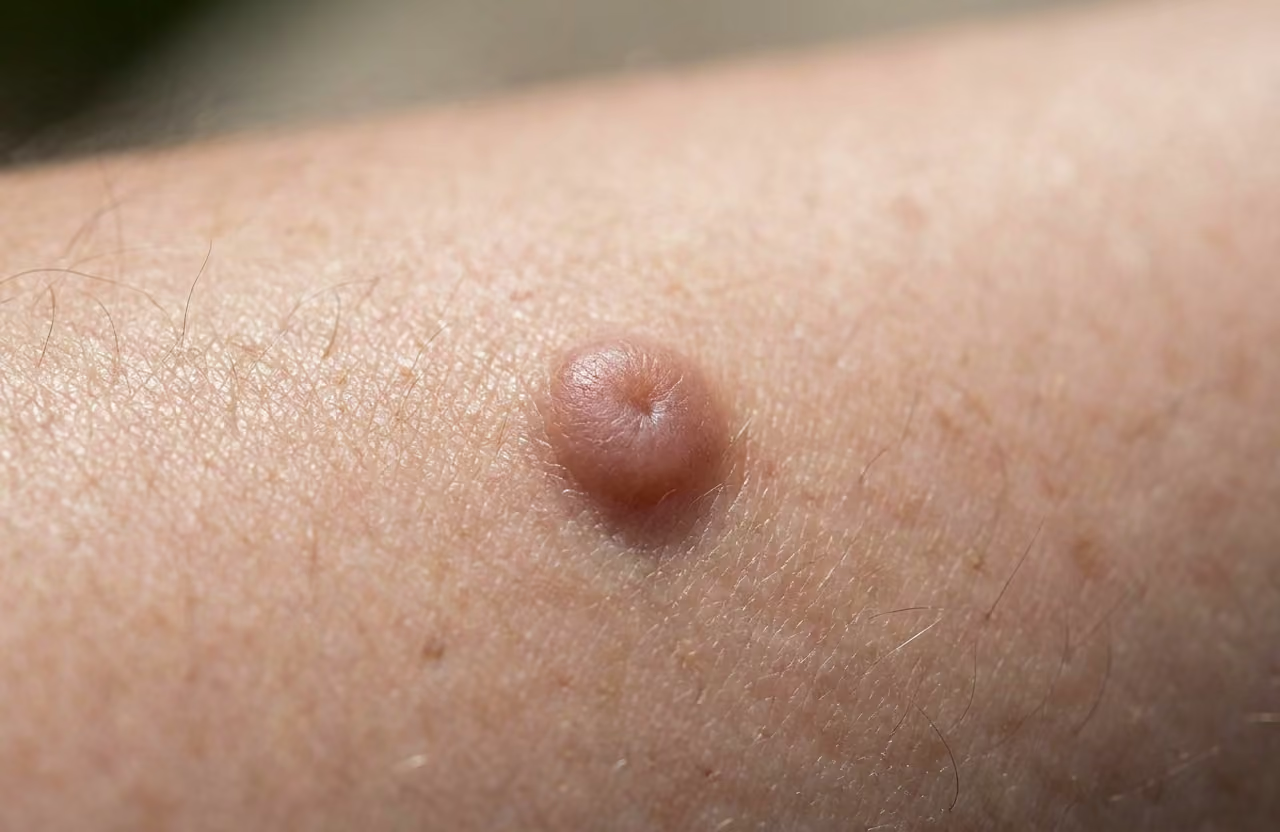
A dermatofibroma is a benign skin growth that originates from connective tissue in the skin. It feels hard, is firmly anchored in the skin, and has a flat or slightly raised surface. Its size typically ranges between 0.5 and 1 centimeter.
A dermatofibroma has several synonyms: dermal histiocytoma, fibrous histiocytoma, or sclerosing hemangioma.
It is important to distinguish a dermatofibroma from other skin lumps such as a skin tag or fibroma, which feels softer and hangs on a stalk. A dermatofibroma is firmly attached within the skin itself.
A dermatofibroma is a benign skin lesion. The chance of it developing into a malignant condition is negligibly small.
Do you suffer from Dermatofibroma?
Personalized advice for your skin, completely online. Upload a few photos through the Skindr app and receive medical advice from a licensed dermatologist within 48 hours. No waiting room or referral required.
How does a dermatofibroma develop?
The exact cause of a dermatofibroma is unknown. Dermatologists suspect that minor skin damage, such as an insect bite, an ingrown hair, or a small wound, triggers a reaction in the connective tissue of the skin. The connective tissue then grows locally into a benign lump.
A dermatofibroma most commonly occurs in women between 20 and 50 years old, although men can also be affected.
In rare cases, multiple dermatofibromas develop in a short period. This is called eruptive dermatofibromatosis . This pattern is more often seen in people with a compromised or suppressed immune system, for example, in systemic lupus erythematosus (SLE), HIV infection, or the use of immunosuppressive treatments.
Symptoms and characteristics of a dermatofibroma
A dermatofibroma is usually a small, firm bump that feels hard to the touch. Its color can vary from pink to brown. It often has a lighter center with a darker edge.
The most reliable characteristic is the so-called dimple sign: when you pinch the bump between your thumb and forefinger, the skin pulls inward instead of outward. This is a typical feature of a dermatofibroma and helps distinguish it from other bumps.
Dermatofibroma or melanoma: how to tell the difference?
Sometimes a dermatofibroma looks dark or mottled, which can resemble a mole and cause concern. Use the ABCDE rule to check if further assessment is needed (also read more about melanoma recognition): Asymmetry (a dermatofibroma is generally symmetrical), Borders (the edges are well-defined), Color (usually fairly uniform pink to brown, the center may differ slightly), Diameter (smaller than 1 cm), and Evolution (grows little or not at all).
If in doubt, or if the bump grows rapidly, changes color, or starts to bleed, it is advisable to consult a dermatologist. A certified Skindr dermatologist will assess your bump within 48 hours.
Where do dermatofibromas occur?
Dermatofibromas most commonly appear on the lower legs. This is by far the most frequent location, possibly because the legs are more often exposed to minor injuries such as ingrown hairs, shaving cuts, or insect bites.
Additionally, dermatofibromas can occur on the upper legs, upper arms, and torso. They are exceptionally rare on the face, palms, or soles of the feet.
Do you suffer from Dermatofibroma?
Personalized advice for your skin, completely online. Upload a few photos through the Skindr app and receive medical advice from a licensed dermatologist within 48 hours. No waiting room or referral required.
Treatment of a dermatofibroma
The best approach for an asymptomatic dermatofibroma is watchful waiting. Since the bump is completely benign, treatment is not medically necessary. Most people choose to simply leave it alone.
If a dermatofibroma does cause discomfort, there are two options.
Surgical removal (excision): the dermatologist cuts out the bump, including a margin of healthy tissue. This leaves a small scar of 1 to 2 centimeters, but the risk of recurrence is low.
CO2 laser treatment: less invasive, but has a higher chance of recurrence because the entire bump is not always removed.
Through Skindr, you can have a certified dermatologist have the bump assessed, without a referral. Within 48 hours, you'll receive advice on assessment and treatment.
What doesn't work against a dermatofibroma?
Creams, ointments, or oils do not help with a dermatofibroma. Because the bump is deep within the connective tissue, a topical agent never reaches its core. Dermatofibromas also do not disappear on their own by applying a product.
Never try to cut or prick a dermatofibroma yourself. Besides the risk of infection, there's a high chance the bump will return because the connective tissue core remains intact.
Be careful when shaving over a dermatofibroma. The surface of the bump is sensitive, and a shaving cut can cause irritation or bleeding.
Frequently asked questions about dermatofibromas
How can I be sure it's a dermatofibroma and not something else?
The dimple sign is the most distinctive feature: gently pinch the bump and the skin will pull inwards. If in doubt, have it checked by a certified dermatologist via Skindr within 48 hours.
Can a dermatofibroma become malignant?
No, there is no evidence that it can develop into a malignant condition.
Does health insurance cover its removal?
Only if there is a medical indication (such as recurrent bleeding). Purely cosmetic removal is not covered.
Does a dermatofibroma disappear on its own?
Rarely. Most dermatofibromas remain stably present for years.
Is a dermatofibroma contagious?
No. It is a local connective tissue reaction that is not transmissible.
When should I see a dermatologist?
If the bump grows rapidly, changes color, starts to bleed, or becomes more painful, have it assessed. Through Skindr, you'll receive advice from a certified dermatologist within 48 hours.
Resources
- DermNet NZ - Dermatofibroma
- Skindr dermatologists (medically verified)


](https://static.legitscript.com/seals/624359.png)