.webp)


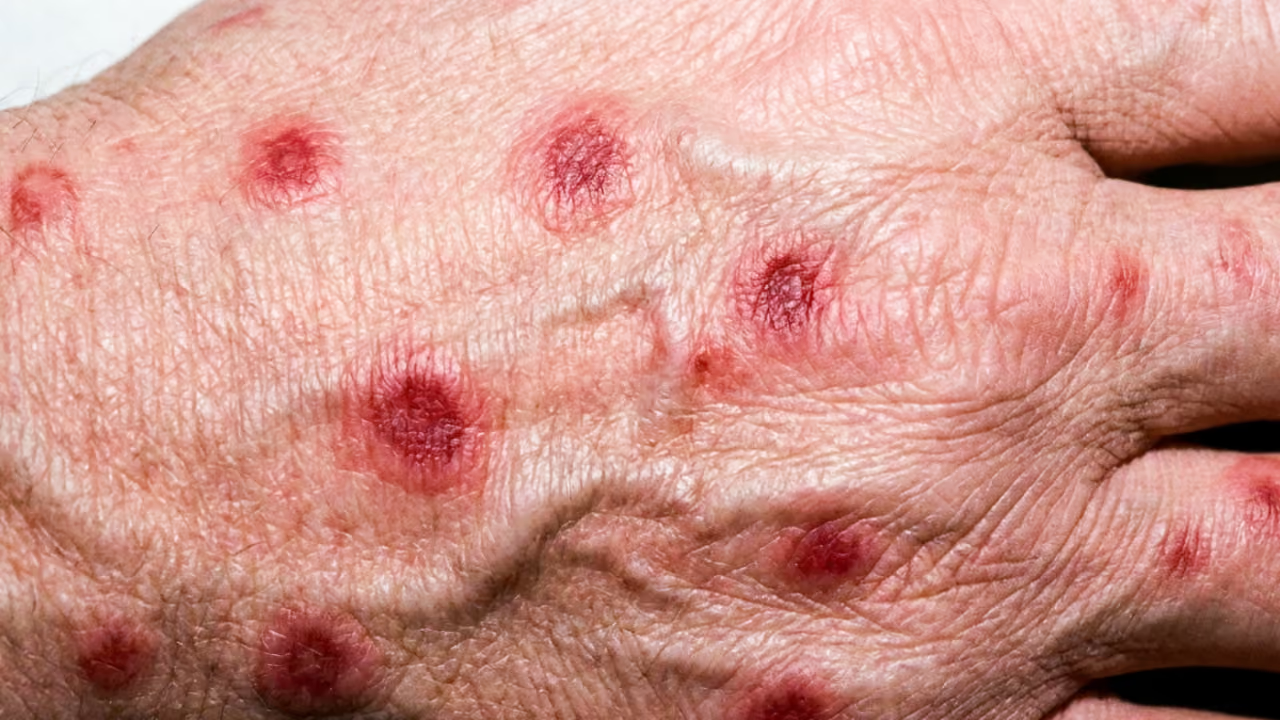
What is erythema multiforme (EEM)?
Erythema multiforme (EEM) is an acute hypersensitivity reaction of the skin characterized by distinctive round lesions that resemble bullseyes or targets, hence the name "target lesions." The condition is also medically known as erythema exsudativum multiforme. EEM affects people of all ages and is most common in young adults.
EEM minor and EEM major: what's the difference?
EEM exists in two forms. EEM minor is the mild, most common variant: the lesions are limited to the skin, possibly with slight involvement of the oral mucosa. EEM major is a more severe presentation where multiple mucous membrane areas are affected simultaneously, including the mouth, eyes, and genitals. EEM major always requires medical supervision.
What is the difference between erythema multiforme and Stevens-Johnson syndrome (SJS)?
EEM and Stevens-Johnson syndrome (SJS) have historically been confused, but they are distinct conditions. EEM is mild and limited to the skin or a single mucous membrane area. SJS is a rare but life-threatening hypersensitivity reaction where the skin detaches over large areas and multiple mucous membranes are severely affected. If your rash is accompanied by fever and mucous membrane problems in multiple locations, go to the emergency room immediately.
Do you suffer from Erythema Multiforme?
Personalized advice for your skin, completely online. Upload a few photos through the Skindr app and receive medical advice from a licensed dermatologist within 48 hours. No waiting room or referral required.
How does erythema multiforme develop?
Erythema multiforme develops due to a hypersensitivity reaction of the immune system, usually triggered by an infection or, less frequently, by a treatment.
The primary cause is an infection with the herpes simplex virus, the virus that also causes cold sores (herpes simplex) and is the primary cause of EEM. The immune system reacts to remnants of the herpes virus in the skin, which initiates the typical lesions. In recurrent EEM, herpes simplex is the most common trigger. Recurrences occur more frequently in spring and autumn, when sunlight and temperature changes can activate the virus.
A second known infectious trigger is Mycoplasma pneumoniae, a bacterium that causes respiratory infections. In children and young people , a Mycoplasma infection can lead to a specific form of EEM with pronounced mucous membrane involvement, also known as MIRM (Mycoplasma-induced rash and mucositis).
Other possible causes include certain treatments. Vaccinations are a rare but known trigger. In some cases, no specific cause is found, in which case it is referred to as idiopathic EM.
Symptoms and characteristics of erythema multiforme
The characteristic symptom of erythema multiforme is target lesions, also known as bull's-eye lesions or iris lesions. These round, layered spots consist of three concentric zones: a dark or necrotic center, a pale or edematous intermediate ring, and a red, raised outer border. This three-layered pattern distinguishes EM from other forms of sudden skin rash.
The lesions usually appear within 72 hours of the triggering event. They start as flat red macules that develop into raised papules. In EM major, vesicles or erosions may develop centrally, accompanied by pain or a burning sensation.
What does erythema multiforme look like on dark skin?
On dark or brown skin tones, the red hues of the target lesions are less prominent. The spots appear more purplish-brown or hyperpigmented rather than bright red, and the three-layered pattern may be harder to distinguish. In such cases, it is helpful to focus on the structure (the three concentric zones), symmetry, and typical location on the hands and forearms.
In EM major, mucous membranes are also affected. The most common locations are the mouth (red, painful erosions on the lips and oral mucosa), the eyes (redness, irritation, photophobia), and the genitals. After recovery, temporary brown or hyperpigmented spots may remain on the affected skin.
Please note: if mucous membranes are affected in more than one location, or if the rash is accompanied by fever? If so, consult a doctor quickly or go to the emergency room.
Are you unsure if your rash is erythema multiforme? A certified Skindr dermatologist will review your photos within 48 hours. More background information can be found on DermNet NZ on erythema multiforme.
Where does erythema multiforme occur?
Erythema multiforme typically begins on the hands and forearms, spreading from the periphery towards the trunk.
The most commonly affected areas are the palms and backs of the hands, the forearms and elbows, and the feet and lower legs. The trunk and face are less frequently involved. The rash is characteristically symmetrical: the lesions appear simultaneously on both sides of the body.
In EM minor, the lesions are generally limited to the skin, with possibly mild involvement of the mouth. In EM major, mucous membranes can also be affected: lips and oral cavity (painful erosions and crusting), ocular conjunctiva (redness, irritation, photophobia), and genitals. You can read more about conditions affecting the oral region on skin diseases and the mouth. Mucous membrane involvement in the eyes always requires an ophthalmologist consultation to prevent scarring and additional complications.
Do you suffer from Erythema Multiforme?
Personalized advice for your skin, completely online. Upload a few photos through the Skindr app and receive medical advice from a licensed dermatologist within 48 hours. No waiting room or referral required.
Treatment of erythema multiforme
For EEM minor, observation is the first step: most cases resolve spontaneously within two to four weeks without treatment. Supportive measures such as cool compresses, pain relief, and avoiding sunlight help alleviate symptoms.
Treatment for recurrent erythema multiforme
When EEM recurs due to a herpes infection, your doctor can discuss an approach that may reduce the duration and intensity of an attack. For individuals experiencing more than two attacks per year, maintenance therapy may be considered to prevent further recurrence. Recurrences are more common in spring and autumn, when sunlight can activate the herpes virus. Consistent use of sun protection is a simple yet effective preventive measure.
For EEM major, involving multiple mucous membrane areas, a short course of treatment is sometimes advised. In severe cases with extensive mucosal lesions, hospitalization may be necessary.
To rule out other skin conditions, such as hives (urticaria) or pityriasis rosea as a differential assessment, your dermatologist may request additional tests.
When is urgent medical attention needed for erythema multiforme?
Seek immediate medical help if more than two mucous membrane areas (mouth, eyes, genitals) are affected simultaneously, if you have a high fever combined with an extensive rash, or if the rash spreads rapidly. This could indicate EEM major or the rare but life-threatening Stevens-Johnson syndrome. The NVDV patient information leaflet on erythema multiforme provides additional information on when to take action.
Through Skindr, you will receive advice from a certified dermatologist within 48 hours. Whether it's your first attack or you've had multiple recurrences, you'll receive personalised advice, including prevention tips, without a waiting list.
What doesn't work for erythema multiforme?
Not all seemingly logical approaches are effective for erythema multiforme. Some can even worsen the situation.
Applying only a cream to the lesions is insufficient when herpes simplex is the underlying cause. Without addressing the viral infection, EEM will continue to recur.
Seeking sunlight as a "remedy" is counterproductive: sun exposure can trigger a new herpes outbreak, which in turn initiates another EEM attack.
Waiting when mucous membranes of the mouth, eyes, or genitals are affected is not an option. As soon as multiple mucous membrane areas are involved, prompt medical advice is necessary.
Self-assessment based solely on photos is risky. The transition from EEM major to Stevens-Johnson syndrome can sometimes be difficult to assess, even for a layperson. In cases of doubt or worsening symptoms, an assessment by a certified dermatologist is the safest choice.
Do not give children with EM salicylate-based painkillers: this increases the risk of a rare but serious complication (Reye's syndrome).
Frequently Asked Questions about Erythema Multiforme
Is erythema multiforme contagious?
No. Erythema multiforme is a reaction of your own immune system to an infection or a treatment. The condition itself is not transmissible from person to person.
Does erythema multiforme go away on its own?
Yes, EM minor usually resolves on its own within two to four weeks. Sometimes, temporary brown or hyperpigmented spots remain. Additional treatment is only necessary when herpes is the trigger or in severe cases.
What is the difference between erythema multiforme and Stevens-Johnson syndrome?
EM is mild and limited to the skin or a single mucous membrane area. Stevens-Johnson syndrome (SJS) is a rare but life-threatening condition where the skin detaches over large areas and multiple mucous membranes are severely affected. For severe symptoms: go to the emergency department immediately.
Can erythema multiforme recur?
Yes. Recurrent EM is in most cases linked to herpes simplex infections. Maintenance treatment can help prevent new attacks in cases of frequent relapse.
How long does an attack of erythema multiforme last?
An attack typically lasts two to four weeks. After recovery, brown or hyperpigmented spots may temporarily remain visible on the affected areas.
Can Skindr help with erythema multiforme?
Yes. Through Skindr, a certified dermatologist assesses your photos and symptoms within 48 hours. You receive personalised advice, even if you experience frequent relapses. No waiting list, no referral needed.
Resources
1. Skindr dermatologists (medically verified content)
2. EBPNet/CEBAM — Red multiform rash (erythema multiforme) | gezondheidenwetenschap.be
3. DermNet NZ — Erythema multiforme
4. NVDV — Patient Leaflet Erythema exsudativum multiforme | nvdv.nl


](https://static.legitscript.com/seals/624359.png)