.webp)


What is erythema nodosum?
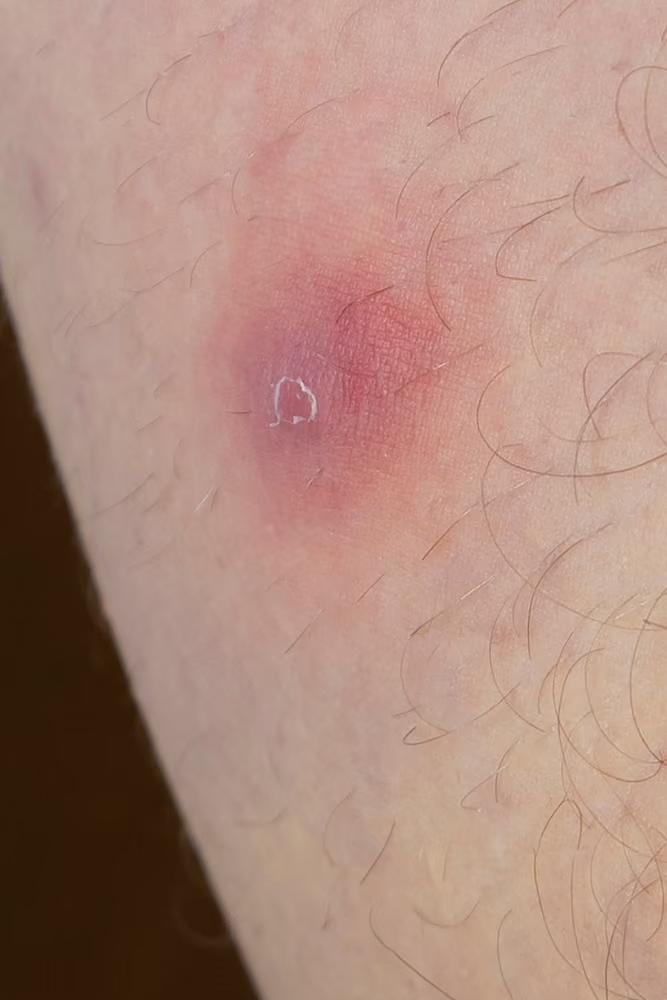
Erythema nodosum is an inflammation of the subcutaneous fatty tissue, also known as panniculitis (ICD-10: L52). The condition manifests as painful, red, and warm lumps on the front of the lower legs, which are typically symmetrically distributed over both legs.
Panniculitis: the medical term refers to an inflammation of the subcutaneous fatty tissue, the layer of fat directly beneath the skin. Erythema nodosum is the most common form of panniculitis. The inflammation is deep beneath the skin's surface, which explains why the lumps are painful to the touch and when walking.
Erythema nodosum primarily affects women between 15 and 40 years of age, with an estimated incidence of approximately 2.4 per 100,000 per year. The condition has a seasonal association: it occurs more frequently in the first half of the year (winter and spring), in conjunction with respiratory infections.
Two reassuring facts: erythema nodosum never leaves scars, and it is not contagious. The lumps discolor and disappear on their own, just like a bruise does, although this typically takes 3 to 6 weeks.
Do you suffer from Erythema nodosum?
Personalized advice for your skin, completely online. Upload a few photos through the Skindr app and receive medical advice from a licensed dermatologist within 48 hours. No waiting room or referral required.
How does erythema nodosum develop?
Erythema nodosum is not a skin infection in itself, but a reaction of the immune system to a trigger elsewhere in the body. The immune system reacts to an infection, a medication, or an underlying condition, and that reaction manifests in the fatty tissue under the skin.
Infections as a cause: The most frequent trigger in adults is a streptococcal infection of the throat (strep throat). In children, this is also the most common cause. Other infections that can trigger erythema nodosum include tuberculosis, cat-scratch disease, and various respiratory infections. Covid-19 has also been described as a possible trigger.
Medications and other causes: Oral contraceptive pills are a known cause, as are certain antibiotics (sulfonamides). Chronic inflammatory diseases such as Crohn's disease, ulcerative colitis, and sarcoidosis are regularly associated with erythema nodosum. A particular combination is Löfgren's syndrome: erythema nodosum occurring together with enlarged lymph nodes in the chest and joint pain, as a variant of sarcoidosis. In approximately 45% of cases, no clear cause is found.
The prodromal phase: A notable characteristic is that 7 to 14 days before the lumps become visible, flu-like symptoms can occur: fever, fatigue, joint pain (especially in the ankles and knees), and a general feeling of illness. Many people recognize this pattern in hindsight.
Symptoms and features of erythema nodosum
The most characteristic symptom of erythema nodosum is painful, red, and warm lumps on the front of both lower legs (shins). The lumps are 1 to 5 centimeters in size, feel hard, and are symmetrically distributed over both legs. They are painful to the touch and can make walking difficult.
In many patients, the lumps are preceded by a period of one to two weeks with flu-like symptoms, joint pain (ankles, knees), and fatigue. Joint complaints occur in about 50% of patients and can even be present weeks before the subcutaneous lumps appear.
The color progression: The lumps start as bright red, turn purplish-red, and then change to greenish-yellow, similar to the color progression of a healing bruise. This progression typically lasts 3 to 6 weeks. Ulcers or scar tissue never occur, which distinguishes erythema nodosum from vasculitis (inflammation of blood vessels).
Can erythema nodosum be a sign of cancer or leukemia? This is a question many concerned people ask: the answer is reassuring. In the vast majority of cases, erythema nodosum is a reaction to an infection or a medication, with no connection to cancer or leukemia. In rare cases, a link to leukemia or other systemic diseases has been described, but then other clear symptoms are usually also present (fatigue, night sweats, enlarged lymph nodes). If you're unsure, have your symptoms investigated. Through Skindr, a certified dermatologist will review your photos within 48 hours.
Where does erythema nodosum appear?
In the vast majority of patients, erythema nodosum appears on the front of the lower legs, specifically on the shins. The distribution is symmetrical: typically, both legs are affected simultaneously.
In less frequent cases, the lumps can also appear on the arms (extensor side of the forearms) or on the thighs. The torso and face are rare locations.
The symmetrical distribution over both lower legs is one of the characteristics that helps doctors recognize erythema nodosum. In children, erythema nodosum occurs in the same locations as in adults, but the most common cause in children is a streptococcal throat infection.
Do you suffer from Erythema nodosum?
Personalized advice for your skin, completely online. Upload a few photos through the Skindr app and receive medical advice from a licensed dermatologist within 48 hours. No waiting room or referral required.
Treatment of erythema nodosum
The treatment of erythema nodosum primarily focuses on the underlying cause. Addressing this cause usually leads to the skin lesions disappearing on their own. Additionally, treatment can aim to alleviate symptoms during the healing process.
Self-care: Rest is one of the most effective self-care measures: elevating the leg (preferably above heart level) reduces swelling and pain. Compression stockings or a Tubigrip bandage support blood circulation. Cool or warm compresses (depending on personal preference) can relieve pain. Heavy lifting and prolonged standing or walking worsen symptoms during the acute phase.
Pain relief: NSAIDs such as ibuprofen, diclofenac, or aspirin are the first choice for pain relief. They have anti-inflammatory effects and reduce pain and swelling. Corticosteroids are only used in severe cases or when the underlying condition requires it, and always under medical supervision.
When to see a doctor for erythema nodosum? Consult a doctor if the nodules have not disappeared after 6 weeks, if they recur, if there is no clear cause, if fever or severe joint pain is present, or if you suspect an underlying condition is involved. For erythema nodosum in the context of IBD (Crohn's disease, ulcerative colitis): treatment of the underlying bowel disease is the most effective approach.
Through Skindr, you'll receive advice from a certified dermatologist, without a referral or waiting room.
What doesn't work in the treatment of erythema nodosum?
Erythema nodosum is not a skin infection, which means some commonly used remedies simply don't work.
Topical antibiotic ointment has no effect whatsoever: the inflammation is deep in the fatty tissue and is not caused by a bacterial skin infection, but by an immune reaction. Only providing painkillers without treating the underlying cause is insufficient in recurrent cases: the nodules will then return. Prolonged sun exposure or seeking warmth during the acute phase can worsen swelling. Firmly massaging the nodules provides no relief, but causes additional pain due to the inflammation in the tissue.
Waiting without medical assessment for nodules that persist for more than 6 weeks or recur is also not advisable.
Frequently asked questions about erythema nodosum
How long does erythema nodosum last?
The nodules usually disappear on their own within 3 to 6 weeks. Treating the underlying cause accelerates recovery. In some people, erythema nodosum recurs (recurrent form), with symptoms potentially lasting for several months.
Is erythema nodosum contagious?
No. Erythema nodosum is not contagious: it is not a skin infection, but a reaction of the immune system. You cannot transmit it to others.
Can erythema nodosum indicate cancer or leukemia?
In the vast majority of cases, no. Erythema nodosum is almost always a reaction to an infection, a medication, or chronic inflammation. In rare cases, a link to leukemia has been described, but other symptoms are usually present then. If you're in doubt, have your symptoms checked.
What causes erythema nodosum?
The immune system reacts to an infection (streptococci, tuberculosis), a medication (birth control pills, sulfonamides), or chronic inflammation (Crohn's disease, sarcoidosis). In about 45% of cases, no clear cause is found.
Can Skindr help with erythema nodosum?
Yes. A certified dermatologist will assess your photos and symptoms within 48 hours, without requiring a referral from your GP. This way, you'll quickly know if further steps are needed.
Resources
Skindr dermatologists (medical editorial review)
Huidziekten.nl: Erythema nodosum (Dr. Jan R. Mekkes, 2023)
Huidarts.com: Erythema nodosum (Dr. M.D. Njoo, 2026)


](https://static.legitscript.com/seals/624359.png)