.webp)


What are milia?
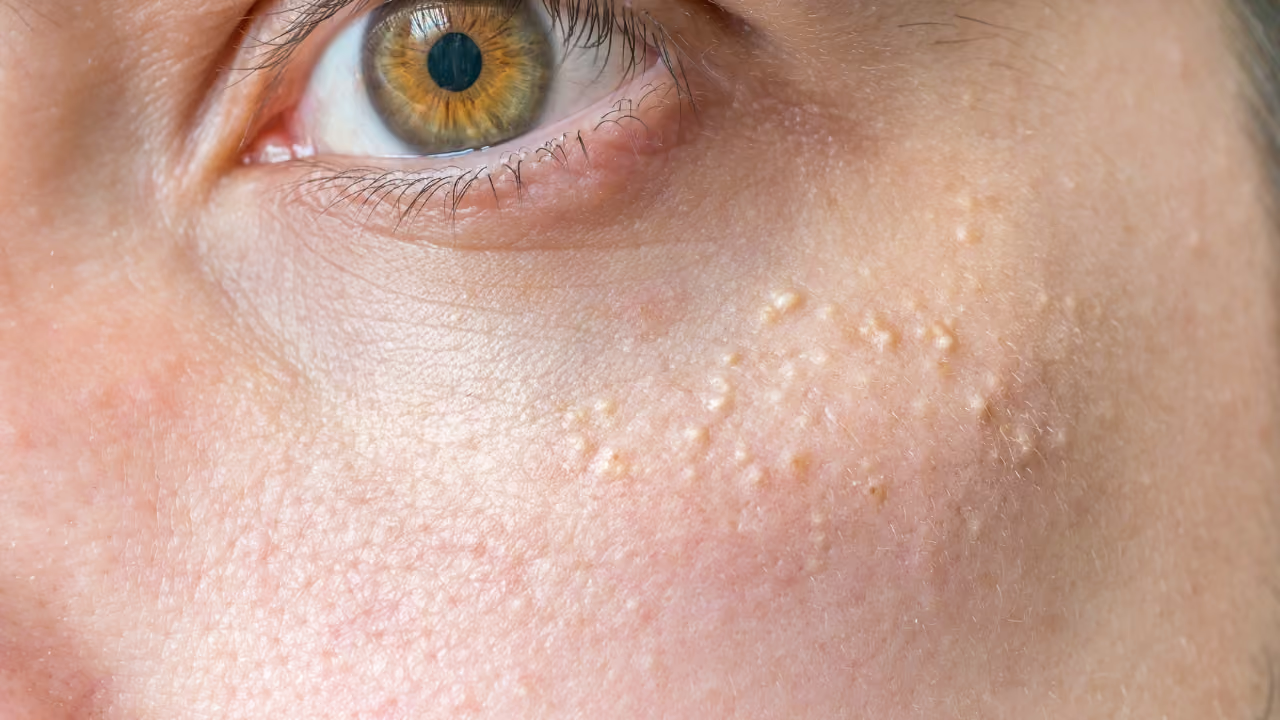
Milia are small, hard, white keratin cysts located just beneath the skin's surface. Keratin is a normal skin protein, but with milia, it becomes encapsulated in a tiny sac without an exit opening. This makes them persistent and impossible to squeeze out.
Other names (milium, milia, milk spots)
The singular form is milium; the plural is milia. In Flanders, they are also known as "gerstekorrel" or "melkkorrel". Online, you'll also find the English term "milk spots".
A milk spot on the skin or on the eye?
In Flanders, "gerstekorrel" (milk spot) is sometimes also used for a hordeolum, a stye on the eyelid caused by a bacterial infection. That is a different condition. If you have a painful, red bump on your eyelid, please visit our page on chalazion or hordeolum (stye on the eye). On this page, we exclusively discuss the white, painless milia on the skin.
A milium is not the same as a blackhead: a blackhead is a clogged pore with a dark tip (oxidation of sebum), whereas a milium is a closed keratin cyst without an opening. Also blackheads and pimples (acne) have a different cause and treatment. Milia are not contagious, not inflamed, and completely benign.
Do you suffer from Milia (milia)?
Personalized advice for your skin, completely online. Upload a few photos through the Skindr app and receive medical advice from a licensed dermatologist within 48 hours. No waiting room or referral required.
How do milia form?
Milia have two causes, depending on age.
Primary Milia (babies and children)
In newborns and babies , milia are very common, especially on the nose and cheeks. They are caused by the accumulation of keratin in superficial skin structures, as the skin is still developing. In babies, they disappear spontaneously within a few weeks to months, and no treatment is needed.
Secondary Milia (adults)
In adults, milia sometimes develop in response to skin damage or stress: sun damage, burns, blisters, dermabrasion, chemical peels, or laser treatments. Prolonged use of certain creams can also trigger milia.
Risk factors include heavy or oil-based makeup and eye contour creams, insufficient exfoliation, but also genetic predisposition. Milia in adults not caused by skin damage are classified as primary and are sometimes more difficult to treat.
In adults, milia rarely disappear on their own, unlike in babies.
Symptoms and Characteristics of Milia
Milia are 1 to 3 mm hard, white or yellowish-white bumps that are slightly raised above the skin surface. They are firmly embedded in the skin and do not yield to pressure; you cannot squeeze them out. There is no redness, pain, or inflammation unless they become irritated by friction.
On darker skin, milia may appear yellowish or skin-colored instead of white.
Milia most commonly occur around the eyes, on the cheeks, nose, and chin. They can also appear on the chest, back, and groin area. In babies, they are most often seen on the nose and cheeks.
Milia on the Eyelid and Around the Eyes
Milia on the eyelid or just below the eye are the most common reason people consult a dermatologist for this complaint. They are harmless, but the thin skin around the eye requires a particularly careful approach when removing them. If you're unsure whether it's milia or something else, such as molluscum contagiosum? A Skindr dermatologist can assess your skin within 48 hours.
Where Do Milia Occur?
Milia most commonly appear on the face: around the eyes, on the cheeks, nose, and chin. They can also occur on the chest, back, and groin area, rarely on the arms or legs. In babies, the nose and cheeks are the most common locations.
Do you suffer from Milia (milia)?
Personalized advice for your skin, completely online. Upload a few photos through the Skindr app and receive medical advice from a licensed dermatologist within 48 hours. No waiting room or referral required.
Treatment of Milia
No treatment is needed for babies, as milia disappear spontaneously within weeks to months.
In adults, milia rarely go away on their own. Trying to remove them at home is a bad idea, as the closed cyst is embedded in the skin and won't yield to pressure. You risk damaging the skin and causing infection and scarring, especially around the eyes.
A dermatologist has safe treatment methods for milia. The most common technique is a small sterile incision with a fine needle, after which the keratin plug is carefully removed.
For multiple milia, chemical peels or another topical treatment on the advice of a doctor or pharmacist can be used to help limit new formation. Treatment around sensitive areas like the eyelid is usually done very carefully with manual extraction.
A dermatologist visit is recommended when the milia are on the eyelid, when you are unsure about the assessment, or when you want many milia removed at once.
Preventatively, mild exfoliation with, for example, salicylic acid or glycolic acid can support skin renewal and potentially help limit the formation of milia. The use of non-comedogenic cosmetics is recommended.
Through Skindr, you will receive advice from a certified dermatologist.
What doesn't work against milia?
Squeezing milia doesn't work. The closed keratin cyst won't yield, and you'll damage the skin. Attempting to remove them yourself with a needle at home is risky, as you risk infection and scarring. Around the eyes, it's even dangerous.
Regular face cream or moisturizing lotion has no effect on the cyst, which is deeper in the skin. Harsh or coarse scrubs can cause more skin damage and actually trigger new milia. For adults, waiting is rarely effective: unlike in babies, milia rarely disappear on their own. Have them professionally removed for the best results.
Frequently Asked Questions about Milia
Can you squeeze a milium?
No. Milia are closed keratin cysts that do not open with pressure. Squeezing them damages the skin and can cause infection or scarring.
How long does it take for a milium to disappear?
In babies, they disappear on their own within a few weeks to months. In adults, they rarely disappear spontaneously. Professional removal by a dermatologist is then the best option.
Can a general practitioner remove a milium?
In principle, yes, but dermatologists have more specialized techniques, especially for milia around the eyes or when there's doubt about the assessment.
Do milia hurt?
No, milia are completely painless. Only with persistent irritation or friction can they become slightly sensitive.
Are milia contagious?
No. Milia are keratin cysts, not an infection. They are not contagious.
Can Skindr help with milia?
Yes. You send a photo and a certified Skindr dermatologist will assess your situation within 48 hours, including advice on the correct treatment.
Resources
- DermNet NZ - Milia
- Skindr dermatologists (medically verified)


](https://static.legitscript.com/seals/624359.png)