.webp)


What is post-inflammatory hyperpigmentation?
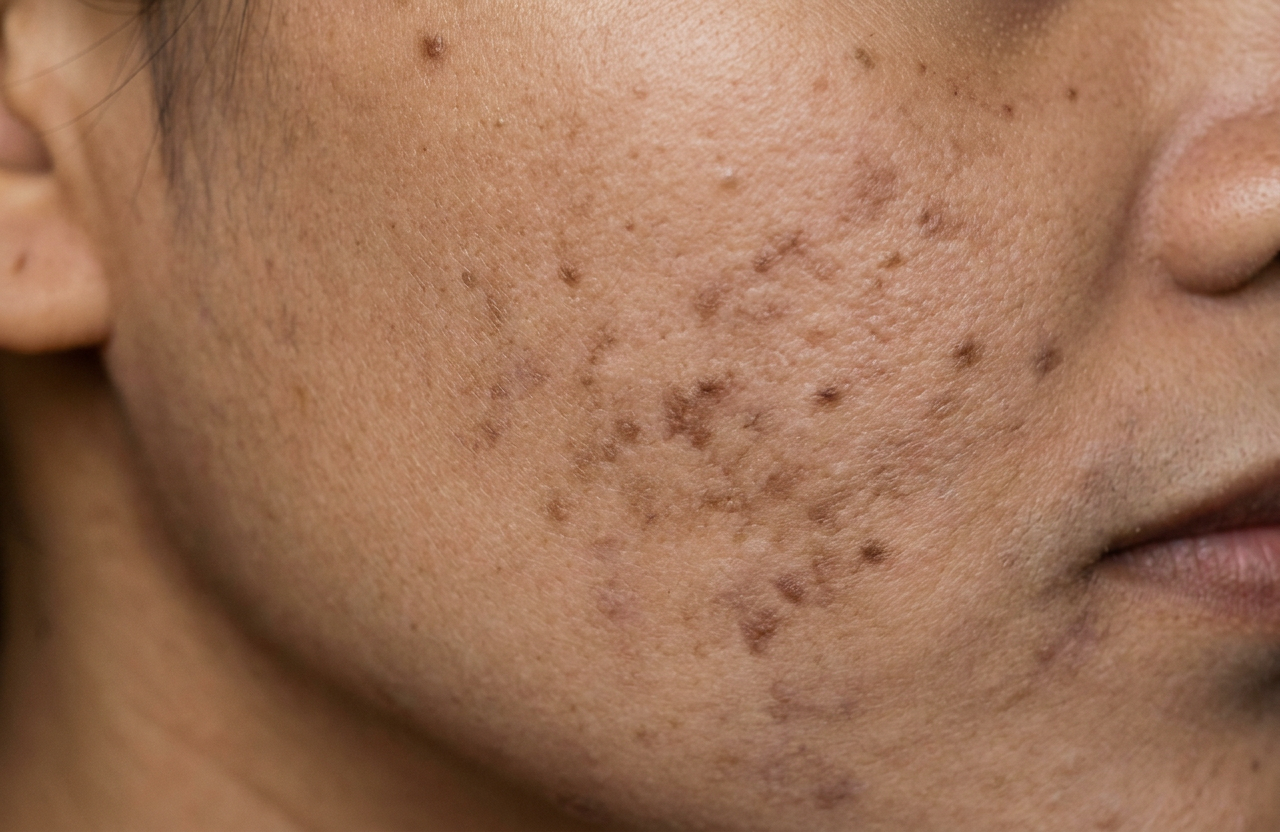
Post-inflammatory hyperpigmentation (PIH) is a dark discoloration of the skin that develops after inflammation or injury. The skin reacts to the inflammation by temporarily producing too much melanin, the pigment that gives skin its color. This overproduction results in a dark spot where the inflammation previously occurred.
PIH is not a scar. The skin structure is not damaged: the spot is flat and feels the same as the surrounding skin. The main difference from a scar is that with PIH, only the color changes, not the texture. However, PIH can occur alongside a scar.
The depth of the pigment helps determine how long PIH remains visible. In epidermal PIH, the pigment is located high in the epidermis, and spots often fade spontaneously within approximately 3 to 6 months, though this can take longer. In dermal PIH, the pigment has penetrated deeper into the dermis. These discolorations can remain visible for 1 to 2 years or more and typically respond more slowly to treatment.
It's also useful to understand how PIH differs from other types of hyperpigmentation. Post-inflammatory hyperpigmentation develops after inflammation at that exact spot, whereas melasma has a hormonal cause and appears symmetrically on the face. Freckles are a result of UV exposure and fade naturally after summer. Scars involve a change in the skin's structure itself, while PIH only alters the color.
PIH occurs in all skin types but is more common and distinctly visible in people with darker skin (Fitzpatrick III to VI).
Do you suffer from Post-inflammatory hyperpigmentation?
Personalized advice for your skin, completely online. Upload a few photos through the Skindr app and receive medical advice from a licensed dermatologist within 48 hours. No waiting room or referral required.
How does post-inflammatory hyperpigmentation develop?
Post-inflammatory hyperpigmentation develops when the skin reacts to inflammation with an overproduction of melanin. During inflammation, substances are released that activate melanocytes (pigment cells in the skin). These cells produce too much melanin, which enters the skin cells in small granules (melanosomes) and causes a dark spot.
The most common cause is acne: even a small pimple that you don't touch can cause PIH. Squeezing or scratching worsens the inflammation and significantly increases the risk. Besides acne, eczema and contact dermatitis are significant triggers. Other causes include wounds, abrasions, insect bites, and burns, where any skin damage temporarily disrupts pigment production. Aesthetic treatments such as chemical peels, laser therapy, and epilation can also cause PIH, especially in people with darker skin.
People with darker skin (Fitzpatrick III to VI) are at higher risk of PIH because their melanocytes react more strongly to inflammation. The discoloration is often pronounced and can persist longer.
Symptoms and Characteristics of Post-Inflammatory Hyperpigmentation
The primary manifestation of post-inflammatory hyperpigmentation is a flat, dark spot in the area where inflammation previously occurred. The spot feels no different from the surrounding skin: it is not raised and does not cause itching, pain, or crusting.
The color of PIH varies depending on skin type and pigment depth. On light skin (Fitzpatrick I-II), PIH usually appears light to dark brown. On dark skin (Fitzpatrick III-VI), the discoloration can be dark brown, grayish-brown, or almost black. The darker the skin tone, the more visible the contrast with the surrounding skin often is.
The size of the spot is comparable to the size of the previous inflammation. In the case of acne, these are small, round spots. With eczema, larger, irregular areas may be affected.
Where Does Post-Inflammatory Hyperpigmentation Occur?
Post-inflammatory hyperpigmentation always appears in the area where the previous inflammation or damage occurred. The location is therefore dependent on the underlying cause.
With acne, PIH spots most often appear on the face, particularly on the cheeks, forehead, and chin. For back acne, the spots are on the back and shoulders. Eczema causes PIH in the typical areas where eczema occurs: the inner elbows, behind the knees, and the neck. In cases of insect bites or abrasions, the legs and arms are most frequently affected.
Do you suffer from Post-inflammatory hyperpigmentation?
Personalized advice for your skin, completely online. Upload a few photos through the Skindr app and receive medical advice from a licensed dermatologist within 48 hours. No waiting room or referral required.
Treatment of Post-Inflammatory Hyperpigmentation
The treatment of post-inflammatory hyperpigmentation proceeds in three steps: addressing the cause, protecting the skin, and active fading.
The first step is to treat the underlying cause. As long as the inflammation persists or recurs, such as with untreated acne or eczema, the skin will continue to produce new PIH. Treating the spots makes little sense if the trigger is still active.
The second step is daily protection with sunscreen (minimum SPF 30), even in winter and on cloudy days. UV rays darken existing PIH spots and slow down recovery. This is the most proven preventive measure.
The third step is active treatment with effective ingredients. Certain active ingredients stimulate cell division and accelerate the shedding of pigmented cells. Glycolic acid and other AHAs exfoliate the epidermis and accelerate the removal of superficial pigment. Vitamin C inhibits the enzyme tyrosinase, which is responsible for melanin production. Certain creams and treatments that help reduce pigmentation also inhibit melanin formation and are well tolerated on sensitive or dark skin. Niacinamide reduces the transfer of melanin to skin cells.
Certain strong skin-lightening ingredients have been banned in Europe as cosmetic ingredients since 2001. It may only be administered through a doctor or pharmacist in controlled concentrations. Never purchase it through unofficial channels outside the EU.
If creams do not yield sufficient results, professional treatments are an option. Chemical peels, laser therapy, and microneedling can accelerate the fading of PIH. Laser therapy requires great caution for Fitzpatrick III-VI.
Through Skindr, you will receive advice from a certified dermatologist. No GP referral needed.
What doesn't work against post-inflammatory hyperpigmentation?
Post-inflammatory hyperpigmentation requires patience, but certain habits can slow down recovery or worsen the spots.
Squeezing pimples or scratching spots is one of the most common mistakes. The additional skin damage increases inflammation, which stimulates pigment production.
Going outside without sunscreen significantly prolongs treatment duration. UV rays activate melanocytes, even on cloudy days. PIH that could have faded in a few months can persist for years with regular exposure without SPF.
Buying skin-lightening creams from unofficial websites outside the EU is dangerous. The product is banned in EU cosmetics.
Aggressive at-home peels or scrubs are also not recommended. They irritate the skin, can cause new micro-inflammations, and thus worsen PIH.
Finally: stopping treatment too early because the spot appears slightly improved is a common mistake. PIH requires consistency over several weeks to months.
Frequently asked questions about post-inflammatory hyperpigmentation
How long does post-inflammatory hyperpigmentation last?
Epidermal PIH usually disappears within 3 to 6 months. Dermal PIH can last 1 to 2 years. Daily SPF and active ingredients significantly shorten the duration.
Do dark spots after acne go away on their own?
Yes, in many cases, PIH spots disappear on their own, but this takes months. Without treatment and without sunscreen, the duration can double.
What is the difference between PIH and a scar?
PIH is a pigment spot: the skin feels normal and only has a dark color. A scar is a change in skin structure: there is a pit, raised edge, or other textural difference that can be felt.
Does vitamin C help with post-inflammatory hyperpigmentation?
Yes, vitamin C inhibits the enzyme tyrosinase, which regulates melanin production. Use it daily, preferably combined with sunscreen.
When should I consult a dermatologist for PIH?
Consult a dermatologist if the spots do not fade after 6 months, if you have darker skin, or if you are considering professional treatments such as laser.
Can I have my PIH assessed via Skindr?
Yes, with Skindr, you send photos of your skin and receive advice from a certified dermatologist within 48 hours. No GP referral is needed.
Resources
- DermNet NZ - Post-inflammatory hyperpigmentation
- Skindr dermatologists (medically verified)


](https://static.legitscript.com/seals/624359.png)