.webp)


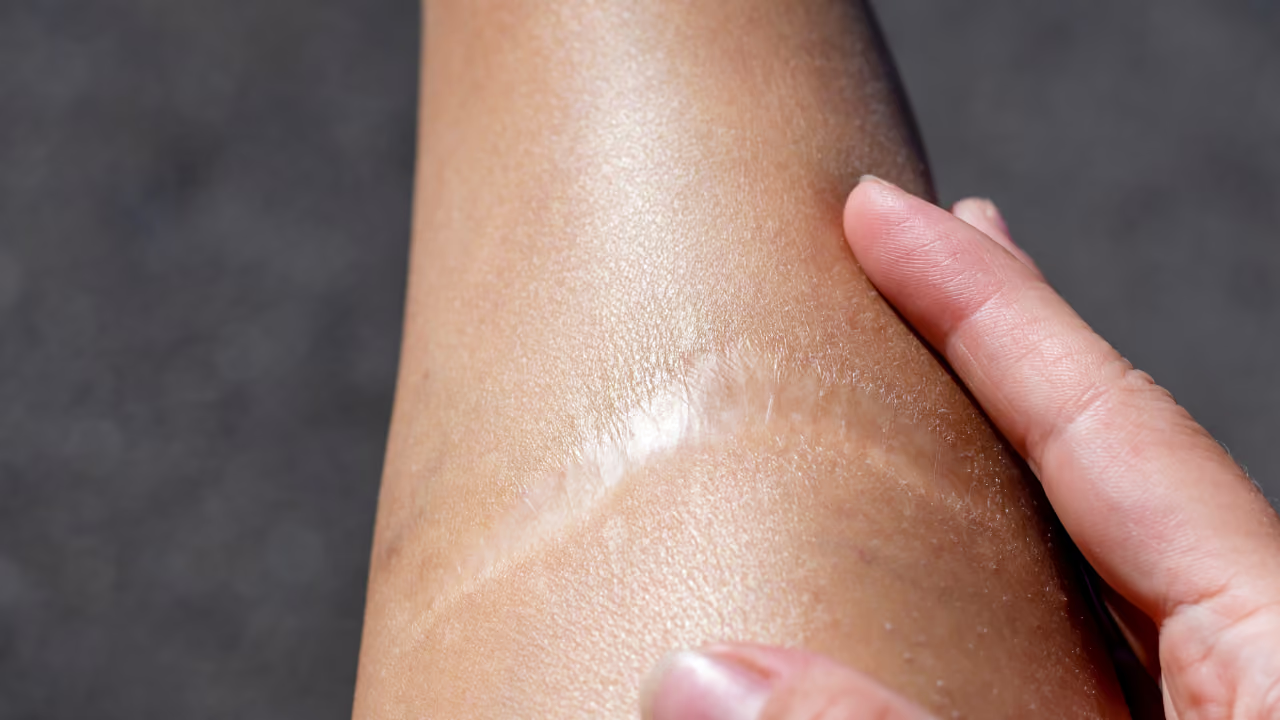
What is a scar?
A scar is connective tissue that repairs the skin after damage extending deeper than the epidermis. When the dermis is damaged by a wound, surgery, burn, or inflammation, the body produces collagen to close the opening. This newly formed connective tissue has a different structure than the original skin: it lacks hair follicles, sweat glands, and the normal pigment cells that ensure an even skin tone.
The type of scar that forms depends on the depth of the damage, its location on the body, genetic predisposition, and the quality of wound care. Four types can be distinguished.
Normotrophic scars are flat, light in color, and level with the surrounding skin. This is the most favorable outcome. Hypertrophic scars are raised, firm, and reddish-pink in color, but remain within the boundaries of the original wound. They usually improve after one to two years, especially with treatment.
Keloid is a distinct and more aggressive form of scar tissue that grows beyond the wound boundaries. Keloids do not stop growing on their own and can cause intense itching or pain. They are more common in people with darker skin tones and in areas with high skin tension, such as the shoulders or sternum.
Atrophic scars are sunken relative to the surrounding skin due to insufficient connective tissue formation. They typically form after severe acne or chickenpox and give the skin a pitted appearance.
Unsure about the type of scar you have? A certified dermatologist from Skindr will assess it within 48 hours based on photos.
Do you suffer from Scar?
Personalized advice for your skin, completely online. Upload a few photos through the Skindr app and receive medical advice from a licensed dermatologist within 48 hours. No waiting room or referral required.
How does a scar form?
A scar is the end result of a wound healing process that occurs in three consecutive phases. Each of these phases influences the appearance of the final scar.
In the inflammatory phase (day zero to five), damaged cells are cleared away, and blood vessels constrict to limit blood loss. This is the red, swollen phase that is normal and necessary. In the proliferative phase (day five to approximately three weeks), fibroblasts produce new collagen fibers to close the wound. The quality of wound care during this phase greatly influences the scar's outcome. In the maturation phase (from weeks to years), the collagen remodels itself. The scar gradually becomes smaller, softer, and lighter in color. However, in individuals prone to hypertrophic scars or keloids, collagen continues to be produced excessively.
Multiple factors influence the type and severity of a scar. Areas under tension, such as the shoulders, sternum, jawline, and upper back, have a higher risk of hypertrophic scars or keloids because the skin constantly pulls at the wound edges. People with darker skin tones have a genetically higher chance of keloid formation. Young skin heals faster but also more intensely. Infections during healing significantly increase the risk of a more prominent scar.
Early intervention with the right measures always yields the best results. Proper wound care from the start is the first and most effective step. More information about skin conditions after wound healing can also be found on the page about eczema, which can occur as an additional complication in poorly healing wounds.
Symptoms and characteristics of a scar
The characteristics of a scar vary greatly depending on its type and maturation phase, as described on huidziekten.nl. In the first few weeks after wound healing, a scar is typically red or pink, slightly raised, and sensitive to the touch. As it matures, it becomes smaller, softer, and paler in color.
A normotrophic scar evolves into a flat, whitish or skin-colored area without symptoms. A hypertrophic scar remains raised and reddish-pink and may itch or pull during its active phase. After one to two years, the redness usually subsides, and the scar typically flattens, sometimes without treatment. A keloid is harder than the surrounding tissue, has a shiny surface, and actively grows beyond the wound boundaries. The itching associated with keloids can be pronounced. An atrophic scar presents as a pitted or sunken surface.
On a light skin tone, redness and color changes are clearly visible in the early maturation phase. On a dark skin tone, a scar can become darker (hyperpigmentation) or lighter (hypopigmentation) than the surrounding skin. In such cases, changes in texture, swelling, and elevation are better indicators than color alone.
Warning signs requiring medical evaluation include: a scar that starts to grow again after healing, an increase in itching or pain in a previously stabilized scar, or a sudden change in color. For keloids, early intervention is crucial: the longer the wait, the more difficult the treatment.
Where do scars occur?
Scars can occur anywhere on the body, but certain locations are more prone to forming hypertrophic scars or keloids. Areas with high skin tension, such as the shoulders, sternum, upper back, and jawline, constantly pull at the wound edges, thereby stimulating excessive collagen production. Acne scars are typically found on the face (cheeks, chin, forehead), back, and chest.
Post-operative scars occur on the abdomen (abdominal surgery, C-section), chest, knee, or hip. Scars on the lower legs generally heal slower due to poorer blood circulation, which can lead to wider or flat normotrophic scars.
Burn scars can cover large areas of the skin, including hands, arms, neck, and face. Extensive burn scars can lead to contractures that limit joint mobility and require a multidisciplinary approach.
Do you suffer from Scar?
Personalized advice for your skin, completely online. Upload a few photos through the Skindr app and receive medical advice from a licensed dermatologist within 48 hours. No waiting room or referral required.
Scar treatment
Early intervention yields the best results. An active, red, and itchy scar responds much better to treatment than old, stabilized scar tissue. The approach depends on the type of scar, its age, and its location.
Silicone gel or silicone sheets
These are the most scientifically supported first step for hypertrophic scars and keloids, as also described by DermNet NZ. They are applied daily for two to three months and work by hydrating the skin and reducing skin tension. They are available over-the-counter and have no side effects. Start as soon as possible after the wound has closed.
Scar Massage
Recommended once the wound is fully closed. Daily circular massage with light pressure improves blood circulation, stimulates collagen restructuring, and reduces the chance of hardening. This is standard advice for burn rehabilitation and postoperative wound care.
Injection Treatment
Administered by a dermatologist for raised, itchy, or actively growing scars. They inhibit excessive collagen production and reduce the size of the tissue. Your doctor or dermatologist will discuss which approach and duration suit your situation.
Laser Treatment
Reduces redness, hyperpigmentation, and textural irregularities. Certain laser types are effective for atrophic acne scars. For darker skin tones, extra caution is required to prevent hypopigmentation. A certified dermatologist assesses which laser technique is suitable.
Surgical Excision
The last resort for large, functionally impairing, or aesthetically bothersome scars that do not respond to any other treatment. Skindr refers to the appropriate specialist when necessary.
Prevention: protect a scar area maximally from sun exposure for the first year, as UV radiation stimulates pigment production and can permanently darken a scar. For keloids: preferably start treatment within six to eight weeks after the wound has closed.
Through Skindr, you will receive advice from a certified dermatologist within 48 hours regarding the most suitable approach for your scar.
What doesn't work for scars?
Vitamin E oil is a persistent misconception. Multiple clinical studies show that it has no demonstrable effect on scar formation and can cause contact eczema in some people, as Thuisarts.nl also confirms. Silicone gel is the scientifically proven choice.
Scratching or picking during the maturation phase slows healing, increases the risk of a secondary infection, and heightens the chance of hyperpigmentation or a wider scar.
Excessive sun exposure in the first year after wound healing is harmful to the scar. UV radiation stimulates melanocytes in the delicate young scar tissue, which can lead to a permanently dark scar. If in doubt about unusual skin changes due to sun exposure, it is advisable to also have skin cancer ruled out as a possible cause by a dermatologist. Use sun protection or cover the scar.
Waiting when dealing with a growing keloid or hypertrophic scar is not advisable. The longer treatment is delayed, the less responsive the tissue becomes, and the harder it is to improve the outcome.
Frequently Asked Questions about Scars
Are scars contagious?
No. A scar is your body's own connective tissue that repairs a healed wound. It is not transmissible through contact.
Do scars disappear on their own?
Never completely, but most become less visible over time. The maturation phase lasts up to two years. Normotrophic scars fade significantly. Keloids do not flatten spontaneously and require targeted treatment.
How long does it take for a scar to fade?
The most significant color changes occur within the first six months. After one to two years, a normotrophic or hypertrophic scar stabilizes. A keloid can continue to grow actively without treatment.
What is the difference between a hypertrophic scar and a keloid?
A hypertrophic scar is raised but remains within the wound boundaries and usually improves after one to two years. A keloid grows beyond these boundaries, is harder and shinier, and has a higher chance of recurrence after treatment.
Can a scar disappear completely?
Rarely completely. Treatments can significantly reduce a scar's size, color, and elevation, but the tissue remains present.
When should I see a dermatologist?
If a scar is actively growing beyond the wound boundaries (keloid), if you experience persistent itching or pain, if there's significant hyperpigmentation, or if you are considering treatment. Early intervention always yields the best results.
Is scar treatment reimbursed?
For medical necessity, partial reimbursement may be possible through supplementary insurance providers such as DKV, AG Insurance, Helan, or Neutraal Ziekenfonds. Check your policy terms. Cosmetic treatments are generally not covered.
Can Skindr help with scars?
Yes. Through Skindr, you can submit photos and receive advice within 48 hours from a certified dermatologist regarding the type of scar and the most suitable approach, including referrals if necessary.
Resources
Skindr (www.skindr.com)
DermNet NZ: Scars (dermnetnz.org)
Thuisarts.nl: Scars
NHG: Skin Guidelines
Journal of the European Academy of Dermatology and Venereology: Scar Management Guidelines
International Scar Management Consensus (ISMC): Evidence-based guidelines


](https://static.legitscript.com/seals/624359.png)