.webp)


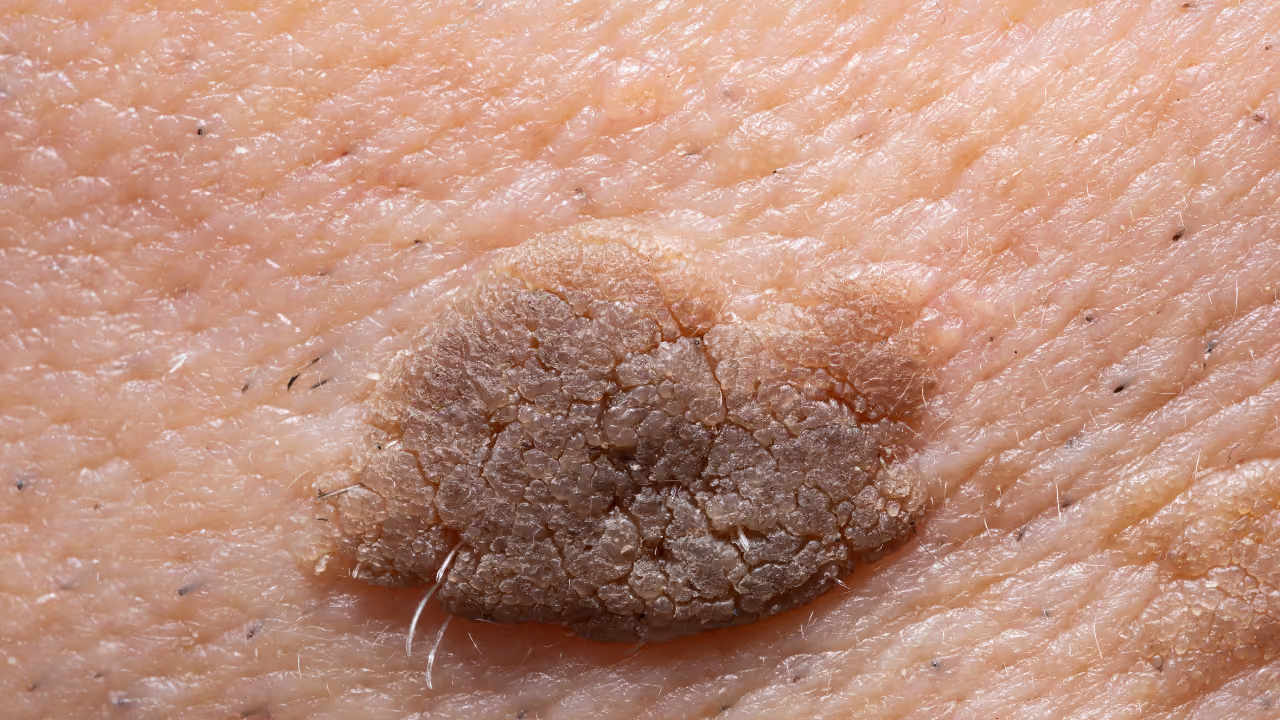
What is seborrhoeic keratosis?
Seborrhoeic keratosis is the most common benign skin condition in adults over 40. These spots are commonly known as seborrhoeic warts or verruca seborrhoica. They appear as light brown to black, waxy growths that look as if they are stuck onto the skin. Seborrhoeic keratosis never turns malignant.
Seborrhoeic Keratosis vs. Other Age Spots
What people refer to as "age spots" encompasses four different skin conditions. Lentigo solaris (sun spots) are flat, light brown spots caused by sun damage. Seborrhoeic keratoses are raised, waxy growths that feel thicker. Senile Angiomas are small red dots caused by dilated blood vessels. Idiopathic guttate hypomelanosis are small white spots due to localized melanin loss. All of these are harmless skin changes that become more common with age.
Is Seborrhoeic Keratosis Dangerous?
No. Seborrhoeic keratosis is completely benign and never acts as a precursor to skin cancer.
Do you suffer from Seborrhoeic keratosis?
Personalized advice for your skin, completely online. Upload a few photos through the Skindr app and receive medical advice from a licensed dermatologist within 48 hours. No waiting room or referral required.
How Does Seborrhoeic Keratosis Develop?
Seborrhoeic keratosis develops due to an excessive growth of cells in the outermost layer of the skin (the epidermis). The exact cause is not fully known, but age, heredity, and environmental factors all play a role.
Age and Heredity
After the age of 40, the frequency of seborrhoeic keratoses increases significantly. Most people develop several throughout their lives. There is a clear familial pattern: if one of your parents has many, you are more likely to develop them as well.
Sun and Skin Aging
Although seborrheic keratosis is not skin cancer and does not occur exclusively in exposed areas, UV radiation and general skin aging accelerate the formation of skin growths. Daily sun protection with a broad-spectrum sunscreen (SPF 30 or higher) helps limit skin aging.
Symptoms and characteristics of seborrheic keratosis
Seborrheic keratoses are light brown to dark brown or black growths that are slightly raised above the surrounding skin. They feel waxy and appear as if they are stuck on. They range in size from 0.2 to 3 centimeters and can have a smooth or granular texture.
What does seborrheic keratosis look like on light and dark skin?
On light skin tones, the brown to black color is clearly visible, and the raised edge is prominent. On dark or tanned skin, the growths are often as dark as or slightly darker than the surrounding skin. The characteristic distinguishing feature on all skin tones is the raised, waxy texture: the "stuck-on" feeling when touched.
Warning signs: when is it not seborrheic keratosis?
Seborrheic keratosis is benign, but a spot that rapidly changes in size or color, bleeds, itches, or becomes asymmetrical is a sign that further evaluation is needed. Melanoma and lentigo maligna can visually resemble seborrheic keratosis. Always have any rapidly changing spot evaluated by a dermatologist.
Are you unsure if the spot is seborrheic keratosis? A certified Skindr dermatologist will evaluate your photo within 48 hours.
Where does seborrheic keratosis occur?
Seborrheic keratosis can occur almost anywhere on the body, but most often affects the back, chest, face, and neck. The scalp and upper arms are also frequent locations. The palms of the hands and soles of the feet almost always remain unaffected.
The location makes no difference to the nature of the growths: whether they are on the face, neck, or back, seborrheic keratoses are always benign.
Do you suffer from Seborrhoeic keratosis?
Personalized advice for your skin, completely online. Upload a few photos through the Skindr app and receive medical advice from a licensed dermatologist within 48 hours. No waiting room or referral required.
Treatment of seborrheic keratosis
Seborrheic keratosis does not medically require treatment: the growths are benign and pose no health risk. Treatment is advisable when a keratosis is cosmetically bothersome, irritates, itches, or rubs against clothing.
Cryotherapy (liquid nitrogen)
The most commonly used method is cryotherapy, where the dermatologist freezes the growth with liquid nitrogen. After treatment, a blister forms and then falls off. Multiple sessions may be necessary for thicker growths.
Curettage and electrocoagulation
The dermatologist can also scrape off the growth (curettage) and simultaneously seal the blood vessels with (electro)coagulation. This is effective for larger or thicker growths.
Prevention
Seborrheic keratoses cannot be entirely prevented, but daily sun protection with SPF 30 or higher slows down skin aging. If you're unsure whether a spot is an actinic keratosis or possible skin cancer ? Then a dermatologist consultation is advisable.
Through Skindr, you will receive advice from a certified dermatologist within 48 hours. No referral from a general practitioner is needed.
What doesn't work against seborrheic keratosis?
Skin-lightening creams (with thiamidol, vitamin C, or kojic acid) have no effect on seborrheic keratosis. They work on melanin in the skin, but seborrheic keratosis is a growth of skin cells, not a pigmentation problem.
Apple cider vinegar is recommended online as a home remedy, but there is no scientific evidence that it works. Furthermore, it can cause burns and scars on the surrounding skin.
OTC freezing sprays (such as Wartner) are developed for HPV warts (verruca vulgaris), not for seborrheic keratosis.
Scratching, squeezing, or attempting to remove them yourself increases the risk of infection and can leave scars.
Frequently asked questions about seborrheic keratosis
Is seborrheic keratosis contagious?
No, seborrheic keratosis is not contagious. It is a benign skin growth that is not caused by a virus or bacterium and cannot be transmitted.
Is seborrheic keratosis dangerous?
No. Seborrheic keratosis is not malignant. It is a completely benign condition, even though it may visually resemble a spot that requires treatment.
Does seborrheic keratosis go away on its own?
Usually not. Seborrheic keratoses may slightly change in color or size over the years, but they rarely disappear spontaneously. Medical removal is the only definitive solution.
When should I see a dermatologist?
For any spot that changes in size, color, or shape, bleeds, or itches. Also, for cosmetic concerns or if you are unsure about the nature of the spot.
Can Skindr help with seborrhoeic keratosis?
Yes. A certified Skindr dermatologist will review your photos within 48 hours and provide advice on assessment and treatment options. No referral needed.
Resources
- DermNet NZ - Seborrhoeic keratosis
- Skindr dermatologists (medically verified)

](https://static.legitscript.com/seals/624359.png)