.webp)


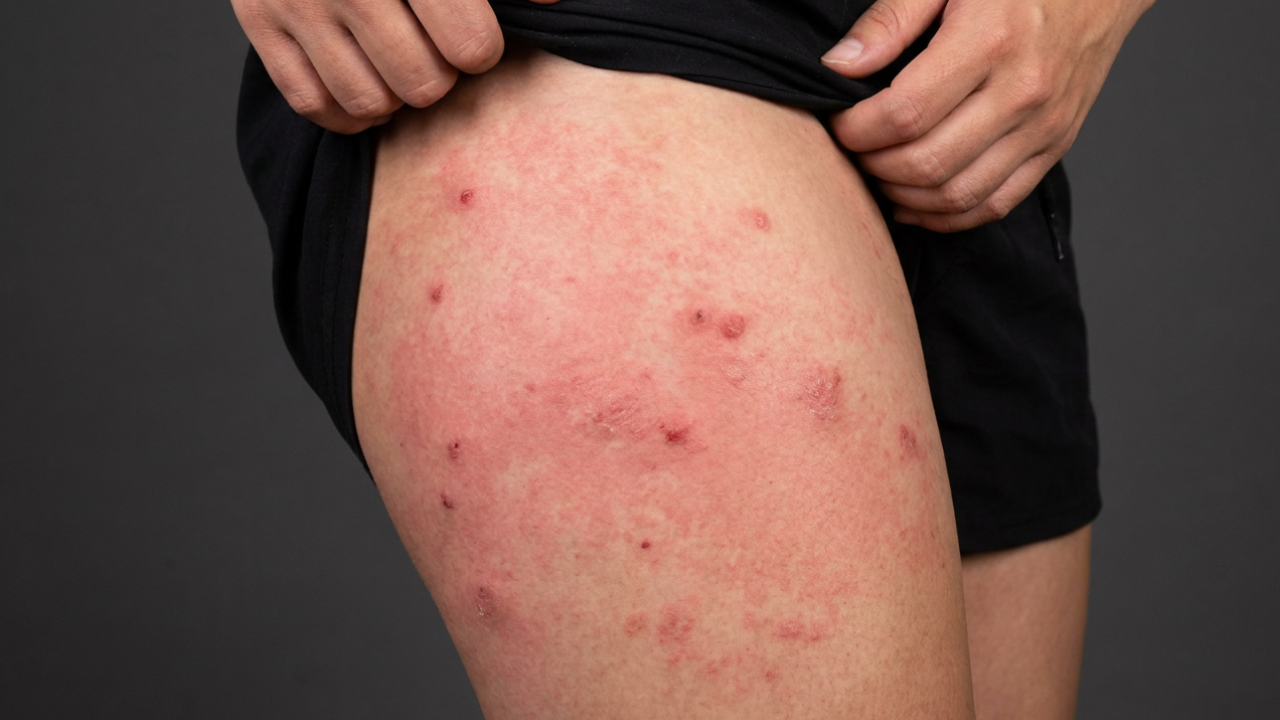
What are severe skin infections?
Severe skin infections are bacterial infections that affect not only the skin itself but also the underlying tissue. In some forms, this progresses rapidly and has life-threatening consequences. There are three main types.
Cellulitis is an infection of the skin and underlying soft tissue. Bacteria, usually streptococci or staphylococci, enter through a small wound or skin lesion. The infection spreads through the skin, causing redness, warmth, and swelling. With prompt treatment, cellulitis is manageable, but without treatment, it can become severe.
Necrotizing fasciitis (ICD-10: M72.6) is a rare but life-threatening infection in which bacteria destroy the fascia: the connective tissue that envelops muscles and organs and is located under the skin. The infection can sometimes spread within hours and always requires emergency surgery. It is commonly referred to as the flesh-eating bacteria.
Gas Gangrene (Clostridial Myonecrosis) is the rarest and most severe form. Anaerobic bacteria of the Clostridium type affect not only the connective tissue but also the muscle tissue, producing gases in the process. This type occurs after trauma or surgical procedures and requires emergency treatment.
Understanding the distinction between these three types is important: cellulitis is serious but generally treatable, whereas necrotizing fasciitis and gas gangrene are medical emergencies where every minute counts.
Do you suffer from Severe skin infections?
Personalized advice for your skin, completely online. Upload a few photos through the Skindr app and receive medical advice from a licensed dermatologist within 48 hours. No waiting room or referral required.
How do severe skin infections develop?
Severe skin infections develop when bacteria penetrate deep into the tissue through a wound, skin lesion, or weakened immune system. Sometimes, even minimal skin damage is sufficient.
Two types of necrotizing fasciitis are distinguished. Type I is polymicrobial: multiple bacterial species work together, including gram-positive, gram-negative, and anaerobic bacteria. This type occurs more frequently in people with risk factors. Type II is monomicrobial and is caused by Group A streptococci (Streptococcus pyogenes). Type II can also occur in completely healthy individuals without prior risk.
Gas Gangrene is caused by Clostridium bacteria, which grow anaerobically and multiply rapidly after trauma or in poorly perfused tissues.
Diabetes mellitus is the most common risk factor for severe skin infections: elevated blood sugar levels reduce immunity and hinder wound healing. Other risk factors include: immunosuppression (due to treatment or illness), obesity, peripheral vascular disease, alcohol abuse, skin injuries, or surgical wounds.
A specific variant is Fournier's gangrene: necrotizing fasciitis affecting the perineum and genital area. This form occurs more frequently in men and in people with diabetes.
Important: necrotizing fasciitis can also occur in people without any risk factors. The absence of risk factors does not rule out the condition.
Symptoms and characteristics of severe skin infections
The symptoms of severe skin infections depend on the type, but early recognition is essential for all forms. The danger with necrotizing fasciitis is that the severe damage occurs beneath the skin, while the skin surface initially appears relatively harmless.
In cellulitis, the typical characteristics are: a rapidly spreading area of redness, local warmth, swelling, and pain, sometimes accompanied by fever and chills. The skin feels taut.
With necrotizing fasciitis, the warning signs are different and more urgent. The earliest and most characteristic warning sign is severe pain disproportionate to what is visible on the skin. This pattern should immediately raise serious concern. Other warning signs include: rapid spread of redness or swelling over hours, browning or graying of the skin, blistering (blisters filled with bloody or cloudy fluid), a crackling or popping sensation under the skin when touched (crepitus, due to gas production), skin that becomes numb while the pain next to it is more intense, and fever combined with confusion or general malaise disproportionate to the visible wound.
On light skin, redness is usually clearly visible. On dark skin, redness can be more difficult to assess: prioritize assessing for warmth, swelling, and pain upon touch.
Call emergency services or go directly to the emergency department if necrotizing fasciitis is suspected. Do not wait for a clearly visible skin change.
Where do severe skin infections appear?
Severe skin infections can occur on any part of the body, but certain locations are more frequently affected.
Cellulitis most often affects the lower legs, but can also occur on the arms, face, and torso. In children, the face (around the eyes) is a relatively more common site.
Necrotizing fasciitis typically begins on a limb (leg or arm) after a wound, cut, or injection. From there, the infection can spread to the torso or perineum. Fournier's gangrene, a subtype of necrotizing fasciitis, specifically affects the genital area and perineum and occurs more frequently in men.
Gas gangrene develops in damaged or poorly perfused tissue, typically in the limbs after trauma or post-surgery.
Do you suffer from Severe skin infections?
Personalized advice for your skin, completely online. Upload a few photos through the Skindr app and receive medical advice from a licensed dermatologist within 48 hours. No waiting room or referral required.
Treatment of severe skin infections
The treatment depends on the type of infection and its severity, but in all cases, rapid action is essential.
For cellulitis, treatment is started on a doctor's advice; severe or rapidly spreading cellulitis requires hospitalization. Elevating the leg or arm helps reduce swelling. Follow-up by a certified dermatologist is recommended to monitor recovery.
For necrotizing fasciitis, emergency surgery is the only effective treatment. The surgeon removes the affected tissue (debridement) as quickly and thoroughly as possible. An additional treatment is given concurrently, but it is insufficient on its own: it does not reach the necrotic tissue. Treatment always takes place in an intensive care unit. Sometimes multiple operations are necessary. The mortality rate for necrotizing fasciitis is 20 to 40% with delayed treatment. Doctors use the LRINEC scoring system for this: a combination of blood values that helps distinguish necrotizing fasciitis from cellulitis.
For gas gangrene, the approach is similar: surgery, an additional treatment, and, in some centers, hyperbaric oxygen therapy.
Prevention starts with good wound care: even small wounds, insect bites or scrapes should be disinfected and thoroughly cleaned to reduce the risk. People with diabetes should check their feet and skin daily for minor damage.
Do you have a skin infection and are unsure how serious it is? Through Skindr, a certified dermatologist will assess your complaint within 48 hours. For severe alarm symptoms: call 112 or go directly to the emergency department.
What doesn't work in the treatment of severe skin infections?
For severe skin infections, home treatment is dangerous. These are the most common mistakes.
Waiting when there is rapidly spreading redness or disproportionate pain is the most dangerous mistake with necrotizing fasciitis. Applying antiseptics or ointment gives a false sense of action and wastes valuable time. Calling your GP instead of 112 for alarm signs: necrotizing fasciitis requires emergency surgery, not a waiting room. Relying on an additional treatment alone for necrotizing fasciitis: it does not reach the necrotic tissue. Waiting to see if cellulitis with fever improves on its own: fever always requires medical attention.
If in doubt about the severity: go directly to the emergency department or call 112.
Frequently asked questions about severe skin infections
What is the difference between cellulitis and necrotizing fasciitis?
Cellulitis is a bacterial infection of the skin and subcutaneous tissue: serious but usually treatable. Necrotizing fasciitis destroys connective tissue (fascia) at a life-threatening speed and always requires emergency surgery. The earliest distinguishing sign is severe pain that is out of proportion to what is visible on the skin.
Is a severe skin infection contagious?
Severe skin infections themselves are not transmissible from person to person. However, the bacteria that cause them, such as streptococci, can be transmitted. With a healthy immune system, this rarely leads to necrotizing fasciitis.
How quickly does necrotizing fasciitis spread?
Necrotizing fasciitis can spread through tissue at several centimeters per hour within a few hours. Early recognition and emergency treatment are literally crucial for survival chances. For alarm symptoms: call 112 or go directly to the emergency department.
When should I call 112 for a skin infection?
Call 112 if you experience: severe pain without an obvious explanation, rapidly spreading redness or swelling, blistering, a crackling sensation under the skin, browning of the skin, fever combined with confusion, or skin that becomes numb.
Does a skin infection go away on its own?
Cellulitis does not go away on its own and worsens without treatment. Necrotizing fasciitis spreads within hours and is almost always fatal without emergency surgery. If in doubt, never rely on spontaneous recovery for a rapidly spreading infection.
Can Skindr help with a skin infection?
Yes, for milder skin infections and uncertain cases where severe warning signs are absent. Through Skindr, a certified dermatologist assesses your concern within 48 hours. If there are warning signs: call 112 or go directly to the emergency department.
Resources
- Skindr dermatologists (medical final review)
- EBPNet / Health and Science: Severe skin and soft tissue infections (2019)
- Huidziekten.nl: Necrotizing Fasciitis (Dr. Jan R. Mekkes, Amsterdam UMC, 2023)
- DermNet NZ: Necrotizing fasciitis



](https://static.legitscript.com/seals/624359.png)