.webp)


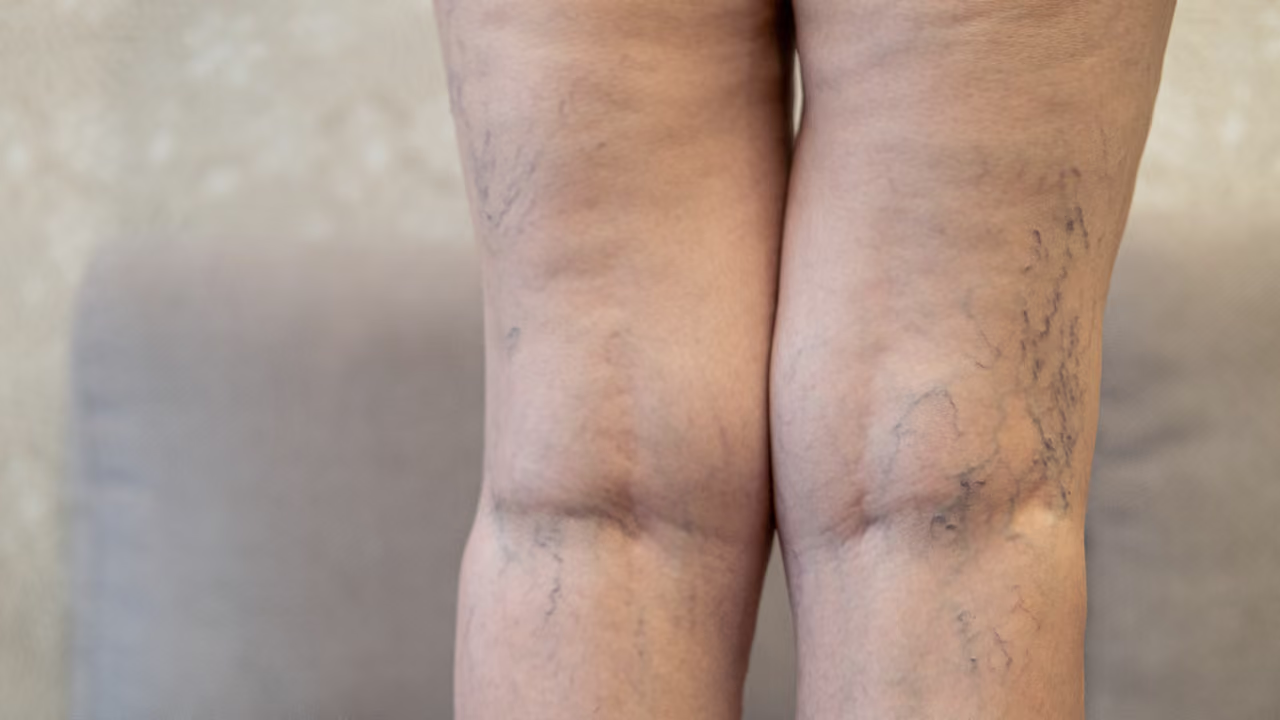
What are varicose veins?
Varicose veins are permanently dilated veins in the legs that develop when the valves in these blood vessels no longer function properly. They are visible as winding, blue-green lines under the skin. In Belgium, 1 in 5 adults has varicose veins, making them one of the most common vascular conditions. Women are affected more often than men, and the risk increases with age.
In healthy veins, valves ensure that blood flows towards the heart and does not flow back. If these valves fail, blood accumulates, pressure in the vein wall rises, and it permanently dilates. This is how a varicose vein develops.
Two main types are distinguished. Varicose veins are large, winding varicose veins that bulge under the skin, typically on the thigh, popliteal fossa, or calf. Spider veins are small, thin red or blue capillaries just below the surface of the skin. They cause fewer symptoms but are cosmetically bothersome.
Varicose veins develop gradually and are often genetically determined. They originate in the superficial venous system located just beneath the skin, separate from the deep system between the muscles.
Do you suffer from Varicose Veins?
Personalized advice for your skin, completely online. Upload a few photos through the Skindr app and receive medical advice from a licensed dermatologist within 48 hours. No waiting room or referral required.
How do varicose veins develop?
Varicose veins develop when the valves in the superficial veins no longer function properly. Blood flows back, pressure builds up, and the vein wall bulges outwards. This is a gradual process that often takes years.
It begins with a weakness in the vein walls and valves. This weakness can be hereditary, which explains why varicose veins often run in families. If your parents have varicose veins, there is a significantly higher chance that you will also develop them.
During pregnancy, a combination of factors plays a role. Hormonal changes weaken the vein walls, while the increasing weight and pressure from the uterus on the blood vessels in the pelvis impede blood flow back from the legs. Some varicose veins that develop during pregnancy disappear afterwards, but others persist.
Prolonged standing or sitting in the same position reduces the muscle pump function in the calf. Occupations that involve a lot of standing, such as hairdressers or nurses, are therefore associated with an increased risk. Overweight increases pressure in the pelvis. Aging reduces the elasticity of the vein walls.
Female gender is associated with a higher risk, partly due to hormonal influences, partly due to pregnancies. Although you cannot eliminate the predisposition for varicose veins, lifestyle measures can slow down their progression.
Symptoms and characteristics of varicose veins
Varicose vein symptoms vary greatly from person to person. The main symptoms include a tired and heavy feeling in the legs, pain or a throbbing sensation along the vein, nocturnal calf cramps, slight ankle swelling at the end of the day, and itching above the varicose vein.
On darker skin tones, varicose veins are sometimes less directly visible but can be felt as raised, tender ridges that are sometimes painful to the touch.
Symptoms worsen in warm weather, after prolonged standing or sitting, and during pregnancy. Rest and elevating the legs provide temporary relief.
Possible complications
In rare cases, prolonged untreated varicose veins can lead to more serious consequences. A venous ulcer is a slow-healing wound on the lower leg that develops when the skin becomes too fragile due to persistently poor circulation. Thrombophlebitis is an inflammation of the varicose vein, recognizable by redness, warmth, and a painful thickening along the vein. Venous eczema is skin irritation and itchy flaking on the lower leg due to poor venous circulation.
Assessment is made via duplex ultrasonography, a painless ultrasound examination that visualizes blood flow in the veins.
Are you concerned about a suspicious spot or wound on your leg? Through Skindr, you will receive advice within 48 hours from a certified dermatologist.
Where do varicose veins appear?
Varicose veins have certain preferred locations. They develop in the superficial venous system that runs just beneath the skin. The most common areas are the inner and back sides of the lower and upper legs, the popliteal fossa (back of the knee), and the area along the ankle.
On the upper legs, varicose veins often appear along the inner side, extending downwards from the groin. On the lower legs, they frequently appear on the inner side of the calf. Around the ankle, the tissue is more fragile, and complications such as skin changes occur more rapidly.
Less frequently, varicose veins appear on the lower abdomen or in the pubic area, particularly during or after pregnancy, due to increased pressure in the lesser pelvis.
In addition to larger varicose veins, you may also see fine spider-web-like veins, telangiectasias. They are red or purple and less raised. They generally cause no symptoms but are cosmetically bothersome.
Do you suffer from Varicose Veins?
Personalized advice for your skin, completely online. Upload a few photos through the Skindr app and receive medical advice from a licensed dermatologist within 48 hours. No waiting room or referral required.
Treatment of Varicose Veins
Not all varicose veins require treatment. If they are limited, cause no symptoms, and are cosmetically acceptable, observation is a valid option.
Medical Treatments
For a thorough assessment and evaluation of severity, a duplex ultrasound is performed: a painless examination that visualizes vein blood flow and valve function.
Sclerotherapy is the most common treatment for small to medium-sized varicose veins and spider veins. Foam Sclerotherapy is a foam variant for larger veins and the most commonly applied minimally invasive treatment in Belgium. With radiofrequency ablation or endovascular laser treatment (EVLA), the vein is sealed from within using heat. This requires a shorter recovery period than surgery. Stripping, the classic surgical removal, is still sometimes used (but is not the first choice).
Self-care and Prevention
Compression stockings form the basis of self-care. Class 1 is sufficient for prevention, while Class 2 is recommended for pronounced symptoms under medical advice. Regular exercise, especially walking and cycling, activates the calf muscle pump. Elevating the legs above heart level in the evening reduces swelling. A stable weight limits pressure on the leg veins.
When to See a Doctor?
Consult a doctor if you experience redness and warmth along a vein, skin discoloration or wounds on the lower leg, or if the symptoms interfere with your daily functioning. Through Skindr, you will receive advice from a certified dermatologist within 48 hours.
What Doesn't Work for Varicose Vein Treatment?
There are no treatments in the form of creams or pills with a proven beneficial effect on varicose veins. Products that promise to reduce varicose veins are not scientifically substantiated. At best, they relieve mild symptoms but do not reduce or eliminate varicose veins.
Massaging the legs provides temporary relief but does not change the defective valves. Cold showers or pressing on the varicose vein have no curative effect. Never puncture or squeeze a varicose vein. Compression stockings relieve symptoms but do not resolve the underlying cause. Ignoring symptomatic varicose veins is not a good strategy: untreated varicose veins generally grow larger.
Frequently Asked Questions about Varicose Veins
Are Varicose Veins Dangerous?
Varicose veins are usually not dangerous, but they can lead to complications if left untreated. Fluid retention, skin changes, and in rare cases, an open sore (ulcer) or thrombophlebitis are possible consequences.
Do Varicose Veins Return After Treatment?
After treatment, the treated varicose vein generally does not return. However, the underlying predisposition remains, meaning new varicose veins can develop elsewhere.
Can I Prevent Varicose Veins?
Complete prevention is not possible if you have a predisposition, but you can reduce the risk. Exercise regularly, avoid prolonged sitting or standing, maintain a healthy weight, and elevate your legs regularly.
Can Skindr help with varicose veins?
Yes. Through Skindr, a certified dermatologist assesses your varicose vein complaint based on photos and provides personalised advice, without a waiting room, within 48 hours.

](https://static.legitscript.com/seals/624359.png)