.webp)


What is a bite wound?
Bite wounds are injuries that occur when the teeth of an animal or human pierce or damage the skin. These injuries can look very different depending on the type of animal, the force of the bite, and the location on the body. Although bite wounds sometimes seem harmless at first glance, they pose a significant risk of complications.
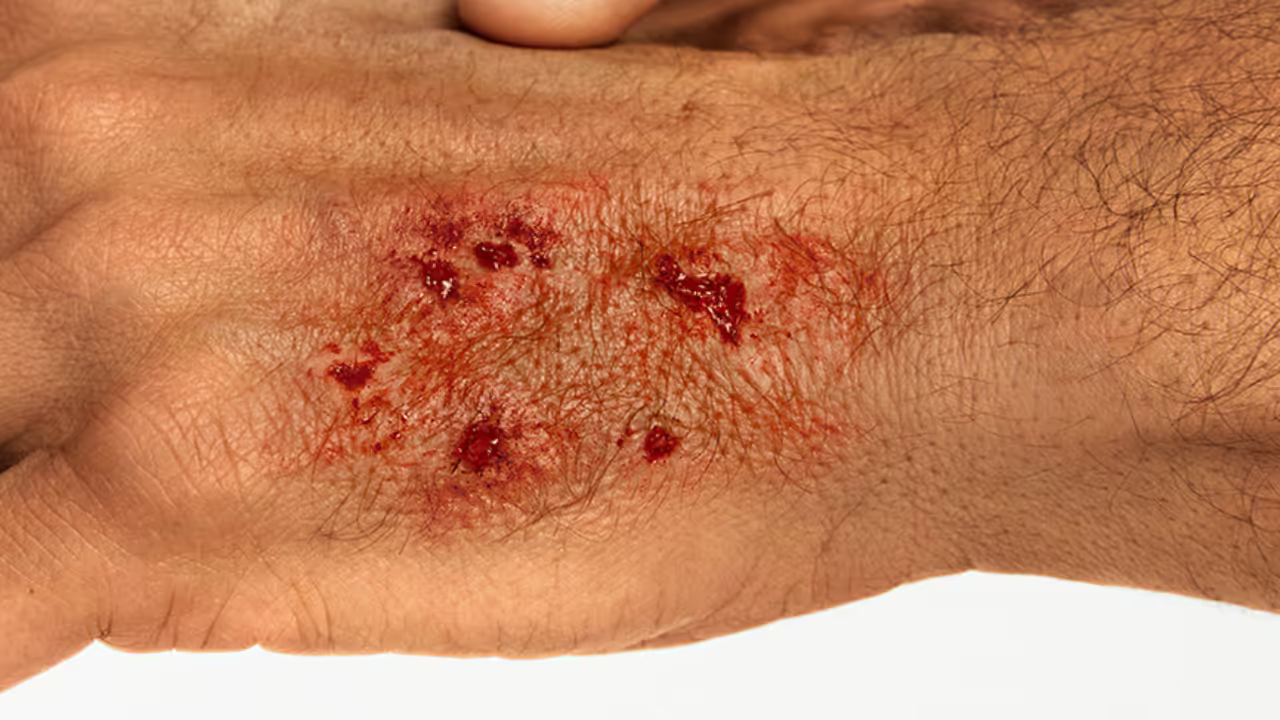
There are three main types of bite wounds, each with its own characteristics and risks. An abrasion occurs when the teeth scrape the skin without penetrating deeply. This results in superficial skin damage, similar to an abrasion caused by a fall. Although these wounds are usually not deep, they can cover a large area and are painful.
A laceration occurs when the teeth tear open the skin. This type of wound often has an irregular edge and can go deep into the underlying tissue such as fat, muscle or even tendons. Lacerations occur mainly in dog bites because dogs have powerful jaws and often shake their heads during an attack, which tears the tissues apart.
A stab wound is the most dangerous type and is caused by a tooth that penetrates deep into the skin. When the tooth is retracted, the wound closes at the surface, leaving only a small hole visible. This seems harmless but is actually dangerous because bacteria are injected deep into the tissue where they don't need oxygen to grow. Cat bites often cause stab wounds because cats have sharp, pointed teeth.
The most important risk in case of bite wounds is infection. The mouths of animals and humans contain countless bacteria that are not normally a problem, but can cause a serious infection if they get deep into a wound. The risk of infection varies greatly by animal species. Five to twenty percent of wounds are infected with dog bites, thirty to sixty percent with cat bites, and around ten percent in human bites.
In addition to infection, bite wounds can also cause other complications. Deep bites can damage tendons, nerves, or blood vessels. Facial bites can leave scars that are cosmetically disturbing. In rare cases, serious illnesses such as rabies or blood-borne infections can be transmitted.
Do you suffer from Bite wounds?
Have your skin assessed by a licensed dermatologist via the Skindr app. Upload photos and get a diagnosis with personal advice within 48 hours. No waiting room, no referral required.
How does a bite wound occur?
Bite wounds occur in different situations and the circumstances often determine the severity of the injury. In pets such as dogs and cats, most bites occur in familiar environments, at home, or with acquaintances. There is often a misinterpretation of signals, where the animal feels threatened or in pain.
Dogs usually bite during play situations that get out of hand, territorial behavior, or when they're protecting themselves. Children are at extra risk because they often tease or hurt animals unintentionally, for example by pulling the tail or disturbing the animal while eating. Children are also unable to properly recognize a dog's warning signs such as growling or becoming stiff.
Cats often bite defensively when they feel cornered or while playing when their hunting instincts are stimulated. Cat bites are more dangerous than dog bites despite their smaller size because the sharp, thin teeth penetrate deeply and inject bacteria far into the tissue. The small wound closes quickly, trapping bacteria in an oxygen-free environment where certain dangerous bacteria thrive.
Human bites occur during fights, sexual activities, or in small children who are not yet able to properly assess how much force is appropriate. Bites can also occur in people with dementia or psychiatric disorders. Human bites are particularly risky due to the diversity and adaptation of bacteria in the human mouth.
The location of the bite significantly affects the risk. Bites in the hands are extra dangerous because the anatomy is complex with many tendons, joints and small compartments where infections can spread easily. The blood supply in the hands is also relatively limited, which makes the immune system difficult. Facial bites have better blood flow and are less likely to be infected, but cosmetic consequences are more important here.
Bites near artificial joints or medical implants are a particular risk because bacteria can adhere to this foreign material and cause persistent infections there. People with a reduced immune system, for example due to diabetes, the lack of a spleen, or drugs that suppress the immune system, are also at increased risk of serious infections.
Bite wounds sustained abroad involve additional risks. In many countries, there is rabies, a deadly viral disease that is transmitted through the saliva of infected animals. Animals can also be carriers of other diseases that do not occur in Belgium or the Netherlands. If you bite people abroad, there may be a risk of blood-borne diseases such as hepatitis and HIV, depending on the region.
Symptoms and characteristics of bite wounds
The symptoms of bite wounds vary widely depending on the severity of the injury and whether complications occur. Immediately after the bite, the wound is usually painful and there may be bleeding. The amount of bleeding depends on which blood vessels are affected. SuperFICIAL abrasions bleed little, while deep lacerations can bleed profusely.
In case of abrasions, you often see multiple parallel scratches or abrasions where the teeth have been scraped over the skin. The skin is damaged and may bleed slightly, but the wound is not deep. These wounds are painful when touched and can feel burning, especially when cleansed. They usually heal within a week without leaving scars.
Lacerations have an irregular pattern with torn edges. You can often see the imprint of individual teeth. The tissue around the wound is often bruised and discoloured due to bruising. When the wound is deep, you can sometimes see underlying structures such as fat, muscle, or tendons. In case of hand injuries, movements may be limited or painful if tendons are damaged.
Stab wounds often look harmless because they only show a small hole or tip on the skin. The surface of the wound closes quickly, but a lot of damage can be done deep into the tissue. These wounds can be surprisingly deep and have touched important tissue without being seen from outside.
The most important thing to watch out for is infection, as this is the most common complication. Signs of infection usually develop within two to five days of the bite, but can sometimes start after just a few hours, especially with cat bites. Initial signs include increasing redness around the wound that is expanding, swelling, local warmth, and increasing pain.
As the infection progresses, pus or cloudy fluid may come out of the wound. The skin around the wound feels tight and tense due to the swelling. Red stripes that run up from the wound are a sign that the infection is spreading through the lymphatic vessels, which requires acute medical intervention. Fever, general malaise, and swollen lymph nodes near the wound also indicate a serious infection.
In case of bite wounds in the hands, you should be extra alert to tendon injuries. Signs of this are that certain movements of the fingers are no longer possible. For example, if you are no longer able to bend or stretch your finger, a tendon may have been cut. Numbness in a finger can also indicate nerve damage. These injuries require immediate medical attention and sometimes surgical repair.
Severely bruised tissue can die due to blood supply damage. You can recognize this by a black or dark grey discoloration of the tissue. Dead tissue must be surgically removed because it promotes infections and prevents healing. It can also be a source of toxins that affect the entire body.
Where do bite wounds occur?
Bite wounds can occur anywhere on the body, but certain locations are affected more often than others, depending on the situation and age of the victim. The pattern of bite wounds often provides information about how the incident occurred and what risks there are for complications.
In children, bite wounds mainly occur in the face, head and neck. This is because children are smaller and their faces are often at the same height as a dog's head. Children are more likely to be bitten in the face while playing or when they bend over a dog. This location is worrying because facial bite wounds are emotionally traumatic and can leave scars that affect appearance.
In adults, the hands and arms are the most common locations. This is because adults instinctively use their hands to ward off a biting animal or to separate a fighting animal. Bites on the hands also occur during animal care, for example when giving medication or cleaning wounds where the animal bites with pain.
The hands are a risk location because the anatomy is complex. There are many tendons running through small compartments and there are many joints. Hand infections can spread rapidly through these compartments and lead to serious complications. The skin on the back of the hand is also thin, so teeth can easily penetrate through all layers to tendons and bones.
Arms and legs are also bitten regularly, especially during fights with animals or between people. Bites in these locations are often less problematic than on the hands or face because there is more soft tissue that can tolerate infections without directly damaging vital structures. However, deep bites can damage muscles, blood vessels and nerves.
The torso is bitten less often, but when this happens, they are often serious attacks where multiple bites are inflicted at the same time. In the event of dog attacks, the torso can be bitten while grasping or knocking down the victim. These bites can be deep and damage a lot of muscle tissue.
Bite wounds near the genitals are rare but occur, usually during sexual activities or in very young children. This location is sensitive and infections here can be painful and difficult to treat. There is also a psychological aspect that means that victims are often reluctant to seek help.
The neck is a dangerous location because it is where large blood vessels and vital structures run. Fortunately, bites are rare here, but if they occur, they can be life-threatening due to loss of blood or damage to the trachea.
In people with artificial joints, bites near these implants are of extra concern. Bacteria can adhere to the artificial material and cause infections that are very difficult to treat and sometimes require implant removal.
Do you suffer from Bite wounds?
Have your skin assessed by a licensed dermatologist via the Skindr app. Upload photos and get a diagnosis with personal advice within 48 hours. No waiting room, no referral required.
Treatment of bite wounds
The treatment of bite wounds should begin as soon as possible and consists of several steps, each of which is important to prevent complications. Timing is crucial because the longer you wait, the greater the risk of infections and the more limited treatment options become.
Immediate action after a bite is essential. Immediately hold the wound under running water, preferably lukewarm tap water, for five to ten minutes. This washes away bacteria and is the most important measure to prevent infections, more effective even than antibiotics. You don't have to use disinfectants because water is sufficient and often less painful and irritating to the tissue.
In case of dog bites, it is extra important to wash the wound with soap. Soap inhibits the development of the rabies virus that causes rabies. Make a big foam and let it work for a few minutes before rinsing it off. This provides extra protection in addition to vaccination if there is reason to do so.
After cleansing, it is best to keep the injured area elevated, above the level of the heart. This reduces swelling by using gravity to allow fluid to drain away from the area. It also helps stop bleeding. Cover the wound with a clean, preferably sterile bandage.
Check your tetanus vaccination. If your last tetanus shot was longer than ten years ago, you need a new booster. Tetanus is a serious illness caused by bacteria that enter through wounds and can cause muscle paralysis. Children who have been vaccinated according to the national vaccination program are usually still protected.
The doctor will treat the wound professionally. First, the wound is thoroughly washed out with saline or pressurized water to remove all dirt and bacteria. Loose patches of skin and dead tissue are excised under local anaesthesia because this material promotes infections and prevents healing.
Whether the wound is sutured depends on various factors. Recent wounds with no signs of infection can sometimes be sutured, but only if the type of wound and location allow. Facial bites are more commonly stitched for cosmetic reasons, while bite wounds on the hands are usually left open because the risk of infection is too high here. Wounds older than twenty-four hours are never stitched because the risk of infection is too high.
Infected wounds and stab wounds always remain open and are covered with a sterile bandage that needs to be changed regularly. If pus is visible, a culture is made to determine which bacteria are causing the infection so that antibiotics can be given in a targeted manner.
Preventive antibiotics are prescribed in specific high-risk situations. These include bites to the bone or joint, bites to the hands and face, bites near genitals or artificial joints, in people with reduced immunity, and all human bites and cat bites. The antibiotics are given over three to five days. If there are no signs of infection after this period, stop. In case of signs of infection, treatment is continued for up to ten days.
In case of human bites, extra attention should be paid to blood-borne diseases. If no data is available about the biter, it is best to get a hepatitis B vaccination immediately. If the biter is known to be HIV-positive, PEP treatment can be started in specific cases. These are medicines that can prevent possible HIV infection if started within 72 hours of the incident.
What doesn't work against bite wounds?
There are several misconceptions about treating bite wounds that can lead to wrong decisions and complications. It's important to know what doesn't help or can even be harmful.
Treating the wound yourself without medical assistance for deep or extensive bites is dangerous. Many people underestimate the risk of infections and think that if the wound doesn't bleed much, there isn't much going on either. It is precisely stab wounds that look harmless that can be deep and cause serious infections. Have all bite wounds except the most superficial scrapes checked by a doctor.
Waiting until tomorrow or the weekend is over before going to the doctor increases the risk significantly. Wounds older than twenty-four hours can no longer be sutured and have a much higher risk of infection. Rapid treatment is crucial, especially for hand bites, cat bites and human bites. Go directly to the GP surgery, GP office or emergency care.
Pouring disinfectants such as iodine or alcohol directly into the wound seems useful but is not necessary and can be harmful. These drugs damage tissue and may delay healing. Running water is equally effective and less harmful. If you really want to sanitize, only do this on the intact skin around the wound.
Self-medication with leftover antibiotics that you still have lying around is unwise. The dosage may be wrong, it could be the wrong antibiotics for the bacteria in bite wounds, and you may be masking an infection that makes you seek medical attention too late. The wrong use of antibiotics also contributes to resistance.
When bitten abroad, thinking things will be fine and not seeking medical help can have fatal consequences. Rabies occurs in many countries and is almost always fatal as soon as symptoms develop. For every animal bite in a rabies endemic area, you should seek medical attention within twenty-four hours for evaluation and possibly vaccination. This is especially true when bitten by wild animals or stray dogs.
Treating the animal that has bitten yourself or hiding it from authorities does not protect anyone. If a pet bites someone, this must be reported so that the animal can be observed for signs of rabies. This protects both the victim and the community. In most cases, animals that have bitten can simply stay with their owners as long as they are under observation.
Thinking that only wild animals are dangerous and that pets cannot transmit serious infections is a dangerous misconception. Most serious bite marks and infections occur when bitten by familiar pets. A sweet, well-groomed pet also carries bacteria in the mouth that can cause serious infections.
Frequently asked questions about bite wounds
When should I go to the doctor with a bite wound?
Go to the doctor for all bite wounds except the most superficial scrapes. Especially with bites that have pierced the skin, bites on the hands or face, all cat bites and human bites, bites in children or people with reduced immunity, and bites where your tetanus vaccination is not in order. If you have signs of infection such as increasing redness, swelling, pus or fever, you should seek medical attention immediately.
Why are cat bites more dangerous than dog bites?
Cat bites are more dangerous because cats have sharp, thin teeth that penetrate deeply and inject bacteria far into the tissue. The small wound closes quickly at the surface, trapping bacteria. As a result, thirty to sixty percent of cat bites become infected, compared to five to twenty percent with dog bites. Cat bite infections also occur more quickly, sometimes within a few hours.
Do I have to take antibiotics after every bite wound?
No, not every bite wound requires antibiotics. Preventive antibiotics are given at increased risk, such as:
- Bites to hands, face, or genitals
- Bites to the bone or joint
- In people with reduced immunity
- In people with artificial joints
- For all cat bites and human bites
Other bite wounds often wait and see and only start antibiotics when signs of infection develop.
What is the risk of rabies in Belgium and the Netherlands?
Belgium and the Netherlands are rabies-free thanks to strict vaccination programs and import controls. The risk of rabies from animal bites is therefore virtually zero. However, you should be very alert to bites by animals abroad, especially in Africa, Asia and parts of South America where rabies still occurs. In case of bites there, you should always seek medical help within twenty-four hours.
Can human bites transmit HIV or hepatitis?
Transmission of HIV via a human bite is highly unlikely because saliva contains too few viral particles. Only if there is blood in the biter's mouth may there be a small risk. Hepatitis B can, however, be transmitted via saliva to people with high viral loads. That is why you often get a hepatitis B vaccination as a preventative measure when people are bitten by unknown people.
How long does it take for a bite wound to heal?
SuperFICIAL abrasions usually heal within a week. Deep lacerations may take two to four weeks. Infected wounds heal slower and may take up to six weeks or more. Wounds that are left open because they were infected must close from within, which takes longer than sutured wounds. Scars gradually lighten but often remain visible.
What should I do if my child is bitten?
Clean the wound thoroughly immediately under running water. Always go to the doctor with children who have been bitten, even with seemingly minor wounds. Children are more at risk of complications and scarring. It is also important to provide the child with psychological support because bite wounds can be traumatic. In the case of facial bites, it is important to minimize cosmetic consequences through timely and adequate treatment.
Resources
- Gezondheidenwetenschap.be: Bite wounds
- www.ebpnet.be
- First aid for a dog bite
- Thuisarts.nl: Bite wounds