.webp)


What is urticaria (hives)?
Hives are a type of rash characterized by the rapid development of itchy bumps or waffles on the skin. The name refers to the reaction you get when you come into contact with nettles, which describes the look and feel well. The medical term urticaria is used by doctors around the world.
It is a very common disorder that affects around twenty percent of the population at least once in their lives. This means that almost everyone knows someone who has had to deal with it. Hives occur in people of all ages, from babies to the elderly, although some forms are more common in certain age groups.
People who suffer from an inherited form of hypersensitivity, also known as atopy, have an increased risk of hives. These individuals often also have other allergic conditions such as asthma, hay fever, or eczema in their medical history or family.
An important characteristic of hives is that the rash is dynamic. The bumps can disappear without leaving a trace within a few hours, but at the same time, new ones can appear in other areas. This staggered character is typical of the disorder and helps doctors make the diagnosis.
Do you suffer from Hives?
Have your skin assessed by a licensed dermatologist via the Skindr app. Upload photos and get a diagnosis with personal advice within 48 hours. No waiting room, no referral required.
How does urticaria occur?
Hives are caused by a reaction in your skin where certain cells, called mast cells, release histamine. Histamine is a substance that causes blood vessels to expand and leak fluid into surrounding tissue, leading to the characteristic swollen, red bumps and itching.
Various factors can trigger this response. Infections are among the most common causes, especially viral respiratory infections such as a cold. In fact, in children, infection is the main cause of acute hives.
Allergic reactions are a second major group of causative agents. You can develop hives after eating certain foods such as shellfish, nuts, eggs, or wheat. Colours and preservatives in food can also trigger the reaction. Some people react to certain medicines, with antibiotics such as penicillin being a known culprit. Cosmetics and skin care products can also cause allergic hives.
Physical stimuli sometimes play a role. Some people get hives due to cold exposure, for example after a cold shower or swimming in cold water. Others, on the contrary, react to heat. Pressure on the skin, for example through tight clothing or a backpack, can also cause a rash in sensitive people. This form is called pressure hives and usually develops a few hours after pressure.
Contact with nettles gives almost everyone a short-term form of hives, hence the name. Bites or stings from insects such as mosquitoes, wasps or bees can also cause a hives-like reaction around the site of the bite or sting.
Sunlight is a trigger for some people. This sun allergy, or light hives, occurs within minutes of exposure to sunlight and usually disappears within hours if you stay out of the sun.
Physical exercise can cause hives in certain individuals, especially when exercise is combined with other factors such as eating certain foods shortly before exercise. Severe emotions such as stress can also play a role in triggering or worsening symptoms.
In many cases, it is estimated that in more than half of the patients with chronic hives, no clear cause can be found. This is called idiopathic hives. The word idiopathic simply means that the cause is unknown, although researchers suspect that autoimmune processes may play a role in which the immune system mistakenly attacks its own cells.
Symptoms and characteristics of urticaria
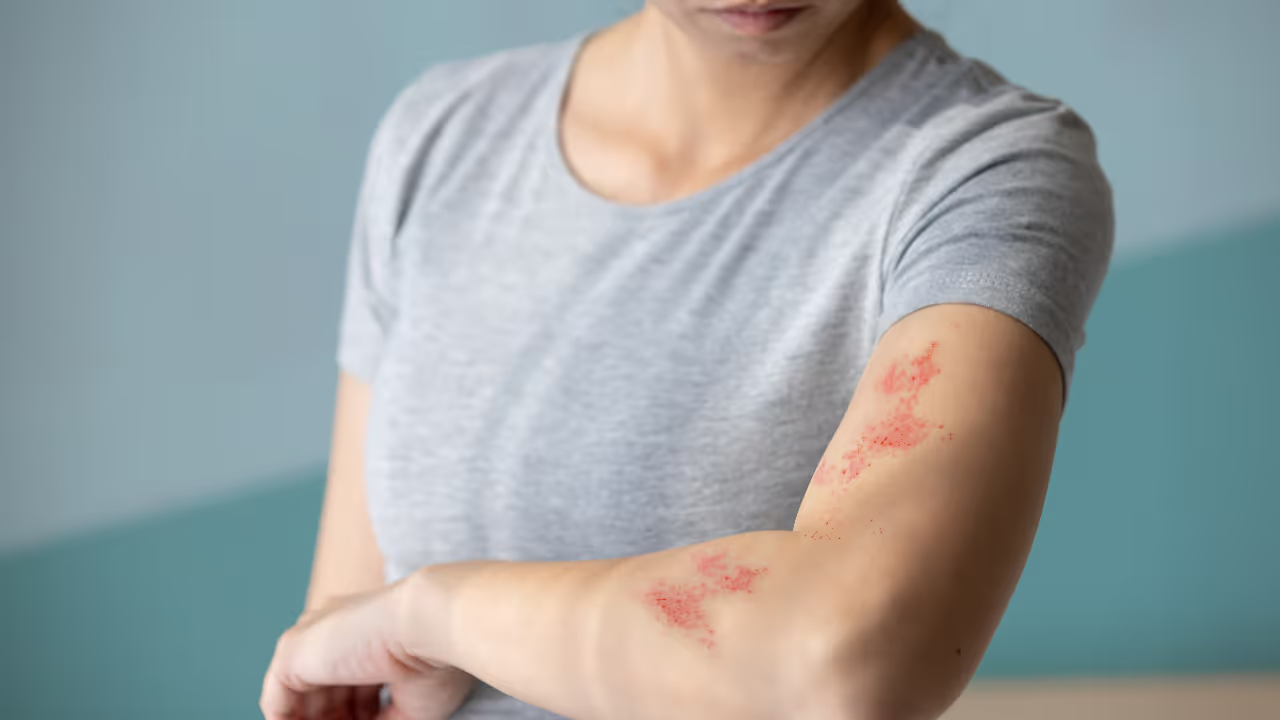
The most characteristic symptom of hives is the bumps or waffles on your skin. These can range from a few millimeters to large areas of several centimeters. Sometimes smaller bumps coalesce into larger, irregularly shaped zones.
The bumps have a characteristic appearance. They are usually red or pink in color, although sometimes they can also be pale with a red border. The bumps are slightly raised above the surface of the skin and often feel a bit tighter than the surrounding skin. When you press on a bump, it usually temporarily turns white or pale.
The development is remarkably fast. Within seconds to a few minutes, new bumps may appear. This rapid onset distinguishes hives from many other skin conditions. But just as quickly as they come, they can disappear again. Individual bumps don't usually stay in the same spot for more than twenty-four hours, and often disappear within two hours without leaving any trace.
Itching is usually the most annoying symptom. It can be intense and the desire to scratch is often irresistible. The itching is usually worse in the evening and night, which can interfere with your sleep. In contrast to the bumps, which come and go, the itching can be persistent.
An important feature is that hives leave no permanent marks. When the bumps disappear, your skin looks completely normal again. There are no scars, discoloration or peeling. This helps doctors distinguish hives from other skin conditions.
More severe reactions may involve deeper layers of the skin and underlying tissue. This is called angioedema. This causes larger swelling, often in the face around the eyes or lips, but also on the hands, feet or genitals. These swellings feel different than regular hives. They are usually painful or cause a burning sensation instead of itching, and they last longer, often one to three days. Angioedema can become dangerous when swelling spreads to the tongue, throat, or vocal cords, as it can interfere with your breathing.
Where does urticaria appear?
In principle, hives can appear anywhere on your body, but there are preferred locations and patterns that can help recognize the condition and sometimes determine the cause.
The trunk is one of the most common places where hives occur. Both the chest and back can be covered with bumps, and often the rash starts here and spreads to other parts of the body. Arms and legs are also frequently affected, with the rash can extend over the entire length - from shoulders to hands and from hips to feet. In certain forms, such as pressure hives, you mainly see the rash in places where pressure has been applied, for example under a waistband or bra strap.
The face can also be affected, which is often experienced as particularly annoying because it is so visible. Bumps on the cheeks, forehead, or around the mouth are common. When the face is involved, there may also be swelling of the eyelids or lips, which may indicate the onset of angioedema. Palms and soles, on the other hand, are less commonly affected, except in certain forms, such as young children, where blisters can sometimes form in these areas.
The staggered nature of hives is particularly striking. You may have bumps on your arms in the morning that will disappear by noon, while new ones will appear on your legs or stomach. This migratory pattern is very characteristic of the disorder and helps distinguish it from other skin conditions.
The location of the rash can also provide clues about the specific trigger. In the case of hives caused by sunlight, the rash is logically limited to exposed parts of the body such as the face, arms and décolleté, while sparing covered areas. Pressure hives occur specifically in areas where pressure has been applied - the shoulders where a bag has hung, the feet after wearing tight shoes, or around the waist where clothes sit. In cold hives, the bumps appear precisely in areas that have been in contact with cold, such as the hands after holding a cold glass or the face after a walk in cold wind.
Do you suffer from Hives?
Have your skin assessed by a licensed dermatologist via the Skindr app. Upload photos and get a diagnosis with personal advice within 48 hours. No waiting room, no referral required.
Treatment of urticaria
The treatment for hives focuses on alleviating the symptoms and, where possible, avoiding or treating the underlying cause. Fortunately, acute hives often go away on their own without treatment within a few days to weeks.
In acute hives, which lasts less than six weeks, antihistamines are the cornerstone of treatment. These medicines block the action of histamine, the substance responsible for itching and swelling. Antihistamines help reduce itching and can prevent new bumps from forming. The advantage is that they usually work well against itching, which is the most annoying symptom for many people. There are different types of antihistamines. Some older variants can cause drowsiness, which can actually be beneficial in the evening, while newer versions usually don't make you sleepy.
If the reaction is severe with severe general symptoms, your doctor may opt for a one-off treatment with corticosteroids. These are powerful anti-inflammatory drugs that can quickly suppress the violent reaction. These are usually only used for a short time due to possible side effects when used for a long time.
In case of angioedema with swelling of the airways, rapid treatment is crucial. In emergency situations where breathing is compromised, an adrenaline injection can be a lifesaver. This ensures a rapid reduction in swelling and restores airway function.
For chronic hives, which last longer than six weeks, treatment depends on the cause found. If a bacterial infection appears to be the culprit, antibiotics may be necessary. Antifungal medicines are used for fungal infections.
If the cause cannot be determined, which is unfortunately often the case with chronic hives, long-term use of antihistamines can help to keep the symptoms manageable. Your doctor may recommend taking antihistamines daily, even on days when you have no symptoms, to prevent symptoms from breaking through.
In persistent cases of chronic hives that do not respond to antihistamines, there are additional treatment options. Phototherapy, where your skin is exposed to specific wavelengths of ultraviolet light in a special cabin, can improve some people. This treatment is also used for other skin conditions such as psoriasis.
In the case of very severe, treatment-resistant hives, specialists may consider other immunomodulatory drugs, although this only happens under close supervision.
In addition to drug treatment, self-care is important. Wearing loose-fitting, smooth clothing can reduce friction and irritation. Cold compresses on itchy areas often provide temporary relief. Avoiding known triggers is essential when they are identified.
What doesn't work against urticaria?
There are some misconceptions about treating hives that are important to discuss because ineffective treatments can cost time and money and cause frustration.
First, antihistamine creams, or ointments are generally not effective for hives. Although antihistamines work well in tablet form, the active ingredient in creams does not penetrate deep enough into the skin to block the release of histamine from mast cells. In addition, these creams themselves can sometimes cause irritation or an allergic reaction.
Completely avoiding water or washing is a misconception that sometimes comes up. While very long and hot baths can dry out and irritate the skin, normal washing is not harmful for people with hives. On the contrary, good skin hygiene is important. However, it is wise to use lukewarm water and soft, fragrance-free products.
Special diets or drastic food adjustments without a clear indication that diet is the cause are usually not helpful and may even be harmful. Unless a proven food allergy has been identified, it is unnecessary and potentially unhealthy to avoid many foods. This can lead to nutrient deficiencies, especially in children. If nutrition is suspected to play a role, it is important to investigate this systematically under the guidance of your doctor or a dietician, instead of randomly omitting things.
Homeopathic remedies or other alternative treatments have no proven effectiveness for hives. Although they are usually harmless, they can cost you time and money and, most importantly, delay necessary effective treatment.
Stopping antihistamines too quickly as soon as the symptoms disappear can lead to a return of symptoms in chronic hives. Chronic forms often require longer treatment, even if the symptoms appear to be under control.
Finally, it is important to know that scratching, although it can provide temporary relief, often worsens the situation. Scratching can damage the skin, release more histamine, and increase the risk of infection. It is better to try to relieve the itching with cooling or by patting gently instead of scratching.
Frequently asked questions about urticaria
Is hives contagious?
No, hives themselves are not contagious. You can't transmit it to others by touch or by being near someone with hives. However, the underlying cause can sometimes be contagious. For example, if hives are caused by a viral infection, that infection is contagious, but not the hives themselves.
How long does hives last?
This varies greatly. In acute hives, individual bumps usually disappear within two to twenty-four hours, although new ones may appear in other areas. The entire episode of acute hives usually lasts from a few days to a maximum of six weeks. In chronic hives, the symptoms last longer than six weeks. In about one in three people, the symptoms disappear within one year, but in one out of four people, they persist for more than two years.
Can hives be prevented?
If you know what triggers your hives, you can often prevent it by avoiding that trigger. If certain foods are the culprit, you can omit them from your diet. With cold hives, it helps to dress warmly. Wearing looser clothing can help with pressure relief. Unfortunately, the cause is unknown to many people, making prevention difficult. However, good skin care and avoiding known irritants can help reduce the risk of outbreaks.
When should I see a doctor?
You should contact your doctor if the hives last longer than a few days, if the itching is very bothersome and interferes with your normal life, or if the hives keep coming back. Seek immediate medical attention if you have signs of angioedema, especially if you have trouble breathing or swallowing, if you feel dizzy or about to faint, or if your rash is accompanied by a fever or other serious symptoms.
Does hives come back?
This depends on the underlying cause. In case of acute hives that were caused by a one-off trigger, such as a specific food or medication that you no longer use, the chance of recurrence is small. In the case of chronic hives or when the cause is not clear, the symptoms can unfortunately return, sometimes after months or years of complaint-free periods. This is called recurrent hives.
Does hives affect my daily life?
For most people with mild, acute hives, the impact is limited, although the itching can be annoying. In chronic hives or severe forms, the impact may be greater. The itching can interfere with your sleep, leading to tiredness during the day. The visible result can affect your self-confidence and make social situations difficult. Fortunately, with good treatment, most people can get their symptoms under control and live a normal life.