.webp)


What is an angioma?
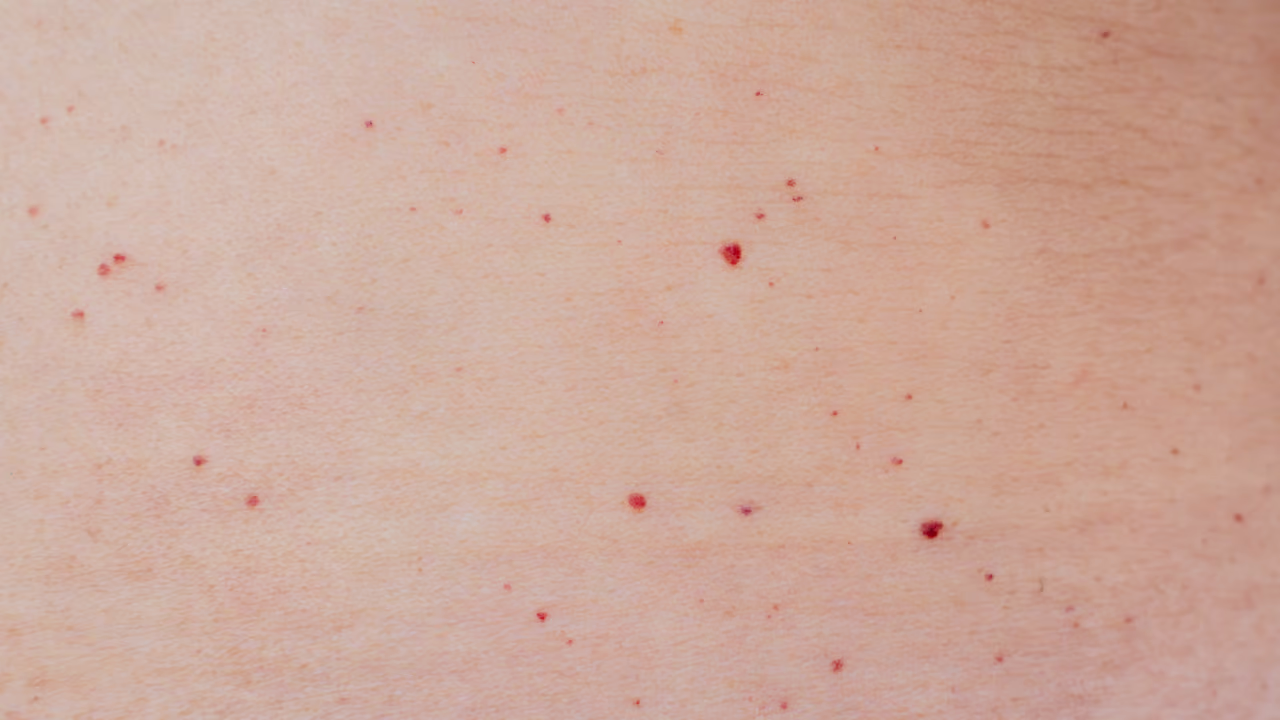
An angioma is a benign vascular growth that develops in the skin. It consists of a cluster of small blood vessels located just beneath the skin's surface, giving it its typical red to purple color. Skin angiomas are almost always harmless and do not disappear on their own, but they also don't necessarily require treatment.
A skin angioma can be known by several names: cherry angioma, ruby spots, angioma senilis, or blood blisters.
Senile angioma (cherry angioma)
The most common type in adults. A senile angioma is a smooth, bright red to purple bump measuring 1 to 5 mm, which primarily appears after the age of 40.
Spider nevus (spider angioma)
A spider nevus is a central red spot with radiating blood vessels. They often occur spontaneously in healthy individuals and can be familial. They are also more frequently observed during pregnancy and, in some cases, with liver conditions.
Hemangioma (strawberry mark)
A hemangioma is a benign vascular growth that often occurs in babies and young children. Most hemangiomas largely disappear during childhood.
Important distinction: angioedema is a completely different condition. It involves acute swelling of the skin and mucous membranes, usually allergic in origin or triggered by a treatment, and is not a vascular growth.
Do you suffer from Angioma (cherry angioma)?
Personalized advice for your skin, completely online. Upload a few photos through the Skindr app and receive medical advice from a licensed dermatologist within 48 hours. No waiting room or referral required.
How does an angioma develop?
Senile angiomas are very common and clearly increase with age. They likely develop due to a combination of skin aging, genetic predisposition, and environmental factors such as UV damage.
The development of a spider nevus is multifactorial, including hormonal influences such as elevated estrogen levels during pregnancy or during certain treatments. They can also be associated with liver conditions.
An infantile hemangioma develops due to abnormal growth of blood vessels in the first weeks after birth. The exact cause is unknown.
Due to genetic predisposition, new angiomas may develop in the same or other locations after an angioma has been removed. This is a normal phenomenon and not a sign of an underlying serious condition.
Symptoms and characteristics of an angioma
A senile angioma is a smooth, bright red to purple bump measuring 1 to 5 mm. On light skin, it is clearly visible as a red dot or bump. On darker skin, the bump may be darker in color or less noticeable. A characteristic sign: if you gently press the bump with a glass, it temporarily blanches. This is because the blood vessels are briefly pushed away.
A spider nevus is recognizable by a central red dot with radiating blood vessels, like the legs of a spider. The bump feels soft.
When is a bump suspicious?
If an angioma starts to bleed, changes color, or grows rapidly, dermatological examination is always recommended. If you doubt whether it's an angioma or something else, such as a mole? A certified Skindr dermatologist will assess it within 48 hours.
Where do angiomas occur?
Senile angiomas most often appear on the torso: chest, abdomen, and back. However, arms, neck, and face are also common locations. They are rarely seen on the palms of the hands and soles of the feet.
A spider nevus typically appears on the face (cheeks and nose), neck, upper chest, and sometimes the hands. During pregnancy, spider nevi may occur more frequently and also spread to the torso.
In babies with a hemangioma, the strawberry mark is located on the head or neck in 50% of cases, but it can appear on any body part.
Do you suffer from Angioma (cherry angioma)?
Personalized advice for your skin, completely online. Upload a few photos through the Skindr app and receive medical advice from a licensed dermatologist within 48 hours. No waiting room or referral required.
Treatment of an angioma
An angioma does not need to be treated. It is a benign condition that usually causes no symptoms. Treatment is a choice: cosmetic (if you find it bothersome) or medical (if the angioma bleeds regularly due to friction or clothing).
The most common method is laser. Lasers such as the V-beam (pulsed dye laser) and the KTP laser are specifically designed to close blood vessels in the skin. The treatment is fast, results are visible after one to three sessions, and scarring is minimal to absent.
Electrocoagulation cauterizes the vessel. Curettage or shave excision scrapes off the angioma. Cryotherapy is less precise for vessels but an option for certain cases.
After treatment: avoid intensive sun exposure on the treated area for four weeks and use high sun protection (SPF 50) daily.
Costs and reimbursement in Belgium: removal for cosmetic reasons is generally not reimbursed by the RIZIV. In case of a medical indication (repeated bleeding, uncertainty about the assessment), reimbursement may be requested.
With Skindr, you'll receive an assessment from a certified dermatologist within 48 hours, without a referral or waiting room. Want to know when a skin change is suspicious? Read more on our page about melanoma to better recognize red flags on the skin.
What doesn't work against an angioma?
Removing an angioma yourself is not a good idea. An angioma consists of small blood vessels. If you try to prick, cut, or scratch it with a nail or razor blade, you risk bleeding, infection, and a permanent scar.
No cream, ointment, or skincare product will remove an angioma. They cannot address the red color, which is located in the blood vessels deep within the skin, not in the top layer of the skin.
The reason why professional treatment is preferred goes beyond the removal itself: a dermatologist first assesses whether it is a benign angioma and takes other conditions, such as skin cancer, into account.
Frequently asked questions about angiomas
Is an angioma malignant?
No. A skin angioma is almost always benign. If you have doubts about the nature of the bump, if it bleeds regularly, grows quickly, or changes in appearance, have it checked by a dermatologist.
Can I remove an angioma myself?
That is not recommended. Pricking or cutting it yourself carries a high risk of bleeding, infection, and scarring. A dermatologist safely removes an angioma, often using laser or electrocoagulation.
How is an angioma removed?
The most common methods are laser and electrocoagulation. It is a quick procedure, usually in one session, and almost painless after anesthesia.
Is the removal reimbursed in Belgium?
Cosmetic removal is generally not reimbursed by the RIZIV. In case of a medical indication (repeated bleeding, uncertainty about the assessment), reimbursement may be requested.
Can children also have angiomas?
Yes. Hemangiomas (strawberry marks) occur in babies and toddlers. In most cases, they spontaneously resolve before the age of seven. Senile angiomas occur almost exclusively in adults.
Can Skindr help with an angioma?
Yes. Through Skindr, a certified dermatologist will assess your angioma based on photos within 48 hours. You will receive advice on the assessment, urgency, and treatment options, without a referral from your GP.
Resources
- DermNet NZ - Angioma
- Skindr dermatologists (medically reviewed)


](https://static.legitscript.com/seals/624359.png)