.webp)


What are mouth sores?
Mouth sores can have various causes. The most common form is canker sores: small, round ulcers on the mucous membrane that are painful but not contagious. They affect approximately 20 percent of the population.
Besides canker sores, there are blood blisters in the mouth (which appear after biting or impact trauma and disappear on their own) and rarer autoimmune conditions such as pemphigus vulgaris and pemphigoid, which always require a dermatologist's guidance.
Important distinction: canker sores are not contagious. They are not herpes. A cold sore (herpes simplex) develops on the lip itself or the skin around the mouth and is infectious. You can read more about blisters and conditions around the mouth in our overview of skin conditions and the mouth.
Canker sores affect 20 percent of the population, more often women. They typically begin before the age of 30.
Do you suffer from Blaasjes in de mond?
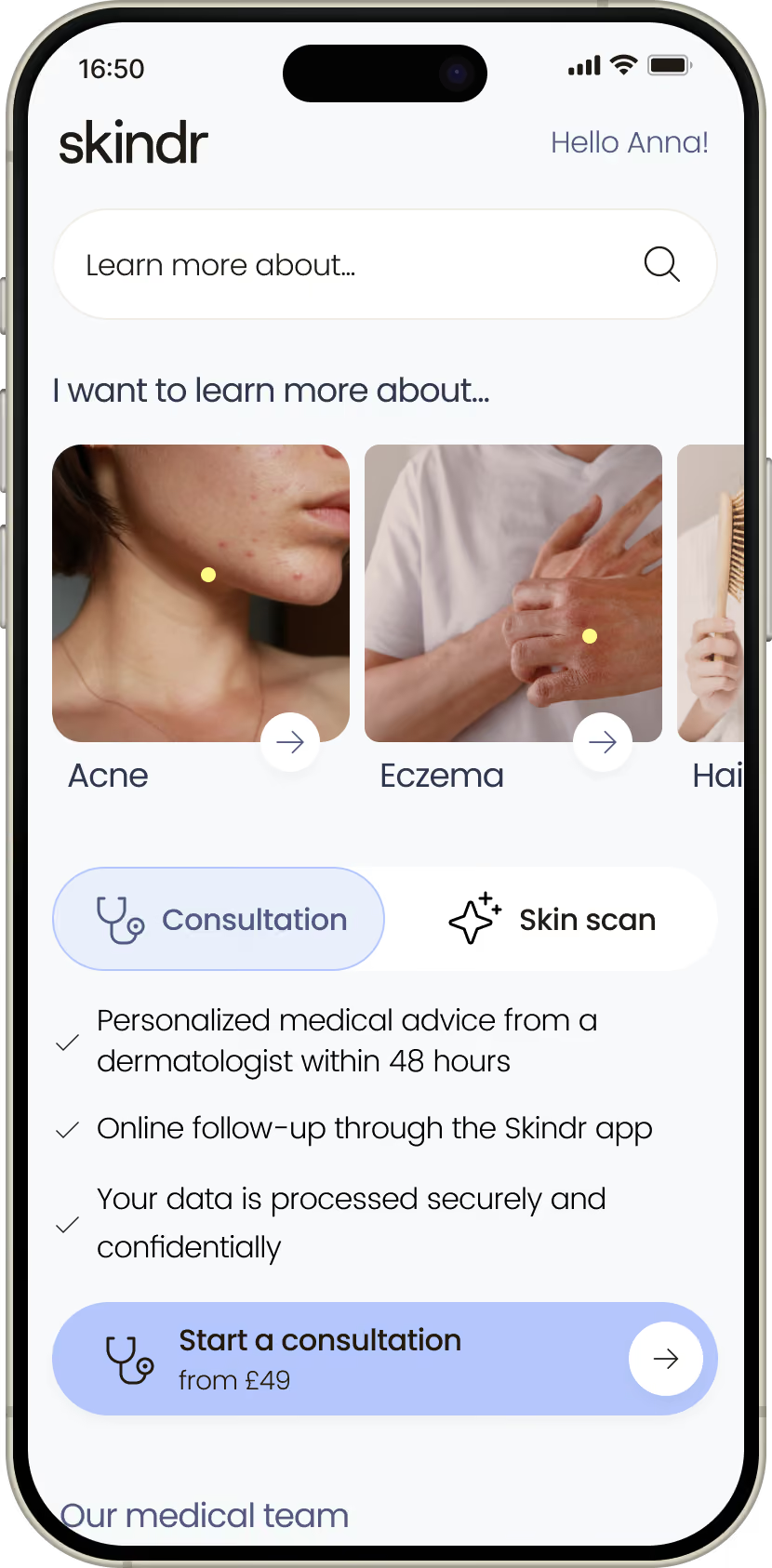
Personalized advice for your skin, completely online. Upload a few photos through the Skindr app and receive medical advice from a licensed dermatologist within 48 hours. No waiting room or referral required.
How do mouth sores develop?
Triggers for canker sores include: mechanical irritation (biting the cheek, sharp tooth edge), stress, SLS-containing toothpaste, food triggers (citrus, nuts, chocolate), hormonal fluctuations, and genetic predisposition. For recurrent canker sores, a doctor will also rule out underlying conditions (Crohn's, celiac disease, HIV).
Autoimmune blistering: in pemphigus and pemphigoid, the immune system produces antibodies that attack the body's own mucous membranes. Blistering caused by a virus, such as in young children with skin problems in children, follows a different pattern and requires separate guidance.
Symptoms and features of oral blisters
Minor aphthae: 2-10 mm, white or yellow center with a red border, painful, spontaneous healing within 7-14 days without scarring. Major aphthae: larger than 10 mm, deeper, more painful, weeks to months, sometimes a small scar. According to DermNet NZ recurrent aphthous stomatitis occurs in 20 percent of the population, and the exact cause is multifactorial.
Oral blood blister: purplish-red, appears after mechanical trauma, filled with blood, disappears spontaneously within a few days.
Autoimmune features: larger, poorly defined blisters, painful erosions after rupture. Nikolsky's sign (doctor only). Biopsy needed for definitive assessment.
When to be concerned: sore lasting longer than 3 weeks, constantly recurring aphthae, fever, sores on multiple mucous membranes.
Does an oral blister last longer than 3 weeks or does it keep recurring? A certified Skindr dermatologist will provide you with tailored advice within 48 hours.
Where do oral blisters occur?
Aphthae: inside of cheeks, tongue, inside of lips, soft palate. Major aphthae in severe recurrent episodes also on genital mucous membranes. Blood blister: always at the site of trauma. Pemphigus/pemphigoid: multiple mucous membranes simultaneously.
Oral candidiasis (thrush) causes white spots on the tongue and mucous membrane and has a different treatment than aphthae. If in doubt about the type of blister or sore, the overview of skin diseases and the mouth offers a useful starting point.
Do you suffer from Blaasjes in de mond?
Personalized advice for your skin, completely online. Upload a few photos through the Skindr app and receive medical advice from a licensed dermatologist within 48 hours. No waiting room or referral required.
Treatment of oral blisters
Aphthae: SLS-free toothpaste + antiseptic mouthwash (pain, disinfection) + temporary local anesthetic. Available through a doctor: a treatment applied locally to the aphtha. For severe or recurrent major aphthae, a dermatologist will discuss a short-term course of treatment as the next step. More background information can be found in our overview of skin diseases and the mouth.
Blood blister: rest, do not puncture, spontaneous healing.
Pemphigus/pemphigoid: always consult a dermatologist. Treatment including immunosuppressants. Early detection is important.
When to see a dermatologist or dentist: sore lasting longer than 3 weeks, monthly recurring aphthae, very large or painful aphthae, fever, aphthae on multiple mucous membranes, suspected autoimmune blistering.
With Skindr, you receive advice from a certified dermatologist within 48 hours, without a referral or waiting list.
What doesn't work against mouth sores?
SLS-containing toothpaste irritates the mucous membrane and triggers new canker sores. According to Thuisarts.nl canker sores usually disappear on their own, and vitamin supplements only help with a proven deficiency. Squeezing open a sore increases the risk of infection and delays recovery. Applying salt or irritating substances is counterproductive. Waiting longer than 3 weeks for a sore is risky: a dermatologist can assess the sore and advise whether further investigation is needed. The huidfonds.nl offers additional information for patients with chronically recurring canker sores.
Frequently asked questions about mouth sores
Are canker sores contagious?
No, not a virus or bacteria, not transmissible through kissing or cutlery.
How long does a canker sore last?
Minor: 7-14 days. Major: several weeks. Longer than 3 weeks: consult a doctor.
What quickly helps against canker sores?
SLS-free toothpaste, antiseptic mouthwash. Available through a doctor: a local treatment.
Why do I keep getting canker sores?
Sensitivity to triggers or an underlying condition (celiac disease, immune disorder). Consult a doctor for frequent episodes.
What is the difference between canker sores and cold sores?
Canker sores are inside the mouth, not contagious, no virus. A cold sore (herpes simplex) appears on the lip or the skin around the mouth, is caused by the herpes simplex virus, and is contagious.
Can a sore in the mouth be malignant?
In rare cases, yes. If a sore hasn't healed after 3 weeks: always have it evaluated by a doctor.
When should I consult a dermatologist?
For sores lasting longer than 3 weeks, monthly recurring canker sores, or suspected autoimmune blistering. Get advice via Skindr within 48 hours.
Resources
1. Skindr dermatologists — skindr.com
2. Health and Science (EBPNet) — gezondheidenwetenschap.be
3. Thuisarts.nl (NHG) — thuisarts.nl/aften
4. LUMC — lumc.nl
5. DermNet NZ — dermnetnz.org/topics/aphthous-ulcer
6. Huidfonds.nl — huidfonds.nl


](https://static.legitscript.com/seals/624359.png)