.webp)


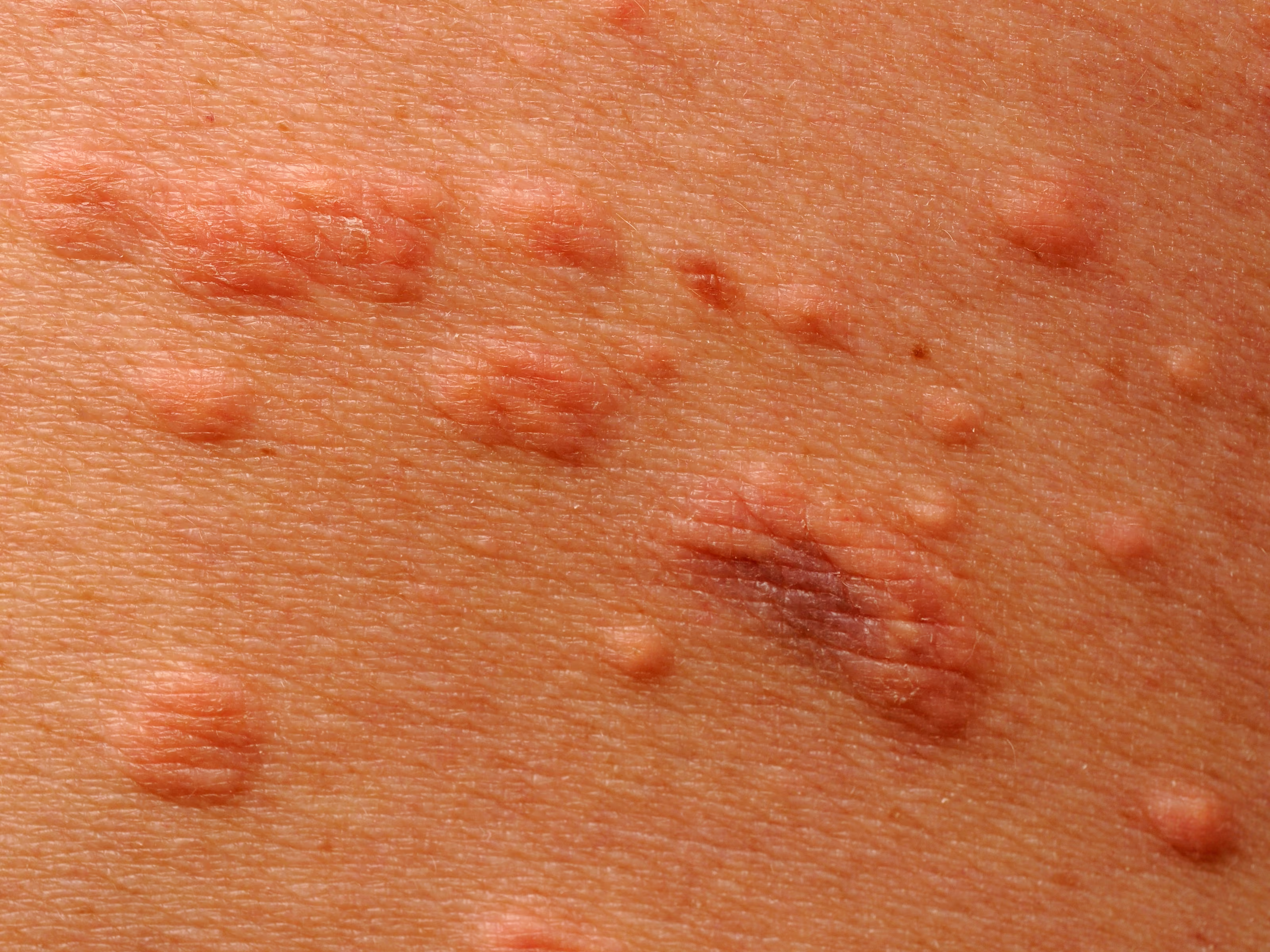
What is exanthem?
Exanthem is the medical term for a sudden, widespread skin rash that appears symmetrically across the body. The name literally means 'eruption'. You also often hear the term eruptive skin rash, and when a virus is the cause, it is referred to as a viral exanthem. If the rash appears on the mucous membranes (for example, in the mouth) instead of on the skin, it is called an enanthem.
Exanthem is common, especially in children. Many classic childhood diseases manifest with this type of rash. Adults also frequently experience it, for example, as a reaction to a new medication. The rash itself is a sign that your immune system is reacting to something, not a disease in itself.
What types of exanthem are there?
You can recognize the different forms mainly by how the skin looks. In a maculopapular exanthem, the most common form, you see a combination of flat red spots and small bumps. In a vesicular exanthem, blisters appear, such as with chickenpox. And in a petechial exanthem, you see tiny pinpoint hemorrhages that do not blanch when pressed. This latter form always requires extra attention, as it can indicate a more serious underlying cause.
Do you suffer from Eruptive Skin Rash?
Personalized advice for your skin, completely online. Upload a few photos through the Skindr app and receive medical advice from a licensed dermatologist within 48 hours. No waiting room or referral required.
How does exanthem develop?
Exanthem usually develops as a reaction of your immune system to a viral infection or medication. Your body reacts to the invader or substance, and this reaction becomes visible as a rash on the skin.
Viral infections are by far the most common cause, especially in children. Well-known examples include fifth disease, sixth disease (roseola), measles, rubella, chickenpox, and glandular fever (mononucleosis). For several years now, we have known that the coronavirus can also cause skin rashes. The virus stimulates the immune system, and the rash is part of that immune response.
A second common cause is medication. Certain antibiotics and anti-inflammatory drugs, in particular, can trigger a drug-induced exanthem. Characteristically, the rash usually appears only seven to fourteen days after starting the medication. Never stop a medication recommended by your doctor on your own, but always discuss the rash with your treating physician first.
Less commonly, exanthem is caused by a bacterial infection, such as scarlet fever due to streptococci. In rare cases, a travel-related infection may be involved, for example, dengue or Zika after a stay in the tropics. In young children, a doctor sometimes also considers Kawasaki disease, a rare condition where a rash is accompanied by persistent fever.
By considering your age, any fever, recent medication, and travel history, a doctor or dermatologist can usually accurately assess the most likely cause.
Symptoms and characteristics of exanthem
Exanthem appears as red to pink spots or bumps that emerge symmetrically over the body, often starting on the torso. The rash may itch, but not necessarily. Sometimes, it is preceded by a few days of fever or a general feeling of illness.
The spots are usually small and close together. In some forms, they merge into larger red patches, while in others, they remain as separate bumps or develop into blisters. The rash appears in waves and often spreads over several days.
On light skin, the redness is usually quickly noticeable. On darker skin, this redness is harder to see. In such cases, pay particular attention to a purplish or dark brown discoloration and to bumps that are more easily felt than seen. As a result, exanthem on darker skin is sometimes noticed later.
It's understandable that a sudden rash might make you uncertain. It helps to distinguish exanthem from other common skin conditions. Hives (urticaria) causes itchy welts that appear quickly and then shift location, while eczema causes dry, flaky patches that remain in the same spot for longer. If you're unsure whether a rash is harmless, a certified dermatologist will assess your skin photos via Skindr within 48 hours and tell you if further examination is needed.
Possible complications
Exanthem is usually harmless, but some signs do require a quick assessment. Be alert for purple pinpoint hemorrhages that do not blanch when pressed, for blistering or involvement of the mucous membranes in the mouth or eyes, for high or persistent fever, for a rapidly spreading rash, or for drowsiness. If you see any of these signs, do not wait and seek medical help the same day.
Where does exanthem occur?
Exanthem usually begins on the torso, meaning the chest, abdomen, and back, and spreads from there to the arms, legs, and sometimes the face. In many viral forms, the rash spreads symmetrically: roughly equally on the left and right sides.
The pattern in which the rash appears often provides a clue about the cause. Some childhood diseases characteristically begin on the face. For example, with fifth disease, you first see bright red cheeks, as if the child has been slapped, before the rash spreads to the torso and limbs. Other viruses, such as those causing sixth disease, start on the torso and only spread later.
A drug-induced exanthem usually covers a large part of the body simultaneously and is evenly distributed. Because the spots appear on different parts of the body at the same time, the rash sometimes feels more extensive than it actually is. By observing where the rash begins and how it spreads, a doctor can better assess what is happening.
Do you suffer from Eruptive Skin Rash?
Personalized advice for your skin, completely online. Upload a few photos through the Skindr app and receive medical advice from a licensed dermatologist within 48 hours. No waiting room or referral required.
Treatment of exanthem
Exanthem usually heals on its own once the underlying infection or drug reaction has passed. Treatment is therefore primarily aimed at alleviating symptoms such as itching, and not on the rash itself. Typically, exanthem lasts one to three weeks.
Medical Treatments
For a viral exanthem, specific treatment is usually not necessary: your body clears the virus on its own. If it's a drug-induced exanthem, the doctor will discuss with you whether the suspected medication should be stopped or replaced. For severe itching or an extensive reaction, a doctor may suggest an anti-inflammatory or anti-itch medication. The appropriate approach depends on the cause and how your skin reacts.
Self-care and Prevention
You can do a lot yourself to alleviate the discomfort. Wear loose, cotton clothing, keep the skin cool, and if necessary, apply a cooling, moisturizing lotion. Drink plenty of fluids and allow your body to rest, especially if you have a fever. Try not to scratch, as this damages the skin and increases the risk of infection. For itching, an over-the-counter anti-itch remedy can provide relief; if in doubt, ask your pharmacist for advice.
When to see a doctor?
Have your skin assessed if the rash persists for more than three weeks, continues to spread, is accompanied by fever or a general feeling of illness, or if you simply doubt the cause. In case of purple pinpoint hemorrhages or affected mucous membranes, do not wait and seek help the same day.
You don't have to live with the uncertainty of an unknown rash that won't go away. Through Skindr, you receive advice from a certified dermatologist within 48 hours, without a referral and without a waiting room. You upload a few photos, and the dermatologist assesses your skin, explains the probable cause, and immediately tells you if a physical visit is necessary. More than 60,000 patients have already benefited.
What doesn't work against exanthem?
Antibiotics do not work against a viral exanthem. They fight bacteria, not viruses, and are therefore useless for the most common form. Nevertheless, people sometimes resort to them out of concern, even though unnecessary antibiotic use primarily has disadvantages.
Scratching also doesn't help: it may temporarily relieve the itch, but it damages the skin and can cause infection or permanent scars. Applying aggressive scrubs, disinfectants, or perfumed products to the rash usually only makes the irritation worse.
Stopping a doctor-recommended medication simply because you develop a rash is also not a good idea. Always discuss this with your doctor first, as sometimes the rash is harmless and the medication should simply be continued. And trying to 'sweat out' the rash with warm baths or blankets is counterproductive: warmth usually makes itching worse.
Frequently Asked Questions about Exanthem
Is exanthem contagious?
Exanthem itself is not contagious, but the underlying cause sometimes is. If the rash is caused by a virus like chickenpox or measles, that virus can be transmitted to others. A drug-induced exanthem is never contagious.
Does exanthem disappear on its own?
Yes, in most cases, exanthem disappears on its own without specific treatment. Care focuses on relieving itching and discomfort while your body overcomes the underlying cause. Typically, the skin returns to normal within one to three weeks.
How long does exanthem last?
Exanthem typically lasts one to three weeks and resolves on its own once the underlying infection or drug reaction has passed. If the rash persists longer or spreads, have your skin assessed.
What is the difference between exanthem and erythema?
Exanthem is a widespread rash of spots or bumps, usually caused by an infection or medication. Erythema is simply redness of the skin due to dilated blood vessels, without bumps. Exanthem can include erythema, but it is a broader term.
When should I see a dermatologist for an exanthem?
Consult a dermatologist if the rash persists for more than three weeks, continues to spread, is accompanied by fever or illness, or if you are unsure about the cause. Do not delay seeking medical attention if you notice purple pinpoint bleeding or affected mucous membranes.
Can Skindr help with exanthem?
Yes. You upload photos of the rash and a certified dermatologist reviews them within 48 hours, without a referral. You receive advice on the probable cause and immediately know if an in-person consultation is necessary.
Resources
Skindr dermatologists (medical review)


](https://static.legitscript.com/seals/624359.png)