.webp)


What is a fibroma?
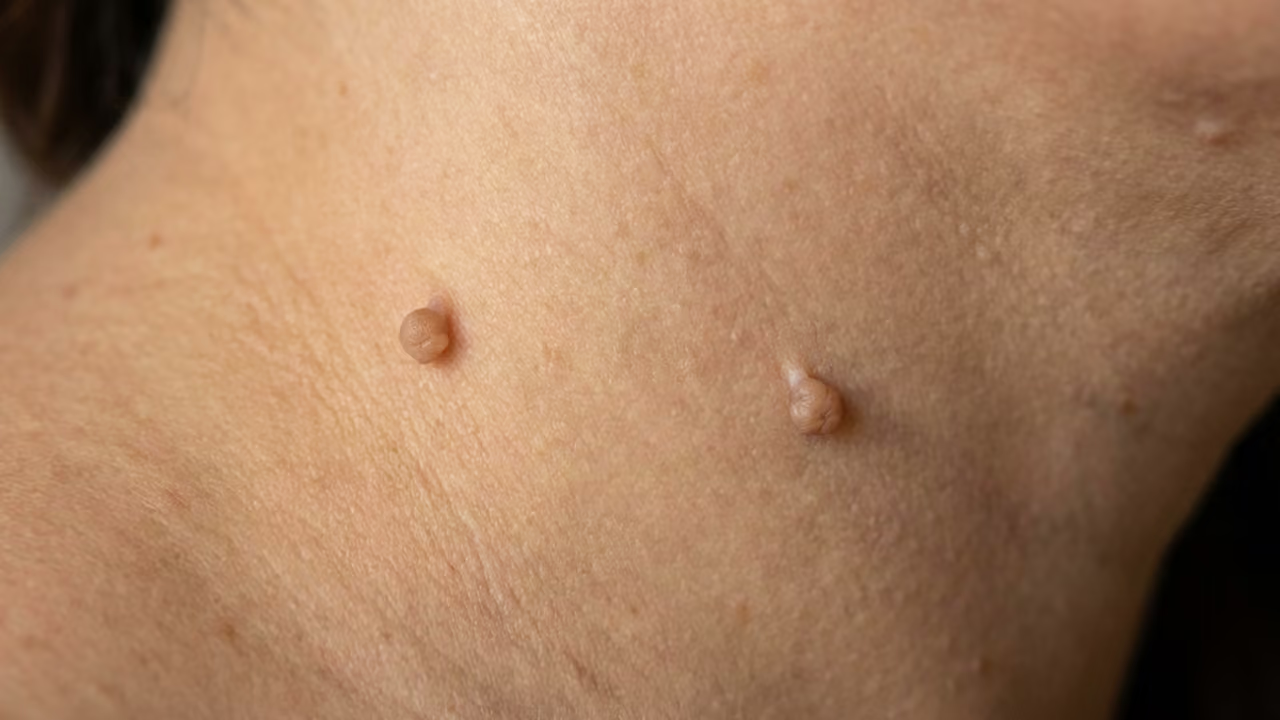
A fibroma is a benign, connective tissue-like growth in or under the skin. The term is an umbrella term for two different conditions that are often used interchangeably in everyday language.
Fibroma molle: skin tag, excess flesh
Fibroma molle (also known as fibroma pendulans, skin tag, or excess flesh) is a soft, stalked skin flap that hangs from the skin via a thin pedicle. It is skin-colored to light brown and feels soft. Sizes range from 1 to 2 mm to several centimeters. It is the most common variant and affects almost everyone after the age of thirty.
Dermatofibroma: firm nodule, deeper in the skin
The dermatofibroma is a firmer, deeper-seated nodule, usually brown to grayish-brown in color. A characteristic sign is the so-called dimple sign: when you pinch the nodule between your thumb and forefinger, the skin indents slightly. This indicates its anchorage in the deeper skin.
Not to be confused with other fibromas
Fibromas can also occur in the uterus, breast, or oral cavity. These are different conditions that fall outside the scope of dermatology and are not discussed on this page. Are you unsure if your bump is a fibroma? A Skindr dermatologist can assess your bump within 48 hours.
Do you suffer from Fibroma (skin tag)?
Personalized advice for your skin, completely online. Upload a few photos through the Skindr app and receive medical advice from a licensed dermatologist within 48 hours. No waiting room or referral required.
How does a fibroma develop?
The exact cause of fibromas is not fully understood, but there are clear risk factors.
Fibroma molle (Skin Tag)
In fibroma molle, chronic friction plays a significant role: skin-on-skin contact in folds, or clothing and jewelry that rub. Hormonal changes increase susceptibility: skin tags appear more frequently and rapidly during pregnancy and around menopause. Obesity and diabetes increase the risk. Almost everyone has one or more skin tags after the age of thirty.
Dermatofibroma
A dermatofibroma often develops after minor skin damage such as an insect bite, a small wound, or an ingrown hair. The connective tissue reacts with localized growth. Women are affected more often than men. Sometimes a dermatofibroma develops without any apparent cause.
Signs and symptoms of fibromas
Skin tags (fibroma molle) are soft, flexible skin flaps that hang from a thin stalk. They are skin-colored to light brown and are not painful. Friction from clothing or jewelry can cause irritation, redness, or itching. Occasionally, a skin tag may bleed slightly if it gets bumped.
A dermatofibroma feels firm and is anchored in the deeper skin. It is typically brown to grayish-brown, has a smooth surface, and exhibits the dimple sign with light pressure: the skin pulls inward. It is usually painless, but can be slightly tender to the touch.
Are you unsure if the bump is a fibroma or something else, such as a mole or molluscum contagiosum? A Skindr dermatologist will assess your bump within 48 hours.
Where do fibromas occur?
Skin tags (fibroma molle) most often appear in skin folds: neck, armpits, groin, under the breasts, and in the gluteal cleft. These areas combine friction and warmth, the two main local triggers.
Dermatofibromas typically occur on the lower legs, but can also appear on the upper legs, torso, or arms. In women, the lower legs are the most common location, presumably due to ingrown hairs, shaving cuts, or insect bites acting as triggers.
Do you suffer from Fibroma (skin tag)?
Personalized advice for your skin, completely online. Upload a few photos through the Skindr app and receive medical advice from a licensed dermatologist within 48 hours. No waiting room or referral required.
Treatment of fibromas
Fibromas that do not cause any symptoms do not need to be treated. They are benign and pose no health risk. If a fibroma is irritating, unsightly, or its nature is unclear, there are several treatment options.
For skin tags (fibroma molle), snipping them off with sterile scissors or shaving them off are the most common methods. Electrocoagulation (burning off) is an alternative that also treats the base. CO2 laser therapy is suitable for multiple skin tags at once.
For dermatofibromas, excision with sutures is the standard method. If there is doubt about the assessment, the tissue is sent for pathological examination to rule out a melanoma or other malignant condition.
Through Skindr, you will receive advice from a dermatologist within 48 hours. certified dermatologist.
What doesn't work for fibromas?
Removing fibromas yourself is risky. Cutting off a soft fibroma at home with regular scissors or nail clippers carries a high risk of infection and scarring, especially in sensitive folds. Tying it off with a thread or elastic band is incomplete, painful, and can cause tissue damage or infection.
With dermatofibromas, attempting to remove them yourself is dangerous: their anchorage in the deeper skin means you'll never remove the entire nodule, and pathological examination to skin cancer rule out is then impossible.
Creams or ointments have no effect whatsoever on a fibroma. For adults, waiting is largely pointless: fibromas do not disappear on their own.
Frequently asked questions about fibromas
Are fibromas dangerous?
No. Fibromas are completely benign and do not spread. They only need to be treated if they cause discomfort or if there is doubt about the assessment.
Do fibromas go away on their own?
No. In adults, fibromas almost never disappear spontaneously. Professional removal by a dermatologist is the only effective solution.
Can I remove a fibroma myself?
No. Home removal carries risks of infection, scarring, and incomplete removal.
Can Skindr help with fibromas?
Yes. You send a photo, and a certified Skindr dermatologist will assess your fibroma within 48 hours, including advice on the best treatment and whether a physical visit is necessary.
Resources
- Skindr dermatologists (medically verified)
- DermNet NZ - Dermatofibroma


](https://static.legitscript.com/seals/624359.png)