.webp)


What are fungal skin infections?
Fungal infections, medically referred to as dermatomycoses , occur when fungi settle on your skin or nails and begin to grow there. These microorganisms feed on keratin, a protein naturally present in your skin, hair, and nails. Fungi thrive best in warm, moist environments, which explains why certain body parts are more frequently affected.
In our daily environment, we are constantly surrounded by fungi. They live in the soil, on plants, with animals, and even simply in the air we breathe. The vast majority of these contacts do not lead to infections because our skin forms a natural barrier. Only under certain circumstances do fungi get the chance to establish themselves and multiply.
With athlete's foot, hereditary factors appear to play a role, making some people more susceptible than others. Fungi originating from animals also transfer more easily to humans. Dogs, cats, guinea pigs, and livestock can be carriers of fungi that can infect humans. Additionally, human-to-human transmission is possible, especially in environments where people walk barefoot, such as swimming pools and changing rooms.
A fungal infection can develop on healthy skin, but also in areas where the skin is already damaged by small wounds or abrasions. These minor damages make it easier for fungi to penetrate and establish themselves. Once established, fungi can spread if left untreated.
Do you suffer from Fungal skin infections?
Personalized advice for your skin, completely online. Upload a few photos through the Skindr app and receive medical advice from a licensed dermatologist within 48 hours. No waiting room or referral required.
How do fungal infections develop?
The development of a fungal infection depends on several converging factors. Firstly, there must be contact with fungal spores, which happens daily. Secondly, there must be conditions that allow the fungus to establish and grow.
Moisture plays a crucial role in the development of fungal infections. Fungi prefer a moist environment and grow fastest there. This is why infections often occur in skin folds, between the toes, or in areas that are regularly warm and damp. People who sweat a lot or whose skin remains moist for extended periods are at higher risk.
Your immune system normally forms a line of defense against fungi. With a weakened immune system, fungi have a greater opportunity to thrive. This explains why people with diabetes, those with reduced immunity due to certain treatments, or during chemotherapy, more frequently suffer from fungal infections. Furthermore, certain prolonged treatments can disrupt the natural balance of microorganisms on the skin, giving fungi more room to grow.
Certain professions and activities increase the risk of fungal infections. People who wear safety shoes that prevent their feet from breathing often suffer from athlete's foot. Athletes who regularly visit changing rooms and showers also face a higher risk of infection. Swimmers and individuals who frequently work in damp environments are similarly more vulnerable.
Age also plays a role. In older people, there's an increased risk of fungal nail infections due to several factors, such as drier and thinner skin, slower nail growth, and a higher chance of microtraumas. Additionally, due to aging processes and repeated stress, nails can become thicker and more brittle, making them more susceptible to infections. Conversely, babies and young children more frequently develop yeast infections in the diaper area and oral cavity. More about skin problems in children.
Minor injuries or damage to the skin can serve as an entry point for fungi. Existing skin conditions such as eczema can weaken the skin's natural barrier function, allowing fungi to penetrate more easily.
Symptoms and characteristics of fungal infections
Fungal infections manifest in various ways, depending on where on the body they occur and which type of fungus is responsible. The most common form is athlete's foot, which usually appears between the fourth and fifth toes. The skin in this area becomes red or pale and wet, and peels off easily. Small, fluid-filled blisters, often intensely itchy, may appear around the affected area. In some people, the infection spreads across the sole of the foot, known as a moccasin-type infection. The skin then becomes red and covered with scales resembling calluses.
Fungal nails are recognizable by discoloration, often yellow, white, brown, or crumbly. The discoloration usually starts at the edge and spreads. A thick layer of fungal debris accumulates under the nail, causing the nail to thicken and potentially separate from the nail bed. Toenails are primarily affected, although fingernails can also become infected. The process is slow but persistent, and without treatment, the infection will persist.
In the groin, men more often develop ring-shaped red to brown patches. These are usually unilateral and may contain small sores. The infection causes itching and can spread if left untreated. The warm, moist environment in the groin area provides ideal growth conditions for fungi.
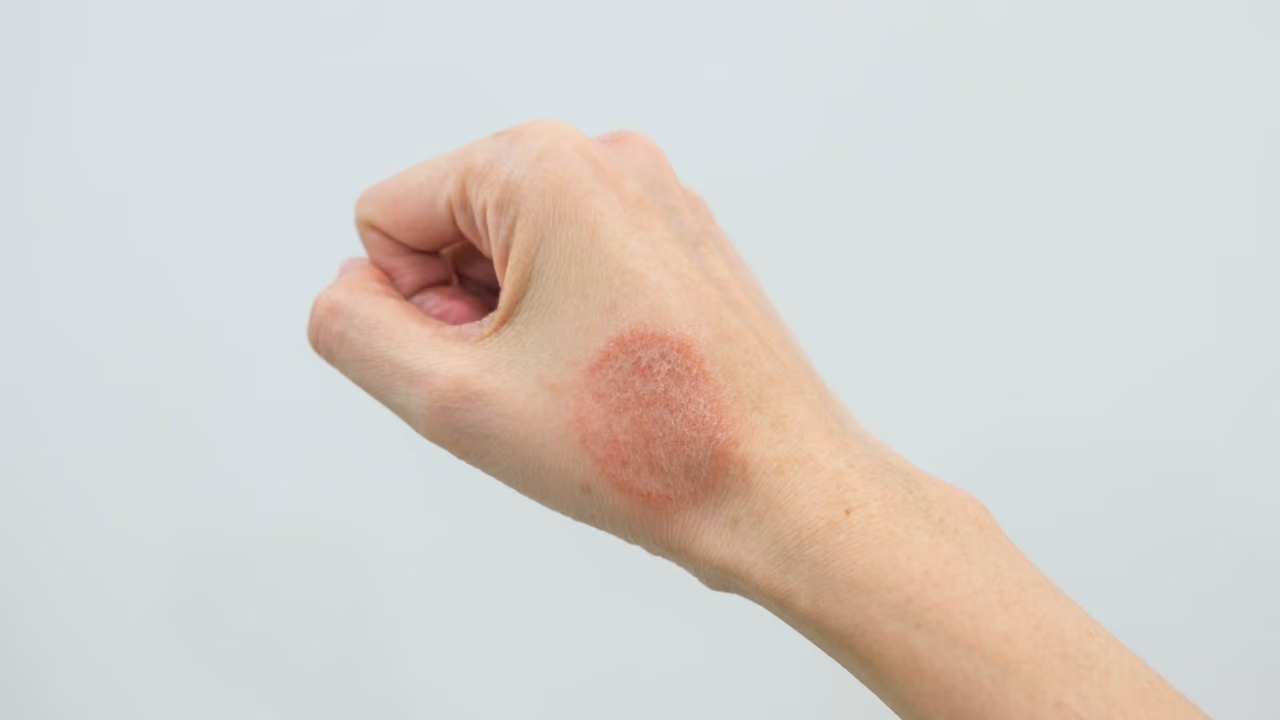
On the torso, fungal infections appear as characteristic round, red patches with scales. These lesions slowly grow outwards while the center heals, forming a ring shape colloquially known as a 'Katharinawiel' (Catherine wheel). This form is often transmitted by animals, for example, after petting infected pets.
On the scalp bald patches appear where hairs have broken off or fallen out, surrounded by scales. Sometimes the scalp becomes infected with bacteria, leading to pus formation. In severe cases, painful, swollen areas with abscesses can form.
Yeast infections present differently from true fungal infections. They primarily occur in warm, moist areas such as skin folds, the groin, armpits, under the breasts, and in the gluteal cleft. The skin in these areas is red, wet, and often slightly damaged. Around the main lesion, smaller red spots, known as satellite lesions, can be seen. In the vagina, yeast causes a whitish discharge with intense itching. In men, the glans penis can become red and irritated. Babies sometimes develop oral thrush, visible as white spots on the inside of the cheeks and on the tongue.
Where do fungal infections occur?
Fungal infections can, in principle, occur anywhere on the body, but some locations are affected much more frequently than others. This is entirely due to the conditions fungi need to grow: warmth, moisture, and often a lack of ventilation.
Feet are by far the most common site for fungal infections. Especially between the toes, where skin rubs together and dries poorly, fungi find an ideal environment. The soles of the feet can also become covered with a fungal infection that may spread to the sides of the foot. The toenails are also often affected, where the fungus penetrates the nail plate and gradually causes damage.
Fungal infections frequently occur in the groin area, where clothing rubs and sweat accumulates. This is a common location, especially for men who are very active or exercise frequently. If left untreated, the infection can spread from the groin to the upper thighs and buttocks.
Fungi can spread on the torso, often after contact with infected animals. Children who play with pets are at higher risk for this type. The round lesions can appear anywhere on the body, from arms and legs to the chest and back.
The scalp is primarily affected in children, although adults can also suffer from it. The infection often arises after contact with other children or with contaminated objects such as combs or hats.
Skin folds are a risk area for yeast infections. These infections occur more frequently in overweight individuals, where skin folds rub against each other. Elderly people with incontinence can also experience yeast growth in the diaper area. Yeast infections can also develop under the breasts, in the armpits, and in the navel.
The oral cavity is primarily affected by yeast in babies and people with dentures. Babies can contract the infection during birth or afterwards, especially if they are breastfed and the mother has nipple issues. In adults with dentures, the prosthesis sometimes remains moist, which promotes yeast growth.
Do you suffer from Fungal skin infections?
Personalized advice for your skin, completely online. Upload a few photos through the Skindr app and receive medical advice from a licensed dermatologist within 48 hours. No waiting room or referral required.
Treatment of Fungal Infections
The treatment for fungal infections depends on the location and severity of the infection. For most skin fungi, effective treatment consists of creams and ointments applied directly to the affected area. This topical treatment usually works well and has relatively few side effects.
For fungal infections of the feet, groin, and torso, treatment often begins with an antifungal cream used for two to four weeks. The cream should also be applied a few centimeters beyond the visible infection, as fungi can extend further than what is visible to the eye. Even if symptoms improve after just one week, it is important to complete the treatment to prevent recurrence.
For fungal infections on the scalp, special shampoos are available that inhibit fungal growth. These are used a few times a week during washing. For stubborn scalp infections, tablets that work systemically are necessary. This treatment lasts approximately four weeks.
Fungal nails are notoriously difficult to treat and require patience. Because the fungus is deep within the nail, treatment must continue until a completely new, healthy nail has grown out. This process easily takes three to four months for toenails, sometimes even longer. Tablets usually form the basis of treatment, sometimes supplemented with a special nail polish applied to the affected nail. The success rate of tablet treatment is significantly higher than that of topical treatment alone. Unfortunately, recurrence remains possible: in about 20 to 50% of people, the infection returns within a few years.
For yeast infections, specific anti-yeast treatment is used. For oral thrush, there are drops that are administered directly into the mouth. There is also a gel that is applied in the mouth. For vaginal yeast infections, a vaginal cream or suppository is used. If this topical treatment is insufficient, tablet treatment can provide a solution. The partner only needs to be treated if they also have symptoms or in cases of recurrent infections.
During tablet treatment, especially for long-term courses for nails, your liver function is sometimes monitored via blood tests. This is done because some treatments can affect the liver. These checks ensure that any potential problems are detected in a timely manner.
What Doesn't Work for Fungal Infections?
Neglecting a fungal infection in the hope that it will go away on its own usually leads to disappointment. Fungi rarely disappear spontaneously and can, in fact, spread further. The longer you wait to treat it, the larger the infected area often becomes and the more difficult the treatment.
Home remedies such as vinegar, tea tree oil, or other natural products are sometimes promoted, but their effectiveness is not proven. These remedies can irritate the skin without actually killing the fungus. For proven effective treatment, specific antifungal treatment is needed that directly targets fungal growth.
Stopping treatment too early because symptoms have disappeared is a common mistake. Even if the skin appears better, the fungus may still be present deeper in the skin or nail. Without complete treatment, the infection often returns within a few weeks.
With nails, it's tempting to just file away or clip off the visible fungus, but this doesn't solve the problem. The fungus is throughout the entire nail plate and must be combated from within. Cosmetic intervention alone without treatment makes little difference.
Shoes, socks, and towels can also be a source of reinfection. Therefore, it's important to wash socks and towels at a minimum of 60 °C, allow shoes to air out sufficiently, and avoid wearing the same pair every day. If necessary, shoes can also be treated with an antifungal spray or powder. Good hygiene does not cure an existing fungal infection, but it does help prevent further spread and reinfection.
Frequently asked questions about fungal infections
Are fungal infections contagious?
Yes, fungal infections can be transmitted from person to person and from animal to person. This occurs through direct contact or via contaminated surfaces such as changing room floors, towels, or shoes. That's why good hygiene is important to prevent spread.
How long does the treatment last?
This varies greatly depending on the location. Skin fungi on the torso or feet can improve within two to four weeks with an antifungal cream. Nails require a minimum of three to four months of treatment, sometimes even longer. Yeast infections often respond to treatment within a week.
Can I prevent fungal infections?
Good hygiene certainly helps. Thoroughly dry your feet and skin folds after showering, especially between your toes. Wear flip-flops or shower sandals in communal areas. Change socks daily and preferably choose cotton or wool socks that absorb moisture better. Allow shoes to dry thoroughly between wears. You can find more prevention tips at Thuisarts.nl.
Why do fungal infections keep recurring?
Recurring infections are often due to incomplete treatment or continuous exposure to the source. Your own skin and environment can also remain contaminated. Always treat all affected areas simultaneously, wash clothes and towels at high temperatures, and replace any old shoes that might be contaminated.
Does my partner also need treatment?
For yeast infections in intimate areas, your partner only needs treatment if they also have symptoms. For other fungal infections, partner therapy is usually not necessary, unless there is clear evidence of cross-contamination.
Can I go to the swimming pool with a fungal infection?
It is advisable not to swim during the active infection phase. You could infect others, and chlorinated water can further irritate your skin. Wait until the treatment is complete and symptoms have disappeared. Afterwards, always wear flip-flops in changing rooms and showers.
Resources
- Health and Science - Fungal infections of the skin, www.gezondheidenwetenschap.be
- EBPnet - Evidence-Based Practice Network, www.ebpnet.be
- BCFI - Belgian Centre for Pharmacotherapeutic Information, www.bcfi.be
- DermNet NZ – Tinea overview
- Huidfonds.nl – Fungal skin infection
- Thuisarts.nl – I have athlete's foot



](https://static.legitscript.com/seals/624359.png)