.webp)


What is impetigo?
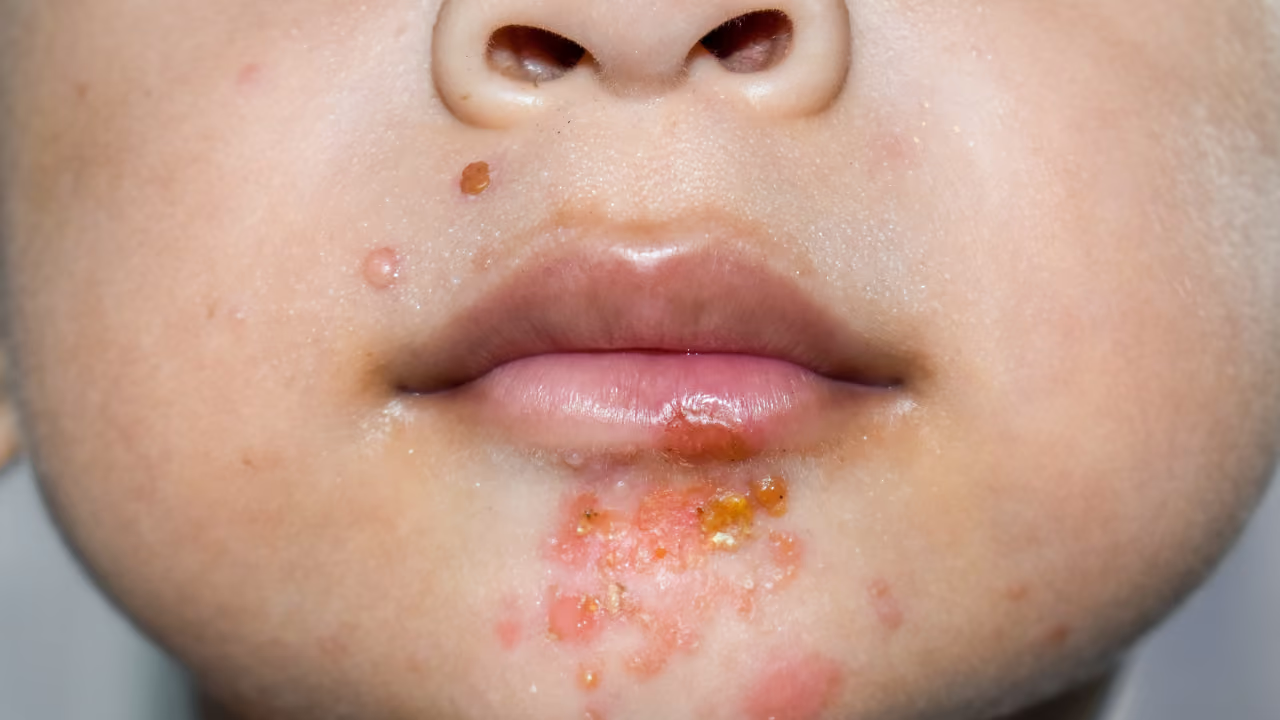
Impetigo, medically known as impetigo, is the most common bacterial skin infection in young children. The infection is caused by bacteria that enter through a small skin lesion and spread. The characteristic yellow scabs around the nose and mouth give the condition its common name. Although usually not serious, the infection spreads easily in families, childcare centers, and schools.
Children between one and nine years old are most often affected by impetigo, with a peak during preschool age. Adults can also contract it, but that is rarer.
Two types are distinguished:
Impetigo crustosa (non-bullous impetigo)
This is the most common form. Small blisters quickly burst open, leaving behind the typical honey-colored scabs, primarily around the mouth and nose.
Bullous impetigo
This form is less common. Larger, flaccid blisters remain intact longer before bursting. Bullous impetigo is almost always caused by Staphylococcus aureus.
The contagiousness is high. Children with skin problems in children who also have eczema, are at an increased risk.
Do you suffer from Impetigo?
Personalized advice for your skin, completely online. Upload a few photos through the Skindr app and receive medical advice from a licensed dermatologist within 48 hours. No waiting room or referral required.
How does impetigo develop?
Impetigo is caused by Staphylococcus aureus or Streptococcus pyogenes, bacteria that enter through a small break in the skin. Many people carry these bacteria on their skin or in their nose without ever getting sick (carrier state). Only when the skin is damaged do they get the chance to start an infection.
A skin lesion forms the entry point. These can be small abrasions from falls or play, scratch injuries due to itching, or irritated skin due to eczema. Insect bites that have burst open also provide an entry point for bacteria. Impetigo is more common in children with eczema because their skin barrier is weakened.
Transmission occurs through direct skin-to-skin contact, shared toys, or towels. Impetigo can spread rapidly in childcare settings and schools. Self-contamination via fingers spreads the infection to other body parts.
Certain conditions increase the risk: warm and humid weather promotes bacterial growth. A weakened immune system makes one more susceptible to bacterial infections.
Symptoms and Characteristics of Impetigo
The onset of impetigo is often subtle. Typically, a small red spot first appears, often around the nose or mouth. Within a few days, the appearance changes significantly. Characteristic blisters appear, filled with clear or slightly cloudy fluid. These blisters are fragile and easily burst, after which the fluid dries into the characteristic honey-colored crusts.
The lesions can merge and affect larger areas. Through self-contamination, the infection spreads: first to both nostrils, then to the corners of the mouth, cheeks, and ears. Itching is common and tempts children to scratch, which promotes further spread. Pain is limited. Fever is rare in uncomplicated impetigo.
In babies and young children, bullous impetigo looks different: large, flaccid blisters leave behind large, raw-looking wet areas after bursting.
In rare cases, impetigo can lead to glomerulonephritis, an inflammation of the kidney filters. Consult a doctor if fever, reduced urine production, or swollen ankles occur after impetigo.
Unsure about your child's skin? Through Skindr, a certified dermatologist will assess the infection within 48 hours, especially in children with underlying eczema.
Where does impetigo occur?
The classic location for impetigo is around the nose and mouth. From the face, impetigo can spread to the cheeks, chin, ears, and neck. Arms and legs are also common locations. In children with eczema, impetigo often follows the pattern of the eczema patches.
Do you suffer from Impetigo?
Personalized advice for your skin, completely online. Upload a few photos through the Skindr app and receive medical advice from a licensed dermatologist within 48 hours. No waiting room or referral required.
Treatment of Impetigo
Prompt treatment is important for impetigo to prevent further spread. The treatment depends on the extent of the infection.
Topical Treatment
For a limited number of small lesions, a topical treatment is sufficient. Your doctor or dermatologist will discuss which approach and duration suit your situation.
Treatment for more extensive infections
For more extensive infections or when local treatment is insufficient, a more extensive treatment is necessary. Your doctor or dermatologist will discuss which approach and duration suit your situation. Complete the treatment as your doctor recommends.
How long is impetigo contagious?
Impetigo is no longer contagious 48 hours after starting treatment. Without treatment, the infection remains contagious for weeks.
Can my child go to school or daycare?
After 24 hours of treatment or when the lesions have dried, the child may return to daycare. In Belgian daycare centers, there is a reporting obligation to the Department of Care when 4 or more children show signs of impetigo within 1 month.
Unsure if your child has impetigo? Through Skindr, a certified dermatologist assesses the skin based on photos and provides treatment advice, without a waiting room, within 48 hours. More about herpes simplex, which is sometimes confused with impetigo.
What doesn't work for impetigo?
Waiting for the infection to clear up on its own is not a good choice for impetigo. Untreated, the infection remains contagious for weeks and can spread throughout the body.
Simply removing the scabs without treatment solves nothing. Ordinary creams, ointments, or natural remedies (tea, honey, herbal products) do not eliminate impetigo.
Sending your child to daycare or school during an active infection is not responsible. Keep your child home until 48 hours after starting treatment and the lesions begin to heal.
Do not share towels, washcloths, or bedding during the infection. Each infected family member needs their own towels, which should be washed daily at a minimum of 60 degrees Celsius.
Frequently asked questions about impetigo
How long is impetigo contagious?
With treatment, contagiousness rapidly decreases. Approximately 48 hours after starting treatment, the risk of transmission is significantly reduced. Untreated, impetigo can remain contagious for weeks.
Can impetigo recur?
Yes, recurrent infections are common. This particularly happens when bacteria survive in the nose and cause new infections from there. For frequently recurring impetigo, the doctor will also discuss an approach for the nose.
Should all family members be treated?
Only family members with visible lesions need to be treated. Everyone should pay extra attention to hygiene: wash hands regularly, use their own towels, and avoid touching lesions.
Can my child get permanent scars?
With normal, superficial impetigo, scars rarely occur. Only with deeper infections or excessive scratching can minor scars remain, which usually fade.
When can my child go back to school?
After 48 hours of treatment, your child can return, provided the lesions are covered and starting to heal. Always check the policy of the school or daycare.
How do I prevent impetigo?
Good hand hygiene is the most important prevention. Teach children to wash their hands regularly, treat small wounds immediately, and keep sick children home. For eczema, good control of the condition is important.
Can Skindr help with impetigo?
Yes. Through Skindr, certified dermatologists assess the skin infection based on photos and provide a treatment recommendation, without a waiting room, within 48 hours.


](https://static.legitscript.com/seals/624359.png)