.webp)


What is lichen planus?
Lichen planus, also known as lichen ruber planus , is a non-contagious autoimmune disease in which the body's own immune system attacks skin or mucous membrane cells. The result is characteristic inflammatory lesions that have a different appearance depending on their location. The condition affects an estimated 1% of the population worldwide and is slightly more common in women than in men. Most patients are between 30 and 60 years old.
Lichen planus can affect the skin, the mucous membranes of the mouth, the genitals, the nails, and the scalp. Not every patient experiences all these locations simultaneously. In some people, the condition is limited to one region, while in others, it affects multiple areas at the same time.
Besides the classic form, there are several clinical variants, including: the annular variant (ring-shaped lesions), the linear variant (line-shaped lesions after scratching), the bullous variant (blistering), the hypertrophic variant (thick, scaly plaques), lichen planus pigmentosus (dark discolorations, more common in darker skin tones), and the actinic variant (triggered by sun exposure).
Lichen planus is a significant condition that can affect quality of life, but effective treatment options are available to alleviate symptoms.
Do you suffer from Lichen Planus?
Personalized advice for your skin, completely online. Upload a few photos through the Skindr app and receive medical advice from a licensed dermatologist within 48 hours. No waiting room or referral required.
How does lichen planus develop?
The exact cause of lichen planus is not fully known. What is clear is that T-lymphocytes (a type of white blood cell) attack the cells of the epidermis or mucous membrane. This mechanism explains the inflammation and the characteristic lesions. Lichen planus is explicitly not contagious and cannot be transmitted through contact.
Autoimmune mechanism
Lichen planus involves a dysregulation of the immune system, where the body considers its own skin or mucous membrane cells as foreign and attacks them. Why this happens in some people is not yet fully understood. However, there are triggers that can provoke or worsen the disease.
Triggers: medications, stress, viruses, and dental materials
Several factors can trigger lichen planus. Certain medications, including NSAIDs, beta-blockers, and ACE inhibitors, are known as possible triggers. Chronic stress can trigger or worsen the condition. Dental materials and amalgam fillings can cause lichen planus-like lesions in the mouth; removing the material can lead to improvement in some cases. Further risk factors include female gender and an age between 30 and 60 years. Additionally, some possible comorbidities have been described, including thyroid disorders, vitiligo, and celiac disease.
Symptoms and characteristics of lichen planus
Lichen planus on the skin
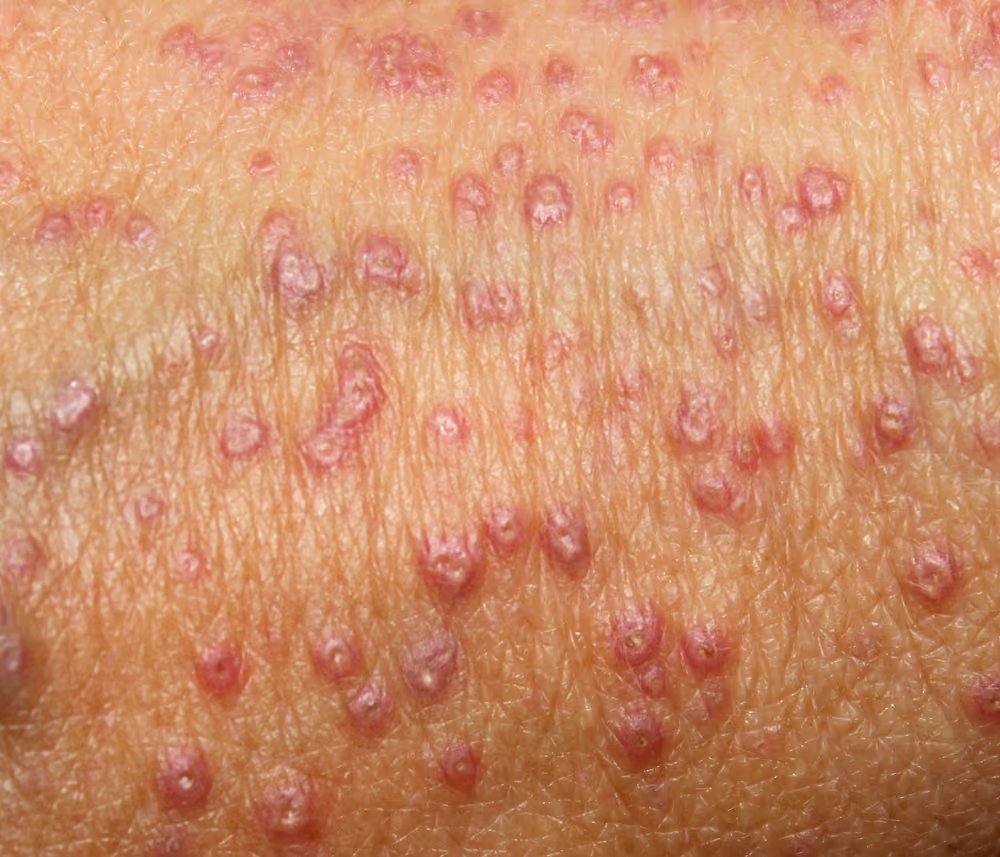
The classic presentation consists of flat, shiny bumps with an angular outline. On light skin, they are purplish-red; on dark skin, they can be grayish-brown or hyperpigmented. The bumps are typically very itchy. Fine white lines, known as Wickham striae, are sometimes visible on the surface. Another well-known phenomenon is the Koebner effect: new lesions appear in areas where the skin has been scratched. After healing, brown discolorations (post-inflammatory pigmentation) may remain. If itching as a symptom of lichen planus that disrupts daily life, a consultation with a dermatologist is advisable.
Lichen planus in the mouth
Oral lichen planus affects 30 to 70% of patients. The typical presentation consists of white, lace-like or web-like patterns on the mucous membranes of the cheeks or tongue. In the erosive form, there are also red, painful erosions. The erosive form is chronic and requires regular follow-up, as oral lichen planus carries a small risk of squamous cell carcinoma (0.1 to 3%). More information can be found on the page about oral lichen planus. For assessment, a skin biopsy can provide a definitive diagnosis.
Lichen planus on the genitals
Lichen planus can also affect the vulva, vagina, and glans penis. In women, this causes pain, burning, and sometimes white patches or erosions. Genital lichen planus carries an increased risk of squamous cell carcinoma (approximately 2%) and warrants regular follow-up.
Lichen planus on the nails
In approximately 10% of patients, the nails are also affected. Characteristic features include ridging, thinning, and sometimes pterygium. More about nail abnormalities in lichen planus can be found on the specialized page.
Lichen planus on the scalp (lichen planopilaris)
When lichen planus affects the hair follicles of the scalp, it is called lichen planopilaris. This condition can lead to scarring and permanent hair loss. Hair loss that has already occurred is usually irreversible. Treatment is therefore primarily aimed at curbing inflammation, stabilizing the condition, and preventing further progression of hair loss. More information about lichen planopilaris and hair loss can be found on the relevant page.
Unsure about what you're seeing? A certified Skindr dermatologist will assess your skin or mucous membrane within 48 hours.
Where does lichen planus appear?
Lichen planus can appear in various places on the body. Classic skin locations include the wrists and inner wrists, ankles, lower legs, and torso. Additionally, the mouth, genitals (vulva, vagina, glans penis), nails, and scalp can be affected.
In rare cases, lichen planus also affects the esophagus, which can cause swallowing difficulties. This always requires specialized evaluation.
Not every patient with lichen planus experiences all locations simultaneously. How the condition progresses varies greatly from person to person. Also, see the page on hair loss due to lichen planopilaris and nail abnormalities in lichen planus for more information.
Do you suffer from Lichen Planus?
Personalized advice for your skin, completely online. Upload a few photos through the Skindr app and receive medical advice from a licensed dermatologist within 48 hours. No waiting room or referral required.
Treatment of lichen planus
Lichen planus is highly treatable, although a definitive cure is not always possible. The goal of treatment is to alleviate symptoms, reduce inflammation, and prevent new lesions.
Topical corticosteroids
The first step involves topical corticosteroids (ointment or cream). They locally suppress the immune response and relieve itching and inflammation. For oral lesions, corticosteroids are used in the form of a mouth paste or mouthwash.
Calcineurin inhibitors
Topical corticosteroids are generally the first choice for treating lichen planus. Calcineurin inhibitors, such as tacrolimus and pimecrolimus, can be used as an adjunct or as maintenance therapy to limit long-term corticosteroid use. In some cases, for oral or genital lichen planus, they can also be applied as an alternative to corticosteroids. These agents have immunomodulatory effects and do not cause skin atrophy, a potential side effect of prolonged corticosteroid use.
Systemic treatment
For severe or widespread lichen planus, systemic treatment with prednisone, cyclosporine, or hydroxychloroquine may be necessary.
Phototherapy
Phototherapy with UVB or PUVA can be effective for widespread cutaneous lichen planus.
Treatment for oral lesions
Avoid highly spiced, acidic, or crunchy foods and citrus fruits. If fungal infections occur as a complication, antifungals are added. If dental material (amalgam) is suspected as a trigger, replacement may provide relief.
Self-care
Do not scratch the lesions (Koebner phenomenon). Wear loose clothing on affected areas. Use a soft toothbrush for oral lichen planus. Stress reduction helps limit flare-ups. Prognosis: skin 1 to 2 years spontaneously; mucous membranes chronic. Through Skindr, you will receive advice from a certified dermatologist within 48 hours, without a referral or waiting room.
What doesn't work in the treatment of lichen planus?
Scratching the lesions is one of the most harmful things you can do: due to the Koebner phenomenon, new lichen planus lesions appear in scratched areas. Antihistamines do not work as a primary treatment for itching in lichen planus, because the itching is not caused by histamine but by the autoimmune mechanism. Stopping a corticosteroid course too early is also a common mistake: lesions can quickly return.
Essential oils and folk remedies applied to oral lesions are not proven effective and can further irritate the mucous membrane. In the actinic variant of lichen planus, excessive UV exposure can worsen the lesions. Do you have doubts about the correct treatment? A certified dermatologist will provide clarity within 48 hours.
Frequently asked questions about lichen planus
Is lichen planus contagious?
No. Lichen planus is an autoimmune disease in which the body attacks its own cells. The condition cannot be transmitted through contact, skin touch, kissing, or sex.
How long does lichen planus last?
On the skin, lesions disappear spontaneously in most patients within one to two years. On mucous membranes, lichen planus is more often chronic and requires regular follow-up.
What are the first signs of lichen planus?
Flat, purplish-red, or shiny bumps on the wrists or ankles, often accompanied by intense itching. In the mouth or on the genitals, lichen planus can manifest as a white lace-like or web-like pattern, sometimes with painful erosions that cause a burning or painful sensation.
Can lichen planus recur?
Yes. Lichen planus can recur, especially with stress or when a triggering factor is not avoided. Regular check-ups with a dermatologist help to detect flare-ups early.
Is lichen planus dangerous, can it lead to cancer?
In the erosive oral form, there is a small risk of squamous cell carcinoma (0.1 to 3%). For genital lesions, this risk is approximately 2%. Regular check-ups by a dermatologist are therefore recommended.
What helps with oral lichen planus?
Corticosteroids in the form of oral paste or rinse, calcineurin inhibitors, and dietary adjustments (avoid acidic, spicy, citrus). If complicated by a fungal infection, antifungals are added.
What is the relationship between lichen planus and stress?
Stress is a known trigger and can exacerbate existing lichen planus. Stress reduction can help limit flare-ups but is not a complete treatment on its own.
Can lichen planus affect the nails?
Yes, in about 10% of patients. Symptoms include ridging, nail thinning, and sometimes pterygium. In severe cases, the nail can be permanently damaged.
When should I see a dermatologist for lichen planus?
For erosions in the mouth or on the genitals, nail damage, no improvement after self-care, or recurrent flare-ups. Through Skindr, you will receive an assessment from a certified dermatologist within 48 hours.
Resources
Skindr dermatologists (medically verified)
EBPNet / NVDV Lichen Planus Guideline 2021


](https://static.legitscript.com/seals/624359.png)