.webp)


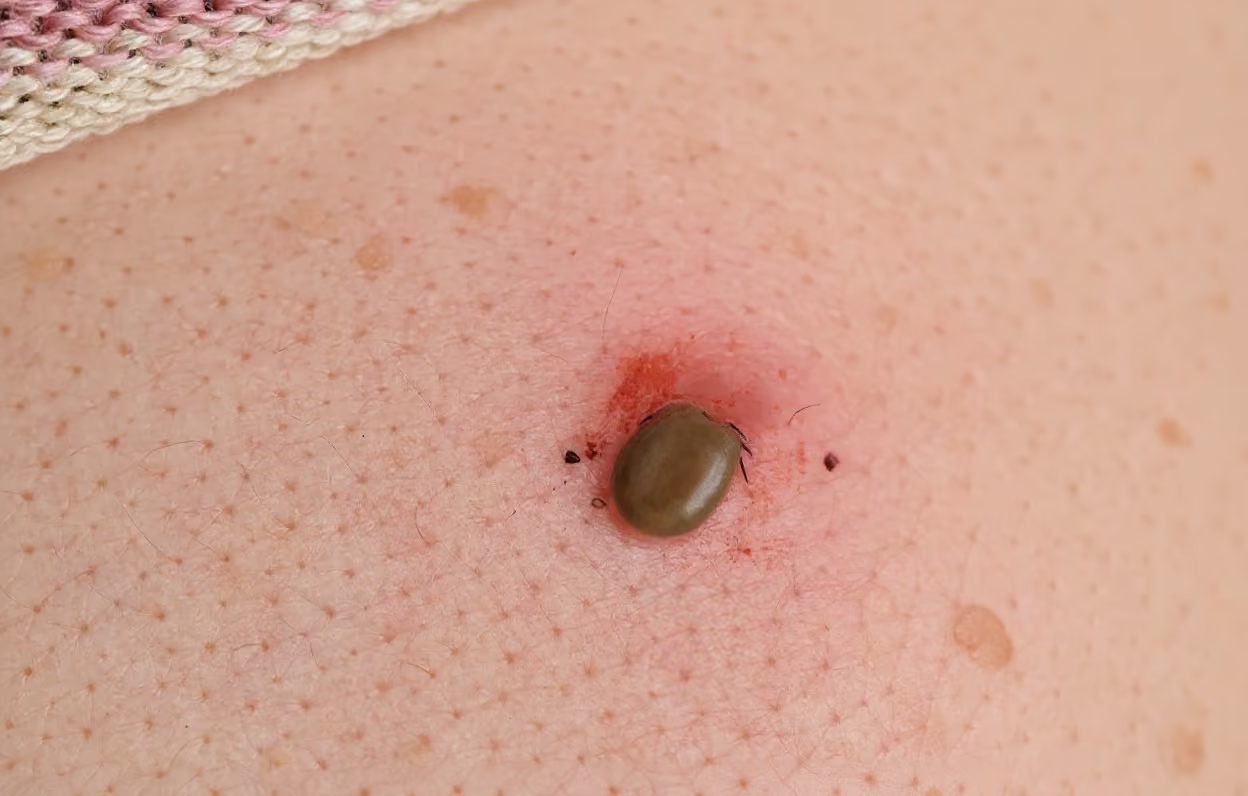
What is Lyme disease?
Lyme disease is a bacterial infection caused by the Borrelia burgdorferi bacterium, transmitted in Belgium by the bite of the sheep tick (Ixodes ricinus). It is the most common tick-borne disease in Europe. Sciensano registers approximately 1,200 confirmed cases in Belgium each year, but the actual number is likely higher due to underdiagnosis.
The good news is that those who receive timely and correct antibiotic treatment make a full recovery in almost all cases. Lyme disease is not an incurable condition, and most tick bites do not lead to an infection. Only 5 to 30 percent of ticks in Belgian risk areas carry the Borrelia bacterium. Furthermore, infection typically requires the tick to be attached for more than 24 hours.
In Europe, three Borrelia species are relevant: Borrelia burgdorferi sensu stricto, B. afzelii, and B. garinii. Each can present with slightly different clinical manifestations, but the treatment is similar for all species.
The tick is the sole vector: Lyme disease is not transmissible from person to person. Knowing how to remove a tick is therefore the first line of defense. According to Sciensano Lyme is the most reported tick-borne illness in our country.
Do you suffer from Lyme disease?
Personalized advice for your skin, completely online. Upload a few photos through the Skindr app and receive medical advice from a licensed dermatologist within 48 hours. No waiting room or referral required.
How does Lyme disease develop?
Lyme disease develops when an infected tick remains on the skin long enough to transmit the Borrelia bacterium through its saliva. In most infections, the tick has been attached for more than 24 hours. Prompt removal significantly reduces the risk.
The sheep tick (Ixodes ricinus) lives in tall grasses, shrubs, and leaf litter. Nymphs are particularly difficult to spot due to their small size. They prefer to bite in warm, sheltered areas: the back of the knees, groin, armpits, and hairline.
In risk areas, 5 to 30 percent of ticks carry the Borrelia bacterium. In Belgium, the Ardennes, the Kempen, Sonian Forest, and the Flemish Ardennes are the most well-known risk areas, but city parks are also not free of infected ticks. The peak season runs from April to October, but ticks are also active at temperatures above 7 degrees Celsius.
Risk groups include hikers, mountain bikers, gardeners, children, and people with outdoor pets. Even after a day trip to a park, a thorough tick check is advisable.
Symptoms and characteristics of Lyme disease
Lyme disease progresses in three stages, each with its own symptoms.
Stage 1: erythema migrans (3 days to 4 weeks after the bite)
Erythema migrans (EM) is a red spot or ring that gradually expands from the bite site and, when fully developed, is at least 5 centimeters in size. On light skin tones, the spot is clearly red, sometimes ring-shaped like a bullseye. If you're unsure whether a red spot is harmless or indicates something more serious, such as skin cancer? Have it assessed. On darker skin tones, the redness is less contrasting; the spot may appear reddish-brown or purplish and is sometimes felt as warmth rather than seen as a distinct color. More images of this typical rash can be found at DermNet.
In addition to the skin rash, flu-like symptoms may occur: fatigue, fever, headache, and muscle pain. Not everyone develops erythema migrans; some infections progress without a visible skin rash.
Stage 2: disseminated infection (weeks to months after the bite)
If Lyme disease is not treated early, the Borrelia bacterium can spread. Symptoms then include: facial paralysis (facial palsy), tingling in the hands or feet, heart rhythm abnormalities, and joint inflammation (especially in the knee). A less common skin manifestation at this stage is borrelial lymphocytoma: a blue-red nodule, typically found on the earlobe, nipple, or scrotum.
Stage 3: persistent infection (months to years after the bite)
Acrodermatitis chronica atroficans (ACA) is a skin condition that can occur at this stage. The skin on the hands, feet, and lower legs gradually becomes thinner, purplish-red, and fragile. ACA is more commonly seen in older individuals and is typical for infections with B. afzelii in Europe.
In some people, symptoms such as fatigue, concentration problems, and pain persist after successful treatment. Sometimes a rash is also accompanied by itching, although this is rather exceptional with erythema migrans. This is called post-Lyme syndrome. The cause is not fully understood but is not related to ongoing active infection.
Are you unsure about a red spot or ring after a tick bite? Send a photo to a certified dermatologist via Skindr and receive an assessment within 48 hours.
Where does Lyme disease occur?
The risk areas in Belgium include the Ardennes, the Kempen, the Sonian Forest, the Flemish Ardennes, and the Limburg forests. City parks and gardens are also not risk-free when shrubs, tall grasses, or leaf piles are present.
Erythema migrans appears at the bite site, preferably in warm and sheltered areas: the hollow of the knee, groin, armpits, buttocks, behind the ears, and the hairline. In children, the bite and the rash more often appear on the head and neck.
In Belgium, Sciensano reports a rising trend in cases, partly due to the expanding tick population caused by milder winters. Checking daily for tick bites after outdoor activities is the most effective preventive measure.
Do you suffer from Lyme disease?
Personalized advice for your skin, completely online. Upload a few photos through the Skindr app and receive medical advice from a licensed dermatologist within 48 hours. No waiting room or referral required.
Treatment of Lyme disease
For a classic erythema migrans, a clinical diagnosis is sufficient: a blood test is not necessary in the early stage and will reliably show a false-negative result in the first few weeks. Antibodies are only detectable 4 to 6 weeks after infection.
Stages 1 and 2 are treated with oral antibiotics for 10 to 21 days. In cases of neurological involvement, cardiac abnormalities, or acrodermatitis chronica atrophicans, a longer course or intravenous antibiotics may sometimes be chosen, depending on the severity and guidelines.
Removing a tick bite: step-by-step
Grasp the tick as close to the skin as possible with tweezers or a tick remover. Pull straight up without twisting or squeezing. Do not use alcohol, nail polish, oil, or fire. Disinfect the bite area after removal. Note the date and check the bite area for redness in the coming weeks. Also consult our information on bite wounds and insect bites and stings for more information on correctly removing a tick. The guideline from Health and Science contains a useful step-by-step plan.
Prevention
Wear long clothing in tall grass and bushes. Use an insect repellent containing DEET. After every outdoor activity, check your entire body for tick bites, including your hairline, behind your ears, and in the hollow of your knee. Remove a tick as quickly as possible.
When to see a doctor immediately?
Consult a doctor immediately if you experience: facial paralysis or limb paralysis after a tick bite, heart problems, high fever shortly after a tick bite, or erythema migrans in a child.
Through Skindr, you will receive advice from a certified dermatologist within 48 hours regarding a suspicious red spot or erythema migrans after a tick bite.
What doesn't work against Lyme disease?
Waiting and watching with erythema migrans is not an option. The rash may sometimes disappear spontaneously, but the Borrelia bacterium continues to spread throughout the body, increasing the risk of stages 2 and 3.
Removing a tick with alcohol, nail polish, fire, or oil is harmful: it irritates the tick, increasing the chance of bacterial transmission.
A blood test in the first few weeks after a tick bite is unreliable: antibodies are only detectable after 4 to 6 weeks. A negative result in the early stage does not rule out Lyme disease.
Alternative long-term treatments for alleged "chronic Lyme" are not scientifically substantiated and are not recommended by official guidelines.
Frequently Asked Questions about Lyme Disease
Is Lyme disease contagious from person to person?
No. Lyme disease is exclusively transmitted through the bite of an infected tick.
Does erythema migrans disappear on its own?
The rash may disappear, but the infection continues to spread. Antibiotic treatment is always necessary for erythema migrans.
When should I see a dermatologist for Lyme disease?
If you have an expanding red ring or rash after a tick bite. Through Skindr, you will receive advice from a certified dermatologist within 48 hours.
Can you fully recover from Lyme disease?
Yes, almost always with early treatment. In a late stage, recovery takes longer, but improvement is still possible in most cases.
How long after a tick bite does erythema migrans appear?
On average 7 to 14 days after the bite, with a range of 3 to 30 days. Check the bite site for at least 4 weeks.
Can Skindr help with Lyme disease?
Yes. Send a photo via Skindr and receive an assessment from a certified dermatologist within 48 hours for suspicious skin abnormalities after a tick bite.
Resources
- Skindr (www.skindr.com)
- Sciensano: Lyme disease surveillance in Belgium (sciensano.be)
- EBPNet/NHG: Lyme borreliosis guideline
- DermNet NZ: Lyme disease (dermnetnz.org)
- Thuisarts.nl: Lyme disease
- ECDC: Lyme borreliosis in Europe


](https://static.legitscript.com/seals/624359.png)