.webp)


What are canker sores?
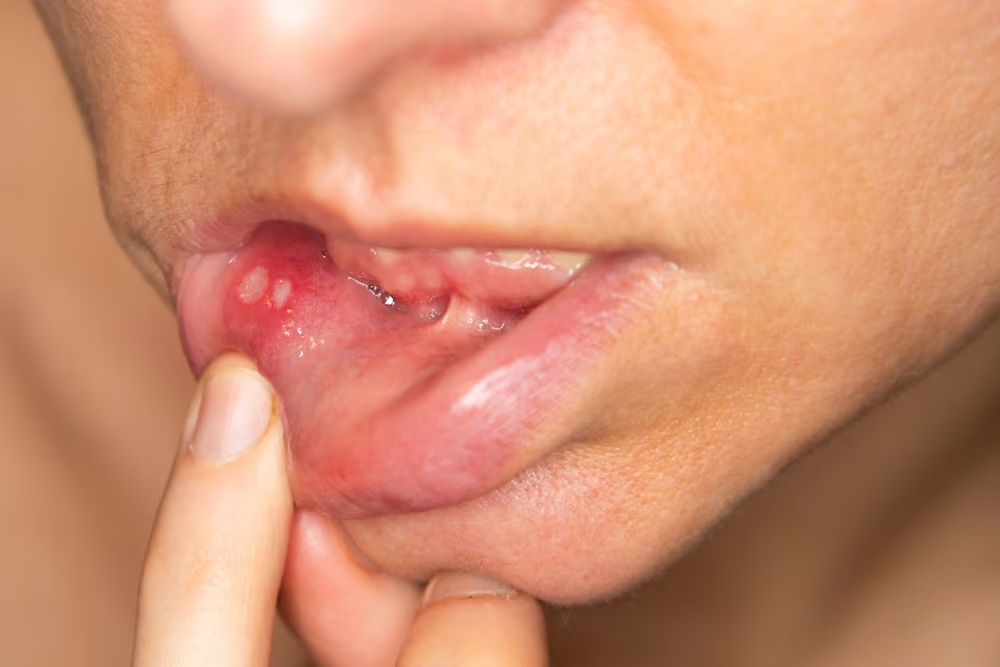
Canker sores (also known as mouth ulcers) are small, painful sores on the mucous membranes in the mouth. According to DermNet , they are one of the most common mucosal conditions. They have a grayish-white or yellow film with a red, slightly raised border. Canker sores are not contagious and clear up on their own. They are not a sign of a serious illness for most people. Canker sores belong to the broader group of skin diseases and the mouth, where you can read more about conditions of the oral mucosa. If you have children with complaints in or around the mouth, also read our page on skin problems in children.
Minor vs. Major Canker Sores: What's the Difference?
There are two main types of canker sores. Minor canker sores (less than 1 cm) are by far the most common, accounting for about 90% of all cases. They typically heal on their own within 7 to 14 days and leave no scar. Major canker sores (more than 1 cm) are rarer, occurring in about 10% of cases, are more painful, and can last 4 to 6 weeks. Major canker sores sometimes leave a small scar after healing. For major or recurrent canker sores, it is advisable to consult a doctor.
Do you suffer from Mouth ulcers?
Personalized advice for your skin, completely online. Upload a few photos through the Skindr app and receive medical advice from a licensed dermatologist within 48 hours. No waiting room or referral required.
How do canker sores develop?
The exact cause of canker sores is unknown for most people. A vitamin deficiency is rarely the reason, even though this is a widespread misconception.
Common Triggers
Stress, fatigue, and lack of sleep are associated with canker sore outbreaks by many people. Minor injuries in the mouth, such as biting your cheek, a sharp tooth, or a toothbrush, can also trigger a canker sore. Hormonal fluctuations, such as around menstruation, play a role for some people. Certain foods like nuts, chocolate, cheese, eggs, and citrus fruits are identified as possible triggers, but this varies greatly from person to person.
Medications that can cause canker sores
Certain medications can cause canker sores as a side effect: cytostatics (cancer medications), nicorandil, beta-blockers, and some anti-inflammatory drugs are among them. Discuss this with your doctor if you frequently get canker sores while using a medication.
Vitamin deficiency and canker sores: is that the case?
This is one of the most frequently asked questions about canker sores. The answer is nuanced: a deficiency in vitamin B12, iron, or folic acid can contribute to canker sore outbreaks if such a deficiency genuinely exists. However, in the majority of people with canker sores, there is no demonstrable deficiency. That a vitamin deficiency would be the cause, according to the LUMC , is a common misconception. Taking a vitamin pill without a proven deficiency has no effect for most people. For frequently recurring canker sores, blood tests through a doctor are useful to rule this out.
Canker sores due to an underlying disease
In a small group of people, canker sores are a sign of an underlying condition: Crohn's disease, celiac disease, Behçet's disease, or a weakened immune system (such as with HIV). For frequent or severe canker sores, it is advisable to have these ruled out.
Symptoms and characteristics of canker sores
You recognize canker sores by a small ulcer with a grey-white or yellow membrane and a red, slightly raised border. They are painful from the start, even without touch.
The progression typically occurs in four phases. First, there is a burning or tingling sensation at the spot where the canker sore is about to form. Then a small red dot appears. After that, the full ulcer with the grey-white membrane develops. Finally, the canker sore heals on its own, without a scar (for small canker sores).
Small canker sores heal within 7 to 14 days. Large canker sores can last 4 to 6 weeks. On light skin, canker sores are immediately recognizable as a white-grey spot with a clear red border on the pink mucous membrane. On darker skin, the contrast is less pronounced, but the red border is often palpable due to swelling.
Are canker sores contagious?
No. Canker sores are not contagious. They are not caused by a virus or bacterium that can be transmitted through touch, kissing, or sharing cutlery. Canker sores are also not a herpes condition: cold sores are caused by the herpes virus, canker sores are not. You can go to school, work, or kiss people as usual. Unsure if it's a canker sore or something else? A Skindr dermatologist will assess your photos within 48 hours.
Where can canker sores appear?
Canker sores appear on the soft mucous membranes in the mouth: the inside of the cheeks and lips, the edge or underside of the tongue, the gums around the teeth, and the soft palate. They do not appear on the hard, keratinized mucous membrane, such as the firm gums close to the teeth.
With large canker sores, ulcers can also appear in the throat and on the tonsillar arches. In rare cases, with Behçet's disease, similar ulcers also appear on the genitals.
Canker sores always appear as isolated ulcers. Multiple canker sores can occur simultaneously. They more often appear as separate spots, not as a continuous rash or a cohesive inflammation of the entire mucous membrane.
Do you suffer from Mouth ulcers?
Personalized advice for your skin, completely online. Upload a few photos through the Skindr app and receive medical advice from a licensed dermatologist within 48 hours. No waiting room or referral required.
Treatment of canker sores
There are no remedies that make canker sores disappear or heal faster. The approach focuses on pain relief and preventing new canker sores.
Lidocaine oral gel is the most commonly used and best-supported remedy for pain relief from canker sores. Apply the gel with a cotton swab to the canker sore, up to 8 times a day. Paracetamol also helps with pain. Cool drinks, ice, and soft foods reduce irritation to the canker sore.
Rinsing with salt water has a mild astringent effect and can temporarily relieve pain, but it does not heal the canker sore faster. Applying honey to the canker sore has a protective, mucous membrane-friendly effect. For frequent canker sores, preferably use a toothpaste without sodium lauryl sulfate (SLS): this detergent in regular toothpaste can irritate the mucous membrane. Also Thuisarts.nl recommends an SLS-free toothpaste for those who frequently get canker sores. SLS-free toothpastes are available at pharmacies and drugstores. Keep a diary of what you eat, drink, and experience around canker sore outbreaks: this way you can discover possible personal triggers.
Consult a doctor or dentist if a canker sore is larger than 1 cm, if a canker sore has not healed after 3 weeks, if you have more than 6 canker sores at once, if you experience severe pain when eating or drinking, if canker sores are accompanied by fever or other unexplained symptoms, or if you suspect a medication is the cause. Through Skindr, you will receive advice from a within 48 hours certified dermatologist, without a referral or waiting room.
What doesn't work in the treatment of canker sores?
Not everything recommended online for canker sores has proven efficacy. Here are a few common mistakes.
Chlorhexidine mouthwash is often recommended, but there is no convincing evidence that it heals canker sores faster or relieves pain. Furthermore, prolonged use can stain teeth and gums.
Laser treatment has limited evidence for faster healing, is not available at home, and is overkill for most canker sores.
Antiviral medications like acyclovir do not work for canker sores. Canker sores are not a herpes infection: the herpes virus plays no role in the formation of canker sores.
Antibiotics have no effect on canker sores: canker sores are not a bacterial infection.
Mega-doses of vitamins or herbal supplements do not help if there is no proven deficiency. Only take them if blood tests show a deficiency.
Always try to identify the underlying trigger factor instead of just treating symptoms.
Frequently asked questions about canker sores
Are canker sores contagious?
No, canker sores are not contagious. They are not caused by a virus or bacteria that you can transmit. You can safely kiss, share drinking glasses, or go to school without infecting others.
How long do canker sores last?
Small canker sores (less than 1 cm) usually heal on their own within 7 to 14 days. Large canker sores can persist for 4 to 6 weeks. For canker sores that last longer than 3 weeks, a visit to the dentist or doctor is recommended.
Which vitamin deficiencies are associated with canker sores?
Most people do not have a vitamin deficiency. A deficiency in vitamin B12, iron, or folic acid can be a contributing factor if the deficiency is genuinely present. For frequently recurring canker sores, it is advisable to have blood tests done through a doctor.
How can I get rid of a canker sore quickly?
Canker sores do not disappear faster with treatment, but you can relieve pain with lidocaine oral gel, paracetamol, or soft and cool foods. Avoid hot, acidic, or spicy foods as long as the canker sore is present.
When should I see a dentist for canker sores?
Consult a dentist or doctor for canker sores larger than 1 cm, canker sores that haven't healed after 3 weeks, more than 6 canker sores at once, or canker sores combined with fever or other unexplained symptoms.
Can Skindr help with canker sores?
Yes. Through Skindr, a certified dermatologist will review your photos within 48 hours and provide advice on the assessment and approach. This is also useful if you want to rule out other conditions, such as thrush or cold sores.
Resources
- Skindr Certified Dermatologists
- NHG / Thuisarts.nl — Canker Sores (December 2025)
- LUMC — Canker Sores of the Oral Mucosa (Leiden University Medical Center)
- Association of Flemish Dentists (tandarts.be) — Canker Sores
- DermNet NZ — Aphthous ulcer (canker sore)
- Huidarts.com — Canker Sores (May 2026)


](https://static.legitscript.com/seals/624359.png)