.webp)


What is syphilis?
Syphilis is a bacterial infection caused by Treponema pallidum, a spiral-shaped bacterium that spreads through direct contact with mucous membranes or small wounds. The condition is classified as a sexually transmitted disease and can affect anyone, regardless of gender, sexual orientation, or age. In the medical world, syphilis is also known as "lues," a term regularly used by doctors and specialists.
Syphilis progresses in four distinct stages, each with its own symptoms and skin characteristics. These stages follow one another, but the transitions are not always clearly discernible. A person may have no or hardly any symptoms for a long time, while the infection remains active and can cause damage.
In Belgium, Sciensano has registered a notable increase in the number of syphilis diagnoses in recent years. Men who have sex with men and young adults are relatively more affected, but the condition impacts all population groups. Early recognition and treatment are crucial: in its early stages, syphilis is completely curable. If left untreated, the infection can cause severe complications to the heart, blood vessels, and nervous system over the years.
Do you suffer from Syphilis?
Personalized advice for your skin, completely online. Upload a few photos through the Skindr app and receive medical advice from a licensed dermatologist within 48 hours. No waiting room or referral required.
How does syphilis develop?
Syphilis is transmitted through direct contact with a syphilis lesion during sex. This can be vaginal, anal, or oral contact. The bacterium Treponema pallidum enters the body through small breaks in the mucous membranes or skin, and this can happen even with very brief contact.
Syphilis is most contagious during the primary and secondary stages, when active lesions or rashes are present. During the latent stage, contagiousness is lower, but not zero. A condom offers good protection, but it is not entirely effective if the lesion is located outside the condom-covered area.
Syphilis does not spread through everyday contact. Touching, kissing without active lesions, sharing cups, utensils, or a toilet seat will not give you syphilis. This reassurance is important: many people mistakenly believe that syphilis is easily transmitted through everyday contact.
A particular risk is the transmission from mother to unborn child, known as congenital syphilis. For this reason, pregnant women in Belgium are routinely screened. Risk factors that increase the chance of infection include: multiple sexual partners, unprotected sex, and a co-existing infection. The link with HIV and skin is relevant: syphilis increases vulnerability to HIV infection, and conversely, an HIV infection increases the risk of syphilis.
Symptoms and characteristics of syphilis
Syphilis does not have a uniform symptom pattern. Symptoms vary by stage and can differ greatly from person to person. Precisely because the symptoms are so variable, syphilis is sometimes recognized too late.
Stage 1: primary syphilis (the chancre)
The first stage begins ten to ninety days after infection, averaging three weeks. The characteristic sign is a painless, firm sore, the chancre. This appears at the site where the bacteria entered the body: the genitals, anus, mouth, or lips. On light skin tones, the chancre is visible as a reddish, hardened, shiny wound. On darker skin tones, the chancre is less visible but palpable as a firm, painless thickening. The chancre disappears on its own after three to six weeks, but the infection is by no means over.
Stage 2: Secondary Syphilis (Skin Rash)
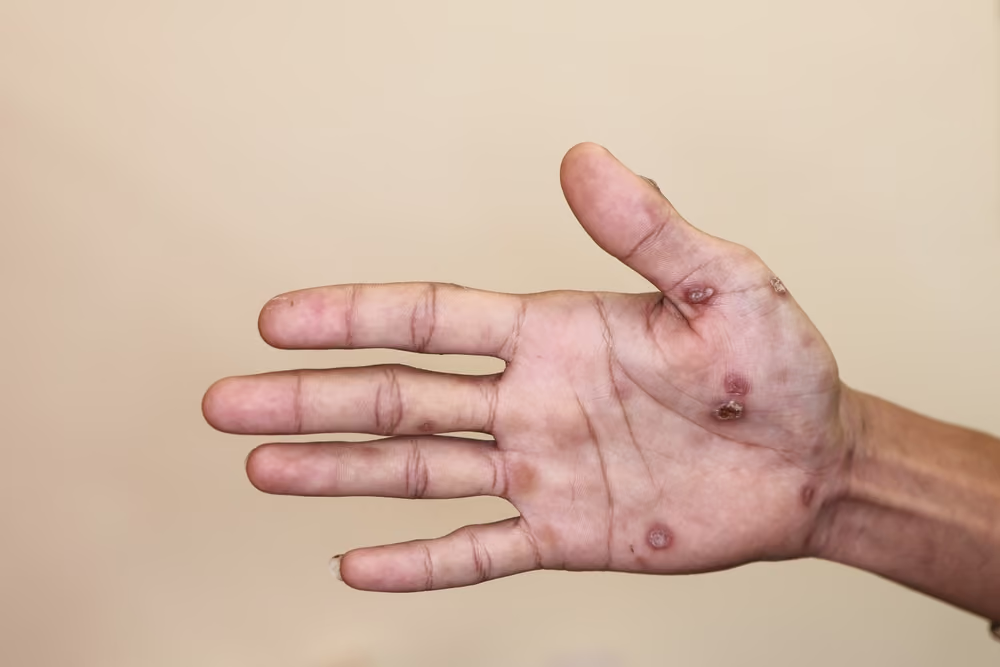
A few weeks to months after the chancre, the second stage begins. In this stage, the bacteria spreads throughout the body via the bloodstream. The most striking manifestation is a patchy, non-itchy skin rash that appears on both the torso and the palms of the hands and soles of the feet. Rashes on the palms and soles are rare in other conditions, making them an important diagnostic indicator. Additionally, fever, extreme fatigue, a sore throat, enlarged lymph nodes, and patchy hair loss may occur. In skin folds (groin, anus, armpits), flat, moist warts called condylomata lata may appear.
Syphilis rash can sometimes resemble other skin conditions. A certified Skindr dermatologist will assess the affected areas within 48 hours.
Latent Stage (Dormant Stage)
After the second stage, symptoms completely disappear, but the bacteria remains present in the body. This silent stage can last for years. In the first year, infectivity is still relatively high. After two years, the chance of transmission is lower, but the infection remains active and can continue to develop.
Stage 3: Tertiary Syphilis
The third stage is rare today thanks to early detection and treatment. If left untreated, syphilis can lead to severe organ damage after ten to thirty years: affecting the heart and blood vessels, granulomatous gummas in the skin and organs, and in severe cases, neurosyphilis with cognitive decline or blindness. Early treatment completely prevents these complications.
Where does syphilis occur?
The location of syphilis symptoms largely depends on the stage.
In the primary stage, the chancre always appears at the site of infection. In men, this is often the glans, foreskin, or shaft of the penis. In women, the chancre affects the labia majora or minora, the vagina, or the cervix. Anal or perianal syphilis occurs in both men and women who engage in anal sexual contact. Oral syphilis manifests as a chancre on the lips, tongue, or in the throat.
In the secondary stage, the skin rash spreads over the entire body, with a notable characteristic being its extension to the palms of the hands and soles of the feet. Condylomata lata, the moist skin plaques of stage two, appear in warm and moist skin folds: the groin, the perianal area, the genital region, and the armpits.
Enlarged lymph nodes are palpable in the groin, armpits, and neck in both the primary and secondary stages.
Do you suffer from Syphilis?
Personalized advice for your skin, completely online. Upload a few photos through the Skindr app and receive medical advice from a licensed dermatologist within 48 hours. No waiting room or referral required.
Treatment of Syphilis
Syphilis is completely curable with antibiotics in all early stages. The earlier the diagnosis, the simpler and more effective the treatment. In the primary and secondary stages, a short course of antibiotics is sufficient. For latent or tertiary syphilis, longer treatment is required, and damage that has already occurred cannot always be fully reversed.
Treatment always takes place via a general practitioner or an STI clinic. Skindr dermatologists assess skin complaints that may indicate syphilis and guide you to the appropriate care for testing and further treatment. Self-medication is not advisable: antibiotics should be taken as directed by a doctor, and the dosage and course must be strictly followed. After completing treatment, a retest via blood examination is performed to check if the infection is fully under control.
Partner notification is an essential part of care. Anyone with whom you have had sexual contact in recent months must be informed so that they can also get tested. In Belgium, there is an anonymous, free tool for this: partneralert.be. This website allows partners to be discreetly notified without revealing your name.
Syphilis increases vulnerability to other infections. Therefore, anyone with syphilis is routinely advised to also get tested for HIV and other sexually transmitted infections such as chlamydia and genital herpes. Regular testing with multiple partners is the most reliable way to detect syphilis early.
A condom significantly reduces the risk of syphilis but does not offer complete protection if the chancre is located outside the condom-covered area. Combine condom use with regular STI tests for the best protection.
Do you have skin complaints that might indicate syphilis? Through Skindr, you'll receive advice from a certified dermatologist within 48 hours.
What doesn't work against syphilis?
Waiting it out is a common mistake with syphilis. The chancre and the rash of the second stage disappear on their own, but that doesn't mean the infection is gone. The bacteria remain active in the body, and the infection progresses to the next stage. Symptoms that disappear on their own give a false sense of security.
Self-medication with antibiotic strips does not work. An incorrect dose or the wrong antibiotic creates the illusion of healing without fully treating the infection. Only a doctor can determine and monitor the correct treatment.
Having no symptoms does not mean you don't have syphilis. Syphilis can be present for years without any symptoms during the latent phase. A negative test taken more than three weeks ago does not rule out a recent infection.
Frequently asked questions about syphilis
Can syphilis go away on its own?
No. Syphilis symptoms, such as the chancre and the rash, disappear on their own, but the infection itself does not resolve without treatment. Untreated, syphilis progresses to the latent phase and can later cause severe organ damage.
What exactly is a chancre?
A chancre is a painless, firm sore that appears at the site where the syphilis bacterium entered the body. It disappears on its own after three to six weeks, but that does not mean the infection is over.
Is syphilis contagious?
Yes, especially in the primary and secondary stages. Syphilis spreads through direct mucous membrane contact during sexual activity. Transmission from mother to unborn child is also possible. During the latent phase, contagiousness is lower but not zero.
Can syphilis return after treatment?
Yes. Syphilis does not provide lifelong immunity. Reinfection is possible with new risky sexual contact. Regular testing is therefore recommended for those with multiple partners.
When should I see a dermatologist for syphilis?
For unexplained rashes, especially if they appear on the palms of the hands or soles of the feet, a dermatological assessment is advisable. A certified Skindr dermatologist will assess the rash and refer you to a general practitioner or STI clinic for blood tests and treatment.
Does syphilis disappear on its own?
No. Only a complete course of antibiotics can cure syphilis. Without treatment, the infection progresses through the latent phase to the tertiary phase, with a risk of severe damage to the heart, blood vessels, and nervous system.
Can Skindr help with syphilis?
Through Skindr, certified dermatologists assess skin complaints that may indicate syphilis, such as unexplained rashes or an unknown sore. They refer patients to a general practitioner or STI clinic for blood tests and antibiotic treatment.
Resources
- Skindr certified dermatologists
- Sciensano, STI Epidemiology Belgium (https://www.sciensano.be)
- Health and Science, Syphilis guideline BE (https://www.gezondheidenwetenschap.be/richtlijnen/syfilis)
- DermNet NZ, Syphilis (https://dermnetnz.org/topics/syphilis)
- Thuisarts.nl, I have syphilis (https://www.thuisarts.nl/syfilis)
- ECDC, Syphilis Annual Epidemiological Report


](https://static.legitscript.com/seals/624359.png)