.webp)


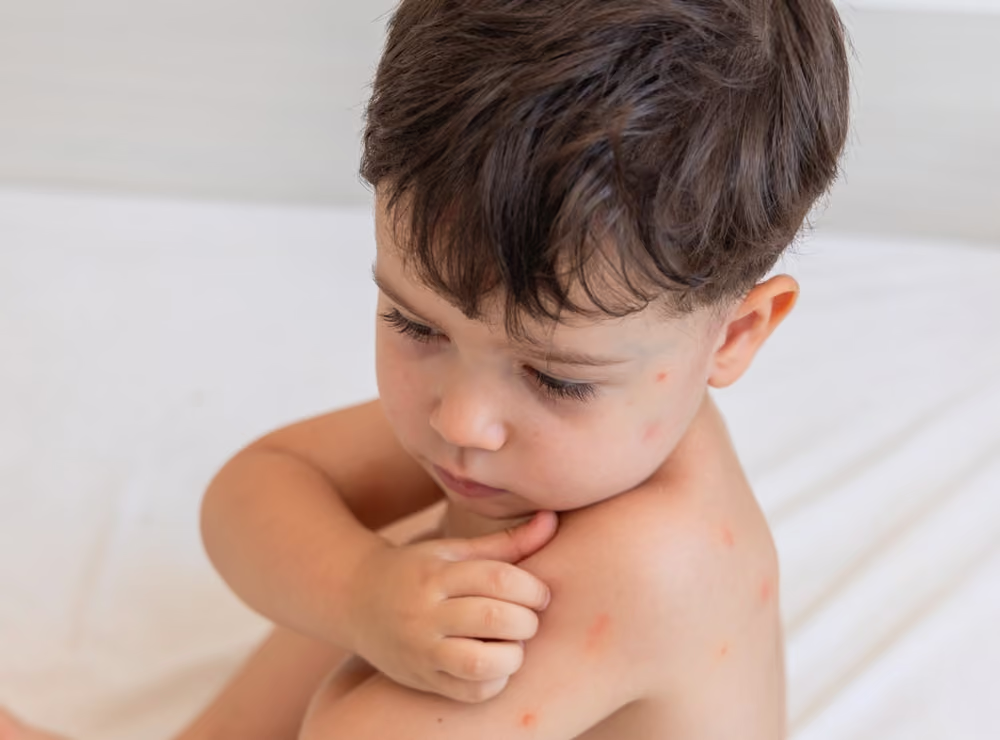
What is itching in children?
Itching is an irritating, tingling sensation in the skin that creates a strong urge to scratch. It's a protective mechanism of the body, intended to signal that something is wrong with the skin. Children find it harder to suppress the urge to scratch than adults: they often scratch spontaneously, without thinking.
The sensation can be concentrated in one specific spot or spread across the entire body. Itching that worsens at night is particularly bothersome, as it disrupts sleep and makes the child irritable.
An important distinction is whether the itching is accompanied by visible skin changes. Sometimes you clearly see a rash, bumps, redness, or flaking. In other cases, the skin looks normal, yet the child is still bothered.
The child's age influences where itching occurs and which cause is more likely. Babies and toddlers more often experience itching on their cheeks and torso due to atopic eczema or dry skin. In school-aged children, itching in the backs of the knees and elbow creases more often indicates eczema. Itching specifically around the anus at night can point to pinworms. Children with skin problems in children are at an increased risk of itching due to damaged skin.
Do you suffer from Itching in Children?
Personalized advice for your skin, completely online. Upload a few photos through the Skindr app and receive medical advice from a licensed dermatologist within 48 hours. No waiting room or referral required.
How does itching occur in children?
Itching in children occurs when certain substances in the skin irritate nerve endings. Children's skin is more sensitive than adults': it's thinner, has fewer protective oils, and reacts more quickly to stimuli.
Dry skin is one of the most common causes. When the skin retains too little moisture due to excessive bathing, the use of harsh soaps, or a dry environment, the outer protective layer becomes vulnerable. Allergic reactions also play a role: the immune system sometimes overreacts to food, pollen, or contact substances.
Skin conditions such as atopic eczema in children have a hereditary component. Infections caused by bacteria, viruses, or parasites can cause itching: with chickenpox, blisters burst and itch intensely; with scabies tiny mites burrow tunnels into the skin. A fungal infection such as ringworm also causes itchy, ring-shaped patches.
Pinworms lay their eggs around the anus, mainly at night. This causes intense, specific itching that keeps children awake. Small white worms are sometimes visible on the buttocks or in the stool.
Athlete's foot (tinea pedis) is a fungal infection that causes itchy, flaky patches between the toes. Children contract this in swimming pools and changing rooms.
Bacterial infection around the anus can develop from scratching an irritated area, with redness, warmth, and pain as additional symptoms.
Symptoms and characteristics of itching in children
Symptoms vary widely depending on the underlying cause. With atopic eczema you see dry, itchy skin in the creases of the knees and elbows. The skin is red and inflamed, sometimes with weeping patches after scratching.
Hives are characterized by itchy, flat bumps that suddenly appear on the torso and limbs. They can disappear and reappear elsewhere.
Scabies causes continuously itchy bumps all over the body. The typical burrows are seen on the palms, soles of the feet, and between the fingers. The itching is strongest at night.
Head lice cause red bumps on the scalp that can itch intensely. Nits are small white eggs that are firmly attached to the hair shaft, especially behind the ears.
Pinworms: intense itching specifically around the anus, strongest at night. Small white worms sometimes visible. Children are kept awake by it.
Athlete's foot: flaking and itching between the toes, possibly blisters. Contracted in a swimming pool or changing room.
Chickenpox begins with itchy bumps which quickly turn into fluid-filled blisters, spread over the entire body.
Are you unsure about the cause of your child's itching? Through Skindr, a certified dermatologist assesses the skin within 48 hours, without a waiting room.
Where does itching occur in children?
The location of the itching often provides clues about the cause. Atopic eczema has a distinct location pattern that changes with age: in babies on the cheeks and forehead, in older children in the creases of the knees and elbows.
Hives can appear anywhere on the body but usually show up on the torso, arms, and legs. Scabies has characteristic preferred locations: between the fingers, on the wrists, around the navel, and on the soles of the feet.
Pinworms cause itching exclusively around the anus and perineum, always at night.
Athlete's foot is limited to the spaces between the toes and the soles of the feet.
Head lice are limited to the scalp and hair. Chickenpox starts on the torso and face and spreads over the entire body. More about atopic eczema in children and about molluscum contagiosum, which also occur in children.
Do you suffer from Itching in Children?
Personalized advice for your skin, completely online. Upload a few photos through the Skindr app and receive medical advice from a licensed dermatologist within 48 hours. No waiting room or referral required.
Treating Itching in Children
Treatment depends on the underlying cause. For dry skin, hydration is fundamental: apply moisturizing cream or ointment one to two times a day. Take short showers with lukewarm water. Use hypoallergenic, fragrance-free products.
For atopic eczema: daily hydration with thick creams, plus short courses of topical anti-inflammatory agents, available by prescription only.
Pinworms are treated with a specific medication prescribed by a doctor that targets the worms. Treat all family members simultaneously. Wash hands regularly, keep nails trimmed short, and wash bedding and underwear at a minimum of 60 degrees Celsius to prevent re-infection.
Scabies: apply a specific medication to the entire family, wash clothes and bedding at 60 degrees Celsius. Itching can persist for weeks after treatment; this is normal.
Head lice: wet-combing method for two weeks (every 3 to 4 days). Use a special fine-toothed lice comb.
Hives: histamine-blocking medications, by prescription. Identify and avoid the cause.
Chickenpox: cold compresses, cooling creams. Keep nails trimmed short.
Unsure what's causing your child's itching? Through Skindr, a certified dermatologist assesses the skin based on photos and provides treatment advice, without a waiting room, within 48 hours. More about hives.
What doesn't help with itching in children?
Scratching provides temporary relief but makes the problem worse. Scratching damages the skin, triggers more itching, and creates a vicious cycle. With chickenpox, scratched-open blisters can become infected and leave scars. Keep nails short.
Too much bathing or showering further dries out the skin. Limit baths and showers to a few minutes with lukewarm water.
Harsh soaps and perfumed products irritate sensitive children's skin. Opt for hypoallergenic, fragrance-free products.
Warm environments and thick blankets worsen itching. Ensure a cool bedroom.
Self-treating with old remedies from the cupboard is dangerous. Topical anti-inflammatories should not be used indiscriminately or everywhere. Always seek advice from a doctor or pharmacist.
Scabies, lice, and worms do not go away on their own: they require specific treatment.
Frequently asked questions about itching in children
When should I see a dermatologist for itching?
If the itching persists for more than a week without a clear cause, if there are red inflamed areas, fever, or if sleep is severely disturbed. Always consult a doctor if scabies, lice, or worms are suspected.
Can itching be contagious?
The itching itself is not contagious, but its causes can be. Scabies, head lice, chickenpox, and worms are highly contagious. Inform the school if there's a contagious cause.
Do antihistamines help with all types of itching?
Antihistamines are particularly effective for allergic reactions (hives, hay fever). They are less effective for eczema or scabies. Always consult a doctor before administering them.
Do I always need to treat the whole family?
For scabies, lice, and worms, all family members need to be treated simultaneously. Family treatment is not necessary for eczema or chickenpox.
Can food cause itching?
Yes, in some children, certain foods (strawberries, citrus, chocolate, nuts) can trigger allergic reactions that cause itching. Discuss suspected foods with your doctor.
Can Skindr help with my child's itching?
Yes. Through Skindr, a certified dermatologist assesses your child's skin based on photos and provides treatment advice, without a waiting room, within 48 hours. If you're unsure about the cause of the itching, professional advice is always the quickest solution.
Resources
Sources:
- Health and Science: https://www.gezondheidenwetenschap.be/richtlijnen/jeuk-bij-kinderen
- EBPNet: https://www.ebpnet.be
- BCFI (Belgian Centre for Pharmacotherapeutic Information): https://www.bcfi.be


](https://static.legitscript.com/seals/624359.png)